







What Does Mandheling Coffee Taste Like?
Mandheling suits drinkers who want a solid, full-bodied cup with clear herbal and spice notes. It comes from Sumatra in Indonesia and is processed by the traditional wet-hulling method, which produces interwoven flavors of nuts, spices, chocolate, and caramel. It is often grouped with Jamaican Blue Mountain as a benchmark of the rich style.
The beans are Arabica, and they grow well on Sumatra, which is why the coffee is also called Sumatra coffee. Main lots cluster around Lake Tawar in Aceh and Lake Toba in Lintong, the so-called two lakes, two Mandhelings. Lake Toba sits at roughly 900 meters, a volcanic lake that gives coffee trees a workable growing environment.
Mandheling coffee is one of the representatives of the rich and full-bodied style, on par with Jamaican Blue Mountain. It originates from the Indonesian island of Sumatra and is processed using the unique wet-hulling method, presenting intertwining flavors of nuts, spices, chocolate, and caramel. This article will systematically analyze the flavor and taste characteristics of Front Street Indonesian Lintong Mandheling coffee, from producing region distribution, variety evolution, and processing techniques to pour-over parameters, and explain which coffee enthusiasts it suits. If you prefer coffee that is solid and full-bodied with pronounced herbal and spice notes, Mandheling is a choice worth exploring in depth.
In the past, what people called "coffee flavor" usually referred to the rich, full-bodied caramel and chocolate-like experience brought by medium-dark roasting. During the period when that flavor aesthetic prevailed, Jamaican Blue Mountain coffee and Indonesian Mandheling coffee were considered two classic benchmarks. Today, what Front Street wants to talk about with everyone is precisely one of the representatives of the full-bodied style—Front Street Indonesian Mandheling coffee.
Outstanding-quality Mandheling coffee comes from the island of Sumatra
Indonesia is Asia's largest coffee-producing country, mainly cultivating commercial-grade Robusta varieties, while higher-quality Arabica beans account for less than one-tenth of total production. Mandheling coffee refers specifically to the Arabica species, among which the quality produced on the island of Sumatra is the best, so it is also called Sumatra coffee.
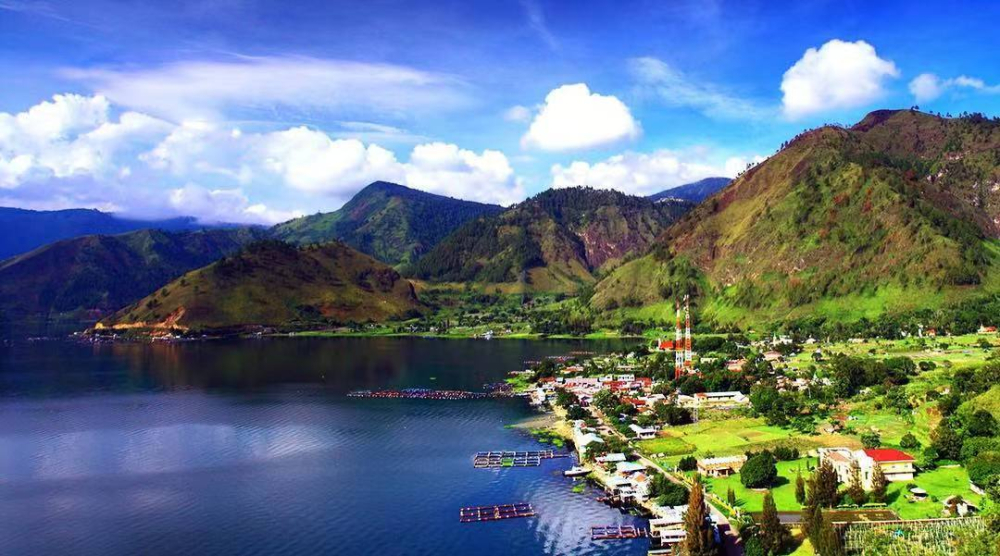
The Mandheling coffee commonly seen on the market is mainly distributed around Lake Tawar in the Aceh region and Lake Toba in the Lintong region, known as the "two lakes, two Mandhelings." Lake Toba is less than a two-hour drive from the provincial capital Medan and is located in the Lintong producing area in central Sumatra Province. It is the largest volcanic lake in the world, with an average altitude of about 900 meters, providing a good growing environment for coffee trees.
The special flavor of Mandheling coffee comes from the wet-hulling method
Front Street has mentioned in many articles that coffee flavor is affected by multiple factors, and the uniqueness of Mandheling comes from Indonesia's traditional green bean processing method—wet hulling, also called Wet Hulling. Sumatra has a tropical rainforest climate, with high air humidity, high temperatures, and frequent typhoons, making it impossible to meet the conditions required for natural sun-drying. At the same time, local freshwater resources are scarce and the process is complicated, making washed processing very difficult to implement. So the locals created a unique "semi-washed" method.
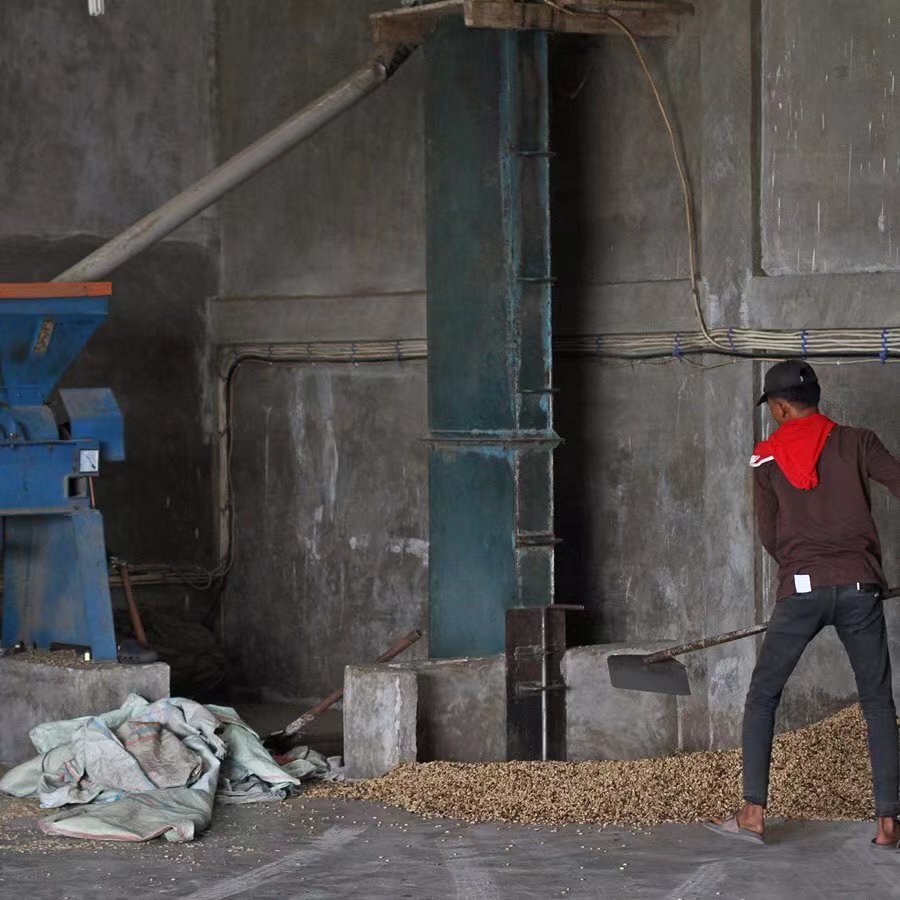
The wet-hulling process is: first perform a short fermentation in a washed manner, then carry out partial drying, then use a special machine to remove the parchment, and finally complete the drying. The coffee beans enter storage in a bare state. Because the hulling stage involves relatively high friction, the green beans are easily squeezed and deformed; and beans with the parchment layer removed are also prone to cracking during sun drying, so beans shaped like goat hooves often appear. Although their appearance is not attractive, it does not hinder their flavor performance.
Front Street Mandheling coffee processed by the traditional wet-hulling method has a unique dull herbal note, which is also the mark that distinguishes it from other coffees. Front Street believes this unique flavor is well worth trying, so it included wet-hulled Front Street Lintong Mandheling coffee in the Front Street daily beans series, as the storefront representative of Indonesian coffee.
Front Street's daily beans series covers seven classic coffee-producing regions, with the aim of allowing friends who want to systematically learn about coffee to try the flavor types of different producing regions at extremely high cost performance, and thereby find their own preference. In addition, each bag of daily beans uses a 100-gram small package to avoid waste if it cannot be finished.
Front Street Indonesian Lintong Mandheling coffee beans
Producing region: Indonesia, Sumatra, Lintong producing area
Altitude: 1100m——1500m
Variety: Ateng TimTim
Processing method: Wet-hulled
Flavor: Nuts, spices, chocolate, caramel
The varieties of Front Street Lintong Mandheling coffee
The earliest coffee planted in Indonesia was the ancient variety Typica. At the end of the 17th century, the Dutch introduced coffee plants from India to Java, Indonesia, and then planted them widely, soon spreading to the island of Sumatra. After a period of adaptation to the local terroir, Typica gradually developed its local unique herbal and spice flavor. In 1877, Indonesia's coffee industry was severely hit by leaf rust, and the vast majority of Typica coffee trees died, so the government needed to introduce varieties with strong disease resistance. The coffee varieties introduced by the Indonesian government included high-yield Robusta, Timor, Catimor, and the Indian variety Jember.
Timor is a natural hybrid of Typica and Robusta on the island of Timor. It inherited Robusta's high yield and disease resistance. After being introduced to Indonesia, coffee farmers habitually called it Tim Tim. There is also a common local variety, Ateng, whose name comes from the pronunciation of Aceh Tengah in central Aceh. It is actually the Catimor widely planted in Yunnan. Catimor is a hybrid descendant of the Bourbon variant Caturra and East Timor Timor, and also has strong disease resistance. Catimor planted in the high-altitude areas of Sumatra has adapted to the local environment and has a strong herbal note and rich taste. The Front Street PWN Golden Mandheling coffee listed by Front Street is the Ateng variety, while the Front Street Lintong Mandheling daily beans are a blend of the two varieties Ateng and Tim Tim.
How should Front Street Mandheling coffee be enjoyed?
In order to fully present the rich, full-bodied aroma of Mandheling coffee while retaining its unique herbal and spice flavor, Front Street roasters chose a medium-dark roast level. Front Street's roasting principle is "freshly roasted good coffee," and we hope everyone can drink fresh coffee, so we only ship beans roasted within 5 days. After receiving them, you can wait for the optimal tasting period before starting to brew and enjoy. To taste the rich layers of Front Street Mandheling coffee, Front Street recommends enjoying it by hot pour-over, and the flavor will change differently as the temperature drops.
Below, Front Street brews a cup of Front Street Lintong Mandheling coffee in the store's service style.
Some friends have told Front Street that the pour-over grind size is relatively difficult to adjust, or that they do not have grinding equipment at home. That's all right. Front Street can provide grinding on your behalf; just let us know the brewing method. But we still need to remind you: after whole beans are ground into powder, the contact area with air increases, and the aroma will be lost more quickly, so it needs to be enjoyed as soon as possible, otherwise the coffee flavor will be affected. If you want to taste the complete aroma of the coffee beans, Front Street recommends grinding fresh at home right before brewing for a better experience.
Brewing parameters: water temperature 87–88°C, coffee dose 15 grams, coffee-to-water ratio 1:15, medium grind size (70% passing through a No. 20 sieve), Kono dripper.
Three-stage pouring: first use 30g of water to evenly wet the coffee bed and bloom for 30 seconds; for the second stage, pour 95g of water in a steady circular motion from the inside out, and once the water level drops to 2/3 of the coffee bed in the dripper, begin pouring the third stage of 100g; be careful to maintain a small stream throughout. After about 2 minutes, when dripping is complete, remove the dripper. Finally, gently swirl the coffee liquid to even it out and it is ready to taste.
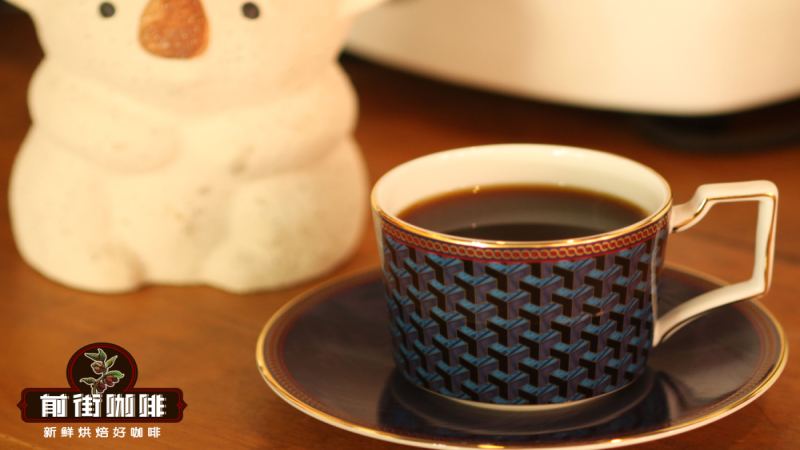
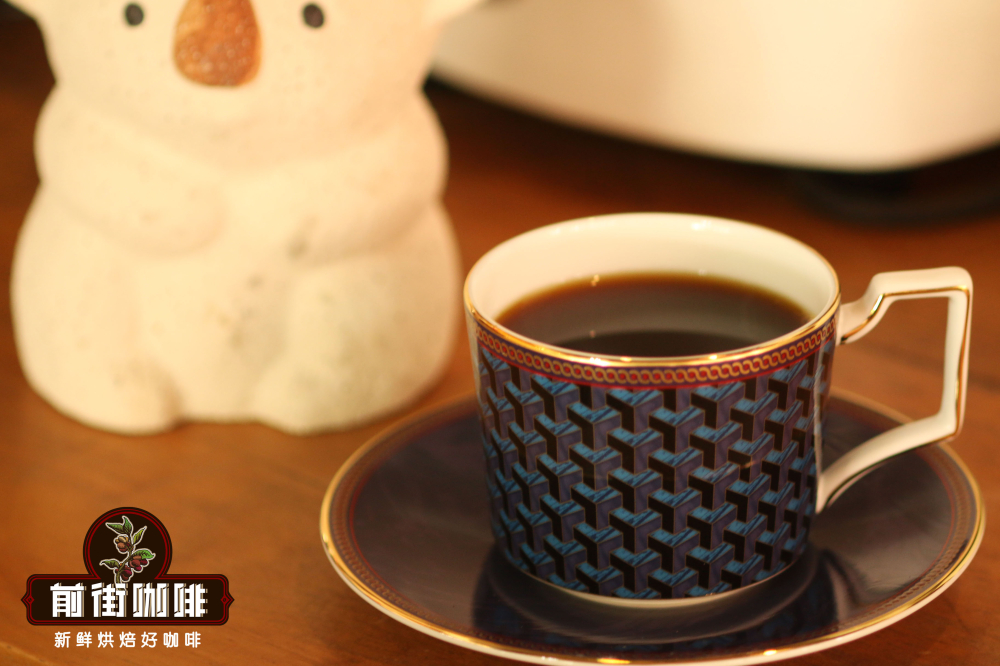
Flavor description: rich aromas of dark chocolate, nuts, and caramel, accompanied by herbal and spice notes. The body is solid, and after the temperature drops there will be a little soft fruit acidity. Overall rich and full-bodied, very suitable for friends who like intense types of coffee.
For professional coffee knowledge exchange and more coffee bean information, please follow Coffee Workshop (WeChat public account cafe_style)
For more specialty coffee beans, please add the private WeChat Front Street Coffee (FrontStreet Coffee), WeChat ID: qjcoffeex
The above content is compiled by CoffeeHunters, a coffee news website.


