






What is the difference between cappuccino and coffee drinks like a flat white?
A flat white and a latte are both espresso milk drinks, but they differ in milk volume, foam texture, and cup size. A flat white uses a single espresso or double ristretto with finely textured microfoam poured in a thin layer, while a latte adds a larger amount of milk with a thicker foam cap, so the milk flavor leads and the coffee sits in the background.
The flat white originated in Australia, which is why it is often called "Aobai coffee," and "flat" points to the smooth texture the drink should have. Cafes vary in how they steam and pour, so the same order can taste different depending on the coffee machine name and settings behind the bar.
Walk into Luckin, Starbucks, or a corner independent café, and the menu almost always includes an espresso milk coffee with the word "white" in its name. Luckin calls it "Aoruibai," Starbucks calls it "FuruiBai," and independent cafés tend to call it "Aobai coffee" — but they are all actually the same drink: the Flat White. So where exactly did the Flat White come from? What is the core difference between it and a latte? And how do the thickness and texture of the milk foam affect the mouthfeel of a milk coffee? This article, from Front Street's perspective, will trace the origin of the Flat White's name, compare it with a latte in terms of the ratio of milk to espresso, explain the principles behind steaming milk and the key points of operating a steam wand, and provide the extraction parameters, milk temperature, and cup size choices that Front Street uses to make a Flat White — helping you truly understand this cup of coffee from theory to practice.

At Luckin, Starbucks, or some independent cafés, drinks with the word "white" in their name often appear on the espresso menu. Each establishment has its own way of naming it: Luckin writes it as "Aoruibai," Starbucks calls it "FuruiBai," and independent cafés mostly use the term "Aobai coffee." In reality, they all refer to the same espresso milk coffee — the Flat White. So what exactly is the difference between a Flat White and a latte? In this article, Front Street will discuss what a Flat White is and why it is called "Aobai coffee."
The Origin of the Flat White's Name
Flat White is a coffee drink that originated in Australia, so people naturally call it "Aobai coffee." In terms of composition, it is not fundamentally different from most milk coffees — it is also made up of milk, milk foam, and coffee, with the method being to incorporate fine, tiny milk foam into a single espresso or a double ristretto. "Flat" itself carries the meaning of "smooth," which also hints at the smooth texture this cup of coffee should have when you drink it.
The Difference Between a Flat White and a Latte
The original meaning of Coffee Latte in Italian is "coffee milk," which is to say that this drink is made by adding a small amount of espresso to a large amount of milk. When you drink it, you can taste both the milk and the richness of the coffee, so its primary flavor is milk-based, with the coffee flavor taking a back seat. The Flat White is the exact opposite — it adds a small amount of milk to a double espresso or ristretto, with the intention of pushing the espresso's flavor to the forefront. In terms of mouthfeel, a latte's milk foam is about 1cm thick, smooth and delicate on the palate, with the sweet aroma of milk interwoven with the richness of coffee; a Flat White's milk foam is about 0.5cm thick, smooth, light, and delicate on the palate, with a rich coffee aroma and the sweet fragrance of milk spreading out simultaneously.
Does the Texture and Thickness of Milk Foam Affect the Mouthfeel of Coffee?
Take the common Flat White, latte, and cappuccino as examples. The Flat White's milk foam is on the thinner side, about 0.5cm, with a glossy surface and strong fluidity, giving a smooth, silky, and light mouthfeel; the latte's milk foam is medium in thickness, about 1cm, with a lustrous surface and strong fluidity that doesn't scatter too much, giving a smooth, delicate, and full mouthfeel; the cappuccino's milk foam is on the thicker side, about 1.5cm, with a duller surface and poorer fluidity, giving a dense, substantial, and full mouthfeel.
Why Do We Heat Milk and Steam Milk Foam When Making Milk Coffee?
When making milk coffee, Front Street uses the steam wand of an espresso machine to heat and aerate the milk, utilizing the surface tension of milk proteins to form a large number of tiny bubbles, and the texture of these bubbles directly affects the mouthfeel of the entire cup of milk coffee. During the steaming process, lactose dissolves into the milk as the temperature rises and gets sealed inside the milk through the aeration effect; milk fat is responsible for keeping these tiny bubbles stable, so that the milk foam bursts in the mouth when drinking, thereby better releasing and amplifying aromatic substances, giving the milk a sweet, rich taste and mouthfeel.
Generally speaking, the angle of the steam wand can be positioned as follows: with the spout of the milk pitcher as the pivot point at the 12 o'clock direction, point the steam wand toward the 2-3 o'clock or 9-10 o'clock direction of the pitcher. This arrangement allows the milk to rotate as quickly as possible during steaming and form a small vortex, which rolls the coarser foam into the milk, giving the steamed milk a dense and velvety texture. Front Street Coffee (FrontStreet Coffee) recommends using the guideline of inserting the steam tip about 0.5-1cm below the liquid surface. If the espresso machine's steam is too strong and the vortex formed is too large or turbulence occurs, you can lower the steam wand slightly deeper; if the steam is not strong enough, you can place the steam wand at a shallower position to let the milk form a small vortex as quickly as possible, while not rotating too violently or creating turbulence.
How to Make a Flat White?
In theory, a Flat White is only served hot, but as market demand changes, many establishments also offer iced Flat Whites. In fact, an iced Flat White and an iced latte don't taste very different, because it's hard to bring out its intended mouthfeel at low temperatures.
When Front Street Coffee (FrontStreet Coffee) makes a Flat White, the base uses a double ristretto: 20 grams of coffee grounds extracted to 35 grams of coffee liquid, with an extraction time of 26 seconds. However, Front Street Coffee (FrontStreet Coffee) also reminds you that each coffee bean's extraction recipe will differ slightly — this set of parameters is adjusted by the barista before opening each day based on the Warm Sun blend used at the shop.
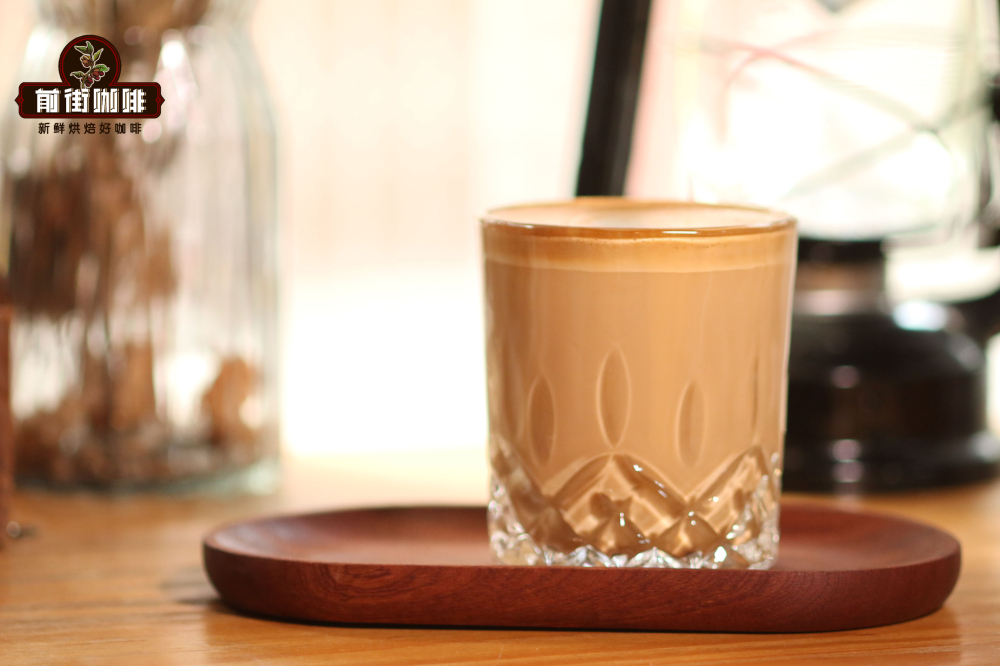
During the milk steaming step, aerate for only one second (one "tsst" sound) or not at all, then heat the milk to 55°C. Finally, pour the steamed milk into the coffee. Compared to a latte, a Flat White has a lower ratio of coffee to milk, with the aim of creating a rich coffee flavor, so Front Street Coffee (FrontStreet Coffee) chooses a 200ml cup as the serving vessel for the Flat White.
The above content is compiled by CoffeeHunters, a coffee news website.


