






Why Is Cappuccino Called Cappuccino Next to Latte and Mocha?
Latte, cappuccino, and mocha all start with espresso, and the differences sit in the ratio of espresso to milk, milk foam thickness, cup size, and final flavor. Cappuccino carries a thicker, airier foam cap; a latte is milkier and smoother; mocha adds chocolate. Espresso itself is a concentrated liquid extracted under pressure, strong enough that milk was added to soften it.
These Italian milk coffees spread worldwide through Starbucks, and flat white arrived later from Oceania, which is why flat white vs latte in Australia often turns on foam texture and milk volume. For home brewing, medium-dark roasted beans blended for espresso give the body these drinks need, and the bean variety plus roast degree decide the final taste.
Standing at the coffee shop counter, facing names like latte, cappuccino, and mocha, have you ever felt confused but too embarrassed to ask? What exactly are the differences between these three classic milk coffees based on espresso in terms of ratios, taste, and preparation methods? This article will start from the extraction principles of espresso, and detailedly break down the recipe proportions, milk foam thickness, cup size choices, and final flavor performance of the three, helping you order precisely according to your personal preferences. At the same time, Front Street Coffee will share multiple suitable espresso blend bean choices and usage suggestions for making Italian milk coffees, allowing you to easily replicate a professional-level coffee shop flavor at home.

What exactly are the differences between latte, cappuccino, and mocha? Do you really understand? Many people, when facing the menu in a coffee shop, are full of questions but too embarrassed to ask the staff, and ultimately either choose randomly or always order the one they are familiar with. Today, Front Street Coffee will help you sort out the similarities and differences among these three one by one, so you can order calmly like a professional.
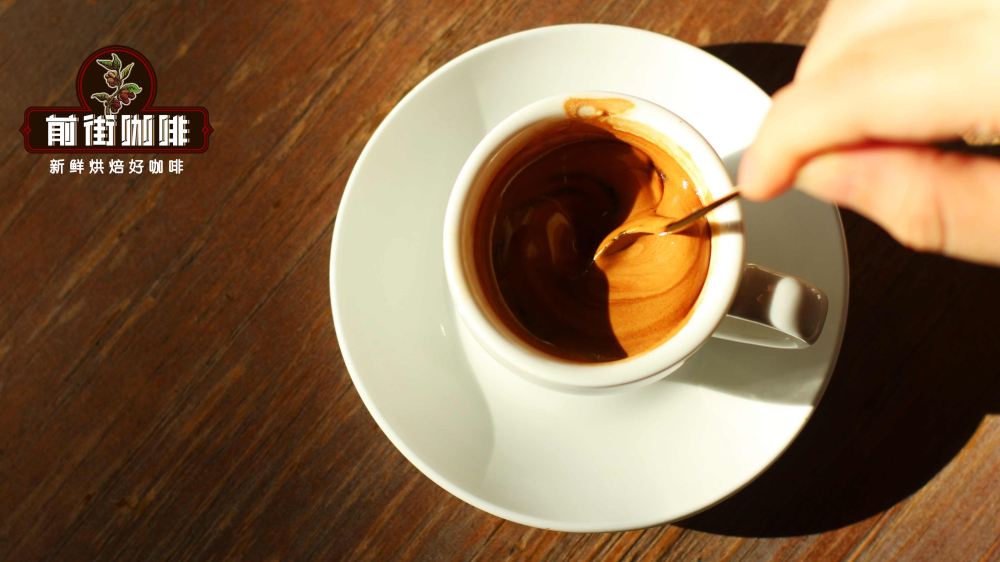
The so-called Espresso is a highly concentrated coffee liquid extracted by pressure using an Italian coffee machine. Because of its strong flavor and powerful impact, many people find it hard to accept when trying it for the first time. For this reason, after espresso spread around the world, people in different countries added various ingredients to it, and with espresso as the base, gradually evolved a rich variety of coffee categories.
Among the many Italian coffees with milk added, the product types are truly diverse. Latte, cappuccino, flat white (Australian white), and mocha are widely known because of Starbucks' global promotion, and many friends in China are also especially familiar with these four Italian milk coffees.
No matter which Italian milk coffee is being made, first an espresso machine equipped with a steam wand is needed. As for coffee beans, comprehensive beans that are medium-dark roasted, full-bodied, and specially blended for espresso should be chosen. The final taste of the coffee depends on the variety of coffee beans used and the degree of roasting.
Currently, Front Street Coffee (FrontStreet Coffee) has six espresso blend coffee beans on sale. All are sent by default as whole beans within 5 days after roasting is completed, ensuring that every customer receives 100% freshly roasted beans. After receiving the coffee beans, you can check the roasting date on the back label. It is recommended to start using them on the 7th day after that date, allowing the coffee beans sufficient time to release carbon dioxide on their own, thereby further improving extraction stability. Below, Front Street has selected several representative house espresso blend beans, and everyone can choose according to personal taste preferences:
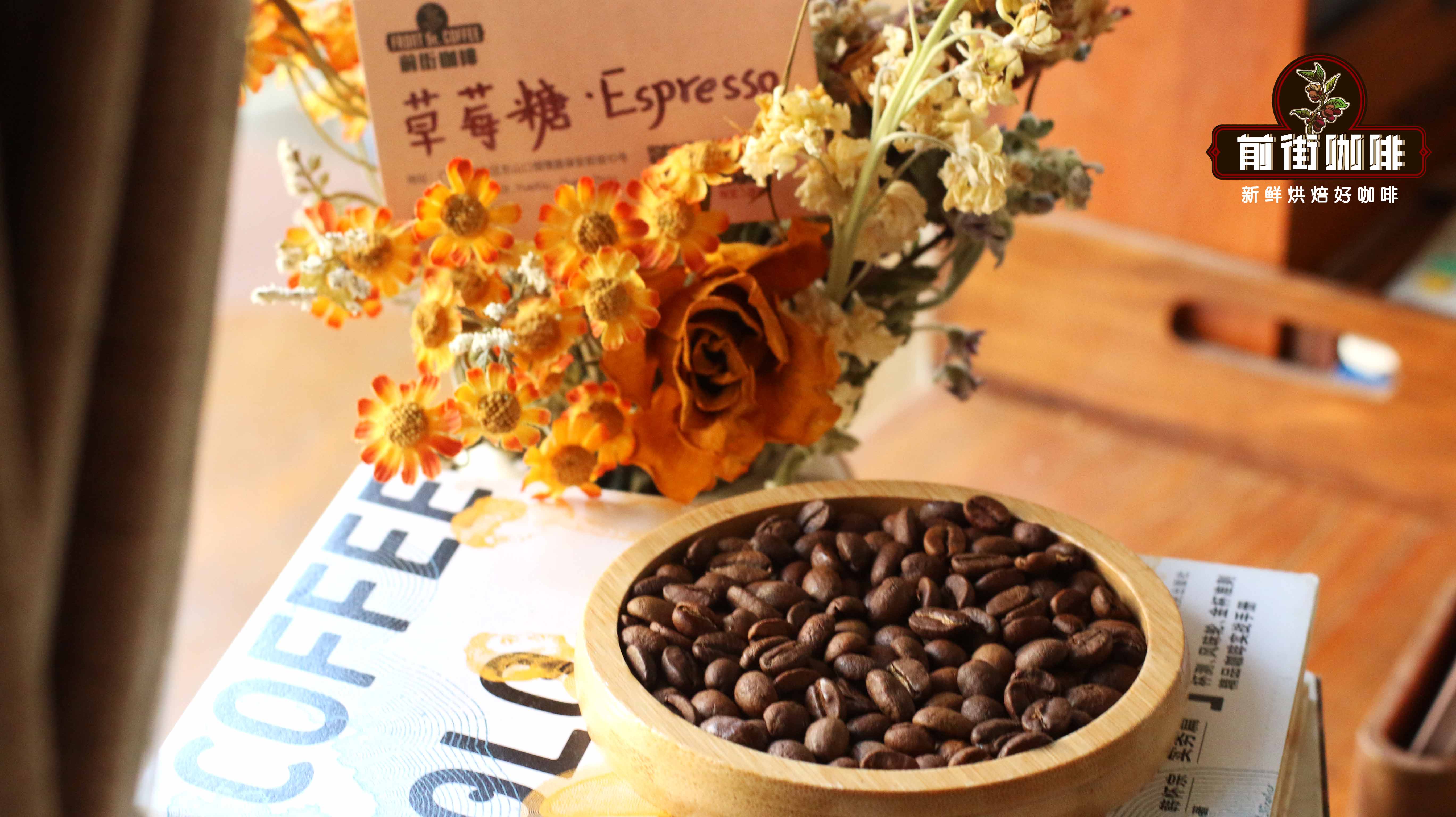
"Front Street Strawberry Candy Espresso Blend Coffee Beans": With elegant rose fragrance, strawberry gummy, grape, and dried fruit notes, smooth and creamy on the palate, with almond aroma in the aftertaste.
"Front Street Specialty Blend Coffee Beans": Composed of Colombian washed coffee beans and Brazilian semi-washed coffee beans, presenting flavors of nuts, dark chocolate, and caramel.
"Front Street Classic Blend Coffee Beans": A blend of coffee beans from Brazil, Indonesia, and Vietnam, with prominent coffee aromas of chocolate, caramel, and roasted nuts, rich crema, and deep color.
When making latte, mocha, and cappuccino, we all use Front Street Specialty Espresso Blend Coffee Beans. After receiving the beans, an espresso coffee grinder is also needed to grind the coffee beans into an extremely fine particle state, then pour them into the portafilter basket of the coffee machine and distribute evenly, then use the included tamper tool to press flat and firm, lock it back onto the coffee machine, and press the extraction button.
Because the performance of each grinder and coffee machine varies, usually extracting 20g of coffee liquid from 10g of coffee grounds, or 40g of coffee liquid from 20g of coffee grounds, takes about 25 to 30 seconds. After extraction is completed, everyone can first taste the espresso, and then decide whether the grind size needs to be adjusted coarser (for a lighter taste) or finer (for a stronger taste).
After the espresso is made, the steam wand can be used to heat and froth the milk.
Front Street's ratio for making latte is: 20g espresso plus 200ml milk, with a milk foam thickness of about 1cm. After the milk and coffee are fully integrated, the overall flavor is balanced and the texture is smooth. The total volume of the finished product is about 280ml, so a 300ml bowl-shaped latte cup is needed.
Mocha is an Italian milk coffee with chocolate flavor. Its preparation ratio is: 20g espresso plus 15g chocolate sauce, then 190ml milk and about 1cm thick milk foam. If conditions permit, a few marshmallows can also be placed on the surface to add a sweet aroma and taste. The method is similar to latte, so similarly prepare a 300ml bowl-shaped latte cup.
The ratio for cappuccino is: 40g espresso plus 150g milk, with a milk foam thickness of about 1.5cm. The total volume of the finished product is about 190ml, and after making it, the coffee surface will show a tall, plump dome. Compared with latte, cappuccino has a stronger coffee flavor, and the milk foam is also denser and thicker, with the first sip feeling like biting into a marshmallow. When making cappuccino, the milk foam must be piled high enough, so it is recommended to use a 200ml straight-sided or tulip-shaped coffee cup.
Comparing these three coffees together: cappuccino, with the least amount of milk, tastes the most prominently of coffee, with a relatively light milk flavor and a thick foam layer; latte has the most balanced taste, whether it is the richness of the coffee, the sweetness of the milk, or the thickness of the foam layer, all can be experienced just right; while mocha adds chocolate-flavored mocha sauce on the basis of latte, so when tasting it, you can feel not only the rich aroma of espresso but also the sweetness of milk chocolate, giving the overall layering more richness.
The above content is compiled by CoffeeHunters, a coffee news website.


