








How Did Australian White Coffee Differ from Latte and Cappuccino?
Flat white, known as Fu Rui Bai at Starbucks and also called xiao bai, chun yi bai, ao rui bai, or Australian-style white, is espresso combined with fine, tiny milk foam. It originated in Oceania, which is why it is also called Australian white coffee. New Zealand versions often use a double ristretto, while Australian versions tend to use a single espresso, and both rely on a thin layer of microfoam.
Compared with a latte, the milk texture is tighter and the foam finer; compared with cappuccino, there is far less foam and more liquid milk. The cappuccino name origin often comes up in these comparisons because New Zealand cappuccino is traditionally topped with chocolate flakes and heavy foam, giving it a different character. Home recipes typically use medium-dark espresso blend beans.
The name Flat white may sound unfamiliar to many, but everyone is surely familiar with Starbucks' Fu Rui Bai. In fact, what are called xiao bai coffee, fu rui bai, chun yi bai, ao rui bai, and Australian-style white all refer to the same drink—Flat white. It originated in Oceania, so it is also called Australian white coffee. Since it is also a combination of milk and espresso, what exactly is the difference between an Australian white, a latte, and a cappuccino? Why has Australian white coffee become popular around the world and become a regular option on the menus of almost every coffee shop? In this article, Front Street Coffee will guide you through the origin and evolution of Australian white coffee, clarify the differences between it and latte and cappuccino in milk foam thickness and flavor presentation, and share a Flat white recipe made with Front Street Sunflower Warm Sun blend beans, so you can also experience that rich and mellow Australian white flavor at home.
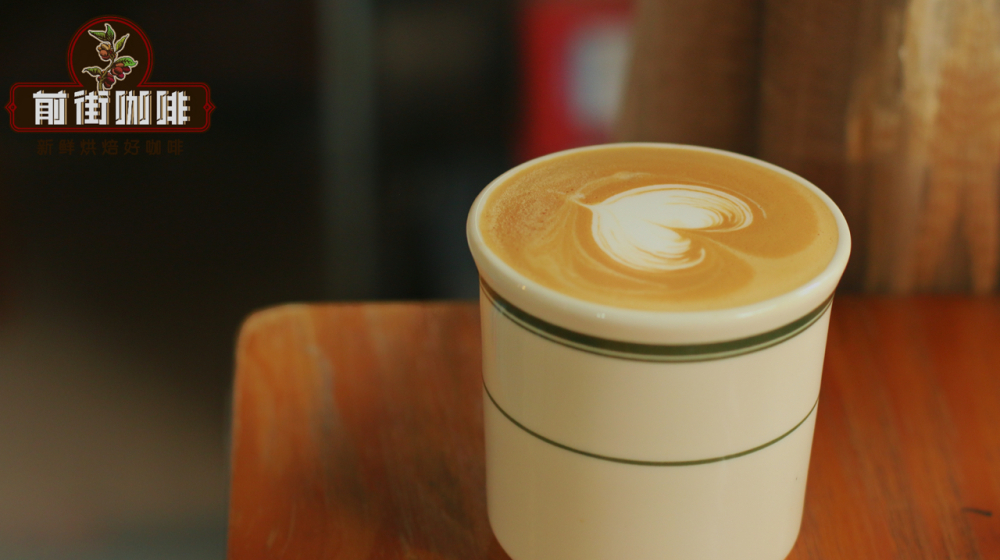
The term Flat white may feel a bit unfamiliar to you, but as long as you have been to Starbucks, you must have heard of Fu Rui Bai. In fact, the names xiao bai coffee, fu rui bai, chun yi bai, ao rui bai, and Australian-style white all refer to Flat white. It originated in Oceania (Australia), so it is also called Australian white coffee. Next, Front Street Coffee will sort out for you the connection among Australian white, latte, and cappuccino.
What is Australian white coffee?
Flat white is a coffee drink that originated in Australia. However, some also suggest that Flat white actually originated in New Zealand. New Zealanders are used to making it with a Double Ristretto, while their Australian counterparts tend to use a Single Espresso. The method for Flat white is to combine fine, tiny milk foam with either a single espresso or a double Ristretto.
When it comes to Australian white coffee, we always compare it with latte and cappuccino. They are all milk coffees, so what exactly is the difference between them?
From the process of how Flat white came into being, we can see where their differences lie.
New Zealand cappuccino has far too much milk foam and almost no liquid milk, and because chocolate flakes are usually sprinkled on top, it is regarded as a children's drink. The milk in both Australia and New Zealand comes from free-range organic cows, and dairy farms are everywhere in these two countries, which is a unique local condition. New Zealand milk has a fairly high milk fat content and can produce large, stiff milk foam. So New Zealand cappuccino tastes as smooth as marshmallow. Imagine this: if you want a milk coffee, New Zealand cappuccino is clearly not an ideal choice for adults.

Then latte should be suitable, right? But in New Zealand, whether hot or iced, latte almost has no milk foam and is considered a weak drink for intellectuals, political liberals, and mothers. Moreover, latte in New Zealand is a broad concept that simply means coffee plus milk, and the ratio is entirely up to the shop. It can range from a large cup of cold milk poured into espresso, to a small macchiato, to a large bowl of coffee, and the variation is so great that customers find it hard to predict.
The evolution of flat white went like this: ordinary New Zealanders at first could not order a cup of pure white coffee to their liking in a cafe. So the birth of flat white probably happened like this—the customer said: I'll have a white coffee. The cafe served cappuccino. The customer said: too much milk foam, can I have a cup of pure milk coffee? The cafe served latte. The customer said: the coffee flavor is too weak and there is too much milk, can I have a coffee with more milk foam than a latte but less than a cappuccino? The cafe served a cup of coffee with milk foam and milk evenly mixed. The customer said: excellent! I want to call this flat white. The origin of the term flat white is still not very clear. It may have come from dozens or even hundreds of these small cafe interactions, and shop owners gradually figured out what kind of coffee customers really wanted. Today flat white is very popular in London, New York, and Berlin. It was originally just an attempt to remake a cup of plunger coffee with a little milk.
And so Australia's national-level coffee drink—Australian white coffee, Flat white, that is, Australian-style white (milk) coffee—was born. In fact, it can be seen that it is somewhat like Australia's version of latte.
Therefore, Australian white coffee is a drink that highlights the taste of coffee. Latte is a coffee drink with a large amount of milk added, while cappuccino is a milk coffee with thicker milk foam. In terms of milk foam thickness, cappuccino is the thickest, latte is in the middle, and Australian white coffee is the thinnest. So Australian white coffee feels more like a cup of coffee with milk; latte is like a cup of coffee-flavored milk; and cappuccino is like a cup of frothy milk coffee with dense milk foam.
Why is Australian white coffee so popular?
We cannot help but ask, why is Australian white coffee so popular domestically and even around the world? It is almost a permanent fixture on the menu of every coffee shop.
From what we learned earlier, compared with latte and cappuccino, Australian white coffee has thinner milk foam and less milk, and can better highlight the taste of coffee, so Australian white coffee is more particular about the choice of coffee beans. If you choose a coffee bean of better quality as the base for Australian white coffee, you can make a cup of Australian white coffee that better highlights the flavor of the coffee itself.
Conversely, if you choose a bean of poor quality as the base to make Australian white coffee, its shortcomings are also easy to taste.
Australian white coffee can better showcase the quality of coffee beans than latte, and is also more suitable for expressing the flavor of the coffee's region of origin, just like the currently very popular SOE (single origin espresso), which caters to the characteristics of the third wave coffee trend in focusing on coffee regions and tracing origins. But in the end, as long as you choose coffee beans and milk of better quality, the Australian white coffee, latte, or cappuccino you make will all be very delicious coffee.
So how do you make flat white Australian white coffee?
Below is today's Front Street Coffee Flat white recipe. The coffee beans used are Front Street Coffee's Sunflower Warm Sun blend coffee beans, composed of 70% Honduras Sherry and 30% Yirgacheffe sun-dried Red Cherry. It has a very fragrant sherry wine note, high sweetness, and a vanilla cream flavor.

For the base, Front Street chose espresso, using 20 grams of coffee powder to extract 27 grams of espresso liquid in 20 seconds.
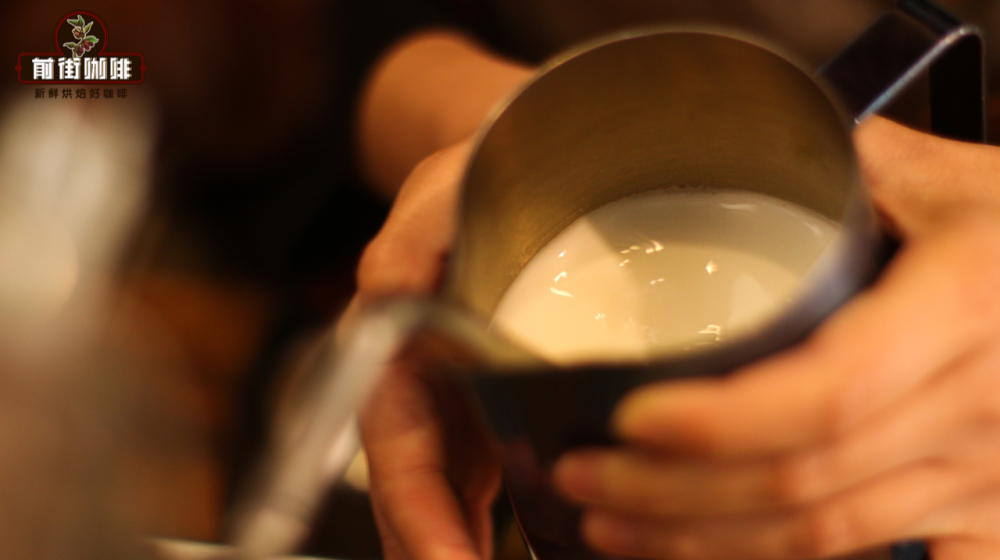
Next, froth the milk. As for the cup, Front Street Coffee uses a 180 ml ceramic cup. The milk should be frothed with as little and as thin milk foam as possible. Pour the frothed milk into the espresso, integrate until eight-tenths full, then gently push out a pattern. Because Flat white milk foam is relatively thin, the pattern easily becomes distorted, so it is recommended to make a relatively simple heart pattern or a dot pattern, or not to do latte art at all.
The Australian white coffee made from the Warm Sun blend presents rich aromas of vanilla, chocolate milk, and whiskey-filled chocolate, with a hint of sweet-and-sour berry notes. It is smooth and mellow on the palate, and the finish is very long-lasting.
The above content is compiled by CoffeeHunters, a coffee news website.


