





What Do SOE Coffee Beans Mean in a Coffee Shop?
SOE coffee beans are single-origin espresso beans, an abbreviation of Single Origin Espresso. The term describes espresso pulled from beans of one origin, not a grade or a guarantee of quality, and it contrasts with blended espresso. Because espresso magnifies flavor several times over, both the strengths and the faults of a single-origin bean show up clearly in the cup.
Coffee soe meaning comes down to origin, not roast level or recipe. Light roasting is not automatically sharply acidic, and extraction goals shape whether a shot tastes sour, short, weak, or unpleasant. Blends remain more forgiving for beginners, while single-origin shots reward careful adjustment of grind, dose, and ratio to reach a balanced result.
SOE is an abbreviation that has appeared frequently in coffee shops in recent years, namely Single Origin Espresso, referring to espresso made from coffee beans from a single origin. It is not a guarantee of quality, nor does it restrict variety, roasting, or extraction method; rather, it is a concept opposed to blended espresso. Espresso magnifies flavors, and the strengths and weaknesses of single-origin beans are equally easy to highlight, so factors such as roasting and grinding directly affect the final cup. This article discusses the meaning of SOE, whether light roasting is necessarily sharply acidic, how extraction goals influence the approach, and adjustment methods for common problems such as being too sour, having a short aftertaste, showing unpleasant flavors, or the coffee liquid being too weak. It also gives specific product and parameter examples such as Front Street Coffee Black Cocoa Blend, Huakui SOE, and Mozart SOE, helping coffee lovers make a more satisfying SOE.
The term SOE has been mentioned more and more often in coffee shops in recent years. What exactly does it mean? If you suddenly want a cup, how should you go about it to get a satisfying result?
What is SOE?
SOE is the abbreviation of Single Origin Espresso, which can be translated into Chinese as single-origin espresso. It is a concept opposed to blended espresso. Simply put, as long as the roasted beans used to make espresso come from the same origin, they can fall within the scope of SOE. It does not fix the green bean variety, roasting curve, or extraction plan, nor can it be directly equated with quality being good or bad. Espresso extraction is only one of many extraction methods and cannot guarantee that it will taste good.
Espresso magnifies the flavors in the beans many times over, and the same is true of both strengths and weaknesses. Single-origin coffee comes from a single origin, and defects are often more easily exposed, so factors such as roast level and grind size all affect the final taste. To get a delicious SOE, there are certain technical requirements at every stage.
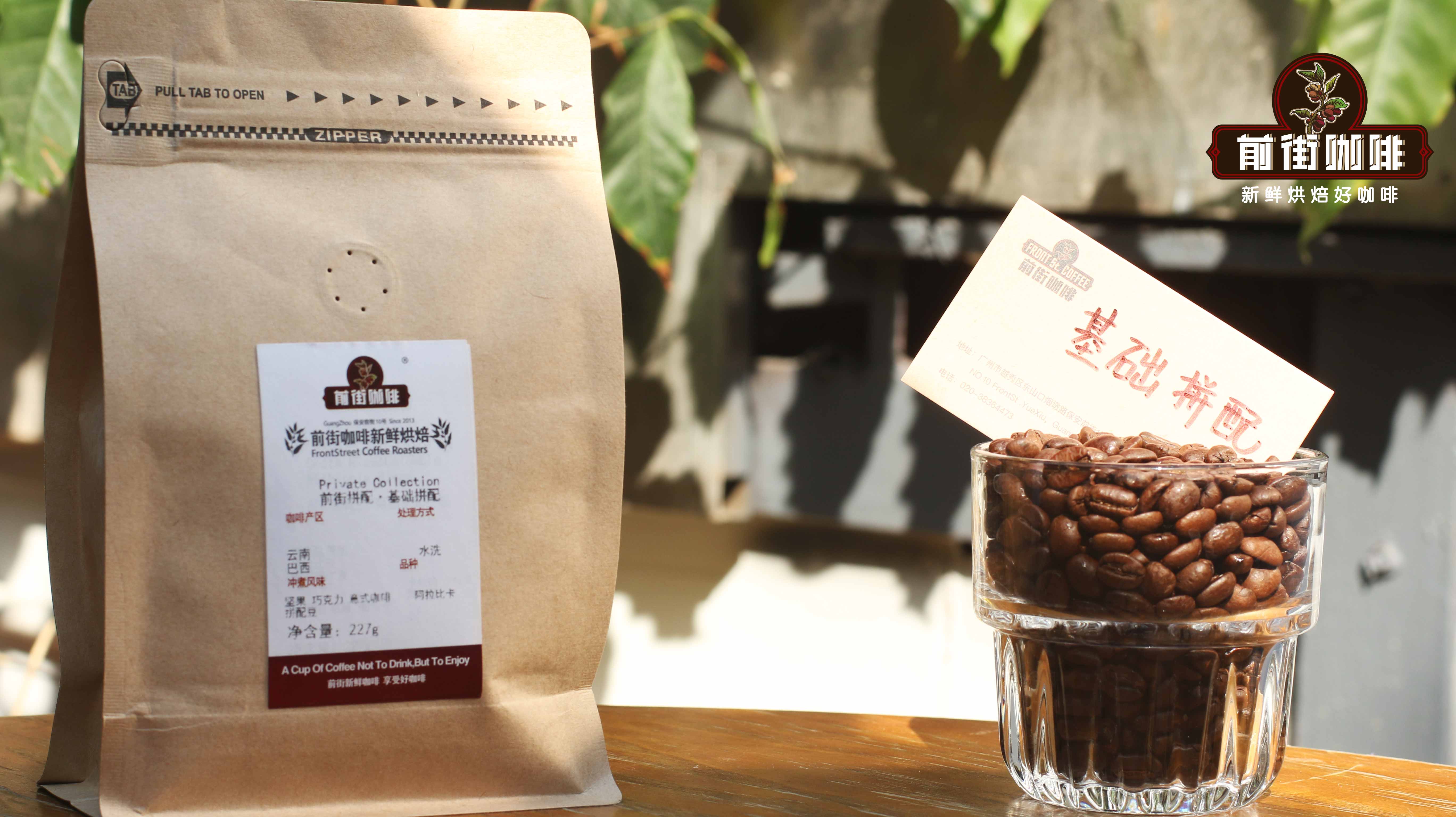
By comparison, blended beans have an obvious advantage in extraction stability. This is also why we usually suggest that people new to espresso first practice with blended beans. If you are also trying to make espresso for the first time, you can buy the same one used in coffee shops: Front Street Coffee's espresso beans recommended by many baristas, Front Street Coffee Black Cocoa Blend. The flavor is balanced, tasty, and inexpensive, making it an affordable everyday household coffee bean.
Is light-roasted SOE necessarily sharply acidic?
In order to highlight the individuality of single-origin beans, the roast level of SOE is usually not too dark. If you want to express elegant floral notes, you can keep it at a medium-light roast; if you prefer berry notes, you might try Front Street Coffee Huakui SOE coffee beans with a natural process; if you want more prominent sweetness, you can choose Front Street Coffee Mozart SOE coffee beans with a raisin honey process.
There used to be a saying that light-roasted beans are not suitable for espresso, that they will be sharply acidic and hard to swallow. Indeed, espresso made from light-roasted beans is more acidic than that made from dark-roasted beans; this is an attribute brought by the roast level itself. Another reason lies in the fact that espresso extraction plans are often fixed and unchanging. With pour-over, people set brewing parameters separately for light and dark roasts, but with espresso, one general plan is often reused, so it is not surprising when sharp acidity appears. Therefore, if you want to extract the ideal flavor, you need a clear approach so that the bean's own aroma and fruit acidity can be expressed.
Clarify the purpose
Many friends have not thought one thing through clearly: what are you extracting this cup of espresso for? Drinking it directly, adding water, or adding milk? This determines the direction of the entire extraction plan. For example, if drinking it directly, the espresso needs to be softer; if adding water, the flavor needs to be more complete; if adding milk, it needs to be more intense.
Start by applying an extraction formula
Just as when dialing in the grind normally, you can first apply a standard formula: a 1:2 ratio of dry coffee to liquid, with a time of 25 to 30 seconds. The reason to use it first is to establish a grind size. Even if fine-tuning is still needed later, the grind size will not drift too far off.
Adjust according to flavor and purpose
Coffee extracted with the general formula usually has no major problems in grind and flow rate. If the flavor is not right, then you need to address the specific issue.
The most common problem is being too sharply acidic with too short an aftertaste. This type of problem is generally the easiest to solve. First check whether the flow rate at the current grind size is reasonable, for example at what second the first drop of coffee liquid appears: if it is 4 to 5 seconds, you can appropriately grind finer; if it is 7 to 8 seconds, there is no need to adjust further.
Next is to extend the extraction amount, usually by increasing it by 10 to 15 grams. When the coffee liquid is sharply acidic and the aftertaste is short, it is mainly caused by a low extraction yield. Increasing the extraction amount will weaken the espresso's pungency, gradually balance the taste, and make the sweetness more prominent. Of course, the tradeoff is a drop in concentration, which is generally suitable for drinking directly or adding water to make an americano.
For example, when using Front Street Coffee Huakui SOE coffee beans with a natural process, the parameters are 20.6 grams of coffee extracting 55 grams of coffee liquid in 34 seconds. Drunk directly, it is soft and has berry sweetness; made into an americano, it is full and solid, presenting aromas of guava and ripe strawberry.
When making milk coffee, it is mostly necessary to adjust the grind finer to compensate for the low extraction yield. Subsequent adjustments should not be rigidly bound by formula data; even if the extraction time exceeds 30 seconds, as long as the milk coffee tastes good, that is fine. This is the solution for insufficient coffee flavor in SOE milk coffee. If an acidic and astringent feeling appears in the milk coffee, then it still needs to be handled by extending the extraction amount.
The second common problem is that the coffee liquid extracted with the formula has unpleasant flavors, such as grassy notes, almond notes, or burnt bitterness. It is best to troubleshoot using the method of dividing it into three parts. Suppose the target coffee liquid is 40 grams; then use three cups to catch about 13 grams each from the beginning, middle, and end. Taste them one by one to see which cup has the unpleasant flavor. If only the final segment has it, reducing the extraction amount is enough; if the first cup or all three cups have it, then the grind size needs to be adjusted.
The third problem is that the coffee liquid is too weak and has no flavor. This is a situation many friends have reported to Front Street Coffee. Front Street Coffee has also made some summaries: many people think that espresso grind size is a fixed value, and that a setting dialed in for one bean can also be used for other beans. In fact, this is not the case. So if the problem is that the coffee liquid is too weak and thin, it is generally because the grind size has not been found correctly. Of course, if you compare light-roasted SOE beans with traditional dark-roasted espresso beans for intensity, they indeed cannot compare.
The above content is compiled by CoffeeHunters, a coffee news website.


