





Is Panama geisha the same as the Artisan variety?
Geisha and the name Artisan refer to the same coffee. The variety was first collected in 1931 in the wild forests of Kaffa, southern Ethiopia, named after nearby Geisha Mountain, and sent to research stations in Kenya, Uganda and Tanzania. It reached Costa Rica's CATIE in 1953, registered as T2722, before moving on to Panama in the 1960s.
Panama geisha became famous through Hacienda La Esmeralda, where the Peterson family noticed the trees survived leaf rust on the Jaramillo farm and replanted them higher. The estate's Red Label and Green Label grades differ mainly in plot selection and lot size, and the cup shows florals and citrus acidity rather than the heavier profile of Blue Mountain.
Geisha is another highly acclaimed and well-known coffee bean after Blue Mountain, often becoming the highest-priced "crown jewel" in coffee shops. Besides the name "Geisha," some people also call it "Artisan" — are they actually the same coffee? What is the historical origin of this bean, and why is it most famous from the Panama region? In this article, Front Street Coffee will walk you through Geisha's varietal origins, flavor characteristics, and the grade differences between Hacienda La Esmeralda's Red Label and Green Label Geisha, taking you from variety and terroir to processing method for a comprehensive understanding of this legendary coffee.
Geisha is probably the most renowned coffee bean after Blue Mountain, and has even become the highest-priced "signature offering" in many coffee shops. Besides the well-known name "Geisha," some also call it "Artisan" — is there really any difference between the two? Behind such a famous Geisha, what story lies hidden? In this article, Front Street Coffee will explain it all for you one by one.
Are "Geisha" and "Artisan" the same coffee?
In 1931, Geisha was first collected in the wild forests of Kaffa in southern Ethiopia, when the goal was to find new disease-resistant varieties, and its name comes from the nearby Geisha Mountain. It was subsequently transferred to research institutions in Kenya, Uganda, Tanzania, and other places for trial planting. In 1953, the Geisha variety arrived at CATIE, the Tropical Agricultural Research and Higher Education Center in Costa Rica, registered as T2722. Many local farms have records of planting it, but Geisha's branches are relatively fragile and its yield is also low, so it did not win farmers' favor and was not widely promoted.
Entering the 1960s, CATIE distributed T2722 Geisha to coffee growers in Panama, and only then did Geisha truly take root in this land of Panama. By the 1990s, the Peterson family, owners of Hacienda La Esmeralda, began to focus on coffee production and bought a new high-altitude farm — Jaramillo. Many coffee trees on the farm were infected with leaf rust, but Daniel Peterson noticed that the Geisha trees were not seriously damaged, so they decided to transplant the Geisha that had originally been mixed with other varieties to more areas of the farm, while also raising its growing altitude.
In 2003, the Peterson family finally discovered Geisha's potential. When they cupped it for the first time, the cup presented a quite intense white floral aroma, an extremely clean mouthfeel, and a finish with berry, citrus, and bergamot-like notes, thus establishing the typical Panama Geisha flavor profile.
Just as everyone was curious about how Hacienda La Esmeralda managed to grow such delicious coffee, the estate owner Price revealed that the variety of this coffee was Geisha, which in Chinese is called "瑰夏." In Taiwan, Geisha is called "藝伎" (artisan), because Geisha's English name happens to share the same spelling as the Japanese word for "geisha."
What are the characteristics of Geisha variety coffee?
Geisha seedlings were initially discovered and collected in the wild forests of southwestern Ethiopia, when the purpose of collection was to find new disease-resistant varieties, and it was named after the nearby Geisha Mountain. In 1954 it was brought to Costa Rica and recorded as T2722. In the 1950s and 1960s, Geisha was trial-planted on many coffee farms in Central and South America, but due to defects such as low yield and fragile plants, it was never widely cultivated. It was not until 2003, when it was discovered by the Peterson family of Hacienda La Esmeralda, and after winning the Best of Panama (BOP) competition in 2004, that the Panama Geisha era officially began.
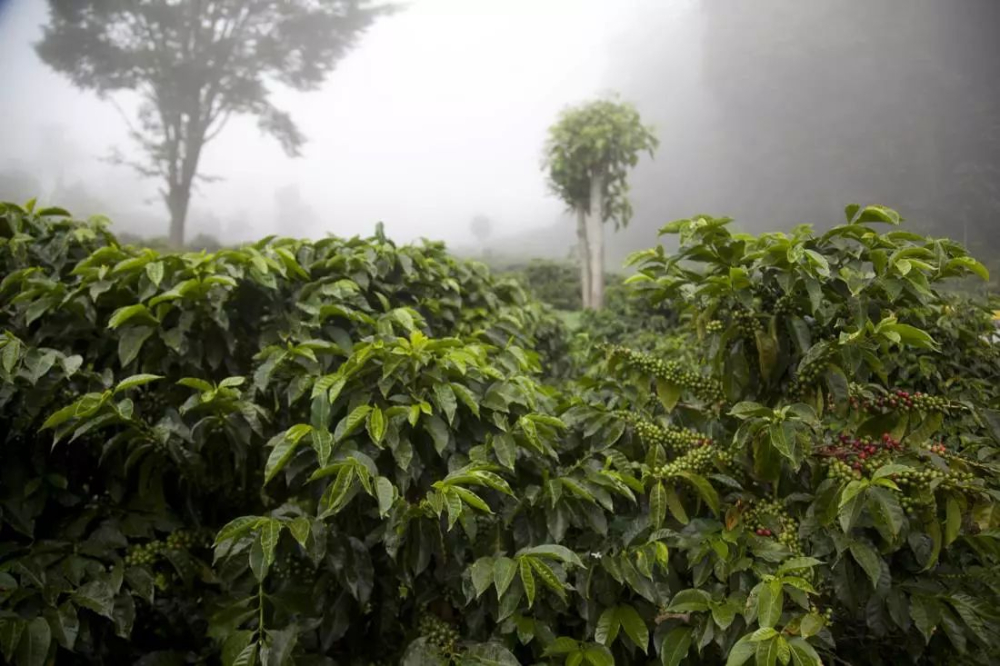
Geisha is very picky about its growing environment, requiring high altitude, fertile soil, and cloud cover or plant shade, and cannot be directly exposed to the sun. The owner of Hacienda La Esmeralda once said that the estate needs a large number of shade trees to block sunlight for the delicate Geisha, and in the early stages of planting, traditional pruning methods must be used, otherwise the plants tend to die. The higher the altitude at which Geisha is planted, the longer the coffee cherries take to mature, and the more complex and unique the flavor expression.
Unlike other coffee varieties, the leaf system of the Geisha coffee tree is very thin, which means its photosynthetic efficiency is very low, and its roots are also fragile, so the absorption of water and nutrients is relatively slow, resulting in a very small coffee yield; combined with the high-altitude growing environment, the cherries also mature later. A single Geisha coffee tree produces only half the fruit of a Caturra variety, which is one of the reasons Geisha is so expensive.
Why is Panama's Geisha the most famous?
As we all know, coffee is a crop, and flavor is not only affected by variety — the terroir conditions of cultivation, post-processing, roasting, and brewing all have a greater or lesser impact on coffee taste. That is to say, even if you plant the same Geisha variety as Hacienda La Esmeralda, you may not necessarily produce the same orange-blossom honey charm. If you are tasting Geisha coffee for the first time, Front Street suggests starting with the Panama region, where Geisha rose to fame. Coffee estates in Panama have accumulated more planting experience with the Geisha variety, and their unique Geisha flavor is more representative.
Panama's coffee-producing regions are mainly concentrated in the Boquete Valley of the western highlands and the Volcán region around Barú Volcano, including Hacienda La Esmeralda, as well as the more familiar Elida Estate, Janson Estate, and Hartmann Estate, all located here.
The Boquete producing region is a town in Chiriquí Province, near the eastern side of Barú Volcano, at an altitude of about 1,000-2,000 meters on a plateau, facing the warm, humid Caribbean monsoon, with the Atlantic cold current at its back, and with high and steep mountain terrain. Barú Volcano National Park is an ecological conservation area with rich biodiversity, seven microclimates, and is shrouded in mist year-round with abundant rainfall, creating excellent local planting conditions. Thanks to its unique terroir conditions, the Geisha coffee here absorbs various essences and transforms them into elegant floral and fruity notes and layered, varied acidity, so it naturally appears frequently in major competitions and wins excellent rankings.
What grade is Red Label Geisha?
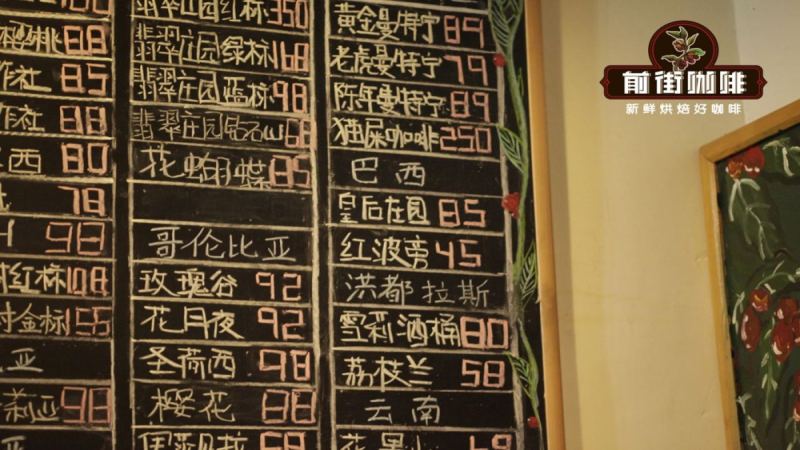
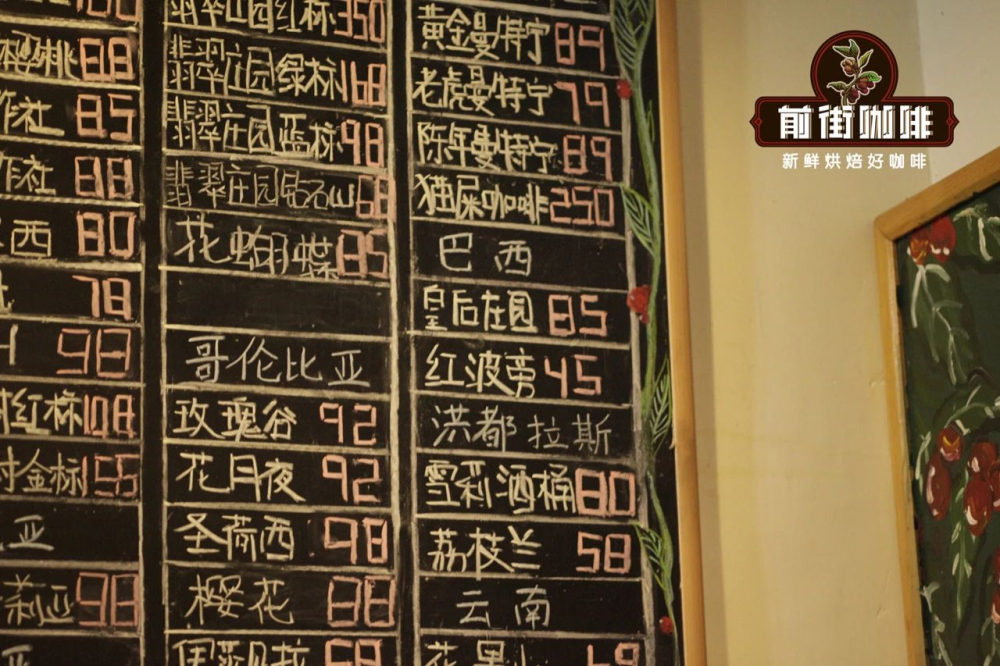
On Front Street's bean list, there are about 10 Geisha coffees to choose from, and among those from the Panama region, Hacienda La Esmeralda's Red Label Geisha and Green Label Geisha have the most classic Geisha flavor. So what do "Red Label" and "Green Label" mean?
The so-called Red Label is the Esmeralda Special grade (including auction lots). The highest-grade Red Label is picked from high-altitude Geisha (1,600-1,800 meters) coffee cherries, with a cupping score exceeding 90 points, mainly from the two farms Jaramillo and Cañas Verdes. Although the altitude poses challenges for cultivation and harvest, the floral and fruity charm of Geisha in the Boquete producing region is the most prominent. Hacienda La Esmeralda holds an independent auction event, and among the divided plots, the Red Label lots put up for competition are called auction lots. Auction lots have a unique number, and each number corresponds to the entire lot of a plot. The one we hear most often is probably the Mario plot of Jaramillo farm. The Esmeralda Red Label Geisha coffee beans that Front Street has obtained come from the Mario plot and use natural processing.
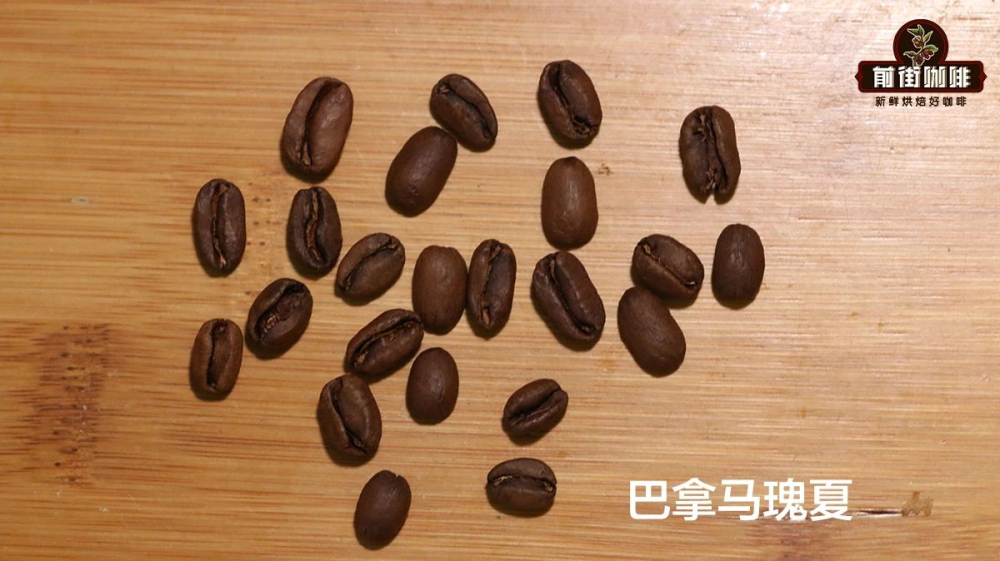
Front Street Coffee: Esmeralda Red Label Geisha Coffee Beans
Region: Boquete, Panama
Estate: Hacienda La Esmeralda, Cañas Verdes
Altitude: 1,700+ meters
Variety: Geisha
Processing Method: Natural
Flavor: Lemon, honey, berries, orange peel, mango, cream, citrus
Green Label refers to Private Collection. Green Label is selected from growing altitudes of 1,600-1,800 meters, all picked from the two plots Jaramillo and Cañas Verdes, but Hacienda La Esmeralda does not specifically identify the plot information, so it also does not participate in auctions. Although its grade is not as high as Red Label, it mainly expresses the iconic classic flavor of high-altitude Geisha. The Green Label Geisha that Front Street has obtained uses washed processing, and its cupping performance shows fresher, more natural flavors of lemon, berries, pomelo, and Tieguanyin tea.
Professional coffee knowledge exchange. For more coffee bean information, please follow Coffee Workshop (WeChat public account cafe_style).
For more specialty coffee beans, please add the private WeChat of Front Street Coffee: qjcoffeex.
The above content is compiled by CoffeeHunters, a coffee news website.


