







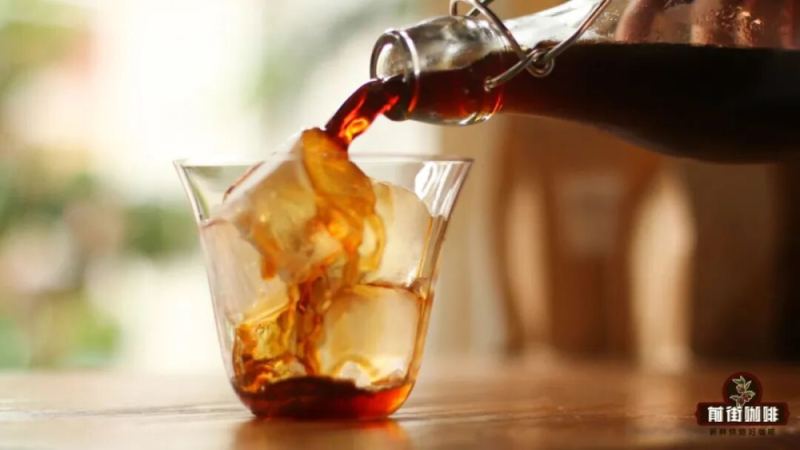
Why does cold drip coffee cost more than an iced americano?
Cold drip coffee uses low-temperature water like cold brew, but the two share almost nothing else. Cold brew is simple steeping: grounds and water rest in the fridge for hours, then get filtered. Cold drip needs a three-tier tower holding ice water, coffee grounds and the finished liquid, relying on a valve-controlled drip rate for continuous, multi-pass extraction.
That equipment and slow cycle explain the price gap. In one shop an Americano sells for 23 yuan while a smaller cold drip serving costs 40 yuan. Grind calibration, drip rate, coffee-to-water ratio and maturation time are the four variables to control, and light roasts and medium roasts need different settings, especially if you are asking how much water goes into an iced americano by comparison.
Cold drip coffee often sells for more in cafés than iced Americano and iced pour-over, sometimes in a smaller serving. What's behind this? Although it and cold brew both use low-temperature extraction, their production logic is completely different. Starting from Front Street's hands-on experience, this article breaks down the four key variables of cold drip coffee—the structure of the equipment, grind calibration, drip rate, coffee-to-water ratio, and maturation time—and gives specific parameter recommendations for light-roast and medium-roast beans. Whether you want to understand why cold drip is expensive or are planning to get a cold drip tower and try it at home, this article offers a clear operational reference.
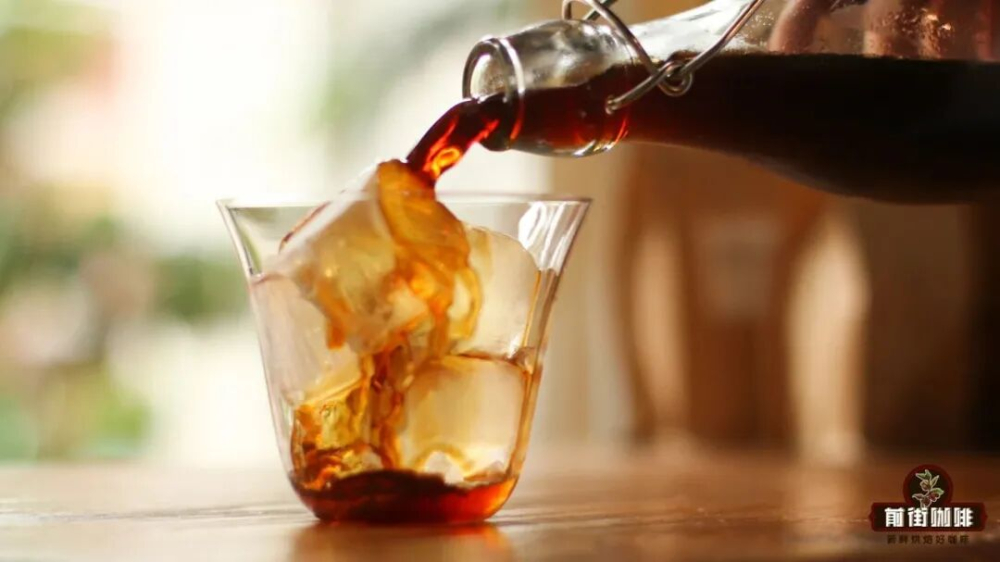
Many coffee lovers have noticed this: cold drip coffee, like iced Americano, iced latte, and iced pour-over, falls under the broad category of iced coffee, yet its price is usually a notch higher while the cup is smaller. Take Front Street's store as an example: an Americano sells for 23 yuan, while a serving of cold drip costs 40 yuan—a difference of more than ten yuan. Where exactly does this price gap come from?
Beyond the price gap, the long production cycle of cold drip coffee also adds a touch of mystery to it.
Although cold drip and cold brew both use low-temperature water to complete extraction, their operating procedures and extraction mechanisms have almost nothing in common. Cold brew, put simply, is cold steeping—mix coffee grounds and water directly, leave it in the fridge for several hours, then filter out the grounds. As long as you have coffee beans or grounds on hand, anyone can make a pitcher of cold brew at home.
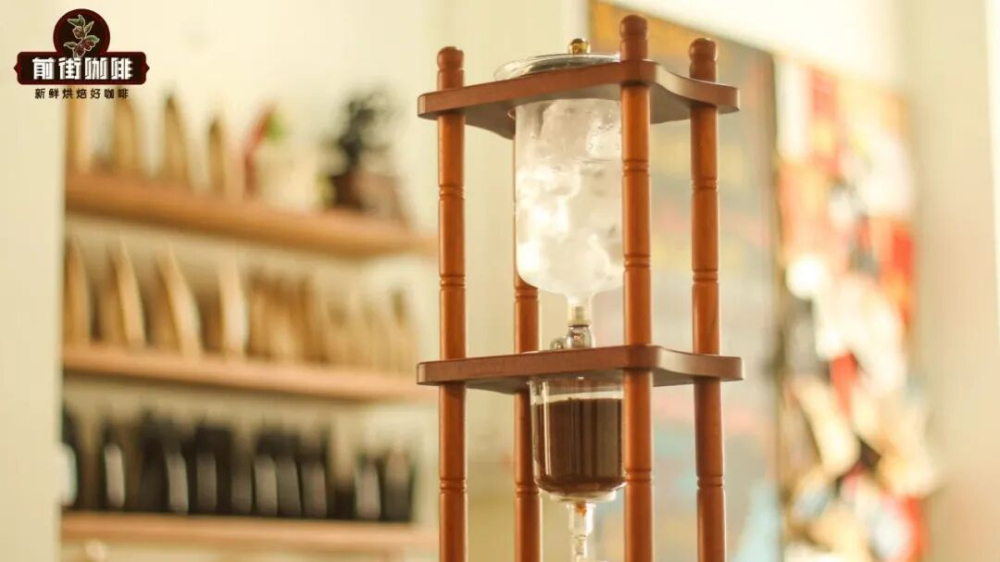
Cold drip is a completely different matter. A standard cup of cold drip coffee is inseparable from a dedicated piece of equipment—a cold drip tower. This device has three tiers, top to bottom, holding ice water, coffee grounds, and the drip-filtered coffee liquid respectively; it is essentially a continuous, multi-pass extraction method.
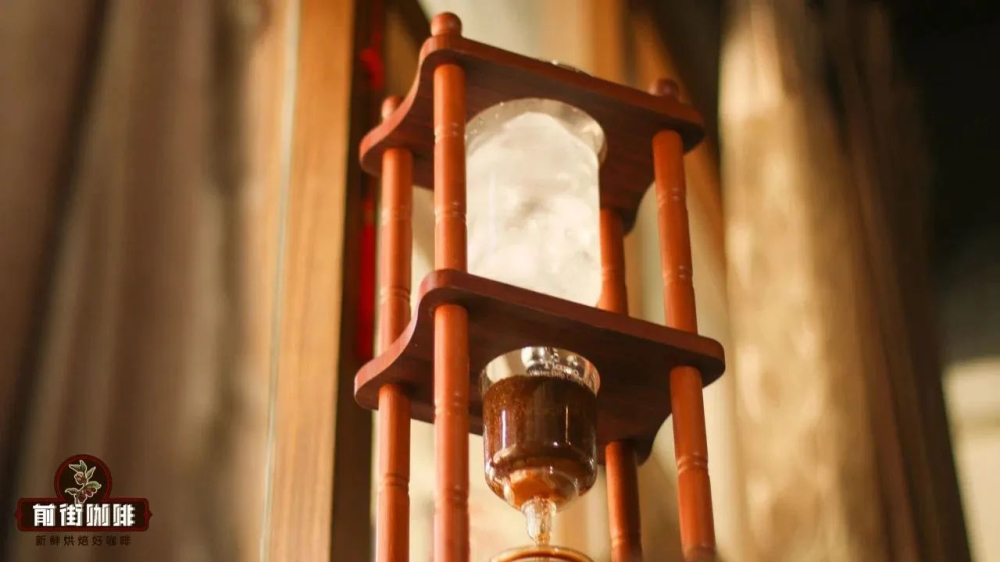
As the name suggests, cold drip coffee emphasizes both "cold" and "drip." The bottom of the upper chamber holding ice water must be fitted with a valve that can adjust the water flow rate, keeping the coffee grounds in a state of extraction throughout. When the coffee liquid reaches the target extraction amount, or all the ice water has dripped into the coffee bed, extraction is complete. But at this point the coffee isn't ready to drink yet—it needs to be refrigerated for a period of fermentation and maturation before the flavor becomes mellow, smooth, and layered.
Taken together, making a standard cold drip coffee requires dedicated equipment, constant attention to whether the drip is steady, careful control of various parameters and details, plus a long wait for fermentation. By comparison, cold brew is almost "so easy anyone can do it," and the barrier to making cold drip is clearly much higher—which is why most people don't choose to make cold drip at home.
Front Street has mentioned many times in past articles that different water temperatures extract different flavors from coffee, and that in a low-temperature environment the astringent compounds in coffee are not easily released. Cold drip and pour-over both belong to drip-style extraction; the difference is that cold drip uses ice water below 5°C as the solvent, so it can be understood as a kind of low-temperature drip coffee.
Based on Front Street's hands-on experience, the production time of cold drip depends mainly on four variables: drip rate, coffee grind size, extraction ratio, and maturation time.
1. Coffee grind size
Grind coarseness needs to avoid two extremes. If the grounds are too coarse, the coffee bed offers little resistance, water passes through more easily into the lower chamber, and since cold-water extraction efficiency is already low to begin with, the coffee ends up weak and flavorless. Too fine is also no good: increased resistance causes clogging and water pooling, and overly long steeping brings out bitterness.
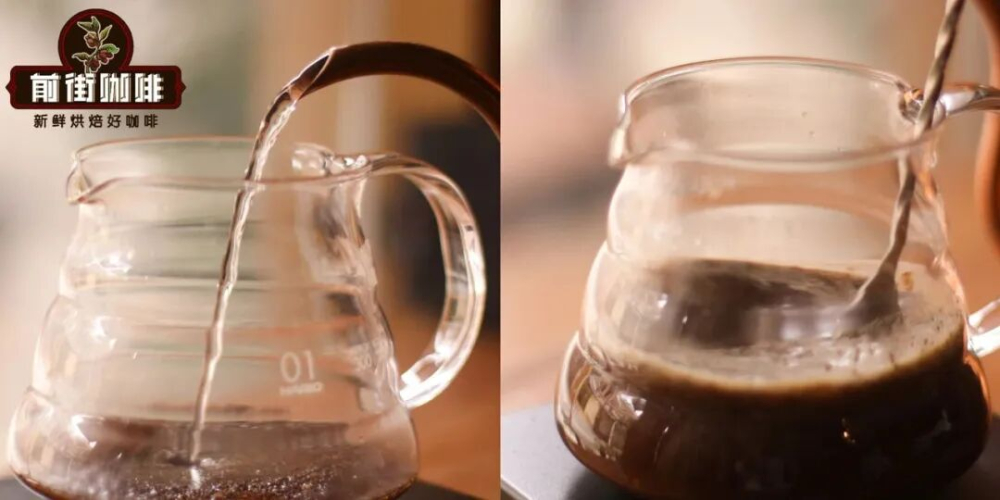
When calibrating cold drip grind size, Front Street uses a No. 20 (0.85mm) standard sieve. The grind sizes of common extraction methods, from fine to coarse, rank as follows: cold drip (cold brew) > pour-over (syphon) 80% > Americano drip 75-80% > cupping 70-75% > French press 65-70%. In other words, cold drip should be ground somewhat finer than pour-over, with a pass-through rate of about 83-85%.
2. Drip rate
During the drip process, new cold water continuously passes through the coffee bed and filters out fresh coffee liquid. Unlike cold brew's static steeping, cold drip is a dynamic brewing method that extracts and filters at the same time. To avoid interrupting extraction, the water droplets must contact the coffee bed at a steady rate to produce a cold drip coffee with both good concentration and mouthfeel.
This shows that controlling the drip rate is an extremely critical step in making cold drip. If the drip is too fast, extraction is insufficient and the coffee is thin and lacking in aroma; if too slow, it easily over-ferments, producing unpleasant acidity or off-flavors.
According to Front Street's experimental results, when using light-roast beans you can open the valve to 7 drops per 10 seconds to highlight the light floral and fruity aromas, as with Front Street Red Cherry and Front Street Little Tomato; if using medium-roast beans for cold drip, such as Front Street Sidra and Front Street Strawberry Candy, Front Street recommends keeping the flow rate slower at 5 drops per 10 seconds, which gives the finished cup a rounder body and a more pronounced fermented character.
3. Extraction ratio
The coffee-to-water ratio not only affects production time but, more importantly, determines the coffee's concentration and extraction yield. Considering that the finished drink needs ice to stay cold, Front Street habitually uses a 1:10 ratio when making cold drip. For those who prefer a lighter mouthfeel, Front Street recommends 1:12 to 1:14, which makes an iced coffee better suited to drinking straight.
4. Maturation time
Many people have experienced this: even under completely identical extraction conditions, cold drip coffee shows noticeably different flavors depending on how many days it has been stored.
After freshly made cold drip is placed in the fridge, the substances inside the coffee enter a slow, controllable fermentation process. After several hours of settling, the mouthfeel becomes clear and sweet; by days 3 to 5, the fermented flavor is at its most prominent; from day 6 onward, the flavor compounds dissolved in the water keep changing, some aromas gradually dissipate, and the acidity is no longer bright. Therefore, considering both flavor performance and drinking safety, Front Street recommends finishing cold drip coffee within 5 days of making it.
How long does it take to make a cup of cold drip coffee?
Take a roughly 200ml cup of Front Street Red Cherry cold drip as an example: using a 1:10 coffee-to-water ratio, you need 20g of coffee grounds and add 240g of ice water (the grounds will absorb twice their own weight in water), set the valve flow rate to 7 drops per 10 seconds, and it will finish dripping in about 2.5 hours.
However, since cold drip is not efficient to make, you usually don't make just one cup—you make as much as the equipment can hold. Take the equipment used at Front Street's store as an example: the lower chamber holds up to about 650ml of coffee liquid, so each batch is made in the amount of three cups—that is, 60g of grounds dripping out 600g of coffee liquid, with the valve at 7 drops per 10 seconds, taking about 7 hours to drip. Afterward, the coffee liquid is refrigerated overnight and can be put on the shelf for sale the next day.
So when someone asks, "How long does it take to make a cup of cold drip coffee?", answering "a day and a night" doesn't seem wrong at all.
The above content is compiled by CoffeeHunters, a coffee news website.


