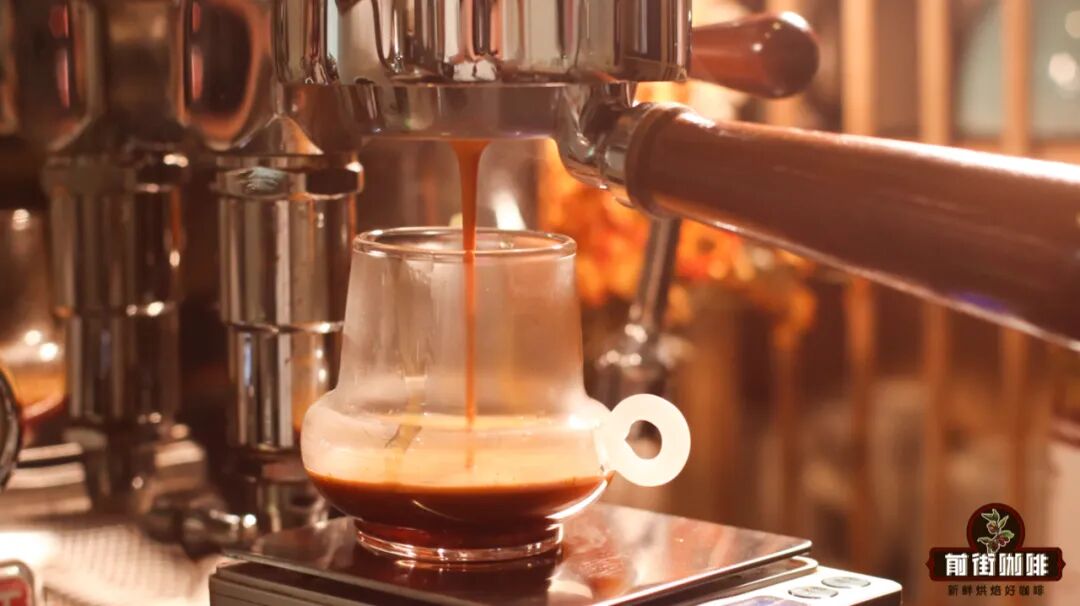
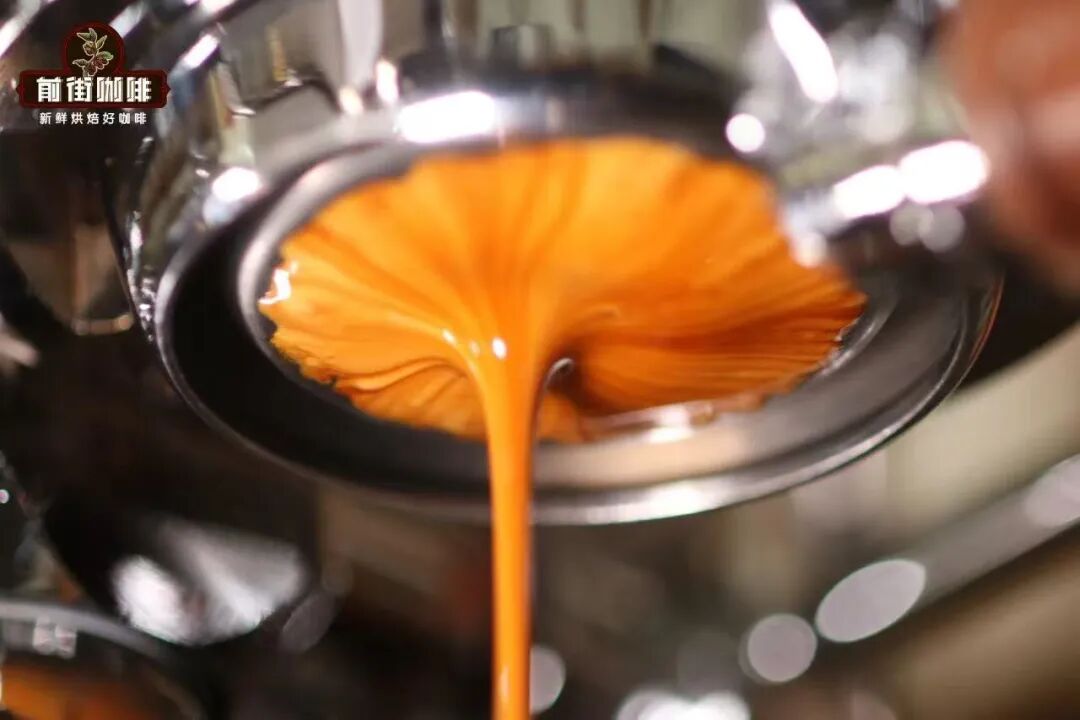
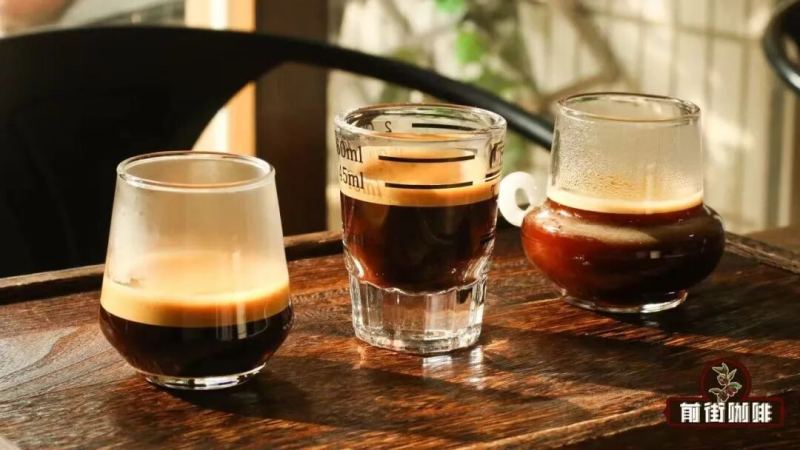
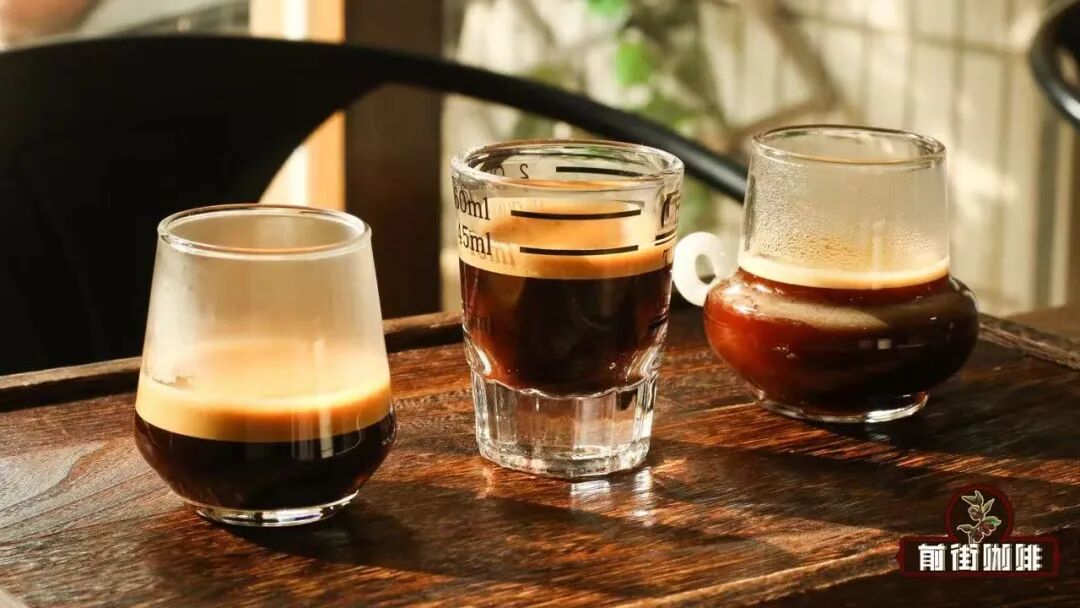
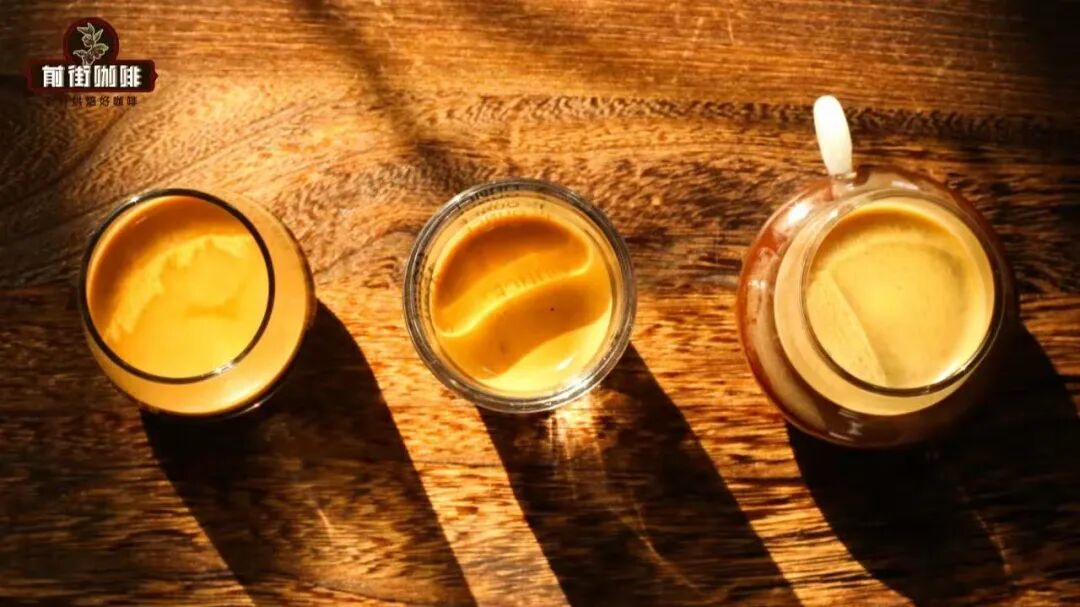
Recently, many specialty coffee shops have started selling a "niche" coffee — the "Lungo." For friends who haven't delved deep into coffee,Lungois quite unfamiliar, so lately people have often been asking Front Street Coffee what a Lungo is.Honestly, Front Street Coffee thinks the reason everyone finds it unfamiliar is mainly the name "Lungo." But if we call it by its other alias, "Lungo," or "Longo," Front Street Coffee believes everyone will no longer find it unfamiliar.In"How to Properly Extract the Big Three of Espresso", Front Street Coffee shared: the espresso extracted from an espresso machine doesn't come in just one version. Besides the common espresso version, there's also the short-extraction Ristretto and the long-extraction Lungo. The difference between them lies mainly in the change in extraction liquid volume and the coffee concentration and extraction yield affected by the liquid volume.From left to right: Ristretto, Normale (regular espresso), Lungo1:2 is the most commonly usedbrew ratiowhen we normally extract espresso. For example, if using 20g of coffee grounds, you need to extract 40ml of coffee liquid. Espresso extracted at this ratio will have a relatively high concentration and extraction yield, and the coffee will taste both rich and balanced; if you reduce a certain amount of liquid output on the regular basis, the resulting espresso is a "Ristretto." Because the concentration is higher but the extraction yield is relatively lower, Ristretto tastes strong without being bitter and has a higher sweetness;And if you increase a certain amount of liquid output on the regular basis, the resulting espresso is a "Lungo." Compared to the previous two, the Lungo's concentration is much lower, so it doesn't taste as "intense" as the other two — it's more gentle, and at the same time the coffee's flavors can be showcased due to the low concentration, making them easier for us to capture.The emergence of the Lungo was actually much earlier than everyone might imagine. Before the current version of espresso appeared and became widespread, the Lungo already existed. In the early 20th century, the world's first true espresso machine was invented. Not long after, the word "Espresso" was included in the Italian dictionary, and its translated meaning is:“coffee made with a pressurized machine or filter."But coffee machines back then weren't that powerful yet. Although they already had a pressurization function, the pressure was only 1.5~3 bar, just like a moka pot. Friends who have used a moka pot will know that such pressure obviously can't produce the higher-concentration espresso we commonly see today. So if you wanted the coffee to have a sufficiently rich taste, the only way was to increase the liquid weight to raise the coffee's extraction yield. And that is what we now know as the Lungo. It wasn't until the mid-20th century that the appearance of lever espresso machines allowed pressure to increase to 9 bar. The 9 bar pressure not only made espresso extraction faster and more concentrated, but also gave it a thick, golden layer of crema on the surface. From then on, the espresso system gradually became established. All kinds of espresso drinks took Espresso as their base link, and then definitions and standards for various espresso drinks appeared. Lungo and Ristretto were defined starting from this time.Even in the era of orthodox espresso, the Lungo did not disappear. In Italian, Lungo means "long" or "extended," so we can understand it as an extended version of Espresso, i.e., a long extraction. If you ask why they kept the Lungo instead of simply diluting espresso with water, then the answer is, of course, that European gentlemen have their own consistent way of doing things
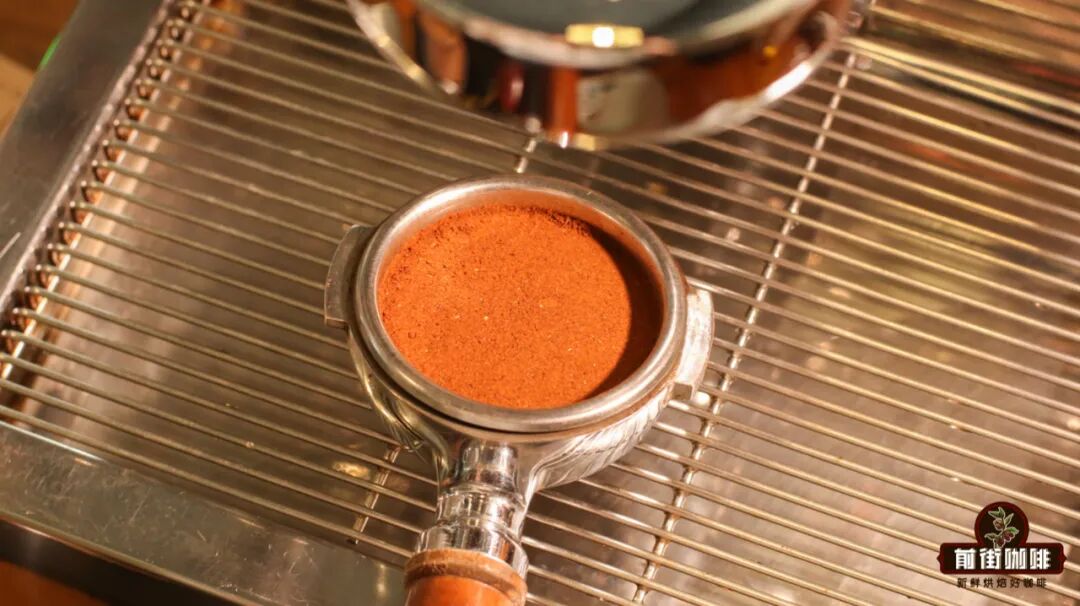
 (those who know, know).As Front Street Coffee mentioned earlier, the Lungo's liquid volume is greater than that of Espresso. The brew ratio it uses is generally 1:4, 1:5, or even more. And its advantage, as Front Street Coffee introduced, is that because the concentration isn't that high, the taste isn't too concentrated — it drinks more gently, and the flavors are easier to capture.But we need to know that a Lungo isn't simply about increasing the amount of extracted liquid on top of espresso. With such an approach, it's obvious that the coffee will suffer from excessively high extraction efficiency due to the large increase in liquid volume and time, and the undesirable substances in the coffee will be extracted, filling it with prominent bitterness.So if we want to make a good Lungo, we need to readjust the coffee parameters, especially the grind size. Generally speaking, the grind size used for extracting a Lungo is relatively coarser, with the aim of increasing the gaps between the grounds so that the flow rate can be increased. This shortens the extraction time and lets the coffee avoid the risk of over-extraction.But things aren't that simple. After the grind is coarsened, because the gaps between the grounds increase, the coffee is more prone tochanneling. So after we finish extracting a Lungo, we often see coffee liquid splattered everywhere, as well as a "half-baked" puck(half of it is not even wet), and the coffee's taste isn't as good because of the uneven extraction. Therefore, for a long time, the Lungo wasn't very popular. It wasn't until the widespread adoption ofpressure profilingthat the Lungo returned to people's view.By adjusting the pressure during extraction, channeling occurs far less often, making extraction more stable, and the Lungo's taste is no longer unpredictable.Most crucially, this approach to the Lungo gives the coffee grounds' grind size a relatively high tolerance. Unlike regular espresso or Ristretto, which have extremely high requirements for grind size — with every bean needing its own dedicated grind size — it only needs to fall within a rough range.Because of this, even when using different coffee beans to make a Lungo, there's no need to equip them with a dedicated grinder — one grinder can handle it all. This not only shortens the coffee-making time but also gives customers more diverse choices, and the Lungo's flavor performance is no inferior to other black coffees, so more and more coffee shops have started making Lungo coffee.It's worth mentioning that making a Lungo like this does involve a certain degree of difficulty. The shop needs to have a sufficient understanding of the beans and extraction. If the understanding isn't deep enough, the Lungo coffee produced will easily end up flavorless and thin, or unevenly extracted. So it's also a test of the barista's skill~
 The above content is compiled by CoffeeHunters, a coffee news website.








 (those who know, know).