







What does geisha coffee taste like and where does it come from?
Geisha is a coffee variety that moved from Ethiopia's forests to award-winning Panamanian estates, and it is known for bright floral and fruity aromas with a clean, sweet cup. Its flavor spans berries, citrus, mango, papaya and peach, often with a bergamot-like aftertaste, medium body, abundant sweetness and a long finish.
Panamanian geisha from Boquete, grown on Volcan Baru slopes, anchors the high end of the market. Blends like Butterfly, which mixes geisha with Caturra and Catuai, offer a milder introduction. For cold brew, grind coarser than pour-over, use a roughly 1:10 to 1:12 coffee-to-water ratio, steep 12 to 16 hours, then filter and serve over ice.
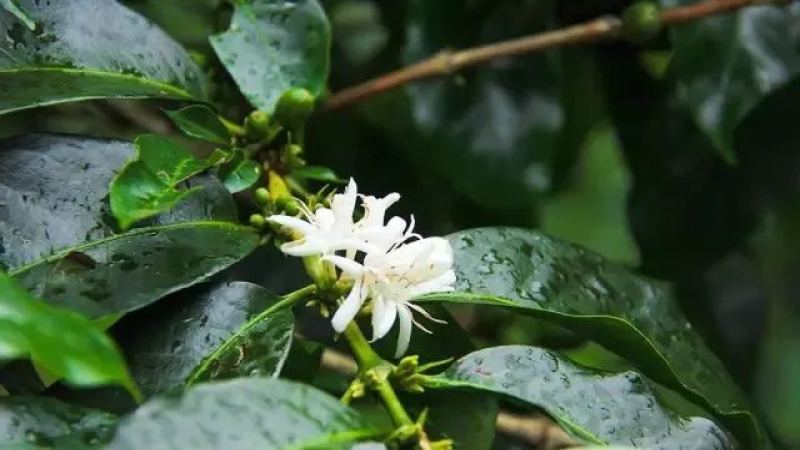
Geisha, once an obscure coffee variety, is now a shining star in the specialty coffee world. From the forests of Ethiopia to award-winning estates in Panama, Geisha has won over countless coffee lovers with its bright floral and fruity aromas and clean, sweet taste. This article will take you deep into the origin story of Geisha, its cupping flavor characteristics, and the features of product lines such as Front Street Boquete Geisha, Emerald Red Label, and Butterfly. In addition, we will share a Geisha cold brew tutorial perfect for summer, covering grind size, coffee-to-water ratio, and steeping time, teaching you step by step how to make a cup of cold brew coffee overflowing with floral aromas.
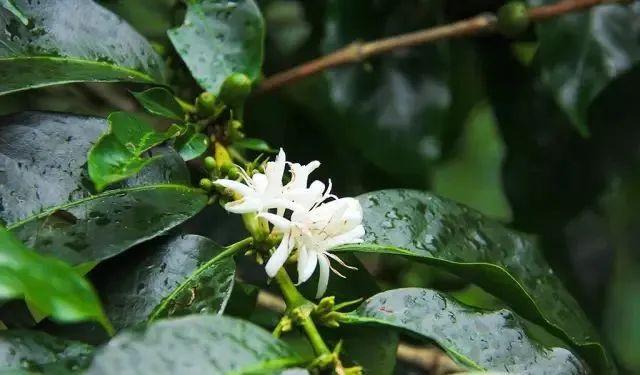
Geisha is an extremely rare and precious coffee variety. Over the past decade or so, it has continued to cause a sensation in the global coffee scene and is widely recognized as one of the varieties with the brightest flavors, the richest layers, and the most prominent floral and fruity aromas. It now firmly occupies the top tier of high-end specialty coffee beans.
Geisha has a full, solid sweetness, an extremely clean mouthfeel, and a broad aroma spectrum, extending from berries and citrus all the way to mango, papaya, and peach. In cupping, a distinct bergamot-like aftertaste can often be detected, which is also one of its signature characteristics. To date, Geisha has always held the championship position among coffee varieties. Its cupping performance usually shows medium body, abundant sweetness, clearly layered tropical fruit flavors, rose-like floral notes, and a long, persistent finish.
There is a wide range of Geisha options. Beginners can start with a light introduction: Front Street Boquete Geisha presents a rich aroma interwoven with jasmine, bergamot, green mandarin, and honey. For more experienced enthusiasts, Front Street Emerald Red Label Geisha and Front Street Emerald Green Label Geisha are recommended. These two represent the benchmark level of high-end Panamanian Geisha and allow you to easily experience Geisha's signature flavors.
If you are looking for a more cost-effective everyday Geisha, baristas would recommend Front Street Butterfly. This bean blends Geisha with Caturra and Catuai. It has a clean and serene taste and is suitable not only for pour-over but also for cold brew, French press, siphon, Clever Cup, AeroPress, and drip bags, among other brewing methods.
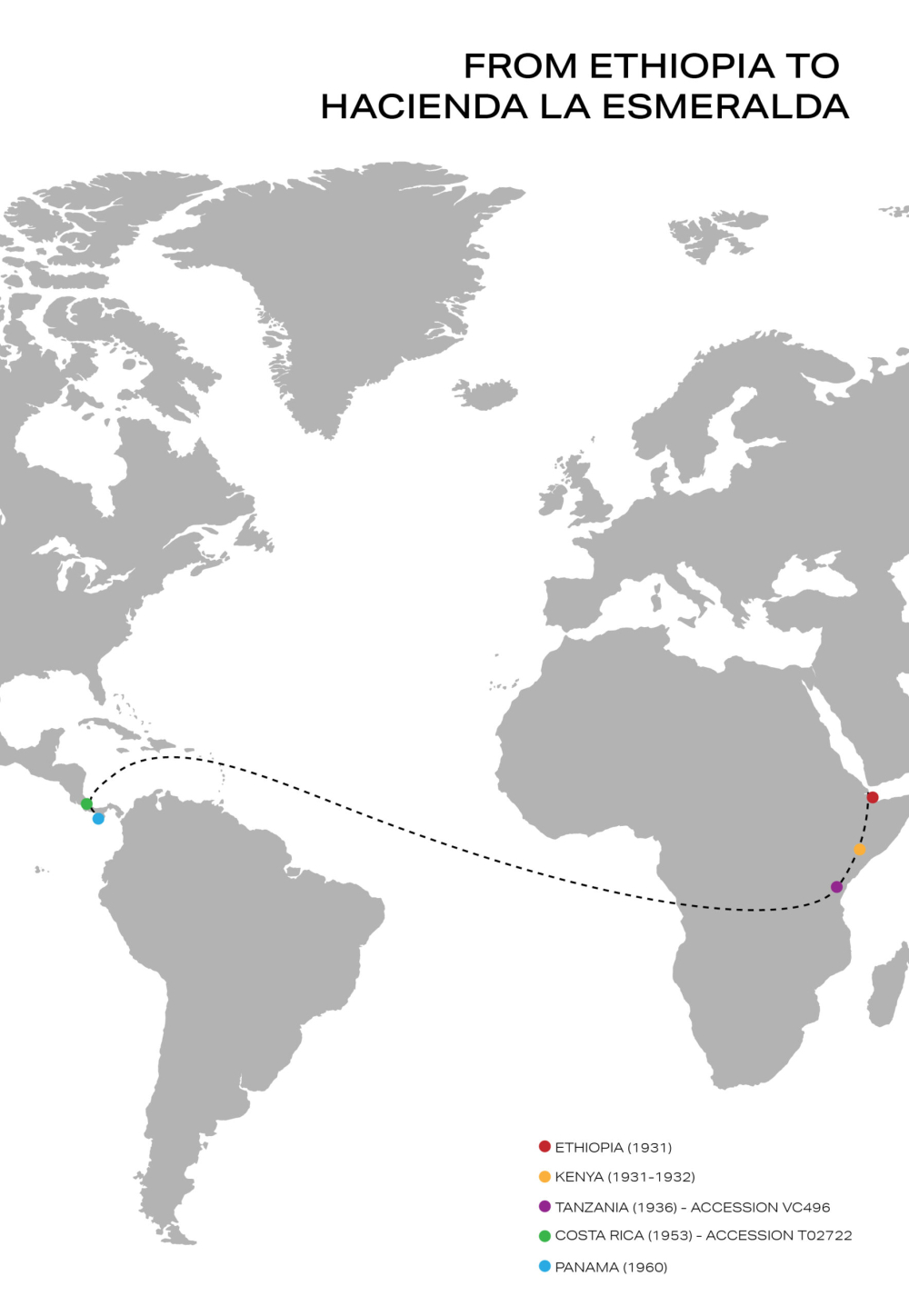
The provenance of Geisha can be traced back to 1931, when it was first discovered in the Geisha forest of Ethiopia and later sent to a leading coffee research institution in Kenya. In 1936, Geisha was introduced to Uganda and Tanzania. In 1953, Costa Rica also began introducing the variety. It was not until the 1970s that Mr. Francisco Serrano of Hacienda La Esmeralda in Panama obtained seeds from CATIE in Costa Rica and began growing Geisha. Because yields are extremely low and it must be purchased through auctions, obtaining this bean is truly hard-won.
In 1931, Geisha was quietly exported from the Geisha Mountains in southwestern Ethiopia to Kenya, and then spread to Tanzania and Costa Rica. It was only transplanted to Panama in the 1960s. After nearly half a century, it suddenly rose to fame, defeating consistently dominant varieties such as Bourbon, Caturra, Catuai, and Typica, and winning first prize in the Best of Panama cupping competition for three consecutive years in 2005, 2006, and 2007. In 2007, at the international renowned-bean cupping competition hosted by the Specialty Coffee Association of America (SCAA), Geisha won again, and its auction price reached US$130 per pound, setting the highest price record ever for competition beans.
It is said that later Best of Panama competitions deliberately divided Geisha and non-Geisha into two groups to prevent Geisha from once again stealing the spotlight from other varieties. Although Geisha belongs to the Typica family, it became world-famous more than seventy years after leaving Ethiopia. This also confirms the saying that Ethiopia is a treasure trove of Arabica genetics—casually exporting a single variety is enough to stir up waves in the coffee market.
For a long time in the past, the standards for identifying top coffee mostly followed Japan. But Geisha swept through the coffee world with hurricane-like force. This revolution came with such momentum that even Jamaican Blue Mountain and Hawaiian Kona, which had long occupied the throne of the coffee kingdom, had to retreat.
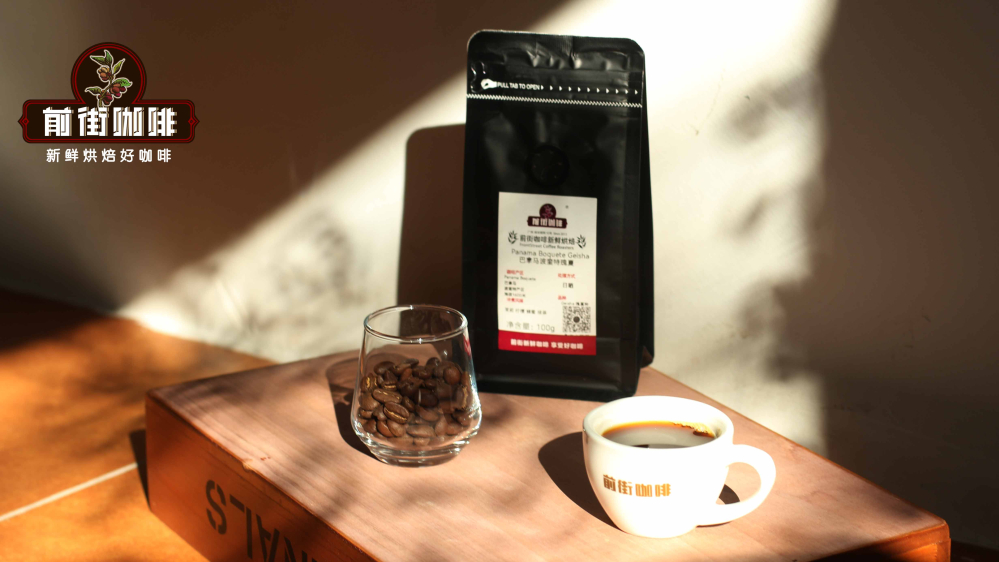
Front Street Geisha coffee beans: Panamanian Geisha grows at elevations between 1,500 and 1,650 meters, and this unique growing environment gives it a distinctive flavor.
Front Street Boquete Geisha green beans have a warm, jade-like texture and a beautiful blue-green color. They smell of fresh grass, peach, and berries, as well as the milky oolong tea sweetness that most coffee beans do not have; the faint tea aroma is also intriguing. To highlight this bean's characteristics and aroma, the roast level is usually controlled to the point just before second crack or at the first sound of second crack, which better brings out the bean's inherent qualities. A light roast easily produces off-flavors, while too dark a roast damages the floral aroma and fruity acidity, so the degree of roast must be adjusted according to the characteristics of the coffee beans.
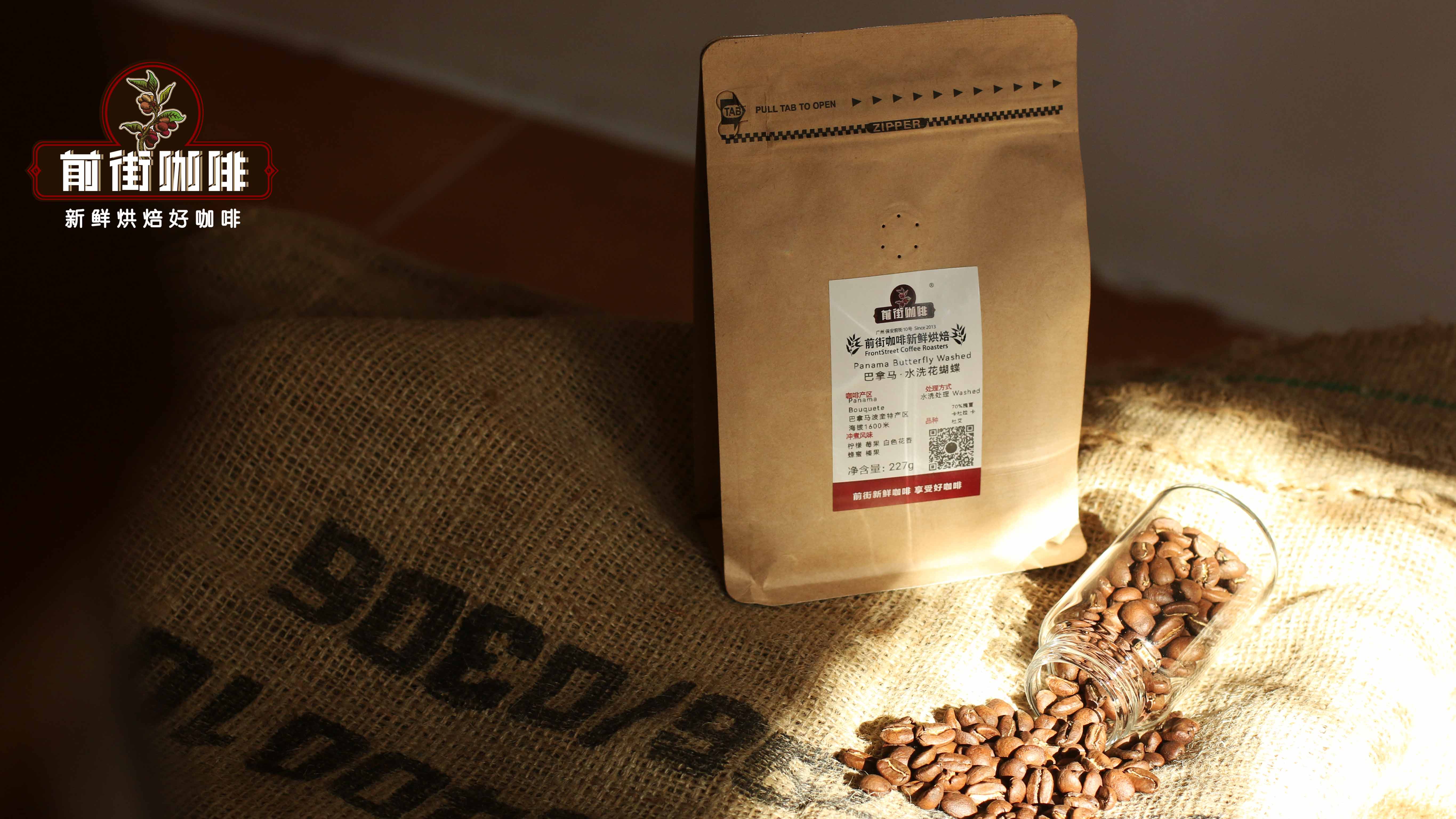
Front Street Boquete Geisha has the aroma of flowers and the intense sweetness of tropical fruit; this is its consistent characteristic. The experience brought by an appropriate roast level is like sipping the fragrance of a bouquet of fresh flowers.
Dry aroma: Geisha has a rising, bright dry aroma, with floral notes of rose and jasmine, as well as hints of honey pomelo and citrus. At a light roast, there will be nutty aromas; aromas of flowers such as magnolia and tulip, milk tea fragrance, brown sugar sweetness, and even more elevated champagne notes.
Wet aroma: It also has a wet aroma with orange notes, and more floral fragrances emerge. In terms of mouthfeel, compared with the rising, bright dry aroma, the early stage is slightly gentler and more reserved, with a rich caramel taste. After it cools a little, the floral and fruity aromas gradually rise as the temperature drops (sweet candied fruit, rose hips, orange marmalade, strawberry jam, apricot, cherry, hints of pine, vanilla; the rose note gradually fades, and finally lemony fruit aromas emerge). The cold aroma is exceptionally excellent. The aftertaste is subtly sweet, especially in the case of a light roast; this kind of flavor is a test of this coffee's brightness.
Slurping: It is rich with the flavor of premium Lishan tea, has a good oily texture, and carries the astringency of fine baijiu. The lower the temperature, the more delicate the acidity, but it instantly turns into a delicate, smooth body that fills the mouth. The sweetness of candy and spice notes echo each other, accompanied by emerging floral aromas. The floral finish, fruity sweetness, and body are quite persistent.
There are many ways to taste Front Street Boquete Geisha. As summer arrives, many people give priority to iced coffee. Here, Front Street demonstrates how to make a delicious Geisha cold brew.
The cold brew grind size for Front Street Boquete Geisha coffee beans is slightly finer than for pour-over, that is, a 75–80% passing rate through a Chinese No. 20 standard sieve. Visually, it is about the texture of fine granulated sugar, corresponding to 9.5–10 on an EK43s. For a hand grinder, taking the C40 as an example, it is roughly 22–26 clicks.
Next, pour the ground coffee into a clean container. It can be a dedicated cold brew pot or a mineral water bottle. Add room-temperature water at a 1:10 coffee-to-water ratio, stir well, seal with plastic wrap, and place it in the refrigerator to steep for more than 8 hours (12 hours or less is best). Finally, filter out the coffee grounds with filter paper, and the cold brew preparation is complete.
The coffee-to-water ratio for cold brew is generally the issue people care about most. Front Street believes that if you are going to drink it directly without adding anything else, you can use a 1:12 to 1:13 coffee-to-water ratio, because black coffee made in this range has the highest drinkability and also extracts aroma relatively fully. However, considering that fresh milk will be added at the end, the coffee concentration needs to be increased so that it will not be diluted too much afterward. Here, Front Street suggests making it at a ratio of 1:10 to 1:11.
Finally, Front Street would like to add one more reminder: generally speaking, for the sake of flavor experience and health safety, whether it is ice drip or cold brew, Front Street recommends drinking any low-temperature extraction method within 5 days (counting from the day it is made).
The above content is compiled by CoffeeHunters, a coffee news website.


