





What do coffee bean grades tell you about a bag?
Coffee bean grades sort green coffee by screen size and defect count, and Yirgacheffe in Ethiopia, grown at nearly 2,000 meters, is a clear example of how altitude and grading work together. The high, misty, mild and humid terroir gives floral aromatics and fruity acidity, while the grading system separates washed and natural lots before export.
Yirgacheffe sits between 1,700 and 2,100 meters in the Sidama area, and a trademark dispute between 2006 and 2007 ended with Starbucks relinquishing the name, which brought wider attention to the region. For buyers, the key variables remain the green coffee bean grade, the processing method, and the pour-over parameters used to brew it.
Yirgacheffe is one of Ethiopia's most iconic specialty coffee regions, sitting at nearly 2,000 meters above sea level, where mist lingers year-round and the climate is mild and humid. This unique terroir gives the beans their captivating floral aromatics and fruity acidity. This article will walk through the region's history, its growing environment, the flavor differences between washed and natural processing, the green bean grading system, representative cooperatives, and Front Street Coffee's roasting approach and pour-over parameter recommendations—covering the core knowledge of Yirgacheffe coffee in full to help enthusiasts gain a deeper understanding of this region's distinctive charm.
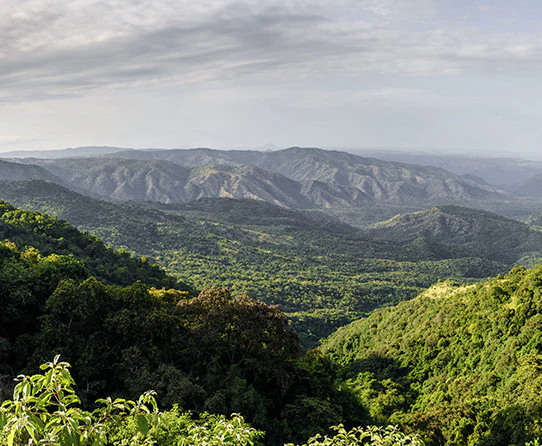
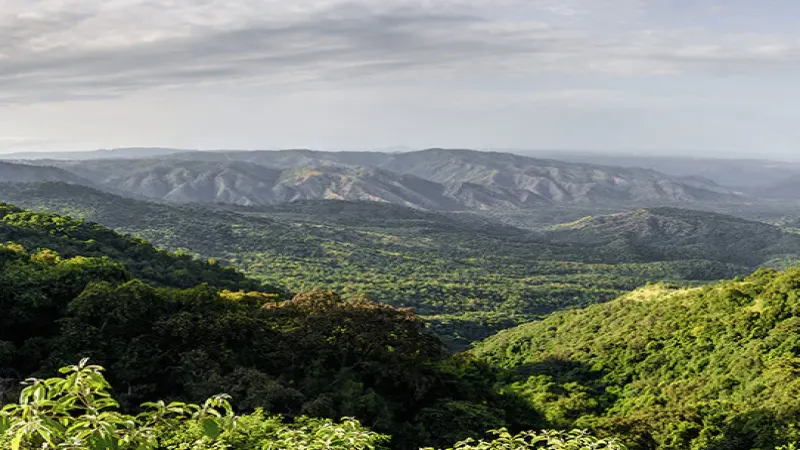
Yirgacheffe is located in Ethiopia, a small town at an elevation between 1,700 and 2,100 meters, situated to the northwest of Sidama Province. Nestled among mountains and rivers, it is one of Ethiopia's highest-altitude coffee regions and a flagship of the country's specialty coffee scene.
Strictly speaking, Yirgacheffe belongs to Ethiopia's Sidama region as a sub-region, set apart as its own designation because of its singular flavor profile. Between 2006 and 2007, a dispute erupted over the trademark rights to Yirgacheffe, and Starbucks ultimately chose to relinquish the trademark, allowing the Ethiopian government to successfully reclaim the trademark rights for Yirgacheffe, Sidama, and Harar. This event brought even broader attention to Yirgacheffe, which was already widely renowned.
Yirgacheffe sits at nearly 2,000 meters above sea level, making it one of the highest coffee regions in the world. The area has been wetlands since ancient times: "Yirga" means "to settle down," while "Cheffe" refers to "wetland." Lake Turkana, Lake Abaya, and Lake Chamo provide abundant moisture to this land. In the Rift Valley zone represented by the Misty Valley, fog blankets the area year-round and the climate is as mild as spring, with gentle breezes—cool and humid—allowing thousands of coffee trees to flourish. This creates Yirgacheffe's distinctive terroir: an interwoven, richly layered, and elusive character of floral and fruity aromatics.
European monastery clergy first established coffee cultivation here, after which operations shifted to coffee communities or cooperatives in villages around the town. There are no dedicated plantations locally; coffee trees are scattered freely among forests and fields. Each harvest season, the Ethiopian coffee trading company would go to the town to purchase coffee beans from farmers.
Beyond the town of Yirgacheffe itself, the region also encompasses three sub-regions: Wenago, Kochere, and Gelena/Abaya.
1. Cultivation System and Environment
The small mountain villages of the Yirgacheffe region are cool and foggy, with spring-like weather year-round. Summers bring gentle breezes—cool rather than hot—and rain without dampness, while winters avoid cold damage, making it an ideal environment for growing Arabica coffee. There are no large coffee plantations locally; coffee farmers interplant coffee with other crops, usually under banana trees, creating a distinctive landscape.
2. Processing Methods
Ethiopia's traditional natural processing method was relatively rough and prone to producing off-flavors, and thus drew considerable criticism. In 1959, the Yirgacheffe region introduced the washed processing method from South America. After that, most regions commonly adopted washed processing—depulping the coffee cherries, then fermenting and washing to remove the mucilage layer before drying.
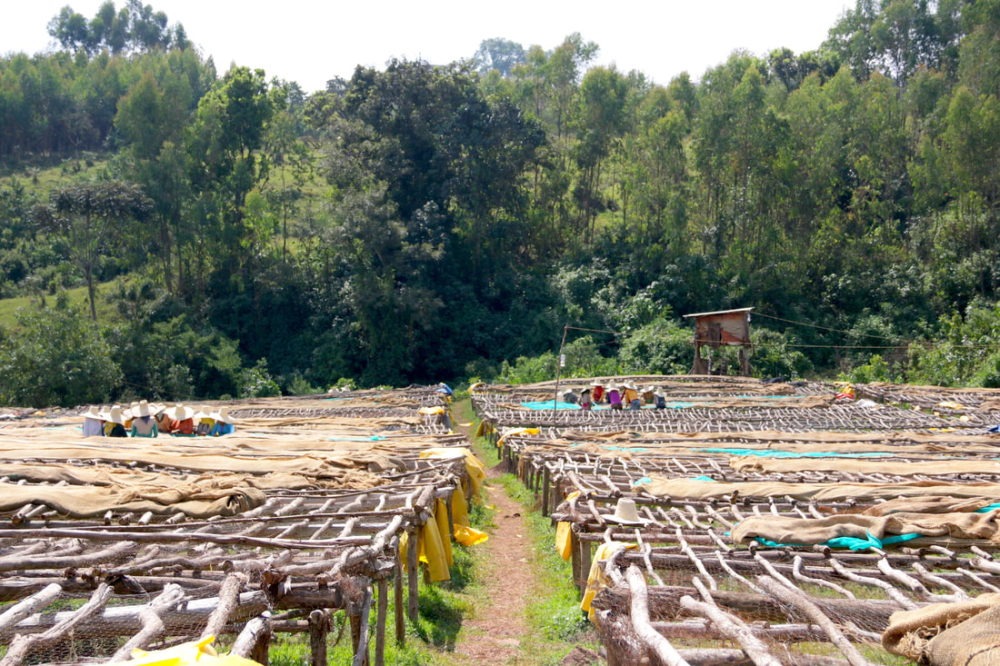
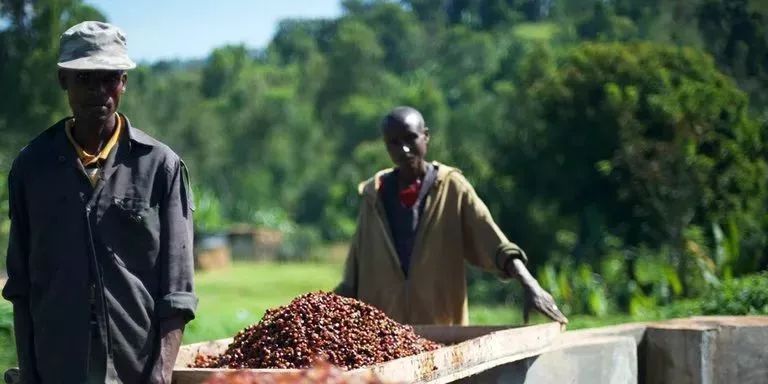
Since 2006, some processing stations in certain regions began using a meticulous raised-bed natural method. This labor-intensive raised-bed drying approach keeps the coffee cherries from touching the ground directly, preventing earthy off-flavors from mixing in during drying and thereby producing an exceptionally clean fruit flavor. After more than two weeks of sun-drying, the dark brown coffee cherries are properly stored, waiting for the flavors to fully mature. Before sale, the dried cherry pulp and parchment are removed, and immature beans and over-fermented beans are sorted out. This strict control significantly improves the quality of natural-processed beans.
3. Flavor Characteristics
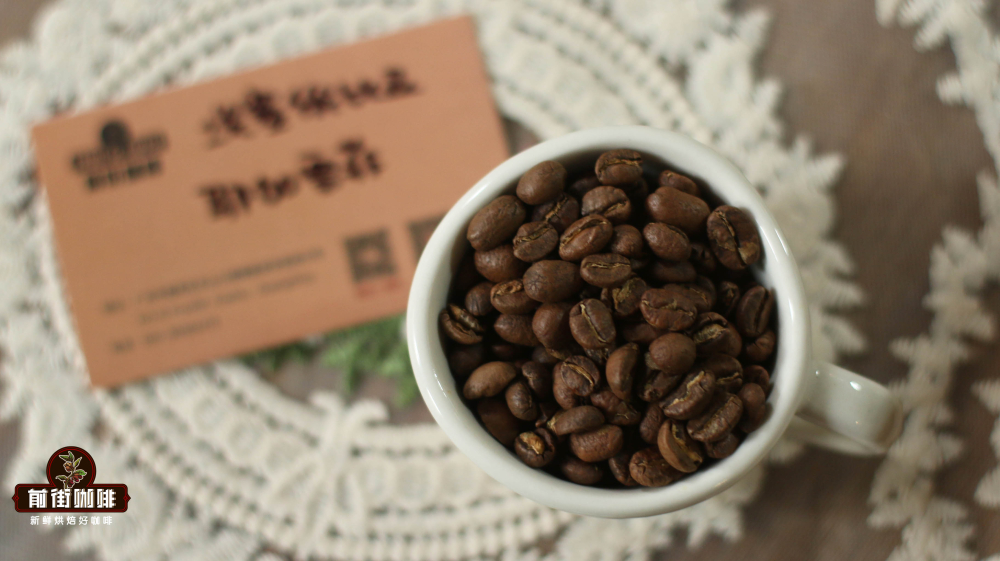
Washed Yirgacheffe: Offers a distinctive lemon note and refreshing jasmine florals, with soft acidity and citrus tonalities, and a clean, bright cup. Representative specialty coffees include: Front Street Coffee Washed Yirgacheffe and Front Street Coffee Gedingding Cooperative.
Natural Yirgacheffe: Charming fruity acidity, a clean and pure sweetness of fermented fruit, with an elegant fruity wine aroma and a sweet finish. Representative specialty coffee: Front Street Coffee Natural Red Cherry.
4. Green Coffee Bean Grades
Ethiopia's coffee grading system is not based on screen size, but rather on the proportion of defective beans in the green coffee. Ethiopia launched the ECX specialty coffee trading and grading system. After evaluating the green beans, Q-Graders assign grades as follows: washed Yirgacheffe is divided into Grade 1 and Grade 2, while natural Yirgacheffe is divided into Grade 1, Grade 3, Grade 4, and Grade 5. Grade 1 is the highest level, representing Yirgacheffe with the lowest defect rate and the best quality.
Within the small Yirgacheffe region, there are quite a few standout cooperatives (villages) that were discovered by coffee hunters and then established independently, such as the Worka Cooperative and the Gedingding Cooperative.
The Worka Cooperative was founded in 2005, and in the same year joined the renowned Yirgacheffe Coffee Farmers Cooperative Union (YCFCU). It is known for producing high-quality natural Yirgacheffe. The Worka Cooperative has roughly 300 coffee farmers under it.
The Gedingding Cooperative is located in the Worka area at the southeastern end of Yirgacheffe, and was originally part of the Worka Cooperative under the Yirgacheffe union YCFCU. Later, as the market's demand for traceability of green coffee continued to rise, independent "single-origin" lots were successively discovered by coffee hunters around the world. Thus, in 2012, Gedingding, with about 300 members, registered independently as the "Gedingding Cooperative."
Front Street Coffee Gedingding Cooperative uses meticulous washed processing, fermenting in a washing tank for about 72 hours to remove the parchment. During mucilage fermentation, the acids produced partially seep into the beans. At the same time, because during the drying stage there is no fruit pulp or mucilage attached to the parchment, it lacks the distinctive fruity aroma of natural beans, and the flavor leans cleaner and brighter, with more pronounced acidity. It is then dried on raised beds, hand-sorted, and after passing quality inspection by the Ethiopian Coffee and Cocoa Authority, traded and exported via bidding. The coffee's flavor presents a pure, refreshing character.
Front Street Coffee Roasting Approach
In a normal roast, Front Street Coffee Gedingding's temperature rise is relatively gentle, with a roast time just over 10 minutes, allowing ample time and temperature for dehydration so that chlorogenic acid can degrade. If degradation is insufficient, the cup tastes sharply acidic, causing discomfort on the tongue and a rough mouthfeel. At the same time, heat is continuously applied after first crack, allowing caramelization to continue and generating sweet substances such as caramel, giving a solid, weighty sweetness while the bright fruit acidity is slightly diminished.
Front Street Coffee Pour-Over Parameter Recommendations
Because Front Street Coffee Gedingding has a shorter heating time, its texture is relatively hard and its water absorption capacity is weaker, making soluble substances inside the beans harder to release. Therefore, you should accordingly raise the water temperature, adjust to a finer grind, and use staged pouring. You can judge the grind by visual estimation—reaching the coarseness of fine granulated sugar is sufficient. If using a C40 hand grinder, use 24 clicks; for an EK43s electric grinder, use 10.
Dose: 15g
Ratio: 1:15
Water temperature: 91°C
Grind: medium-fine (80% passing a No. 20 sieve)
Technique: three-pour
First pour: 30ml, bloom for 30 seconds
Second pour: 100ml
Third pour: 95ml
Time: 2 minutes.
Pour-over flavor: The acidity is more pronounced and delicate, presenting yellow lemon acidity, a light sucrose sweetness, and a sweet-tart sensation, with flavors of cream and lemon black tea, plus a finish of green tea and floral notes; the mouthfeel is smooth, the flavor full, and the finish relatively long-lasting.
The above content is compiled by CoffeeHunters, a coffee news website.


