







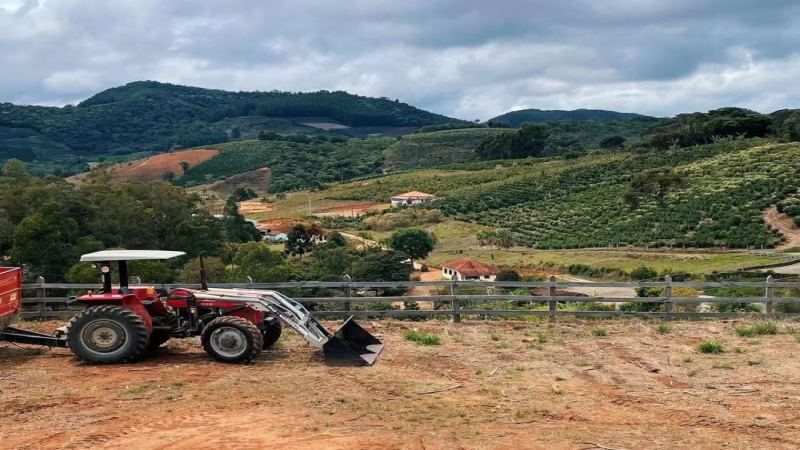
How did one coffee seed reach Brazil's Cerrado?
Brazil grows coffee in 17 states and is the largest producer, and its Cerrado Red Bourbon lots trace back to a single historic introduction. In 1727, Portuguese diplomat Francisco de Palheta carried coffee seed out of French Guiana in a bouquet, and that material founded Brazilian cultivation, which today centers on Red Bourbon, Yellow Bourbon, Mundo Novo, and Catuai.
Bourbon and typica coffee are both old Arabica varieties, but Bourbon was first planted on Reunion Island, called Bourbon Island before 1789. Bourbon leaves are wider, growth is denser, yield runs about 30 percent above Typica, and the beans are rounder and shorter, carrying berry-like acidity, a full body, and nutty, chocolate-leaning notes in Cerrado.
Brazil, as the world's largest coffee producer, has 17 states growing coffee, with varieties mainly consisting of Red Bourbon, Yellow Bourbon, Mundo Novo, and Catuai. This article will guide you through how coffee was introduced to Brazil in 1727, trace the origins of the Bourbon variety on Reunion Island and its differences from Typica, and delve into Brazil's Cerrado region to analyze the grading of Red Bourbon coffee beans, the pulped natural processing method, and Front Street Coffee's roasting curve and brewing suggestions. Whether you are an espresso blend enthusiast or a pour-over player, this flavor guide to Brazil Cerrado Red Bourbon will help you gain a more comprehensive understanding of this classic coffee with nutty and chocolate notes.
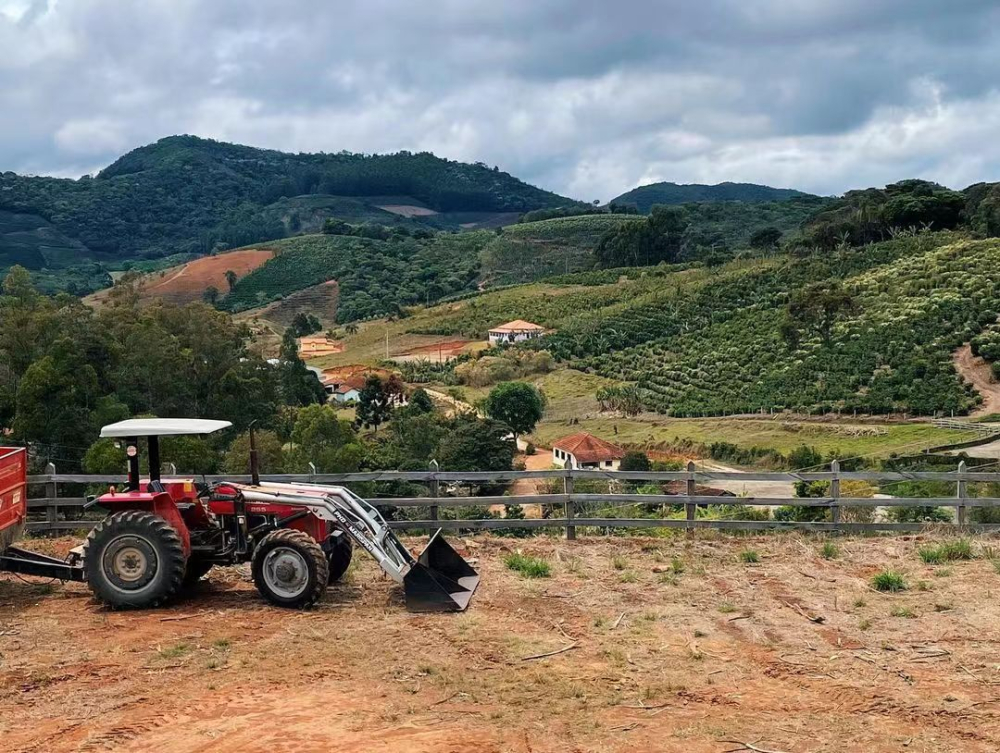
Brazil is the world's largest coffee producer, with an extensive coffee-growing area and a total of 17 states producing coffee nationwide. At the same time, Brazil cultivates a rich variety of coffee varieties, currently mainly Red Bourbon, Yellow Bourbon, Mundo Novo, and Catuai. As the world's largest coffee origin, Front Street Coffee will introduce Brazil's coffee production situation and quality characteristics.
Coffee was introduced to Brazil in 1727. At that time, Portuguese diplomat Francisco de Palheta was sent to French Guiana to handle territorial disputes. During this period, he won the favor of the governor's wife, who hid several coffee seeds in a bouquet given to him, and Francisco successfully brought the coffee seeds into Brazil.
Bourbon Variety
Bourbon coffee and Typica coffee both belong to the Arabica species and are both old varieties with a long history. Bourbon coffee was first planted on Reunion Island, which was also known as Bourbon Island (le Bourbon) before 1789, and the variety was thus named "Bourbon."
Although both are old-variety coffee beans, Bourbon and Typica have some differences: Bourbon's leaves are wider than Typica's, its growth is denser, and its yield is about 30% higher than Typica's. Bourbon beans are rounder and shorter, with berry-like acidity and a full body, prominent creamy and aromatic notes, strong acidity, and obvious fruity acidity. However, it also shares the shortcoming of weaker disease resistance.
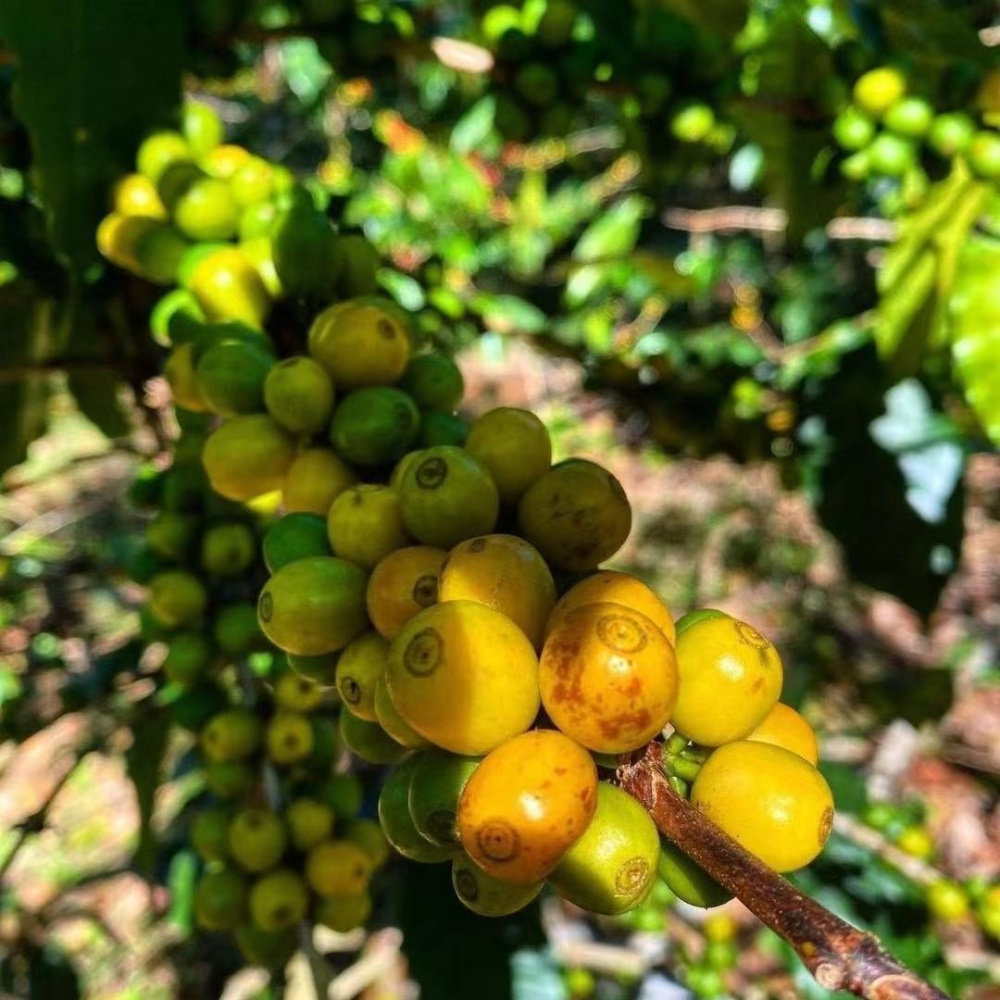
After the Red Bourbon coffee tree flowers and bears fruit, the fruit color undergoes a series of changes: green, slightly yellow, slightly orange, ripe red, and finally a darker deep red, which is why some call it "Red Bourbon." Red Bourbon was introduced to Brazil around 1860 through the southern Campinas region and is a representative coffee tree variety.
In simple terms, Bourbon is a branch variety under the Arabica species, usually bearing red fruit, called Red Bourbon; there are also Yellow Bourbon and Orange Bourbon. Among them, Yellow Bourbon has relatively lower yield but better quality performance.
South Minas Region, Brazil
South Minas is located in a hilly area at an altitude of 700 to 1,200 meters and is the earliest coffee-producing region in Brazil. Due to rising labor costs, most of the region now uses mechanical harvesting, and it is also the earliest region for coffee commercialization, with many large exporters setting up bases here. The Bahia region in northern Brazil mainly produces washed Brazilian beans, while the Espirito Santo region near the coast is the main export area for Brazil's Robusta varieties.
Brazil's coffee-growing terrain is mainly divided into two types: one is the Brazilian Plateau above 500 meters in altitude, and the other is the Brazilian Plain below 200 meters in altitude. The most well-known cultivated varieties are Bourbon (including Yellow Bourbon, Red Bourbon, and Flat Bean Santos). Brazilian coffee's taste is mainly characterized by low acidity, nutty flavors, balance, and moderate body. In the specialty coffee field, Brazilian coffee is not particularly outstanding, but it is often used as a blending component in espresso. Also because of its high balance, it is often selected by merchants as the raw material for "Blue Mountain flavor beans."
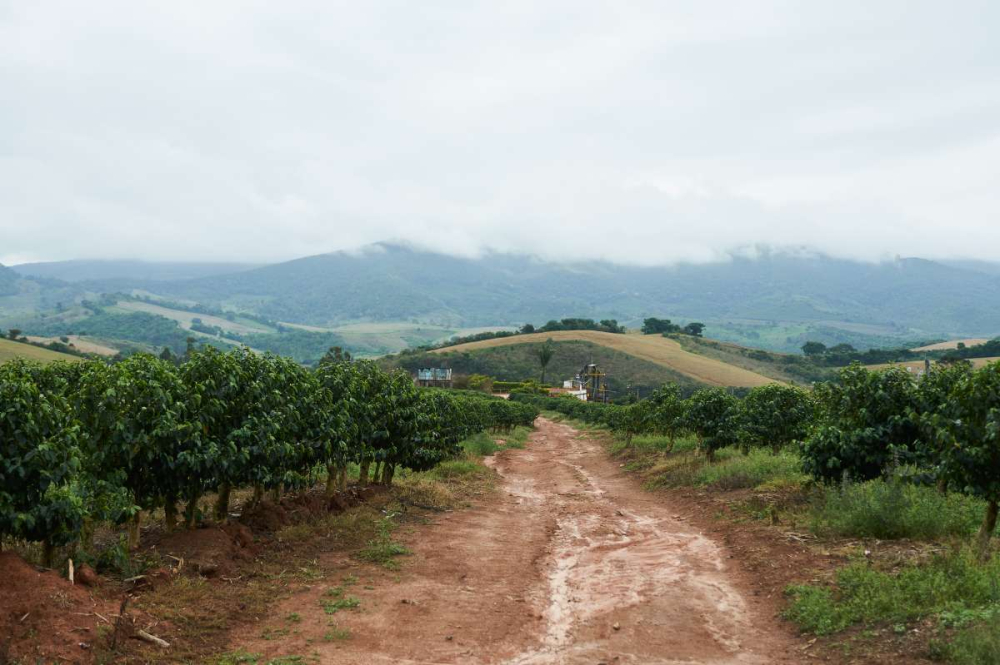
Cerrado / CerradoMineiro
Growing coffee in Cerrado (also known as Savanna) can be said to be a victory for Brazilian coffee technology. More and more large coffee plantations in the area are using high-tech methods for production, which can only be achieved in a very few regions. The plateau climate has four distinct seasons, stable fruit ripening, and absolutely no rainfall during the harvest season. Cerrado coffee usually uses the natural processing method, which is also a current trend in processing methods.
FrontStreet Coffee: Brazil Cerrado Red Bourbon Coffee Beans
Country: Brazil
Region: Cerrado
Altitude: 1,000 meters
Variety: Red Bourbon
Processing Method: Pulped Natural
Flavor: Nuts, chocolate, cream, peanut, caramel
Processing Method: Pulped Natural
After picking the coffee cherries, they first pass through a water tank to remove unripe fruit and impurities, then the skin and part of the pulp are removed, followed by using a demucilager to remove the mucilage. Removing the mucilage helps shorten the time required for sun drying and reduces the risk of fermentation. This method is mostly used when climate conditions are not ideal. If air humidity is high, the climate is warm, or rainfall occurs, mold damage is likely to occur during the drying process. Therefore, most washed beans used for commercial trade in Brazil are processed using the pulped natural method.
Brazilian Coffee Bean Grades
Brazilian coffee beans are graded by defect rate using a "deduction method," with the grade determined by the number of defective beans per 300 grams of main beans, divided into seven levels from No.2 to No.8, with a deduction of less than 4 qualifying as No.2. Although coffee with no defective beans at all can be called No.1, this situation is extremely rare and cannot maintain a stable supply, so Brazil sets No.2 as the highest grade rather than No.1.
The method for classifying by coffee bean size in screen mesh is: screening with a mesh screen based on 1/64 inch, with screen sizes usually between 14 and 20. It should be noted that the mesh number corresponds to the short side, or "width," of the coffee bean. The largest mesh size for Brazilian coffee beans is 19, but the yield is not large, so 17/18 is the highest grade.
FrontStreet Coffee Roasting Analysis
This Brazil Red Bourbon uses a medium-dark roast, highlighting the full body of Brazilian coffee as well as rich nutty, cocoa, and peanut flavors.
When the roaster temperature rises to 175°C, charge the beans, set the heat to 140, open the air vent to 3, and the turning point appears at 1 minute 36 seconds at a temperature of 95.6. When the roaster temperature reaches 140°C, open the air vent to 4; when the roaster temperature rises to 166°C, adjust the heat to 130 and keep the air vent unchanged; when the roaster temperature rises to 176°C, adjust the heat to 110 and keep the air vent unchanged; when the roaster temperature rises to 192°C, adjust the heat to 70 and the air vent to 5.
At 9 minutes 45 seconds, rough wrinkles and dark streaks appear on the bean surface, and the toast aroma clearly turns into coffee aroma, which can be defined as the prelude to first crack. At this point, listen carefully for the sound of the first crack. First crack begins at 10 minutes 51 seconds, open the air vent to 5, develop for 2 minutes after first crack, and drop the beans at 201.5°C.
FrontStreet Coffee Brewing Suggestions
For the nutty aroma unique to Brazil Cerrado, Front Street generally uses the pour-over method for serving. However, considering that many office workers do not have free time to carefully consider parameters, in this case drip bag coffee is the best choice.
First, we need to prepare a container for the coffee, a kettle for pouring water, and sufficiently hot water. A sharing pot or drinking cup will both work.
Tear open the sealed packaging, take out the coffee drip bag, and tear open the non-woven pocket along the dotted line. Pull apart the two ears, unfold the entire drip bag, and hang it on the edge of the cup or sharing pot.
In the first stage, wet all the coffee grounds first and let them bloom for about 10 to 20 seconds. In the second stage, pour steadily in a small stream until the liquid level is nearly full, then wait for the coffee liquid to drop until it has fully drained. Pour the final stage of water until full, wait for all the coffee liquid to finish dripping, shake gently to even it out, and it is ready to enjoy.
Dose: 15g
Coffee-to-water ratio: 1:15
Water temperature: 88°C
Grind size: Medium-coarse grind (70% passing rate on a No. 20 standard sieve)
Dripper: kono
1. First pour: 30 grams of water, bloom for 30 seconds.
2. After blooming, pour the second stage of water, circling outward from the center with 100 grams. This stage can be poured slowly; Geisha coffee is very resistant to extraction and needs a certain pouring time to bring out its aroma. After pouring, wait for the water level to drop to half.
3. When the coffee bed is about to be exposed, pour the third stage of 95 grams, for a total poured amount of 225 grams. Wait for the coffee to finish filtering, then remove the dripper. Total brewing time is 1 minute 52 seconds.
The above content is compiled by CoffeeHunters, a coffee news website.


