





How Does Golden Mandheling Differ From Colombian Coffee?
Golden Mandheling and Colombian coffee differ mainly in origin, variety and cup profile. Mandheling comes from Sumatra and includes Lintong, Golden, Tiger and Aged types, with a rich, heavy body. Colombian coffee grows in volcanic soil under family-run farms and splits into commercial and specialty production areas, offering brighter, fruitier acidity.
The Mandheling name traces to the Dutch colonial period and a pronunciation misunderstanding by Japanese soldiers in World War II. Colombia is a leading exporter of washed coffee, with Typica, Bourbon, Caturra and Castillo as main varieties. Choosing between them depends on whether a heavy body or bright acidity is wanted.
Faced with the dazzling array of more than forty coffee beans in Front Street Coffee's stores, many beginners often feel at a loss. Among them, Mandheling and Colombian coffee are the two categories most familiar to Chinese consumers and most frequently asked about. This article will take you through the historical origins of Mandheling, from the Dutch colonial period to the pronunciation misunderstanding by Japanese soldiers during World War II, clarify the differences in origin and variety among the four types of Mandheling—Lintong, Golden, Tiger, and Aged—and systematically sort out Colombian coffee's volcanic soil advantages, family-run business model, the divide between commercial and specialty production areas, as well as the performance of main bean varieties such as Typica, Bourbon, Caturra, and Castillo. Whether you prefer a rich, heavy body or a bright, fruity acidity, you can find the right cup for you among Front Street Coffee's recommendations.
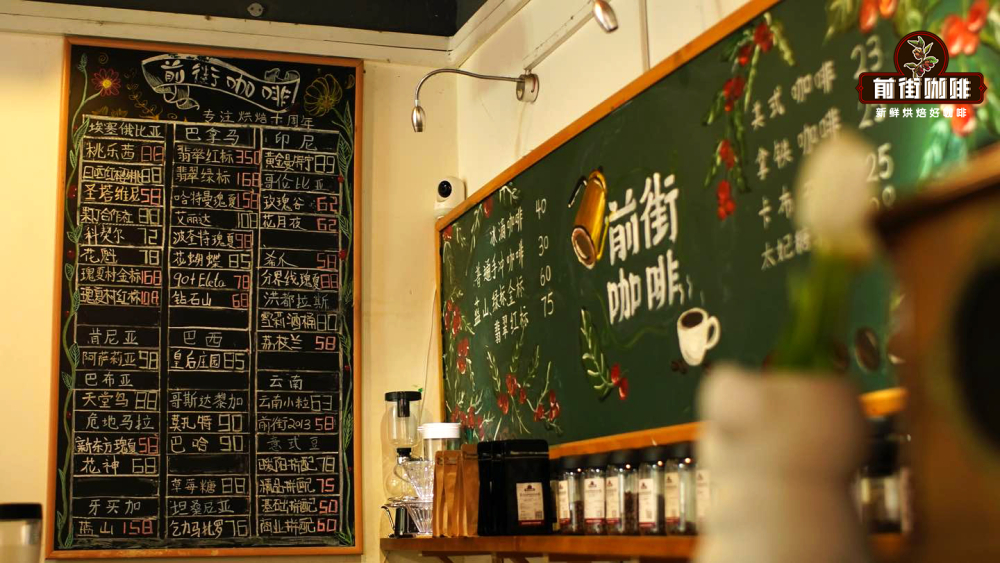
At FrontStreet Coffee's stores or Tmall flagship store, almost every day guests can be encountered asking how to choose coffee beans. Some are newcomers just stepping into the world of specialty coffee, still lacking a clear concept of the flavor characteristics of various origins; others are overwhelmed by the dazzling variety of the menu—FrontStreet Coffee currently sells more than forty types of coffee beans, from different origins around the world, with distinct styles, and new origin beans are added from time to time.
Among such a rich selection, Mandheling can be said to be one of the coffees most familiar to domestic consumers. How much do you know about the history, culture, and stories behind it? Besides Mandheling, customers who come to FrontStreet Coffee also often ask about Colombian coffee. As the world's largest exporter of washed coffee beans, what exactly makes the Colombian origin so unique? If you have no idea about this yet, then let this article help you sort out all aspects of Mandheling and Colombian coffee.
Guests who come to FrontStreet Coffee are not just here for a cup of coffee, and Front Street is not just about producing a cup of coffee. More importantly, it is about passing on the story behind the coffee. Now please join FrontStreet Coffee in listening to the respective origins of Mandheling and Colombian coffee.
Mandheling Story of Origin
In the seventeenth century, the Dutch first brought Arabica seedlings to Ceylon (present-day Sri Lanka) and Indonesia. By 1877, a large-scale disaster swept across the Indonesian archipelago. Coffee rust disease nearly destroyed all coffee trees, and people had to abandon the Arabica they had cultivated for years, instead introducing the more disease-resistant Robusta from Africa. Today Indonesia is a major coffee-producing country, with production concentrated in Java, Sumatra, and Sulawesi, where Robusta accounts for ninety percent of total output. Sumatra Mandheling, by contrast, belongs to the scarce Arabica category. These trees grow on hillsides at altitudes of 750 to 1,500 meters. The mysterious and unique Sumatra variety gives Mandheling a rich aroma, full body, intense taste, and a subtle chocolate flavor with caramel notes.
Mandheling coffee beans are relatively large, with hard bean texture, and are prone to defects during cultivation. After harvesting, they usually require strict manual sorting. If quality control is not rigorous enough, the quality can easily be uneven, and different roasting levels also directly affect the taste, making it a single-origin coffee that attracts considerable controversy.
The name Mandheling is very different from other coffee beans. It is neither a production area, a place name, a port name, nor the name of a coffee variety (for example, Yirgacheffe or Sidamo are African production area names). During World War II, the flames of war spread from Europe to Asia. At that time, Indonesia was still a Dutch colony. Because the Netherlands declared war on Japan, it was invaded by Japanese troops in 1942, and the Japanese army landed on Sumatra in February 1942. The Japanese, who were already coffee enthusiasts by then, experienced the charm of wet-hulled Mandheling coffee in northern Sumatra and became devoted fans of Mandheling ever since.
Even the origin of the name Mandheling is rumored to be related to the Japanese, said to stem from a pronunciation misunderstanding. During World War II, a Japanese soldier偶然 happened to drink a cup of rich and aromatic coffee in a local café. Amazed, he asked the owner what kind of coffee it was. Due to the language barrier, the owner mistakenly thought the soldier was asking about his ethnicity, so he answered "Mandailing." After the war, the soldier commissioned an Indonesian broker to ship fifteen tons of the "Mandheling coffee" he remembered to Japan, where it became hugely popular. It can be said that this broker made Mandheling, and Mandheling made him—the founder of what is now the famous Pwani Coffee Company (PWN).
This Indonesian coffee merchant is the now renowned Pwani Coffee Company in the Indonesian coffee world, abbreviated as PWN, and also the holder of the Golden Mandheling trademark.
Mandheling Coffee
Mandheling is also known as "Sumatra coffee." Most of what North Sumatra produces is Gayo, mainly the Ateng variety; the area around Lake Tawar in the north can be called Aceh coffee or Tawar Lake coffee; in South Sumatra, Lintong and the area around Lake Toba can be called Mandheling, and the Lintong area is the actual Mandheling production region. Mandheling is produced in the mountainous area around Lake Toba, which is located north of Medan, the provincial capital of Sumatra, and is a high-altitude freshwater lake with an average elevation of about 900 meters. Sumatra's mysterious and unique natural environment gives Mandheling coffee a full body, intense taste, and a slight chocolate and herbal flavor.
Mandheling coffee beans are relatively large, with hard bean texture, prone to defects during cultivation, and after harvesting require strict manual selection, otherwise quality can easily be uneven. In addition, different roasting levels also directly affect the taste, making it a single-origin coffee that attracts considerable controversy. The appearance of Mandheling coffee beans can be said to be the ugliest among coffee beans, but as the saying goes, "Don't judge by appearance." Mandheling coffee beans are smooth and aromatic, with a clear sweet aftertaste.
Characteristics of Mandheling Coffee
Mandheling has a rich flavor, sweet aroma, pure bitterness, full body, and a slight sweetness. Because Mandheling itself is not high in acidity, even if kept warm for a long time or made into iced coffee, it will not develop an unpleasant sour and astringent taste. After roasting, the coffee beans are relatively large, and the green beans are brown or dark green, with a special caramel-like aroma and a smooth, rich taste. Most coffee lovers prefer to drink it as a single origin, but it is also an indispensable variety when blending coffee.
What are the common types of Mandheling?
Here we introduce FrontStreet Coffee's four Mandheling varieties: Lintong Mandheling, Golden Mandheling, Tiger Mandheling, and Aged Mandheling. Below is their related information:
FrontStreet Coffee Lintong Mandheling
Origin: Lintong production area
Altitude: 1100-1600m
Variety: Typica, Caturra
Processing method: Wet-hulled
This is a specialty Mandheling coffee bean from the Lintong region, with relatively large beans and hard texture. Indonesian coffee varies greatly in quality, but what is usually called Mandheling refers to Typica or its variants grown in the mountainous areas around Lake Toba. Coffee gourmets around the world have commented: "Sumatra Mandheling coffee has the best texture in the world." However, because there are many defective beans, strict selection is required during processing. Mandheling is an indispensable variety for blending coffee, with a rich flavor, sweet aroma, pure bitterness, full body, and a slight sweetness and mild acidity.
FrontStreet Coffee Golden Mandheling
Origin: Gayo Mountain, Aceh
Altitude: 1100-1600m
Variety: Typica
Processing method: Wet-hulled
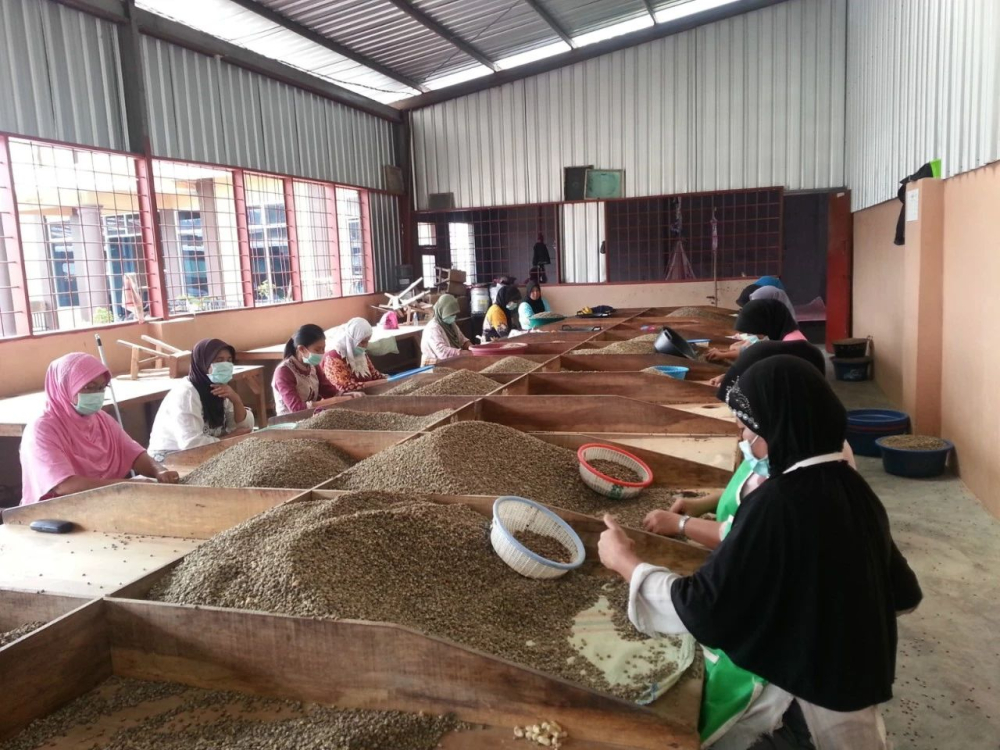
Golden Mandheling has been registered as a trademark by the Indonesian company PWN, so Golden Mandheling has become exclusive to PWN. Golden Mandheling on the market is often Front Street PWN Golden Mandheling.
FrontStreet Coffee's new-season Golden Mandheling comes from Gayo Mountain in Aceh, North Sumatra, and the variety is Ateng. Ateng is a hybrid of Arabica and Robusta, widely planted in Sumatra and other small Indonesian islands, and is actually the local name for Catimor coffee. Golden Mandheling has stricter quality requirements: first, the coffee beans must reach screen size 19 and be plump and uniform; then they must undergo one mechanical selection and three manual hand-sortings to ensure the defect rate of green beans is controlled.
FrontStreet Coffee Tiger Mandheling
Origin: Aceh
Altitude: 1500m
Variety: Typica, Caturra, Sidikalong
Processing method: Wet-hulled
FrontStreet Coffee Tiger Mandheling: only Mandheling with screen size 17 and above and a defect rate below 4% can be called Tiger Mandheling. Because the main varieties are Caturra and Typica, Caturra brings a citrus and lemon acidity to the taste, while Typica has a long-lasting sweet aftertaste, giving Tiger Mandheling a balanced mouthfeel and high cleanliness. FrontStreet Coffee's Tiger Mandheling has a relatively balanced taste, with obvious cream, dark chocolate, and nutty flavors.
FrontStreet Coffee Aged Mandheling
Origin: Sumatra
Variety: Typica
Processing method: Wet-hulled
Aged coffee beans do not simply mean leaving green beans stored long enough. You should know that green beans will spoil if stored too long, changing from fresh green to white, then to yellow, becoming tasteless and even breeding insects. Like aged wine, green beans must undergo proper processing and long-term storage to be called truly aged coffee. So-called aged beans refer to green beans that are allowed to naturally age by extending storage time (usually 2 to 3 years). These changes include reduced acidity, color change, and thickened bean texture. The storage environment must be cool and ventilated. Because the storage environment is relatively dark and the time is long, aged coffee always inevitably carries a moldy smell, or what is commonly called complex odors such as burlap and leather.
Brewing Parameters
Front Street recommends using freshly roasted coffee beans for brewing, so as to experience the rich flavors of the coffee to the greatest extent. FrontStreet Coffee ships coffee beans within 5 days of roasting, because Front Street knows well the great influence of coffee bean freshness on flavor. Front Street's roasting philosophy is "Freshly Roasted Good Coffee," so that every customer who places an order receives the freshest coffee. The resting period for coffee is about 4-7 days, so when customers receive it, it is at its best flavor.
Dripper: Kono dripper
Water temperature: 86℃
Dose: 15 grams
Coffee-to-water ratio: 1:15
Grind size: Medium-fine grind
For daily brewing of Mandheling, FrontStreet Coffee recommends using the KONO dripper, because it can bring out a rounder, fuller body and a more direct flavor expression. The only vent of the Kono dripper is that quarter of the ribs. When the water level is higher than the rib section, the water volume inside the dripper keeps rising, increasing pressure through the weight of the water. Because the outlet is relatively small, it can extend the contact time between coffee particles and water, and as the water flow drives it, it more effectively extracts soluble substances. FrontStreet Coffee uses this brewing method and generally can achieve the high-bodied effect guests expect.
Brewing method: Pulse pouring Use 30 grams of water for blooming for 30 seconds, then pour in a small stream in circles until 125 grams for a pulse, and when the water level is about to expose the coffee bed, continue pouring to 225 grams and stop. When the water level is about to expose the coffee bed, remove the dripper. (Start timing from the beginning of blooming.) Extraction time is 2'00".
Colombian Coffee
Colombia's suitable climate provides coffee with a true "natural pasture." The country is the second-largest coffee producer after Brazil, and the world's largest exporter of Arabica coffee beans and the largest exporter of washed coffee beans. Colombia grows about 875,000 hectares of coffee across 590 municipalities and 14 coffee-growing regions. On average, 75% of the country's products are exported worldwide, with crops accounting for 10% to 16% of agricultural GDP.
What surprises FrontStreet Coffee is that most of these coffees come from small farms. 60% of Colombian coffee farms are less than one hectare, while only 0.5% of coffee-growing areas exceed 20 hectares.
Colombian coffee is a fairly representative high-quality variety among Arabica, and also a traditional dark-roasted coffee with a strong and memorable taste. Colombian coffee beans have a rich and solid aroma, with bright, high-quality acidity, high balance, sometimes presenting nutty notes, and a long finish. Both in appearance and quality, it is a premium product.
Volcanic Soil + Family-Style Operation
It is said that coffee was introduced by missionaries from Venezuela in 1730 and planted in the southeast of the country, later gradually shifting to the western mountains due to civil war and political reasons. In the ideal growing environment of high altitude and volcanic soil, Colombian coffee has been highly regarded by upscale consumers in the United States and Japan since the 1940s. Local people wait until the fruit is fully ripe before manual harvesting. They cherish the land they live on and act with restraint from choosing fertilizers to clearing land, so land fatigue is less common. Besides coffee, locals also plant tall trees or banana trees around the coffee trees, and during the seedling stage they build shade for the coffee trees to ensure the cool, humid environment needed for coffee growth. Because the coffee forest has high humidity and small temperature differences, the coffee beans mature slowly, which is conducive to the accumulation of caffeine and aromatic substances, thus producing the best coffee quality. In addition to natural conditions, another main reason Colombian coffee is superior to Brazilian coffee is family-style operation. They have no heavy machinery for harvesting and irrigation, nor spare money to hire workers, so all coffee cherries are carefully handled by hand.
Colombian Coffee Producing Regions
Colombia's coffee-producing regions are divided into commercial beans and specialty beans. Commercial coffee bean regions are concentrated in central and northern Colombia, mostly large-scale corporate coffee farms. Among them, the well-known "MAM" three major regions are Medellín, Armenia, and Manizales, whose main flavor is the familiar Central American flavor with strong fruity acidity. However, Bucaramanga, produced in the northeastern province of Santander, is known for low acidity and a heavy bitter aroma, somewhat similar to Indonesian Mandheling.
The specialty coffee bean producing regions are mainly in the south, at altitudes above approximately 1500 meters, and there are many volcanoes, which have created many well-known specialty producing regions, including Cauca, Huila, Meta, Tolima, Nariño, etc. The main flavor is caramel aroma, with delicate berry aromas and acidity, and obvious sweetness.
Colombian Coffee Bean Varieties
Due to the Colombian government's strong support for coffee cultivation, Colombian coffee has also begun to embark on the path of diversification. As in other producing regions, Typica is the coffee bean variety with the longest history of cultivation in Colombia. Typica has excellent flavor, but because of its low yield and high requirements for agronomic costs and technology, many farmers have no choice but to choose higher-yielding varieties.
Bourbon is also a long-established coffee bean variety in Colombia, but currently it is grown in only a few areas. The Pink Bourbon from Finca El Paraiso in Cauca that Front Street Coffee previously offered is a Bourbon variety, with a clean and fresh flavor.
Caturra is the main force in Colombian coffee. It is a natural mutation of Bourbon coffee. Compared with Bourbon, its advantages are that it does not require shade trees, has a small stature that makes picking easy, and has more branches, resulting in high yield. The Flower Moon Night and Rose Valley currently offered by Front Street Coffee are Caturra varieties.
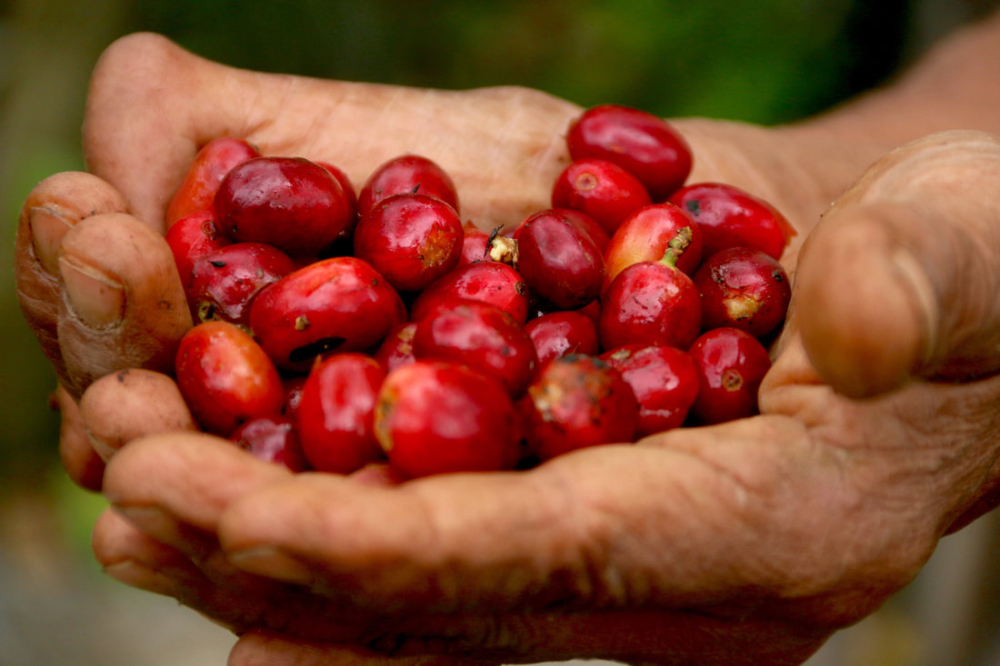
Castillo is a new-generation coffee variety resistant to leaf rust, jointly cultivated by the Colombian Coffee Growers Federation (FNC) and the National Coffee Research Center of Colombia, Cenicafé. Cenicafé hopes to further improve the variety to achieve higher coffee yields, stronger resistance, and quality and flavor comparable to Caturra. Front Street Coffee's Sakura comes from Castillo coffee beans from Finca El Paraiso in Cauca, Colombia.
Next, Front Street Coffee will use Sakura as an example to introduce Colombian Castillo coffee.
Front Street Coffee Colombian Sakura
Country: Colombia
Region: Cauca
Farm: Finca El Paraiso
Variety: Castillo
Processing Method: Double Anaerobic Washed
Altitude: 2050 meters
Brewing Recommendations
Recommended Brewing Method: Pour-over
Dripper: V60 dripper
Water Temperature: 90-92°C
Coffee Dose: 15 grams
Coffee-to-Water Ratio: 1:15
Grind Size: Medium-fine grind
Front Street recommends using freshly roasted coffee beans for brewing, as this allows you to experience the coffee's rich flavors to the greatest extent. The coffee beans shipped by Front Street Coffee are all within 5 days of the roasting date, because Front Street deeply understands that the freshness of coffee beans has a great impact on flavor. Front Street's roasting philosophy is "Freshly Roasted Good Coffee," so that every customer who places an order receives the freshest coffee when they get it. The resting period for coffee is about 4-7 days, so when the customer receives it, it is exactly at its best flavor.
Use 30 grams of water for blooming, with a blooming time of about 30 seconds. Pour in 125 grams of water in a small stream in a circular motion around the center, pausing in stages. When the water level drops and is about to expose the coffee bed, continue pouring water until 225 grams, then stop. When the water level drops and is about to expose the coffee bed, remove the dripper. (Start timing from the beginning of blooming.) The extraction time is 2'00".
The dry aroma has a strong spiced tea note, with obvious floral fragrance. The double anaerobic washed processing method brings aromas of mugwort, mint, and eucalyptus. On the palate, there are flavors of berries and strawberry candy, with soft fruit acidity.
What kind of people are Mandheling coffee and Colombian coffee suitable for?
Mandheling Coffee: Suitable for friends who like a full-bodied mouthfeel and strong flavors. Mandheling has a heavy taste, with rich body and a lush, lively dynamism. It is neither astringent nor sour, and its body and bitterness are fully expressed. The appearance of Mandheling coffee beans can be said to be the ugliest, but coffee lovers say that the worse-looking Sumatra coffee beans are, the better, richer, and smoother they taste. Mandheling is considered the fullest-bodied coffee in the world. When tasting, you can feel obvious smoothness on the tip of your tongue, while also having relatively low acidity, but this acidity can also be clearly tasted. The lively slight acidity mixed with the richest aroma allows you to easily experience the lively element within the gentle richness. In addition, this coffee also has a faint earthy aroma, which some people describe as the aroma of herbaceous plants.
Colombian Coffee: Those who prefer a lighter taste can choose Colombian coffee with acidity. After roasting, Colombian coffee releases a sweet fragrance, with the positive characteristics of sweetness within acidity and balance within bitterness. Because its strength is appropriate, it is often used in premium blended coffees. Colombian coffee gives off a light and elegant aroma, not as intense as Brazilian coffee, nor with the acidity of African coffee, but rather a sweet, light fragrance, understated and elegant.
Professional Coffee Knowledge Exchange More Coffee Bean Information Please follow Coffee Workshop (WeChat public account cafe_style)
For more specialty coffee beans, please add the private WeChat of Front Street Coffee, WeChat ID: kaixinguoguo0925
The above content is compiled by CoffeeHunters, a coffee news website.


