







How Has Yunnan Coffee Moved Into Specialty Espresso?
Yunnan coffee has shifted over a century from cheap raw material to a regular presence in specialty shops. The low-latitude plateau, with producing areas such as Baoshan and Lincang, gives the beans distinct terroir. Washed and natural processing create different flavors, and washed small-bean Yunnan lots now work well as single-origin or blend components.
Coffee reached Yunnan in 1904, when French missionary Tian De'neng planted a tree in Zhugula Village, Binchuan County. Large-scale commercial cultivation began in the 1950s after Arabica was identified in Dehong. Blending washed Yunnan small beans with Brazilian beans builds a balanced recipe suited to the Italian moka pot, showing Yunnan's espresso potential.
Yunnan coffee has gone through a century-long journey, from an obscure and cheap raw material to a regular feature in today's specialty coffee shops. This low-latitude plateau is rewriting the map of Chinese coffee with its unique terroir. This article reviews the origins of Yunnan coffee cultivation and the industry's transformation, analyzes the natural advantages of major producing regions such as Baoshan and Lincang, and explores in depth the flavor differences brought by the two natural processing methods: washed and natural. At the same time, using the "Front Street" brand as an example, it shows how Yunnan washed small-bean coffee can be cleverly blended with Brazilian beans to create a balanced recipe suitable for the Italian moka pot, revealing to coffee lovers the potential of Yunnan beans in espresso coffee.
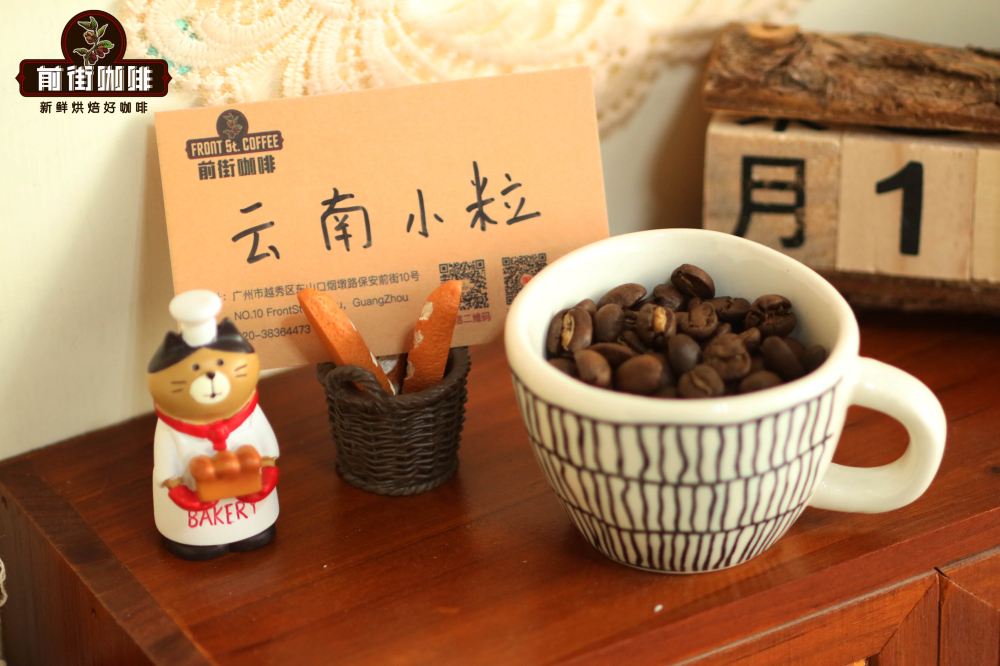
Looking back more than a decade ago, Yunnan coffee was almost synonymous with inferior quality and low price in people's minds, and many industry insiders could not help shaking their heads when mentioning it. However, times have changed, and today Yunnan beans appear more and more frequently in specialty coffee shops, with some shops even shelving them separately by different flavor types. Taking "Front Street" as an example, its product line includes two single-origin beans from Yunnan producing regions — Front Street Washed Yunnan Baoshan Small Bean and Front Street Natural Typica — and it also offers a Front Street basic espresso blend designed specifically for espresso machines.
The Development of Yunnan Coffee
The connection between Yunnan and coffee can be traced back to 1904, when the French missionary Tian De'neng planted the first coffee tree in Zhugula Village, Binchuan County, thus opening the prelude to coffee cultivation in Yunnan, which has now lasted more than a hundred years.
The truly large-scale cultivation for commercial purposes began in the 1950s. Professor Qin Renchang, a famous botanist at the Institute of Botany, Chinese Academy of Sciences, discovered a red fruit in the courtyard of a Dai farming household in Luxi County, Dehong Prefecture, which was identified as Arabica coffee. Under his promotion, coffee seedlings were trial-planted at the Mangshi Forest Farm and at Lujiangba in Baoshan City, among which Lujiangba officially went into production in 1955, thus opening a new chapter in coffee research and production in New China.
The key turning point for Yunnan coffee entering the international market was Nestlé's establishment of a branch in China in 1988. Nestlé not only introduced the high-yield, disease-resistant Catimor variety, but also promised to purchase Yunnan coffee beans as raw materials at the then-current U.S. futures price. After that, brands such as Starbucks and Maxwell also successively built factories in Yunnan to purchase green beans, further expanding the planting area. According to relevant information reviewed by Front Street, because coffee farmers lacked cultivation knowledge and production and processing methods were extensive, for a long time most Yunnan coffee green beans could only serve as raw materials for instant coffee and were deeply bound by international futures prices. To escape this predicament, industrial transformation and upgrading were imperative, and specialty production has become Yunnan coffee's new journey today.
The Current Situation of Yunnan Coffee
In recent years, with the advancement of China's coffee wave and society's emphasis on the rural economy and sustainable development, coffee people from all over the world have visited Yunnan one after another. Everyone has continued to improve local coffee quality in aspects such as pest and disease control, shade tree management, soil and water conservation, cultivation altitude, and fresh fruit picking and processing methods, and Yunnan coffee has gradually won attention and recognition. Domestic and international brands such as Starbucks, Blue Bottle Coffee, Luckin, and Manner have also successively launched products from Yunnan producing regions, broadening people's understanding of the flavor and quality of Yunnan coffee.
Compared with the past, consumers today are more willing to take the initiative to learn about Yunnan, this "new producing region." Many customers who come to Front Street stores to drink pour-over coffee ask whether there are Yunnan beans, which shows that the progress of Yunnan coffee is evident to all.
Where Is Yunnan's Specialty Coffee Produced?
At present, coffee cultivation in Yunnan is distributed across eight regions, among which there are six main producing areas: Pu'er, Baoshan, Dehong, Lincang, Nujiang, and Xishuangbanna. These places have the natural conditions of low latitude, high altitude, and large temperature differences between day and night, making Yunnan a golden growing region for producing high-quality Arabica coffee. Coffee trees are usually planted among higher-altitude hillsides; the undulating hills, fertile soil, ample sunshine, and concentrated rainfall in the rainy season allow coffee trees to quickly integrate into the local terroir. Yunnan coffee has successively obtained five geographical indication protected products, including "Baoshan Small Bean Coffee," "Zhukula Coffee," "Dehong Small Bean Coffee," "Pu'er Small Bean Coffee," and "Simao Coffee." Front Street's representative choice from Yunnan producing regions is Baoshan small bean coffee.
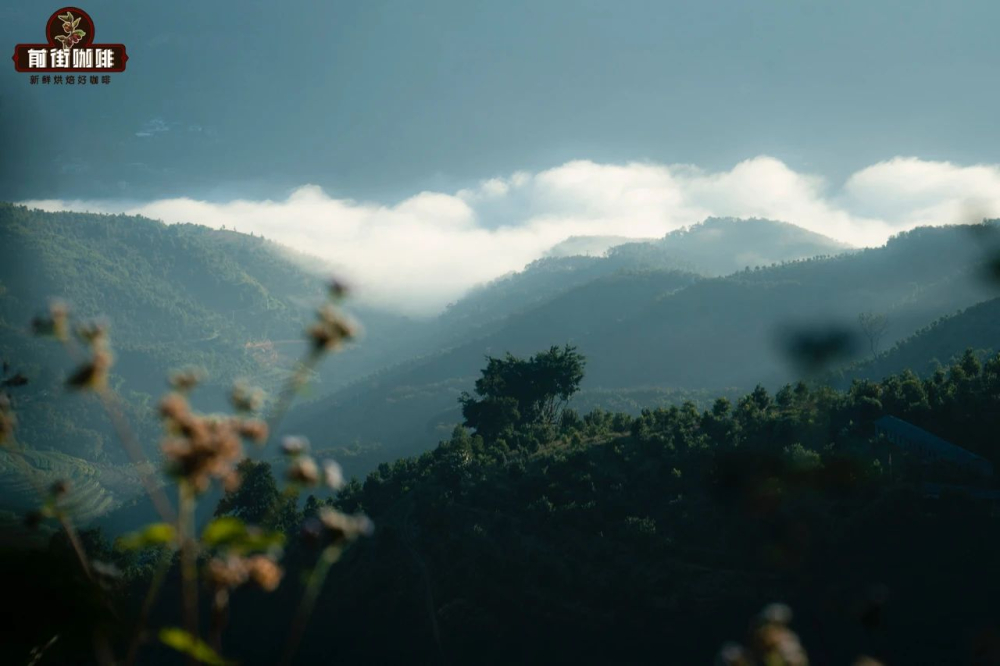
In recent years, with the continuous expansion of international trade, coffee cultivation in Baoshan has continued to develop, and the small bean coffee of Lujiangba is even more widely renowned. Baoshan has a low-latitude mountainous subtropical monsoon climate and is located on a low-latitude plateau. Its complex topography and landforms form a three-dimensional climate of "one mountain dividing four seasons, ten li with different weather." Here the annual temperature difference is small while the daily temperature difference is large, with an average annual temperature of 14–17°C; rainfall is abundant, with distinct dry and wet seasons and uneven distribution, and annual rainfall of 700–2,100 mm. The reasonably low rainfall brings great advantages to the growth of coffee cherries, creating the unique sweet aftertaste of Baoshan small bean coffee.
In addition, Front Street's bean list also includes an exclusively produced Front Street Yunnan Natural Typica coffee. The reason it is called exclusive is that this coffee comes from Front Street's own estate. In 2013, Front Street established a dedicated estate in Lincang, with the entire process from site selection, seed selection, seedling cultivation, planting, harvesting, processing, and roasting controlled by Front Street, thereby accumulating a great deal of experience and knowledge. Lincang is affected by the warm, humid air currents of the Indian Ocean and the southwest monsoon, with distinct dry and rainy seasons, abundant rain, long sunshine hours, and a short frost period, with some areas frost-free all year round; its three-dimensional climate is significant and very suitable for coffee to accumulate nutrients and transform them into richer flavor substances. Front Street specifically chose the most original Arabica variety — Typica — and produced it using the natural sun-dried processing method, naming it "Front Street 2013." With its elegant and gentle taste, it has won praise from many customers.
Yunnan Coffee Beans Under Natural Processing Methods
After tasting a certain Yunnan coffee bean that used a novel flavor-enhancing treatment, a friend told Front Street that they tasted rich floral aromas and strong winey notes. Front Street believes this is not the inherent flavor of Yunnan coffee. If you really want to explore "the taste of Yunnan," Front Street recommends the Front Street Yunnan Small Bean Daily Bean on the shelf, which uses washed processing. The Daily Bean series launched by Front Street selects seven classic producing regions, covering multiple highly representative producing areas and varieties, and uses the natural processing methods customary in the producing areas, presenting the unique terroir character of each origin.
Most Yunnan coffee farmers work under difficult conditions and do not have expensive processing equipment, so the vast majority of Yunnan coffee beans generally use natural processing methods, namely washed and sun-dried. As for why washed Yunnan small bean was chosen, Front Street believes that washing not only reduces the defect rate and makes the quality of the produced coffee more stable, but also gives Yunnan beans a higher degree of cleanliness, which is why it is also a natural processing method that Front Street particularly favors. In addition, Yunnan has abundant freshwater resources, and the harvest season easily encounters rainy weather, so it is inconvenient to use sun-dried processing on a large scale.
Of course, Yunnan also has no shortage of high-quality sun-dried coffee. For example, "Front Street 2013," which uses natural drying and sun-drying processing, comes from Front Street's own estate in Lincang, Yunnan, and selects the elegant-flavored Typica variety, processed by the natural sun-drying method to give the coffee greater sweetness. Every November, the coffee fruits grown by Front Street mature one after another. Front Street arranges workers to pick red coffee cherries one by one and spreads the fresh fruit in the sun to dry naturally, turning it from time to time so it dehydrates evenly. Front Street's sun-dried Yunnan coffee has a little more pronounced fermentation note and rounded fruit tone than the washed one.
Front Street believes that the flavor of Yunnan coffee belongs to a neutral, balanced tonality, with sweetness, acidity, and bitterness all present, so Front Street's own roasted Yunnan coffees all use medium roasting.
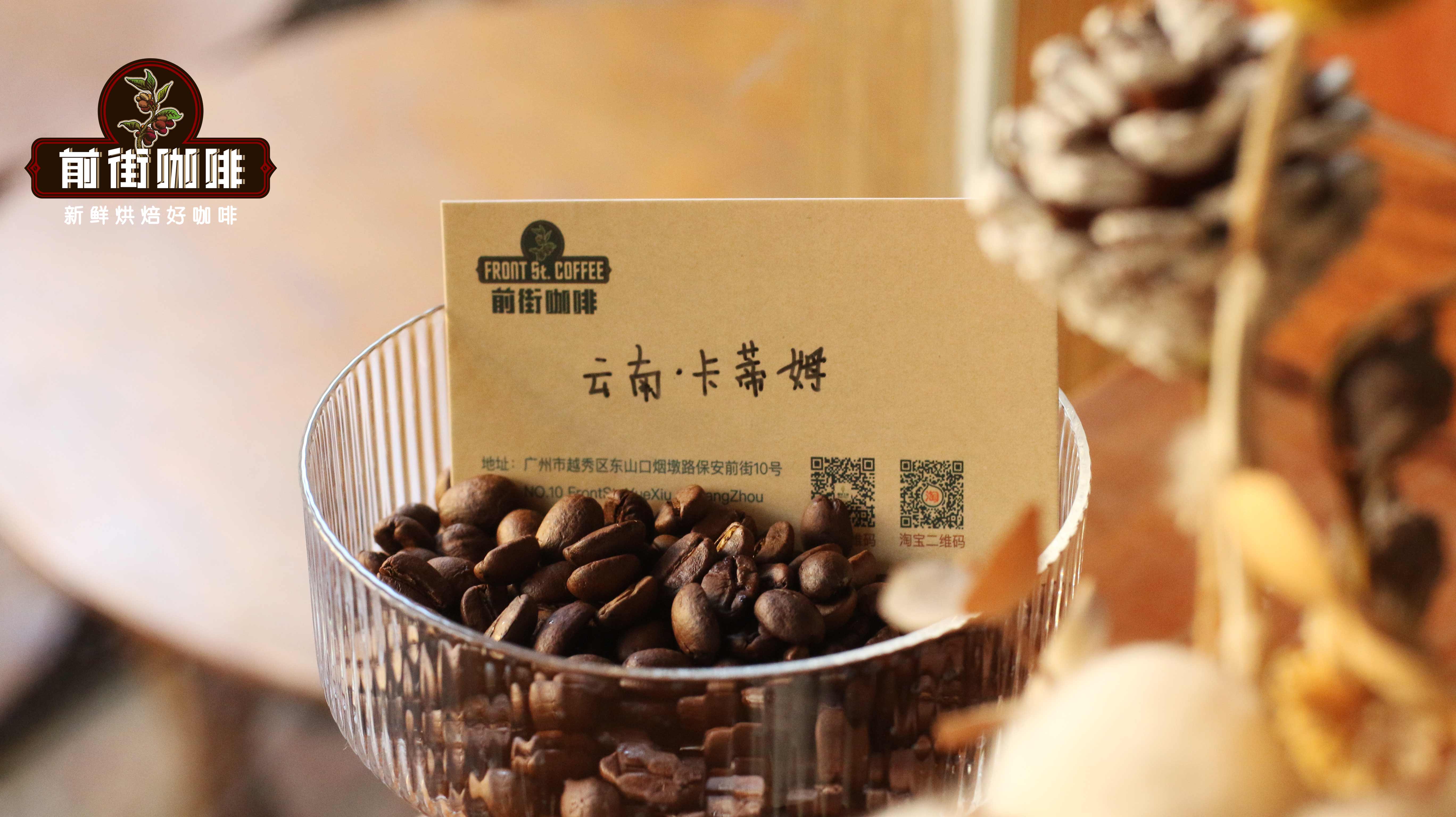
Through cupping, Front Street Yunnan Baoshan Small Bean Daily Bean presents flavors of nuts, herbs, sweet potato, melon, brown sugar, cream, plum, caramel, and so on, with a balanced mouthfeel and a clear sweet finish. The cupping flavors of another coffee, Front Street 2013 Natural Typica, are: caramel, nuts, chocolate, fermentation note, berries, black tea, and sugarcane. It has a medium-high body, a clear mouthfeel, a black tea finish, and rich, varied layers.
For washed Yunnan small bean, considering that after medium roasting it has a nice nutty aroma and slight fruit acidity, Front Street also added it to an espresso recipe, allowing it to play its balancing advantage and, together with Brazilian Cerrado, create the slightly acidic, full-bodied espresso moka pot coffee bean recommended by many baristas — Front Street Dark Cocoa Blend Coffee Bean. Front Street used 30% Yunnan washed small bean coffee + 70% Brazilian semi-washed coffee bean. The espresso made from it has a soft acidity, solid roasting aroma, and full-bodied coffee mouthfeel. When Front Street makes it into a latte, you can taste flavors of caramel, nuts, and cream, which is very pleasant. This Front Street espresso moka pot coffee bean recommended by many baristas — Front Street Dark Cocoa Blend Coffee Bean — is suitable for shops and home users who prioritize cost and have general flavor requirements, and espresso lovers interested in Yunnan coffee beans can also buy it and give it a try.
The above content is compiled by CoffeeHunters, a coffee news website.


