





Can Yirgacheffe Work as SOE Coffee in a Moka Pot?
Yirgacheffe is a coffee from a small town in southern Ethiopia, originally under Sidamo jurisdiction, and it is not the same thing as mocha coffee. Its classic profile is bright lemon acidity, white floral notes and honeyed sweetness rather than heavy burnt bitterness. That fresh, fruit-tea-like character makes it a reasonable candidate for brewing as SOE coffee in a moka pot at home.
Washing stations established in the area gave rise to the distinct "Yirgacheffe flavor" and helped it become a recognized region. For moka pot brewing, a sun-dried red cherry SOE works well, delivering citrus, lemon and white floral notes. Grind and dose need adjusting for the moka pot's pressure, and a washed Yirgacheffe daily bean is a straightforward starting point for learning the flavor.
Yirgacheffe is often regarded by coffee enthusiasts as the representative of hand-brewed single-origin beans, but does it strictly count as a hand-brewed single-origin? And if you switch to a moka pot, what kind of SOE coffee beans should you choose to bring out the floral and fruity notes? This article, from Front Street's perspective, first sorts out the origins of the Yirgacheffe region and the history of its washing stations, then explains what "Yirgacheffe flavor" actually means, and finally provides specific steps and parameter suggestions for making moka pot coffee with Front Street Sun-Dried Red Cherry SOE, helping you brew a cup of moka pot coffee with citrus, lemon, and white floral notes at home.
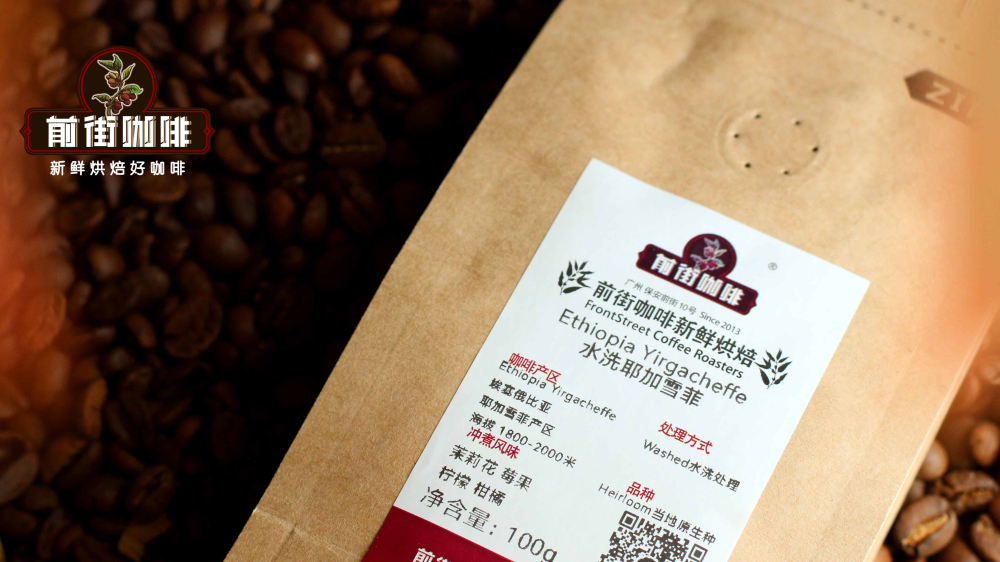
Yirgacheffe is a coffee bean from Ethiopia, and it is not the same thing as mocha coffee. Compared with most black coffees dominated by bitterness, Yirgacheffe is often unforgettable after just one taste: rich floral aroma, along with refreshing citrus and lemon acidity, very pleasant on the palate. Today Front Street will talk about the background of this coffee and whether it can be used to make moka pot coffee.
◇What does Yirgacheffe mean?
The Yirgacheffe that everyone often hears about is actually a small town in southern Ethiopia, originally under the jurisdiction of Sidamo. Later, as washing stations were established one after another, a distinctive "Yirgacheffe flavor" emerged here, and it gradually became an independent representative region and rose to fame in the coffee world.
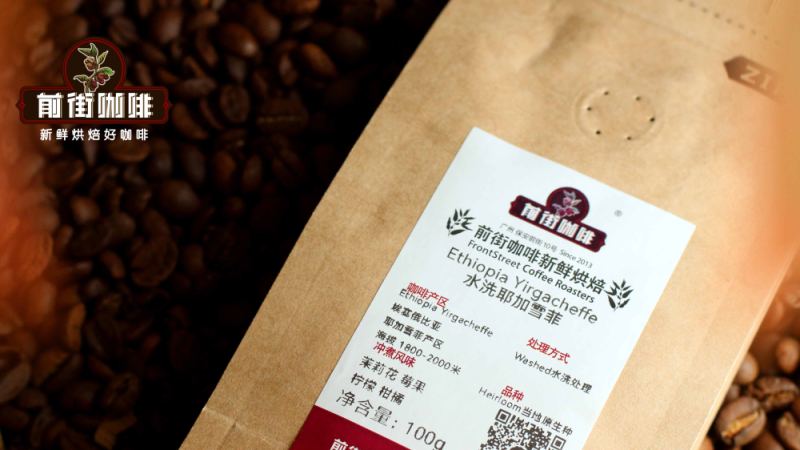
Most friends who have tried specialty coffee know that the classic Front Street Yirgacheffe is known for its bright, uplifting lemon acidity, white floral notes, and honeyed sweetness. Unlike traditional bitter coffee, it does not have a heavy, burnt bitterness; instead, it is closer to the fresh aroma profile of fruit tea, which is why it has become a type of specialty coffee that many enthusiasts specifically ask for. If you have not yet tried the classic "Yirgacheffe flavor," Front Street recommends starting with this Front Street Washed Yirgacheffe daily bean; its elegant white floral notes and lemon-citrus acidity suit various brewing methods.
◇The establishment of washing stations
According to Front Street's understanding, the reason Yirgacheffe coffee beans can have such a distinctive style is due not only to innate terroir conditions, but to a large extent also to washed processing. At that time, what people called "Yirgacheffe coffee" referred to beans produced through washed processing in the town of Yirgacheffe.
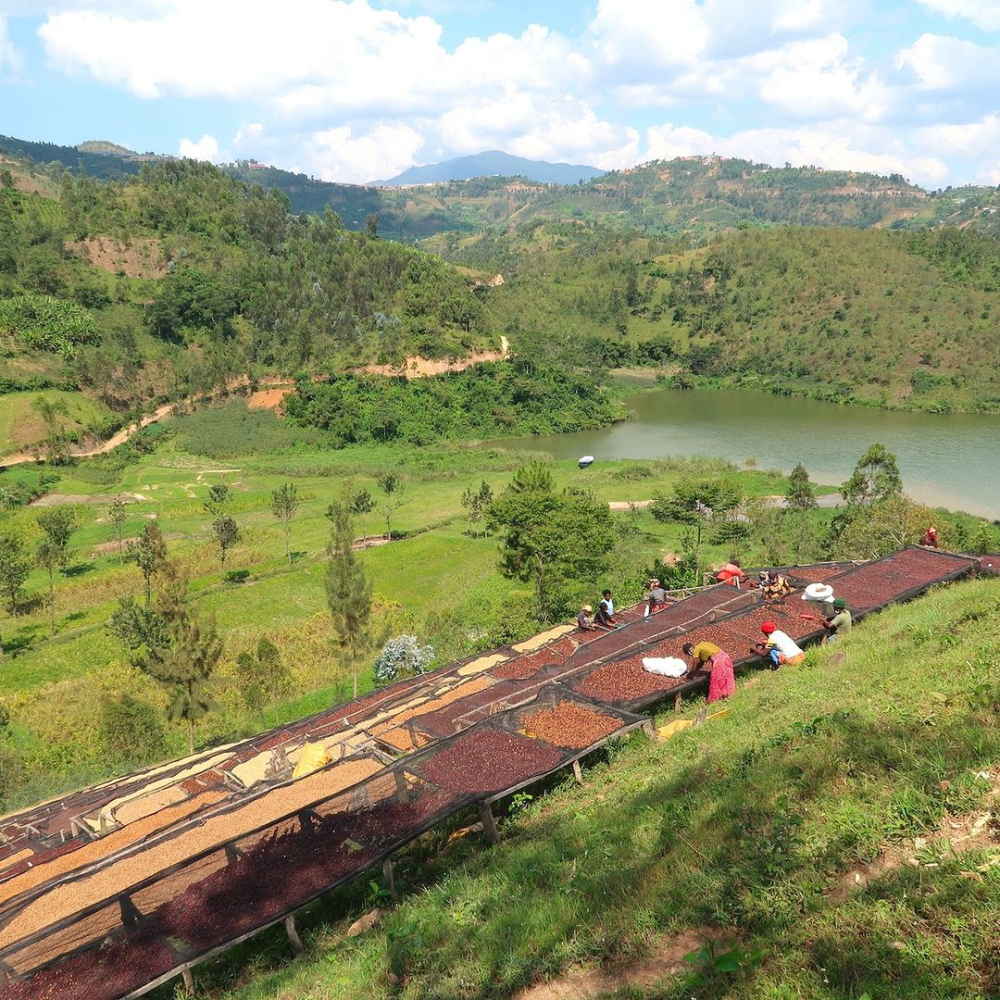
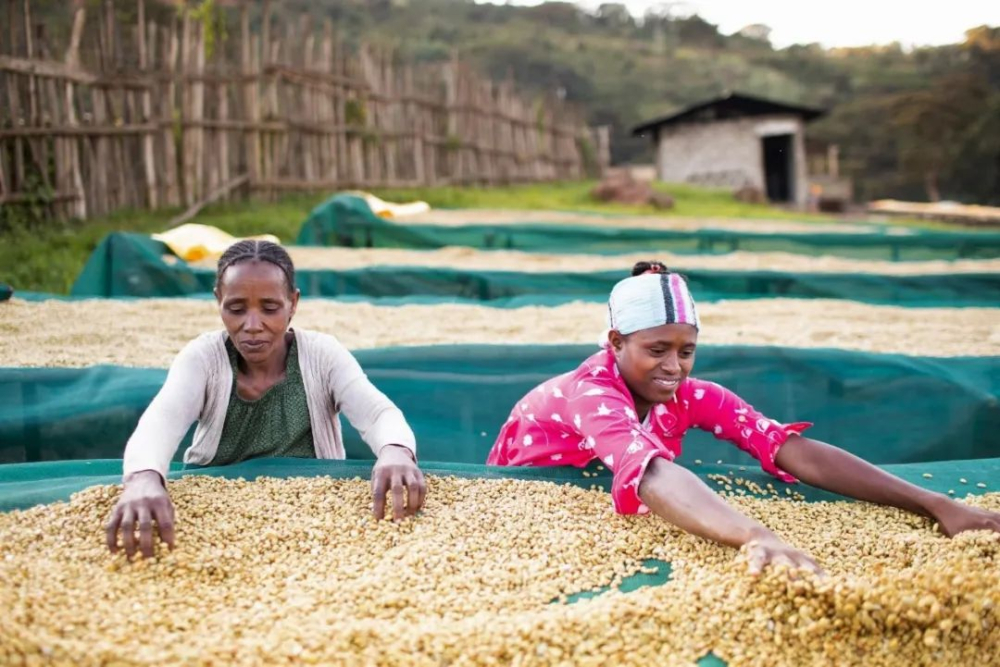
Ethiopia generally has high altitudes and abundant sunshine, making it very suitable to dry coffee cherries directly in the sun. At first, Yirgacheffe also mainly produced sun-dried coffee. The traditional sun-dried method was to spread the cherries directly on the ground to dry, without sorting or floating selection, so the quality of the coffee beans was often uneven.
It was not until the 1970s that the town of Yirgacheffe established the first washing station in Sidamo State, while also introducing washing technology and equipment from Central and South America. It was precisely this measure that not only qualitatively improved the quality of green coffee beans, but also amplified the citrus and lemon aromas of Front Street Yirgacheffe coffee itself, making the taste fresher and brighter, and establishing a unique flavor impression. After that, Yirgacheffe became independent from Sidamo and formed its own style, and Yirgacheffe-flavor coffee also began to spread around the world, becoming a classic product passed along by coffee lovers.
As more and more farmer cooperatives were established, in order to improve the quality of green coffee beans for export, thereby increasing everyone's income while also serving multiple communities, people began to have the desire to build washed processing factories. Unlike sun-dried processing, washing stations first had to solve the problem of water resources, then invest in pulping machines, and then have enough labor. Therefore, from a production perspective, a place with people, water, and roads was the best location for establishing a washing station, and Yirgacheffe was exactly such a treasured place.
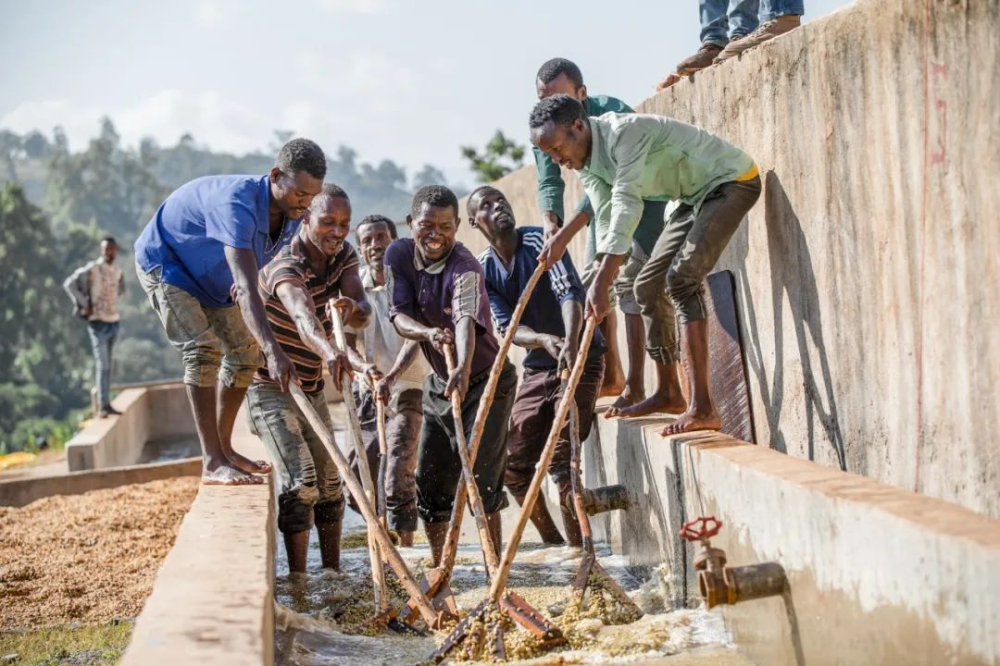
The town of Yirgacheffe, located in the Gedeo Zone, happens to be downstream of the Great Lakes, with abundant springs and rivers flowing through, providing ample fresh water resources for washing stations. Front Street also noticed that in an ancient Ethiopian language, the English word "Yirgacheffe" is composed of two parts: Yirga ይርጋ Yərga means calm, to settle down, while Cheffe ጨፌ Č̣äfe refers to swampy wetlands, so Yirgacheffe carries the meaning of "let us settle and establish ourselves on this wetland."
◇What is Yirgacheffe flavor?
In order to promote the development of the coffee industry, the Ethiopian government registered three national coffee regional flavors as commercial trademarks in 2004, including Yirgacheffe®. In 2008, it established the Ethiopia Commodity Exchange (ECX), and coffee was one of the commodities auctioned on the exchange. The government carried out quality grading and flavor classification for the country's exported coffee beans, with the aim of ensuring that buyers could purchase coffee bearing the trademarked flavors.
The so-called "Yirgacheffe flavor" can also be simply understood as having unique citrus and lemon fruit aromas, along with jasmine fragrance, a fresh and bright texture, and layered acidity, clean without miscellaneous notes. According to ECX contract provisions, in addition to the town of Yirgacheffe, coffee produced in places such as Wenago in the north, Gelena Abaya in the west, and Kochere in the south can also be classified as coffee-producing regions with Yirgacheffe flavor.
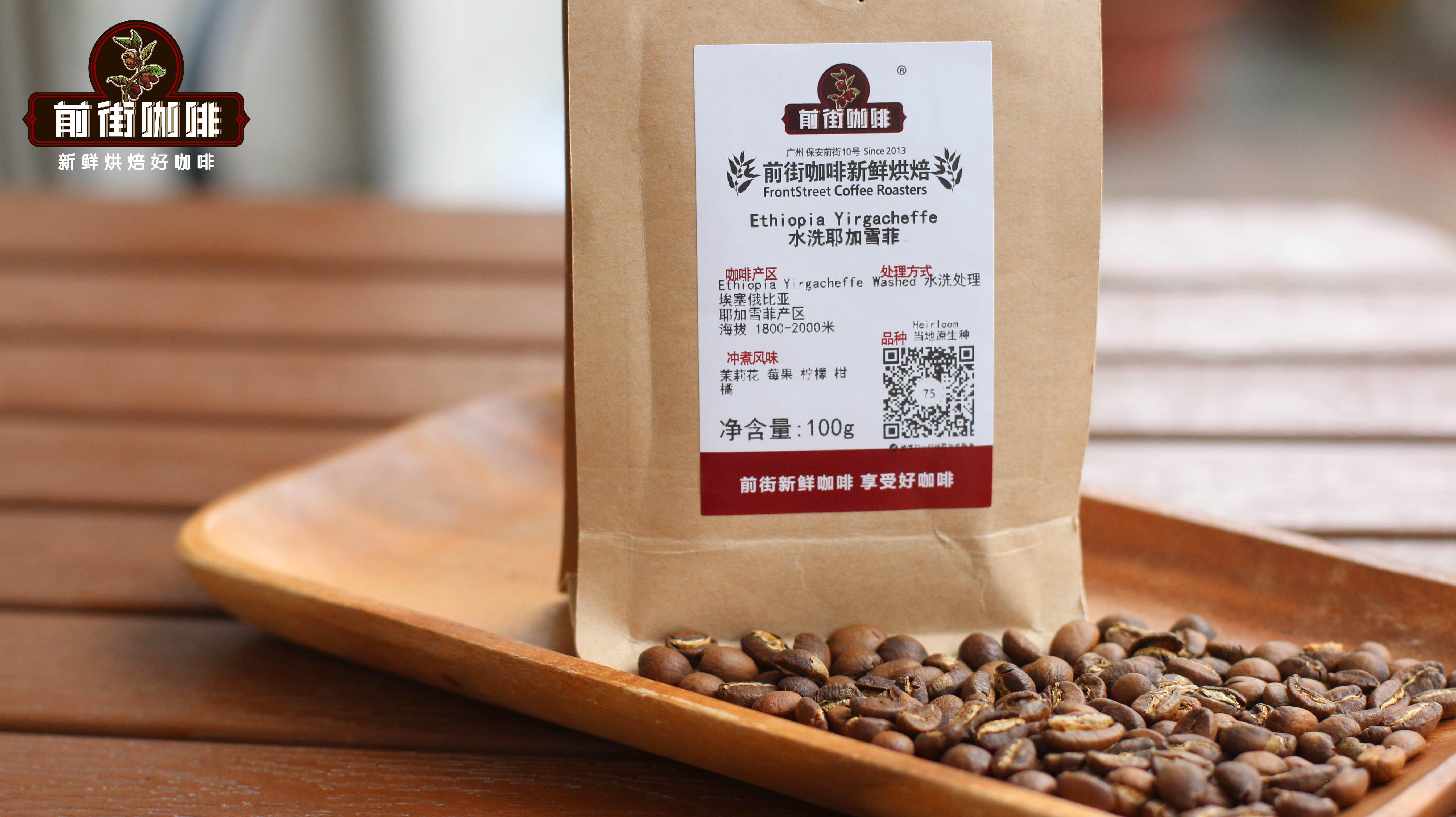
Because Yirgacheffe's flavor is so wonderful, Front Street has four representative Yirgacheffe coffees in total: Front Street Washed Gedingding Cooperative, Front Street Sun-Dried Red Cherry, Front Street Washed Yirgacheffe, and Front Street Sun-Dried Red Cherry SOE specially for espresso machines and moka pots. You can place orders at the Front Street Tmall flagship store or Front Street Taobao store.
Is Front Street Yirgacheffe suitable for making moka pot coffee?
In order to present Yirgacheffe's floral and fruity aromas, Front Street uses medium-light roasting for the above coffees, so they are relatively hard and do not absorb water easily, which can lead to spattering or under-extraction during brewing. For this reason, Front Street specially launched a medium-roast version of Yirgacheffe for two devices, espresso machines and moka pots: Red Cherry SOE.
1. Pour purified water into the lower chamber of the moka pot; the water level should be about 0.5 cm below the pressure relief valve.
2. Grind 18 g of coffee beans to a fine-salt consistency, slowly pour the coffee grounds into the filter basket, tap gently to distribute the grounds evenly, and when the coffee grounds form a small mound, level the coffee surface through distribution.
The particle size of the coffee grounds is between 0.3 mm and 0.55 mm. However, not everyone can distinguish the difference of one or two millimeters with their eyes. The simplest method is to use a grind-size ruler or moka-specific grounds for comparison. In addition, you can also debug directly by hand: if the grind is too fine, you can hear the water boiling with a whirring sound, but no coffee liquid rises, and at this point it is recommended to turn off the heat immediately; if the grind is too coarse, the coffee liquid may gush out like a fountain.
Filling the filter basket with grounds is to avoid extracting bad, defective flavors. Because when the density of the coffee grounds in the filter basket is more uniform, it avoids causing some coffee grounds to be over-extracted or some to be under-extracted, which would lead to uneven flavor or a bitter phenomenon.
3. Place the filter basket into the lower chamber, tighten the upper and lower parts of the moka pot, and place it on an electric ceramic stove to heat over high heat;
4. When the moka pot rises to a certain temperature, and when the moka pot emits an obvious whistling sound, set the electric ceramic stove to low heat and open the lid of the upper chamber.
5. When half of the coffee liquid has come out into the upper chamber, turn off the electric ceramic stove. The residual heat and pressure of the moka pot will "push" the remaining coffee liquid into the upper chamber.
6. After all the coffee liquid has been extracted into the upper chamber of the moka pot, we can see that it is very rich and can even extract Crema. At this point, you can add half warm water to make Yirgacheffe SOE moka pot Americano, or add regular fresh milk to make Yirgacheffe SOE moka pot latte, for a smoother mouthfeel.
The above content is compiled by CoffeeHunters, a coffee news website.


