







The coffee-to-water ratio is a very important parameter in pour-over coffee. In simple terms, with a fixed amount of coffee grounds, there exists a water volume that is just right to fully express the aroma of the coffee. Therefore, learning to find the correct coffee-to-water ratio is also an important part of learning to brew coffee.
What is the coffee-to-water ratio?
The so-called coffee-to-water ratio is the ratio between coffee grounds and total water volume, which directly affects the strength of the coffee. Regardless of the brewing method used, Front Street Coffee always determines the coffee-to-water ratio before extraction. For example, Front Street Coffee's stores typically use 15 grams of coffee grounds to produce a single serving of pour-over coffee, then use a 1:15 coffee-to-water ratio, which means approximately 225 milliliters of hot water needs to be poured.
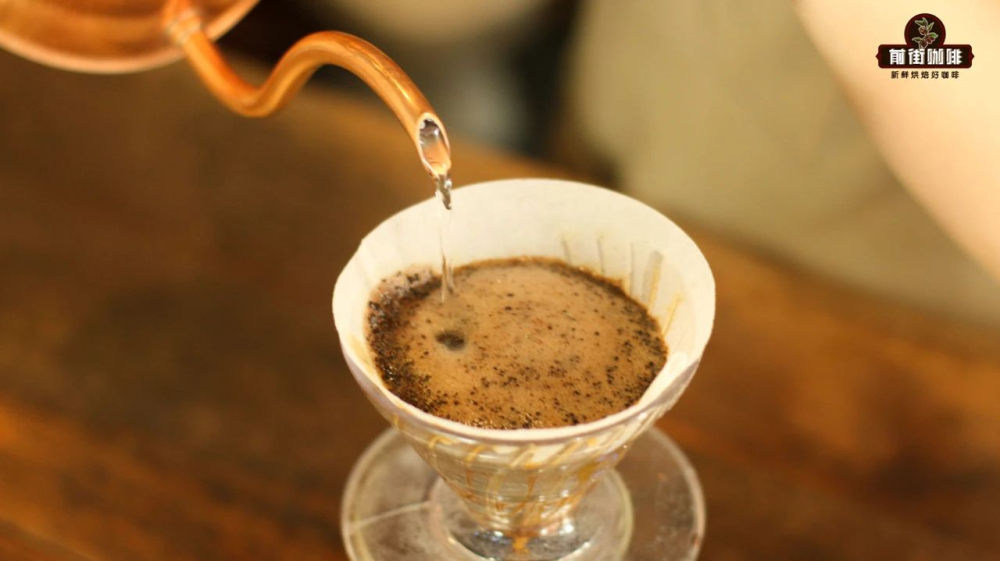
With all other parameters unchanged, the more water poured, the lower the coffee concentration and the more dispersed the flavor; the less water poured, the higher the concentration and the more concentrated and full-bodied the coffee flavor. Additionally, the more water poured, the higher the extraction rate, yielding more soluble substances. As more water is poured, the extraction efficiency continuously decreases—the good things in the coffee have already come out, and what remains will release undesirable bitter compounds, making the coffee bitter and astringent. So we need to find the appropriate coffee-to-water ratio to adjust for the optimal concentration and extraction rate.
For the coffee beans, Front Street Coffee chose the medium-light roasted Front Street Kenya Asalia, with the dose fixed at 15g, then extracted it using three different coffee-to-water ratios. The three sets of parameters were 1:10, 1:15, and 1:20, meaning the water volumes for the three pots were 150ml, 225ml, and 300ml respectively. The grind size was 80% passing through a No. 20 sieve (fine granulated sugar coarseness), the water temperature was 91°C, and the pouring technique was kept consistent, all using a three-pour method.
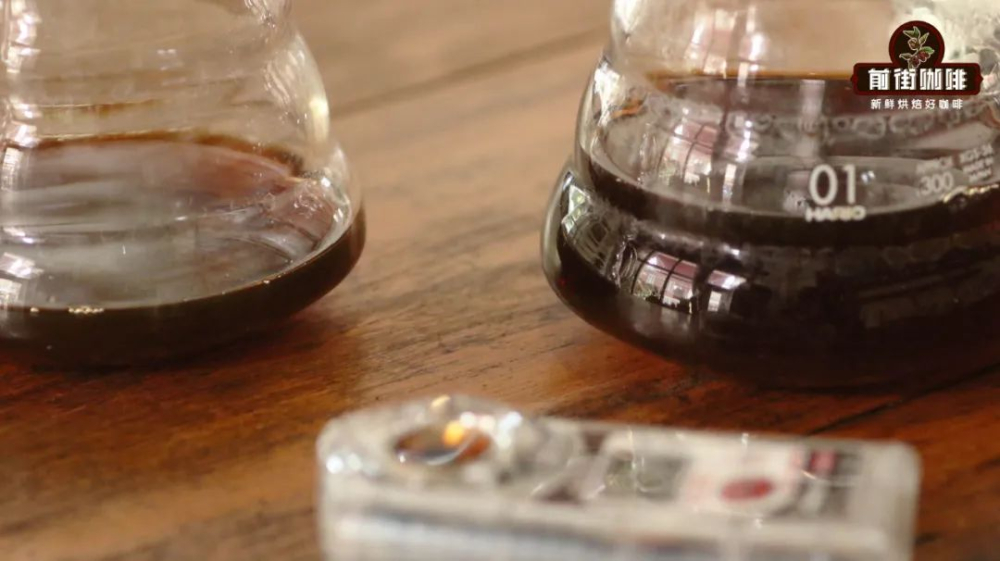
But it's not simply a matter of pouring less water if you want a stronger cup, or pouring more water if you want a lighter cup. Because besides concentration, the amount of water also affects another parameter related to coffee flavor—the coffee extraction rate. After knowing the concentration of the coffee liquid, we can easily calculate the coffee extraction rate. The extraction rate for 1:10 was 16.43%, for 1:15 was 18.55%, and for 1:20 was 19.72%.
In other words, although pouring less water produces a higher-concentration coffee, the extraction rate is lower, meaning fewer total coffee substances are extracted. This is why coffee brewed with a 1:10 ratio tastes only strong, sour, and bitter—because the concentration is too high, it can cause discomfort.
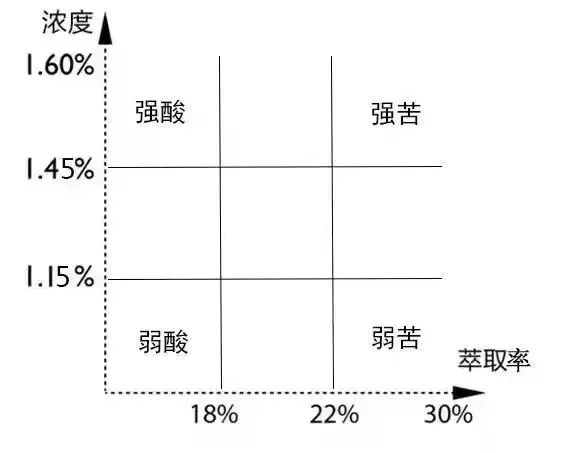
When more water is poured, more coffee substances are extracted, but since the extraction efficiency drops significantly with later pours, the concentration becomes very weak. Moreover, the water-soluble coffee substances include not only the pleasant sweet and sour flavors we enjoy but also undesirable bitterness—the more substances extracted, the more bitter compounds there will naturally be. For example, coffee with a 1:20 ratio tastes weak, without much coffee flavor, and carries a subtle bitterness.
Therefore, the appropriate coffee-to-water ratio is about finding a balance point between concentration and extraction rate, bringing them to their optimal state.
Must pour-over coffee always use the universal 1:15 ratio?
You may have seen many pour-over coffee recommendations suggesting a 1:15 ratio, and after seeing it so often, you might get the impression that the coffee-to-water ratio is an unshakable fixed parameter. Actually, that's not the case. The reason the recommended pour-over coffee-to-water ratio is 1:15 is that 1:15 is a relatively safe ratio (hard to mess up), because recommended parameters target a very broad audience, including many people who are just starting to explore pour-over coffee.
Therefore, a very reliable parameter is needed, and the emphasis is usually placed on parameters that are easier for everyone to control, such as coffee-to-water ratio, water temperature, and pouring technique, thereby reducing variables. All of this serves the grind size—a variable that is very difficult to master (many beginners' coffee brewing problems stem from incorrect grind size).
If you've already started researching coffee-to-water ratios, it proves you've gotten past the beginner stage and have a certain understanding of brewing parameters. So for beginners, the fixed variables like coffee-to-water ratio and water temperature become adjustable variables that can make coffee taste even better.
The difference of 5ml of water
How much difference does pouring 5ml more or 5ml less water make? In terms of data, testing with a refractometer shows a difference of only 0.02%, and accounting for error, the difference between the two is almost negligible.
Front Street Coffee would like to share a story. Once, when Front Street Coffee was brewing a Front Street Geisha coffee, a 1:15 coffee-to-water ratio was used and the flavor came out rather concentrated, without that "taste of money." The second time, the brewing was adjusted by simply pouring 5ml more water than the previous time (230ml total). This time, it tasted much more pleasant, and the layering of flavors immediately came through.
Finally, Front Street Coffee would like to summarize some experience about coffee-to-water ratios to share with everyone.
1. 1:15 is not the only coffee-to-water ratio, nor is it necessarily the most suitable one. Depending on different coffee beans and your own flavor preferences, it could be 1:14, 1:16...
2. Generally, the coffee-to-water ratio range for pour-over coffee is around 1:13 to 1:18. Within this range, you can more easily find the flavor profile that suits you.
3. For some harder coffee beans, you can appropriately extend the coffee-to-water ratio, such as between 1:16 and 1:17. "Harder" refers to roasted beans, such as coffee beans grown at high altitudes and roasted to a light level.
The above content is compiled by CoffeeHunters, a coffee news website.


