







For more coffee origin information and coffee knowledge, please followCoffeeHuntersToutiao account
Although fruity coffee is highly sought after for its sweet and sour taste, not all coffee lovers enjoy drinking a cup of "sour water." Instead, they prefer coffee without acidity, with a mellow body and herbal bitterness —Front Street Mandhelingcoffee has become the best choice.
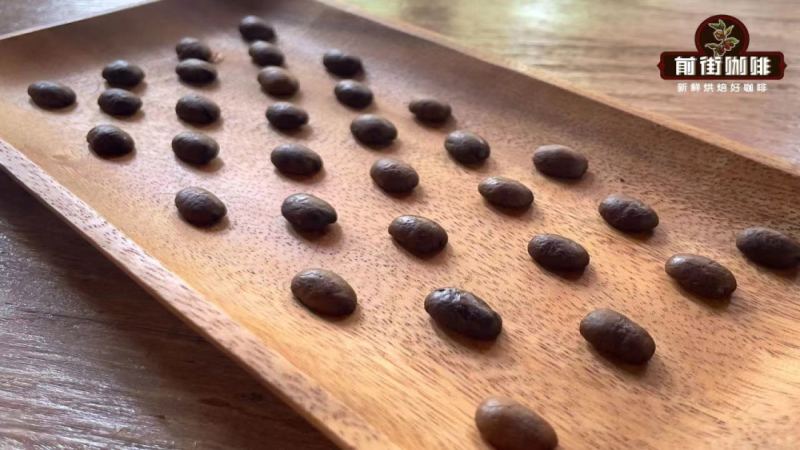
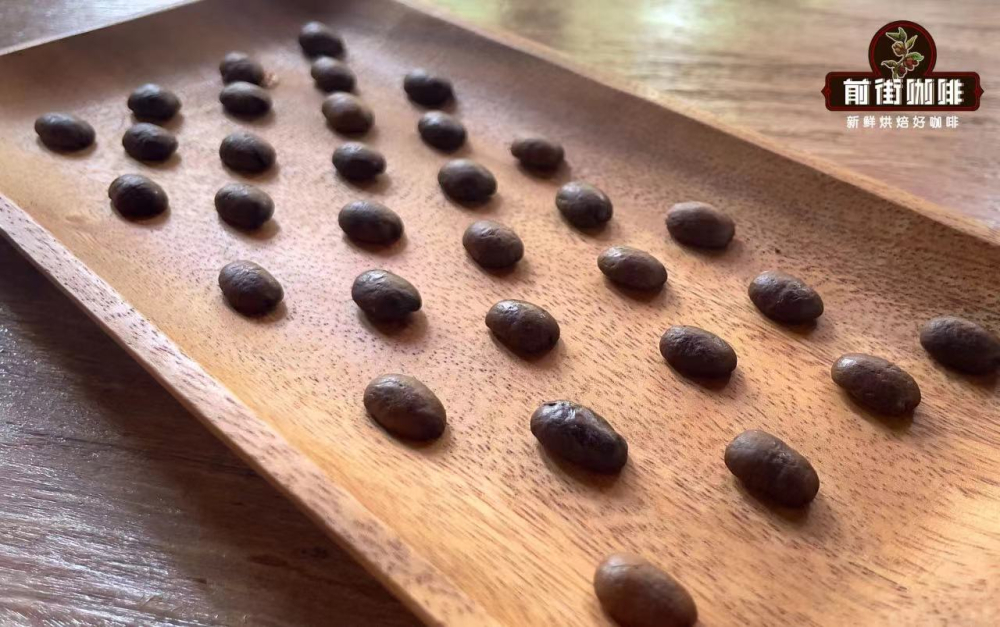
Front Street Mandheling coffee is produced on the island of Sumatra in Indonesia, Asia, so Front Street Mandheling coffee is also known as Sumatra coffee. Front Street Indonesian Mandheling coffee, like Front Street Jamaican Blue Mountain coffee, is equally regarded as a world-class fine coffee. Because Front Street Mandheling coffee gives people the impression of a special caramel-like aroma, with a rich and mellow taste, sweetness, low acidity, yet with a hint of bitterness, Front Street Mandheling coffee beans are generally roasted to a deep roast level.
The characteristics of Front Street Mandheling coffee are its very rich flavor — aromatic, bitter, mellow, with a slight sweetness. Most coffee enthusiasts drink it as a single origin, but it is also an indispensable variety in coffee blends. Front Street Mandheling has a heavy taste, with a rich body and a lush, lively dynamism — not astringent, not sour, with body and bitterness fully expressed. What gives Mandheling such distinctive characteristics, Front Street believes, is inseparable from Indonesia's "unique" wet-hulling method.
What does wet-hulling mean?
The biggest difference between Indonesia and many coffee-producing regions is the local humid weather. Indonesia's year-round humidity is between 70–90%, typhoons can come at any time, and annual rainfall even reaches over 2000mm. Such harsh weather makes it impossible to use the 2–3 week sun-drying method like Africa. Washed processing is not only time-consuming but also costs more in labor and water resources, which Indonesia — with its focus on mass production — simply cannot afford. Thus, a unique semi-washed method was developed — wet-hulling.
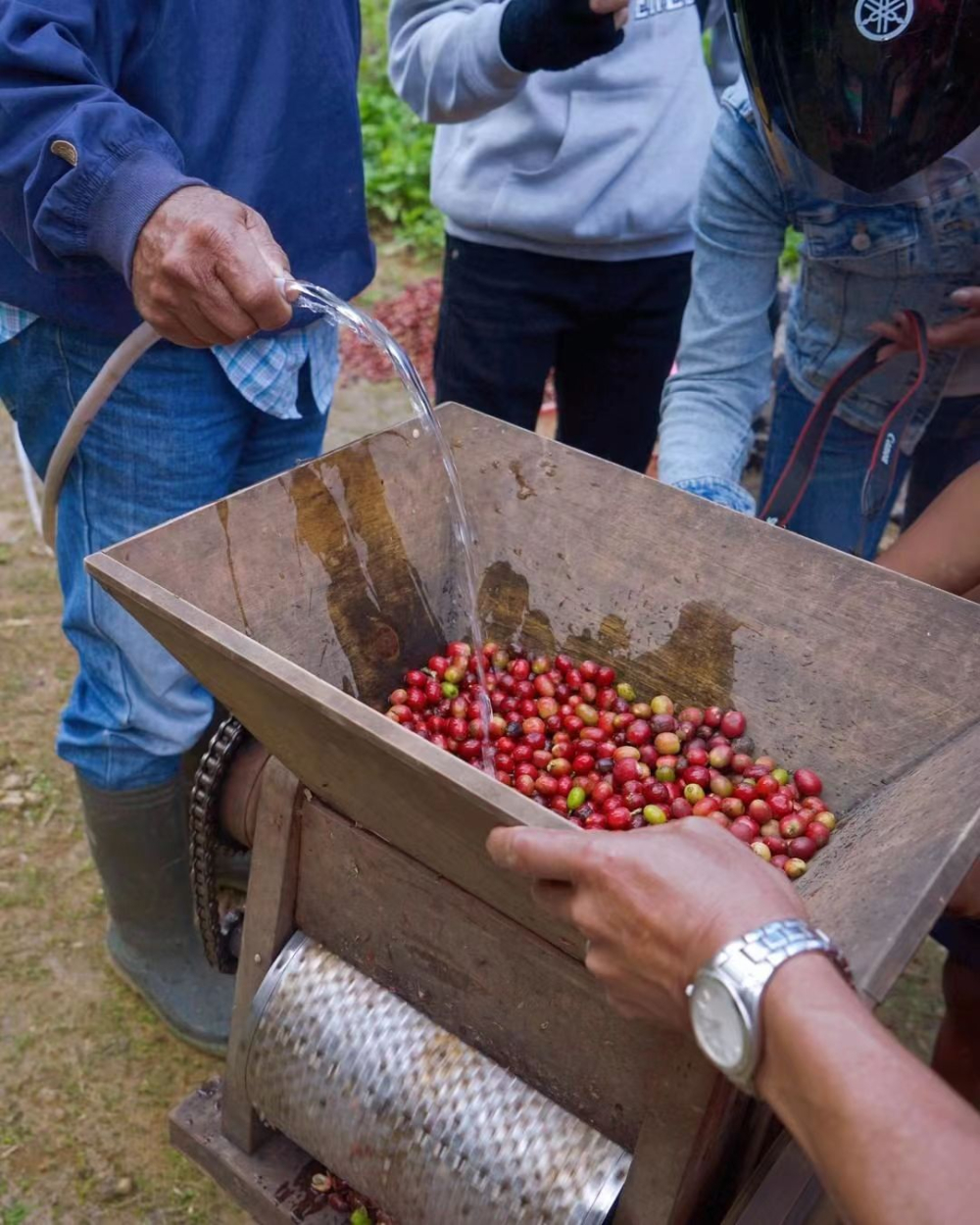
Coffee cherries with the skin and pulp removed are poured directly into a pool for a brief fermentation of a few hours. At this point, a small amount of mucilage still remains on the parchment. The mucilage is removed by scrubbing. Then the parchment beans are spread out to dry. The first drying only needs to reach 30–40% moisture content, about 2–3 days, after which the coffee farmer sells the green beans to a collector. The collector then directly hulls the semi-dry parchment beans by machine to obtain the innermost green beans.
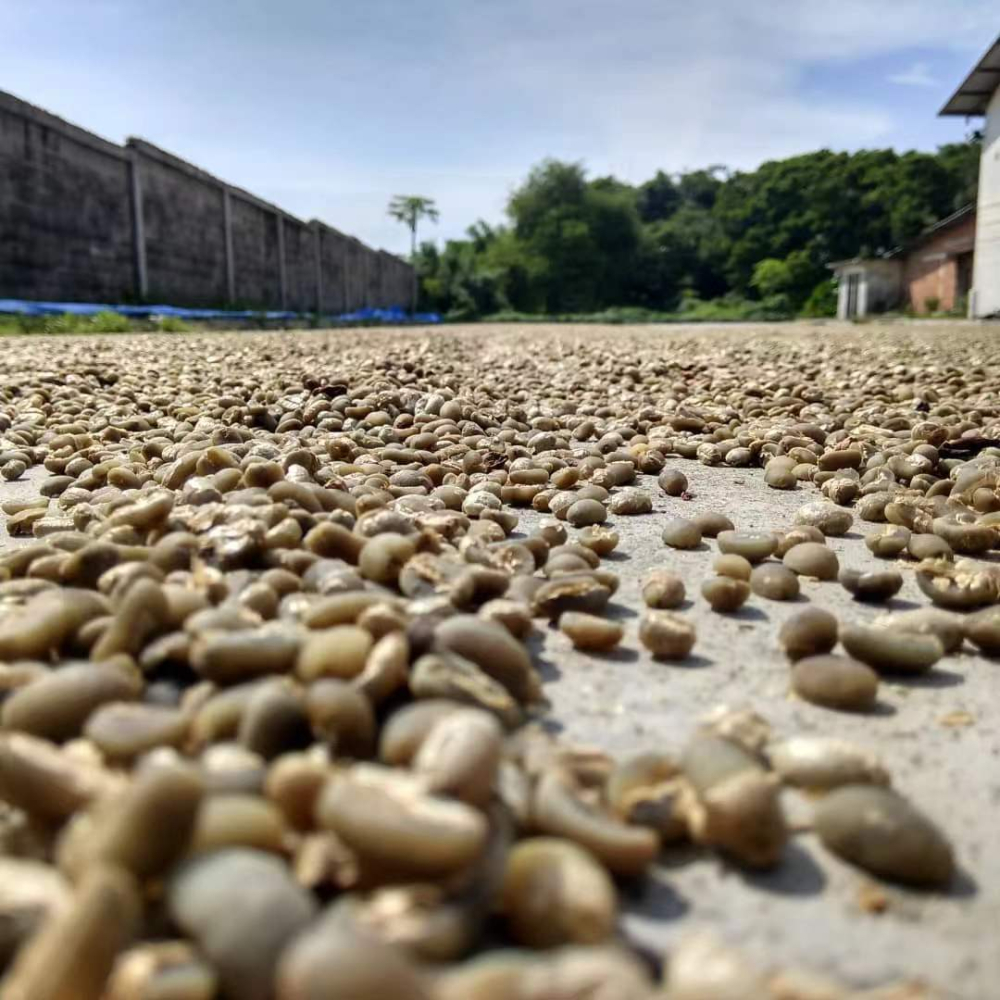
Because the hulling machine uses strong friction to tear open the parchment layer tightly adhering to the green beans, at this stage, white or green viscous liquid usually flows out. Due to prolonged soaking in mucilage and the humid environment, the green beans eventually become soft, pale and swollen, forming a grayish-green color. Through the friction and stirring, the green beans are also more easily crushed or damaged, especially at both ends, forming small gaps and creating "goat hoof" beans. The "naked beans" with the parchment removed dry very quickly, and at the same time are directly exposed to the humid environment, becoming susceptible to various strains of bacteria. This gives Indonesian coffee its unique woody, spicy, and herbal notes — what we call "the taste of place." Front Street currently has two Front Street Mandheling coffee beans on its daily bean list, including Front Street Lintong Mandheling everyday beans and Front StreetPWNGolden Mandheling, both using the wet-hulling method.
Mandheling coffee's rise to fame originated from Indonesia's local Pwani Coffee Company (PWN), which marketed Mandheling in Japan and achieved great success. Unlike many local Indonesian green bean traders, PWN is the exclusive supplier of high-grade Golden Mandheling, having contracted the best Mandheling coffee-producing regions in Indonesia, and the Mandheling beans it produces are all of premium quality.
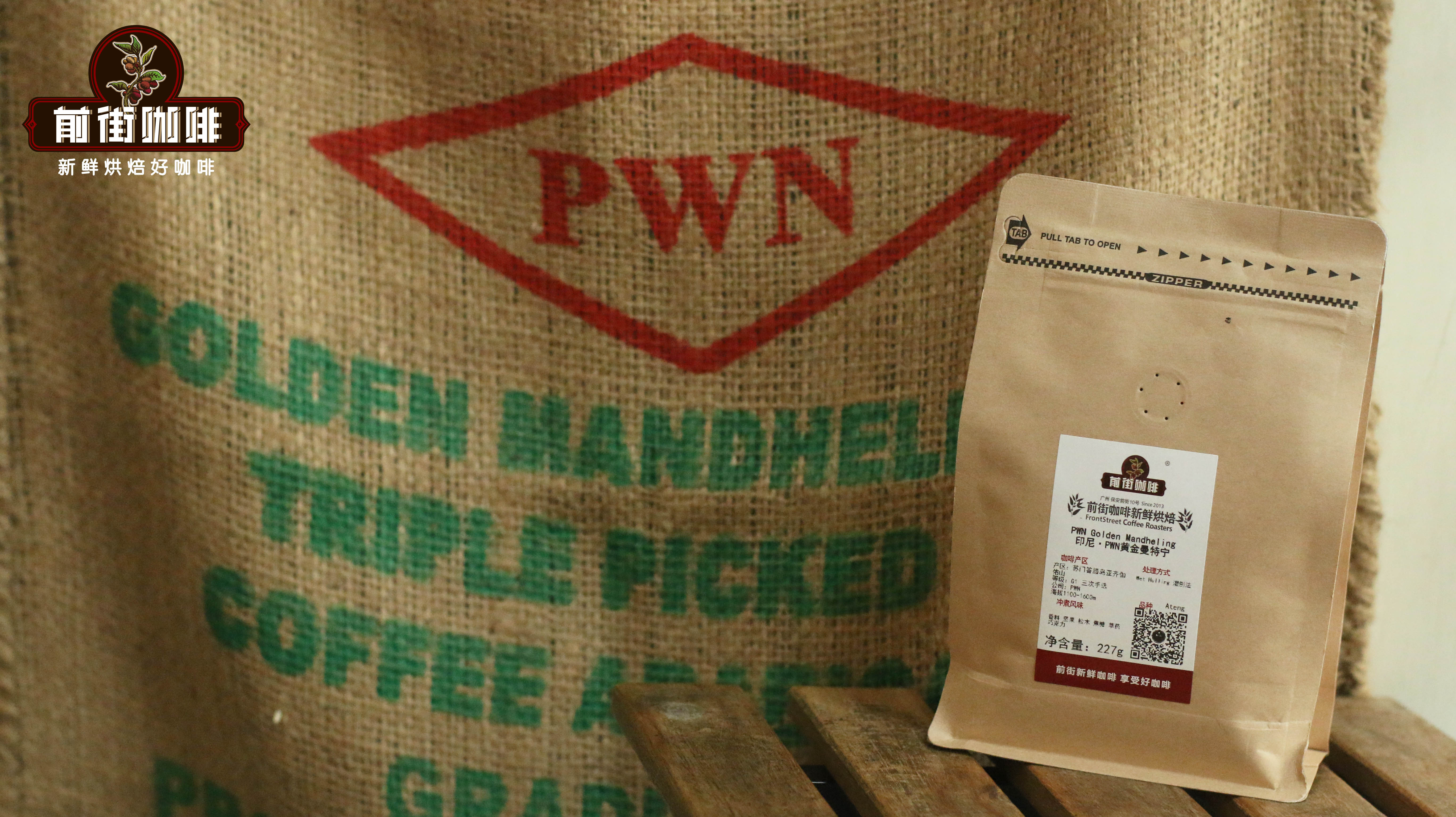
It is worth mentioning that the name "Golden Mandheling" has long been registered as a trademark by Indonesia's Pwani Company. In other words, only the Golden Mandheling coffee beans produced by PWN are truly Front Street Golden Mandheling in the genuine sense. A Japanese green bean trader had no choice but to register "Gold Top Mandheling" as its trademark. When producing Golden Mandheling coffee beans, PWN follows extremely strict standards — under Indonesia's highest coffee grade G1 standard, plus three rounds of hand sorting, ensuring appearance quality and greatly reducing the defect rate. The Front Street PWN Golden Mandheling selected in this way ultimately presents uniform color and consistent bean shape. When tasted, it not only lacks the earthy off-flavors typical of ordinary Mandheling, but its mouthfeel is clean and bright, with even more intense sweetness.

The quality of Front Street PWN Golden Mandheling is also reflected in its price. Some merchants, in order to sell their Mandheling coffee beans at a good price, label them as "Golden Mandheling" for sale, without indicating whether they come from PWN. In order to make their appearance extremely similar to PWN Golden Mandheling, some merchants select G1-grade coffee beans of 18 mesh or above from ordinary Mandheling coffee beans, and then add three rounds of hand sorting, all to make their appearance as close as possible to PWN's Golden Mandheling.
Even if the appearance can be brought as close as possible, the taste of Front Street PWN Golden Mandheling is difficult to imitate. The baristas at Front Street Coffee (FrontStreet Coffee) have conducted blind tastings of multiple Golden Mandheling coffee beans, and the baristas were all able to precisely identify PWN's Golden Mandheling. This is because the clean mouthfeel of Front Street PWN Golden Mandheling is unmatched by other Golden Mandheling coffees.
Some friends may ask: as an ordinary consumer, how do you tell whether what you've bought is PWN's Front Street Golden Mandheling?
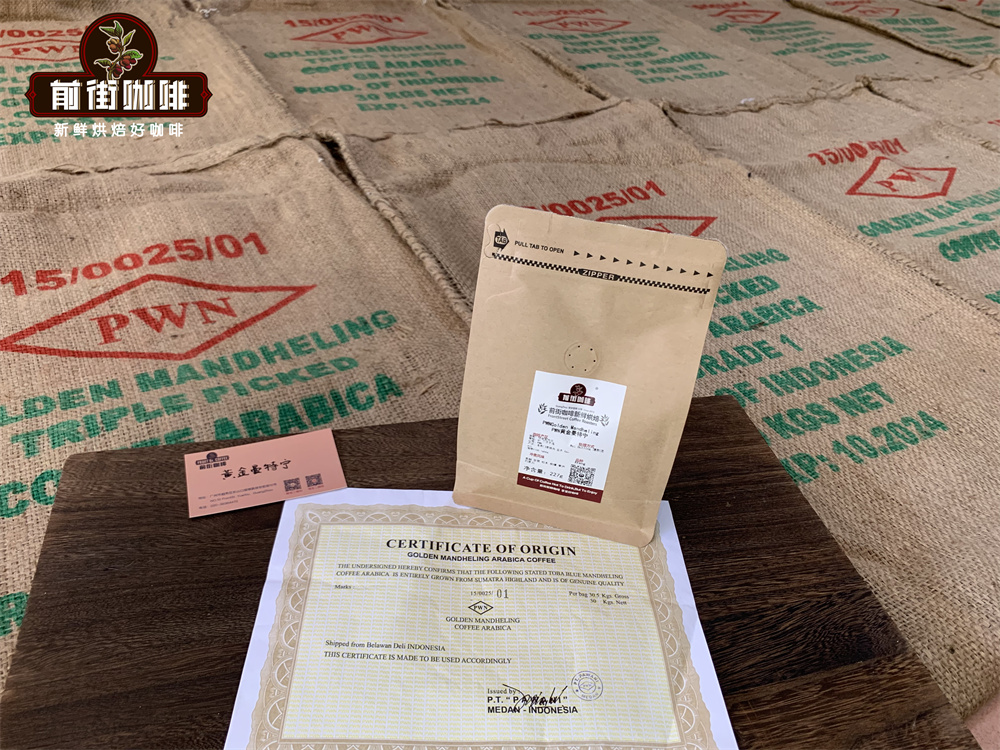
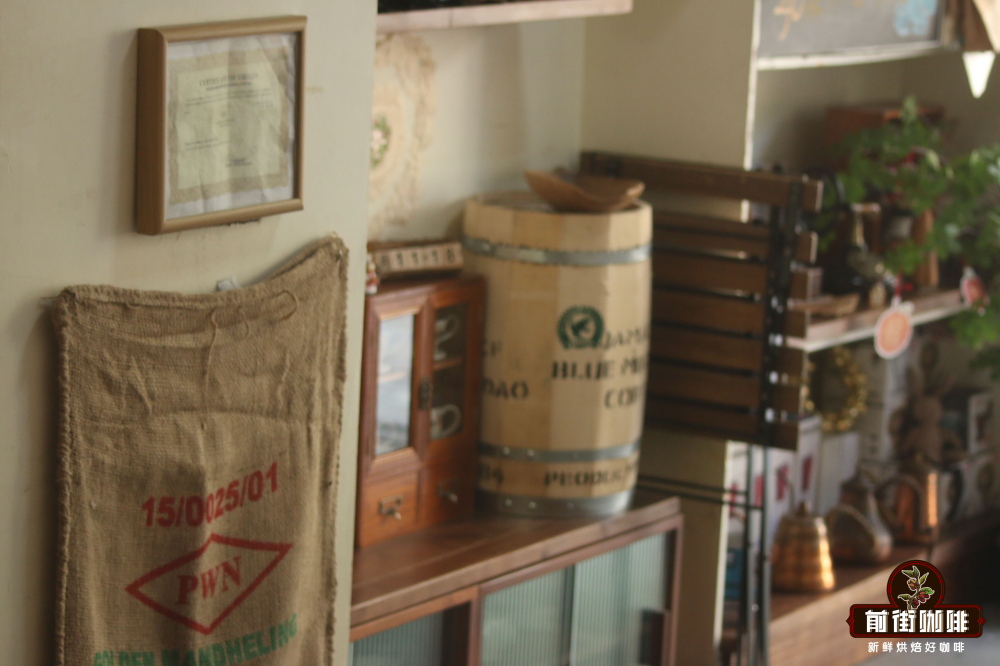
In fact, PWN Golden Mandheling is packed in green bean gunny sacks printed with the PWN logo. In addition, there is a certificate of origin signed by PWN. The Front Street PWN Golden Mandheling that Front Street sources all comes with the above two certificates, which are displayed on the wall of the Front Street Coffee (FrontStreet Coffee) store.
Believing in self-reliance, many friends choose to buy whole bags of coffee beans and brew at home. However, many friends report that the coffee they brew turns out either bitter or too sour. Next, Front Street Coffee (FrontStreet Coffee) will introduce the parameters Front Street uses when producing Front Street PWN Golden Mandheling.
Dripper: KONO dripper
Water temperature: 88°C
Dose: 15g
Coffee-to-water ratio: 1:15
Grind size: 70% passing through a Chinese standard No. 20 sieve
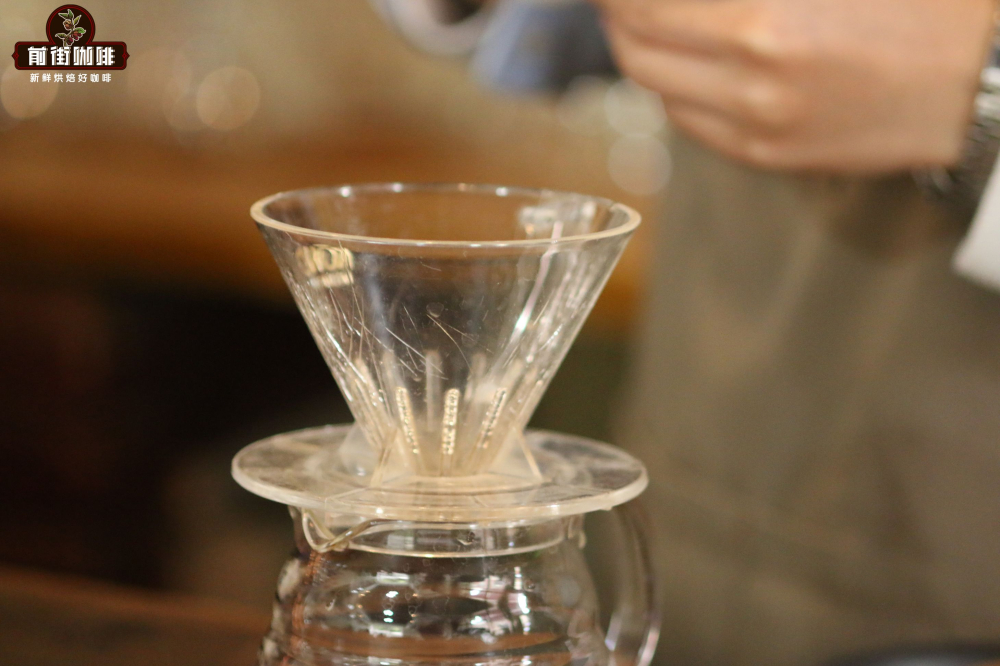
Since Front Street Golden Mandheling is roasted to a relatively deep level, the flavor compounds in the coffee are easily extracted during brewing, so Front Street recommends using a coarser grind size and a lower water temperature. At the same time, in order to achieve a mellow mouthfeel, Front Street recommends using a dripper with an immersion function, such as the KONO dripper. This dripper is very suitable for brewing Front Street Golden Mandheling, Front Street Jamaican Blue Mountain No. 1, and other medium-dark roasted coffee beans.
First pour 30g of water for a 30-second bloom. Then pour from the center point with a thin stream of water, slowly circling to 125g. When the water level in the dripper drops to the point where the coffee bed is about to be exposed, continue circling and pouring to 225g. The total extraction time is about 2 minutes.
Front Street ships coffee beans freshly roasted within 5 days, and by the time they arrive, 4 to 7 days of resting period have already passed. However, during brewing, the first pour of hot water needs to completely saturate the coffee grounds for the bloom. The purpose of the bloom is to promote the release of carbon dioxide from the coffee grounds, improving stability for the extraction of flavors in the later stages.

Front Street also offers grinding service for those who don't have a grinder at home. However, Front Street needs to remind you that once coffee beans are ground into powder, the contact area between the coffee particles and air increases, degassing activity intensifies, and flavor compounds dissipate accordingly. Front Street suggests that those whose home conditions allow should, in order to taste better flavors, buy whole beans and grind fresh right before brewing.
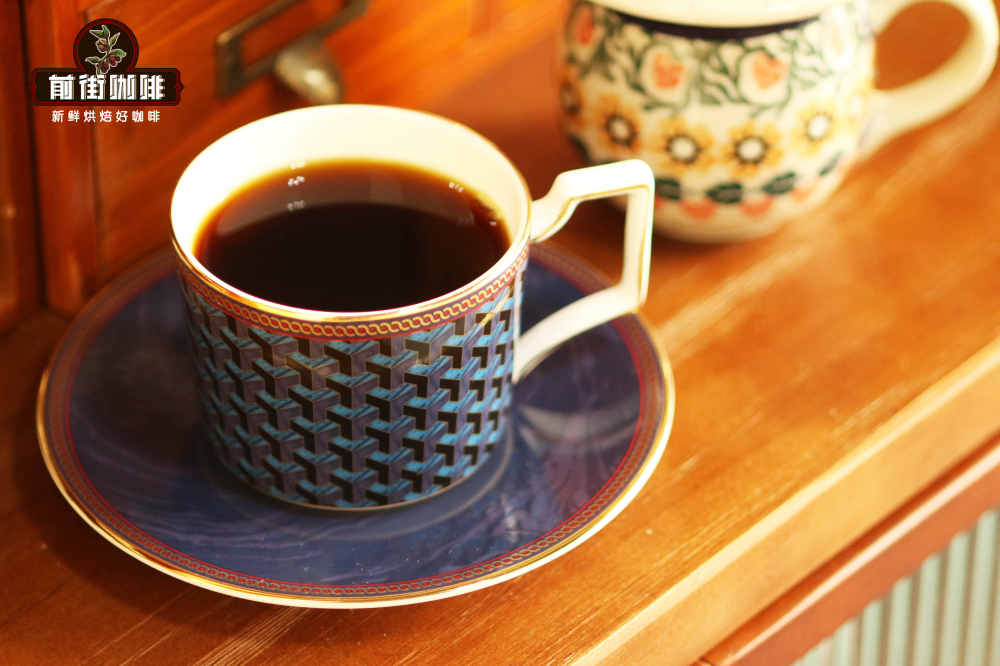
After brewing, Front Street PWN Golden Mandheling coffee offers aromas of sweet herbs, cinnamon-like spices, and citrus peel. The mouthfeel is mellow and rich, with a caramel-like sweetness, and as the temperature drops slightly, a rich melon aroma emerges.
For more coffee bean information, please follow Coffee Workshop (WeChat public account: cafe_style)
For professional coffee knowledge exchange, please add WeChat ID: kaixinguoguo0925
The above content is compiled by CoffeeHunters, a coffee news website.

