







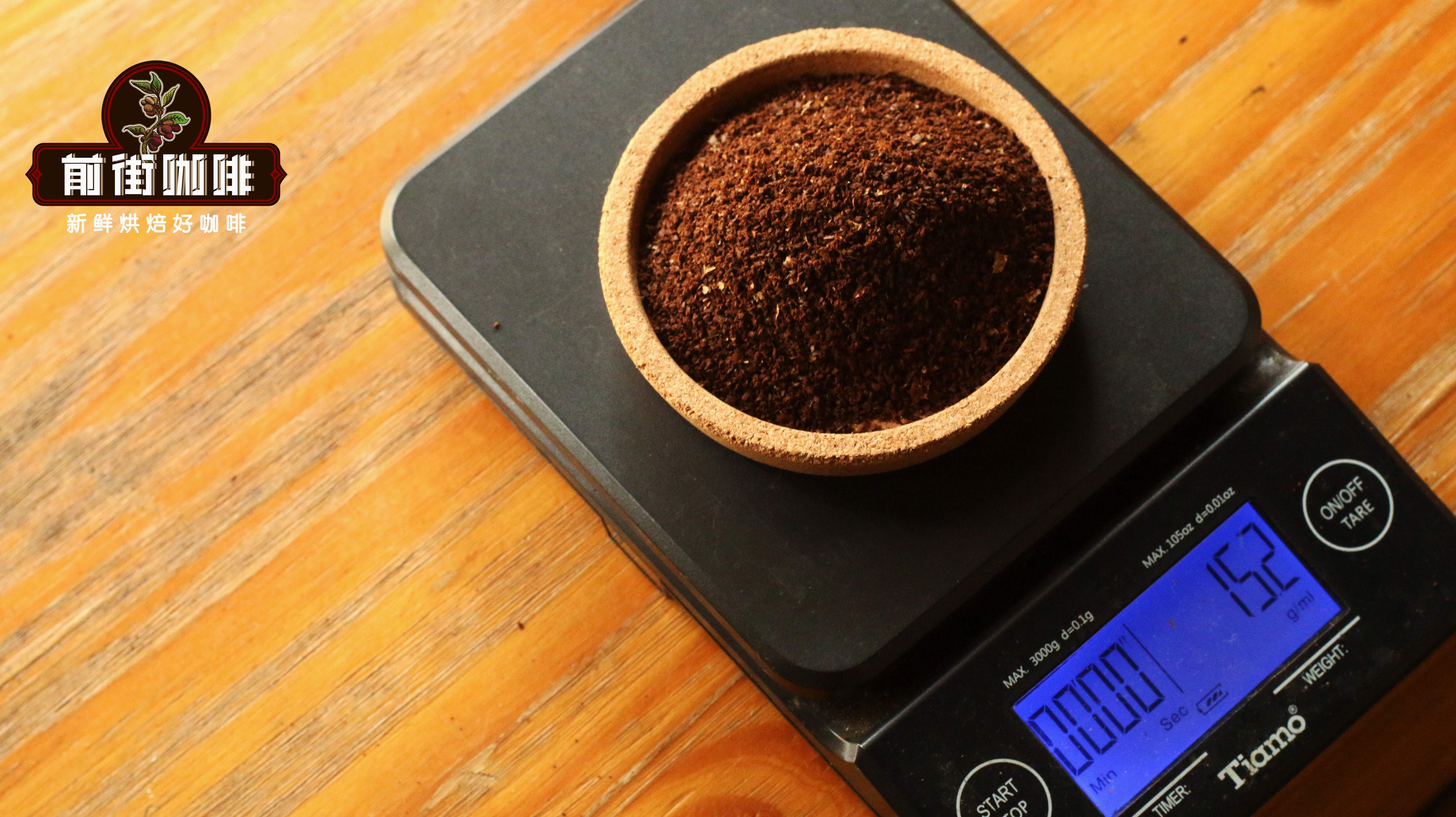
We all know that different coffee beans require different grind sizes. When making pour-over coffee, you need to grind the coffee beans into powder first, and then brew. So every coffee shop has an electric grinder, but electric grinders are also relatively expensive, so many coffee lovers consider manual grinders. So how do you use a manual grinder? In this article, Front Street Coffee (FrontStreet Coffee) will talk with you about manual coffee grinders.

First, the handle of a manual coffee grinder consists of 5 parts: the grind size adjustment screw, the inspection fixing ring, the A-shaped grind size adjustment fixing screw, the handle, and the main fixing screw. Depending on the model, some machines require you to separate and disassemble the above parts in order to adjust the grind size adjustment screw, and then reassemble and use it after adjustment, while other models allow you to adjust the grind size adjustment screw directly. If you turn the grind size adjustment screw clockwise, you can grind finer coffee; if you turn it counterclockwise, you will grind coarser particles.
In particular, if you want to use a rotary-wing electric grinder to grind uniform coffee particles, shaking the grinder up and down while grinding is the key! While checking the grinding process and appearance, grind the coffee to the desired size and coarseness—this is the key point. But once you are proficient to a certain degree, when shaking, you can distinguish the coarseness of the particles by the sound it makes. Not this sound, nor this sound. It may sound like advertising copy, but in fact, the finer the particles, the lighter the sound.
1. Unscrew the metal nut on the top of the manual coffee grinder.
2. Remove the crank handle from the manual coffee grinder.
3. Remove the metal fixing plate above the manual grinder's fineness adjustment screw.
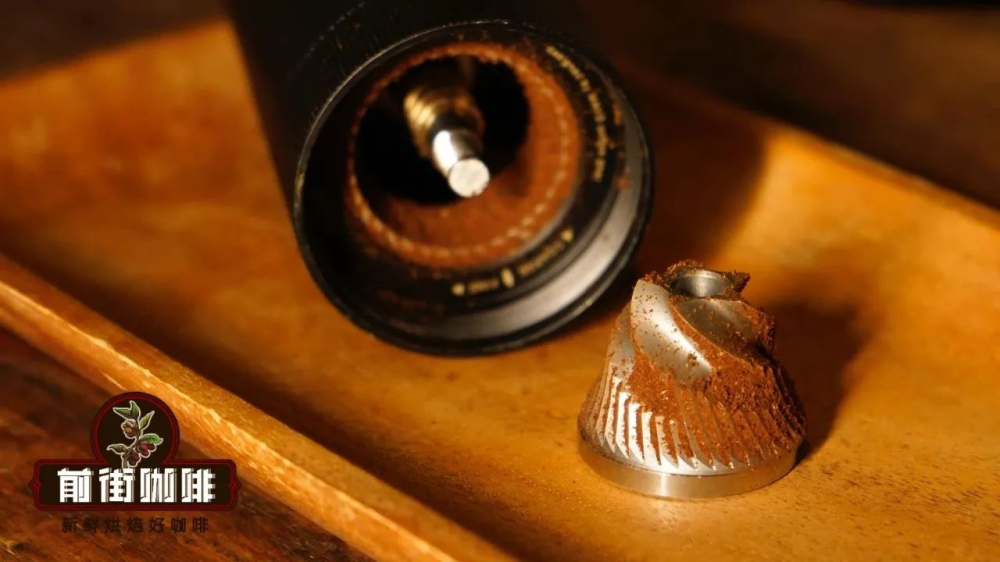
4. With your left hand, firmly pinch the central fixed column in the middle of the manual coffee grinder so that it cannot rotate left or right, and with your right hand rotate the coarse-fine adjustment nut. If you rotate it downward, the grind will become finer; if you rotate it upward, the grind will become coarser. During this process, you should occasionally put the crank handle back on, take some coffee beans and grind them, and observe whether the coarseness meets your needs.
5. Reinstall the handle and tighten the nut on top again.
After adjusting the grind size, you can grind the beans. Manual coffee grinders are used for most pour-over coffee, but they are not suitable for espresso. Espresso requires an espresso grinder, and the grind size for espresso is very fine. The grind for pour-over coffee is a bit coarser than for espresso, but this mainly depends on what beans you are brewing.
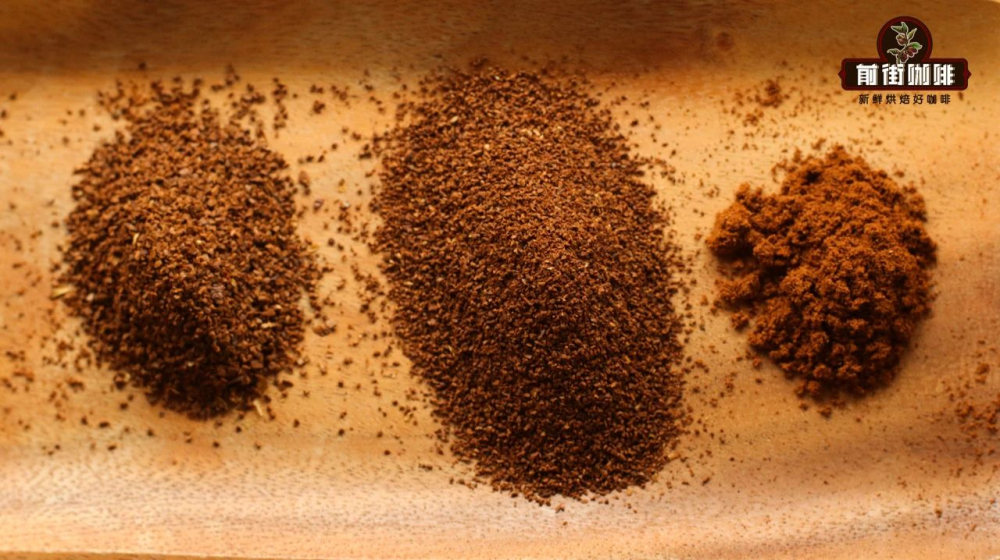
Front Street Coffee (FrontStreet Coffee) generally uses a medium grind size for pour-over coffee. A slightly coarser setting is used for siphon, and the coarsest grind setting is used for French press brewing. Front Street Coffee (FrontStreet Coffee) has also summarized the relevant patterns, such as Front Street Coffee (FrontStreet Coffee)'s grind size standard sieve pass rate:
Cold drip > pour-over siphon 80% > moka American drip 75-80% > cupping 70-75% > French press 65-70%.
When Front Street Coffee (FrontStreet Coffee) gets a new bean and needs to determine the grind size for that bean, Front Street Coffee (FrontStreet Coffee) will use a 0.80 mm standard sieve; coffee particles smaller than 0.80 will pass through these small holes. We will first weigh out 10 grams of coffee beans and grind them, place the ground coffee powder onto the upper layer of the entire sieve, and by shaking it repeatedly many times, coffee particles smaller than 0.80 mm will be sifted into the lower layer. At this point, we then weigh the coffee powder in the lower layer. For example, Front Street Coffee (FrontStreet Coffee) recommends a pour-over grind that is a little finer than medium, with a sieve pass rate of about 80%, meaning 10 grams of coffee beans can yield about 8 grams of coffee powder. So the initial grind size is the pour-over grind size.

If the coffee powder is less than 8 grams, it means the grind is too coarse, so you can adjust it finer; if the sifted coffee powder is more than 8 grams, it means the grind is too fine, and you need to adjust it coarser.
You may think it is a bit troublesome, but once you get familiar with it, you will gradually get the hang of it! Pour-over coffee is a very meticulous task. Factors such as the coffee-to-water ratio, grind size, water temperature, and extraction parameters will all affect the flavor of the coffee, so the flavor of the coffee brewed by every barista is somewhat different, or the flavor of the coffee beans you brew at home each time may also be different.
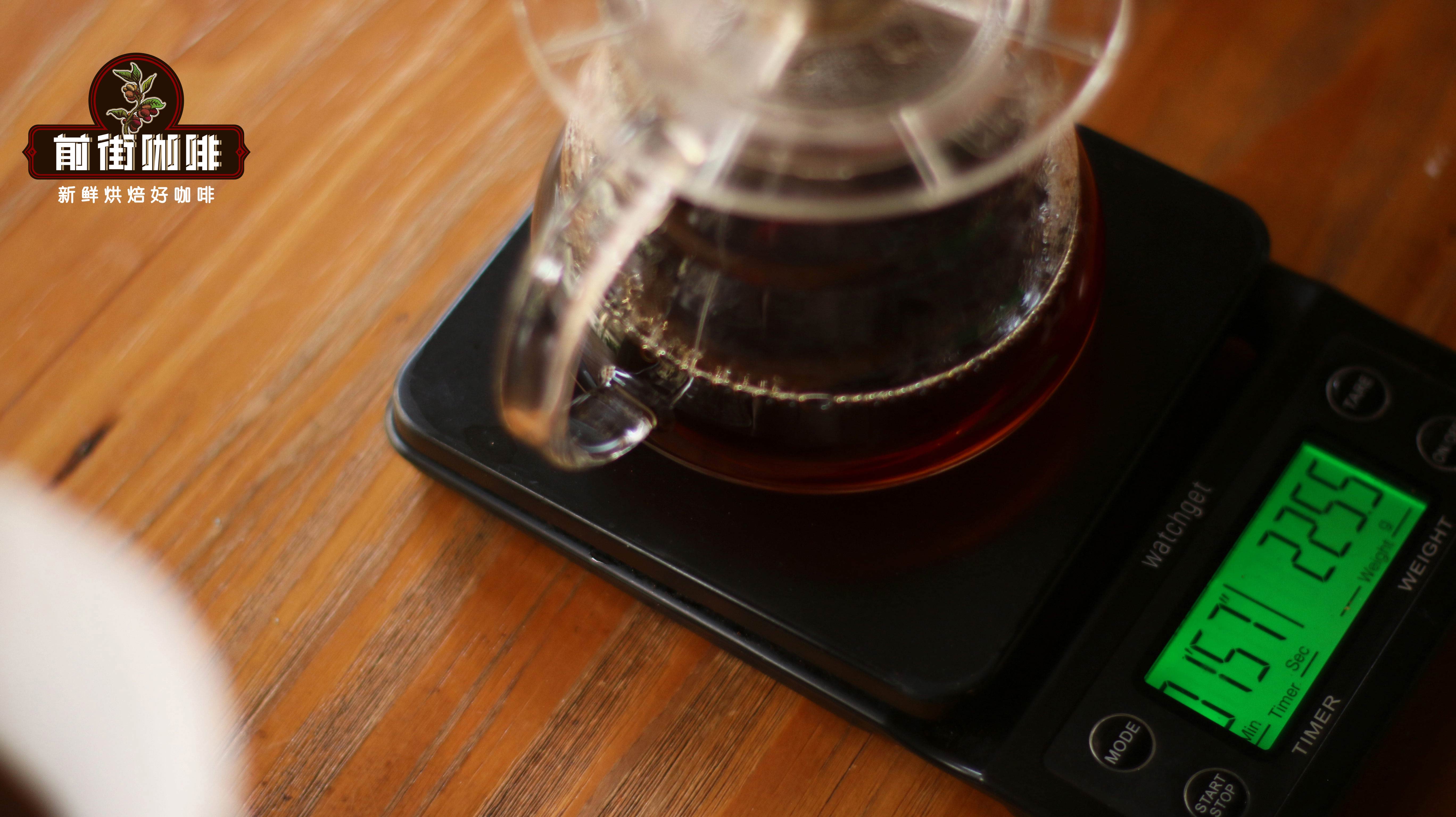
Therefore, in the process of gradual research, Front Street Coffee (FrontStreet Coffee) records and summarizes the grind size, water temperature, and brewing time for each coffee bean. As for the coffee-to-water ratio, Front Street Coffee (FrontStreet Coffee)'s recommended pour-over ratio is in the range of 1:14 to 1:18. At present, the ratio used by Front Street Coffee (FrontStreet Coffee) when producing coffee is 1:15, that is, 225 grams of water is poured over 15 grams of coffee powder. Because a high ratio makes the taste weak, and a low ratio makes the taste strong.
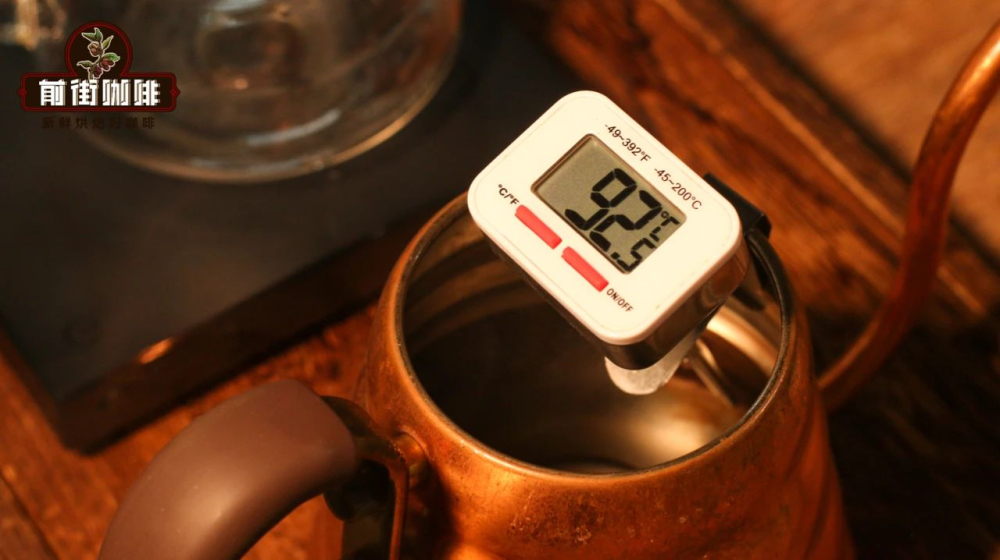
There is also water temperature, which is also an important element affecting pour-over. The higher the water temperature, the more flavor can be extracted; similarly, the lower the water temperature, the lower the efficiency of extracting coffee flavor. When brewing lighter-roasted coffee beans, Front Street Coffee (FrontStreet Coffee) chooses a water temperature of 90°C, while for darker-roasted coffee beans it chooses a water temperature of 88°C. Extraction time refers to the time from when the coffee powder first contacts water to when the dripper is removed. The longer the contact time between coffee and water, the more substances are extracted; if the contact time between coffee and water is short, the taste is weak. Front Street Coffee (FrontStreet Coffee)'s brewing/extraction time is about 2 minutes.
After saying so much, it is time to put it into practice. Front Street Coffee (FrontStreet Coffee) will use a Panama Diamond Mountain coffee bean to explain it to everyone.

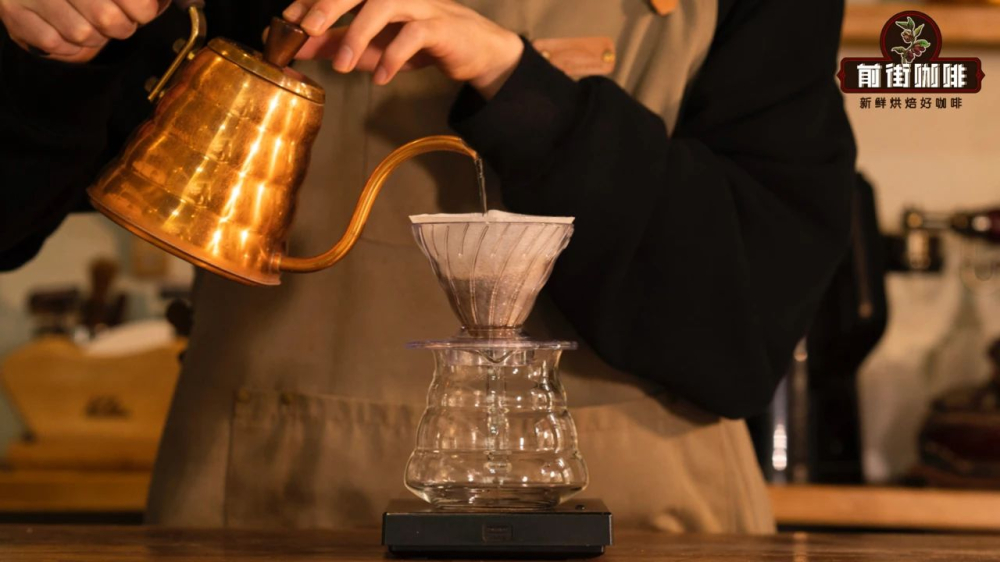
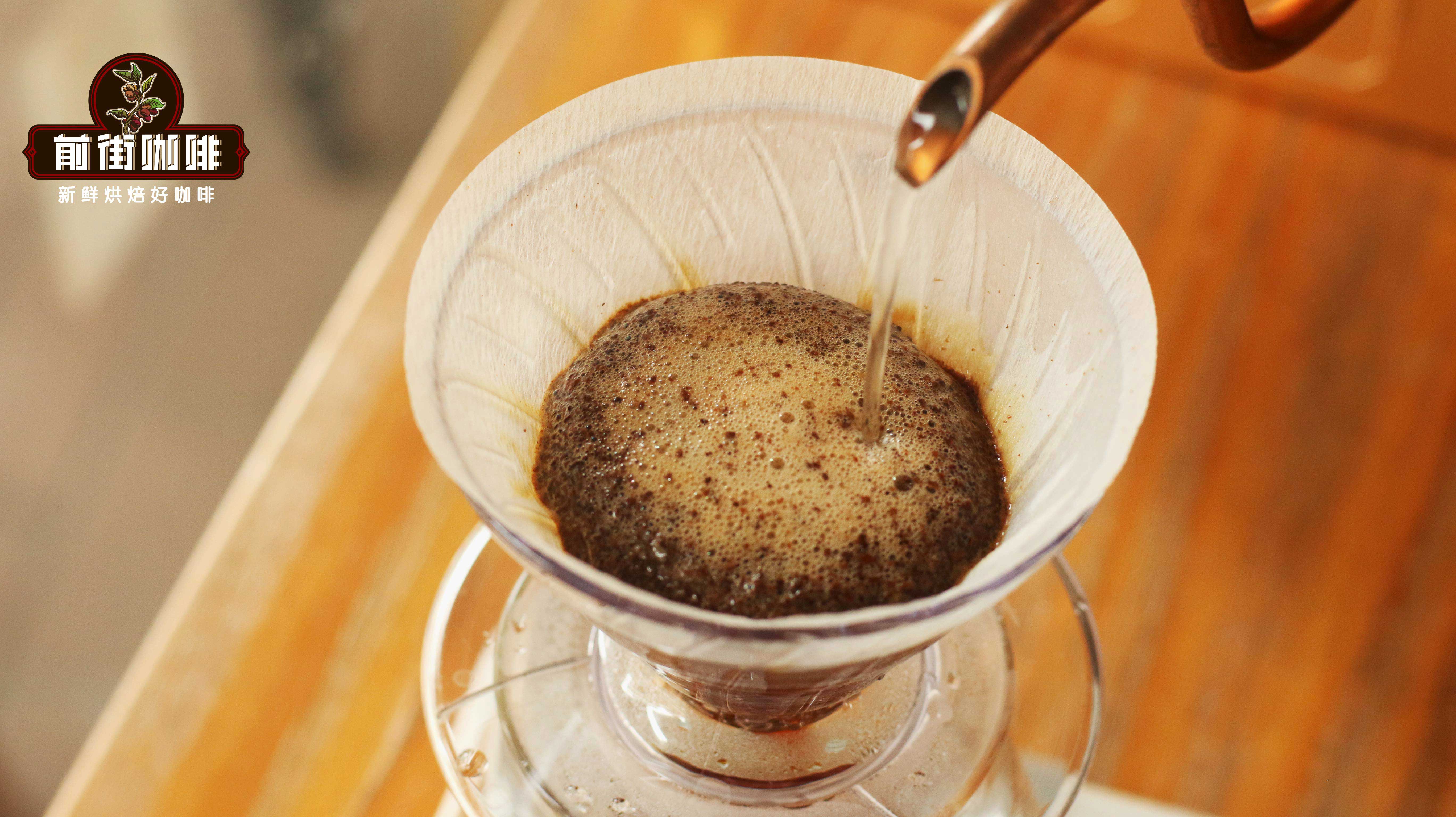
The Front Street brewing parameters are: use a Hario V60 dripper, 90°C water temperature, 15 grams of coffee powder, and a 1:15 coffee-to-water ratio. The pour-over method uses Front Street's simplest three-stage method. In the first stage, first use 30 g of water to fully wet the coffee bed into a “hamburger” shape and bloom for 30 s, then proceed to the second stage of brewing. In the second stage, pour water until it reaches 125 g at 54 s on the timer, then stop and wait for the water level to drop to 2/3 of the coffee bed before pouring the third stage (this stage of brewing is to extract the sweet and sour flavor substances in the coffee powder); in the third stage, pour water until it reaches 225 g at 1'40" on the timer, with a total extraction time of 2'10". After the coffee extraction is complete, gently swirl it, and wait until the coffee liquid is fully uniform before tasting.
Diamond Mountain from Hacienda La Esmeralda in the Panama producing region has berry-like acidity and notes of citrus and chocolate, with rich layers and a smooth mouthfeel. Front Street believes that Panama's washed processing method has a clean and balanced mouthfeel, with bright acidity yet without losing caramel aroma.
The above content is compiled by CoffeeHunters, a coffee news website.


