









Many friends who originally used hand grinders have purchased an electric grinder to grind coffee beans, with the goal of freeing their hands and no longer needing to go through the tedious grinding process. However, electric grinders are different from hand grinders, and many details need to be paid attention to when using them. A single oversight can easily shorten the grinder's lifespan and significantly reduce grinding quality.
Coincidentally, many friends have recently asked Front Street at the store about various grinder-related questions, so today Front Street will share what details are worth noting when using an electric grinder!
One, pay attention to "seasoning the burrs" and "cleaning the burrs"
That's right, here Front Street is referring to two kinds of burr washing. Although both involve cleaning the grinder, the specific methods and effects are completely different.
The first kind of burr washing is done when we use the grinder to grind beans! If you often go to a café for pour-over, then it should not be hard to notice that before grinding the beans for brewing, the barista will first take out a few coffee beans and grind them as a preliminary run, and then put the beans to be brewed into the grinder to grind into powder.

The purpose of this action is not to test the grind size of the coffee powder, but to give the grinder's burrs a quick "cleaning."
As everyone knows, no matter how good the quality of the grinder, the phenomenon of "retention" will occur, meaning the coffee powder ground out will be a little less than the coffee beans put in. This is because some coffee powder is left in the burrs or internal gaps during grinding and cannot come out. At the same time, some darker-roasted/stronger-smelling coffee beans will also attach their oils and aromas to the burrs.

If it is not cleaned, then these aromas, oils, coffee powder, and other "impurities" will mix into the next batch of coffee beans being ground, directly affecting the taste and cleanliness of the coffee.
So, we need to send out a small amount of coffee beans before formal grinding to carry these substances out, avoiding any impact on coffee quality. Generally speaking, Front Street will use 1~2g/3~4 coffee beans to season the machine. Too few will have no effect, while too many will cause waste. But if we grind dark-roasted coffee beans too many times, then we need to pay attention to regularly deep-cleaning the grinder, and this is the second kind of "machine washing" mentioned by Front Street.
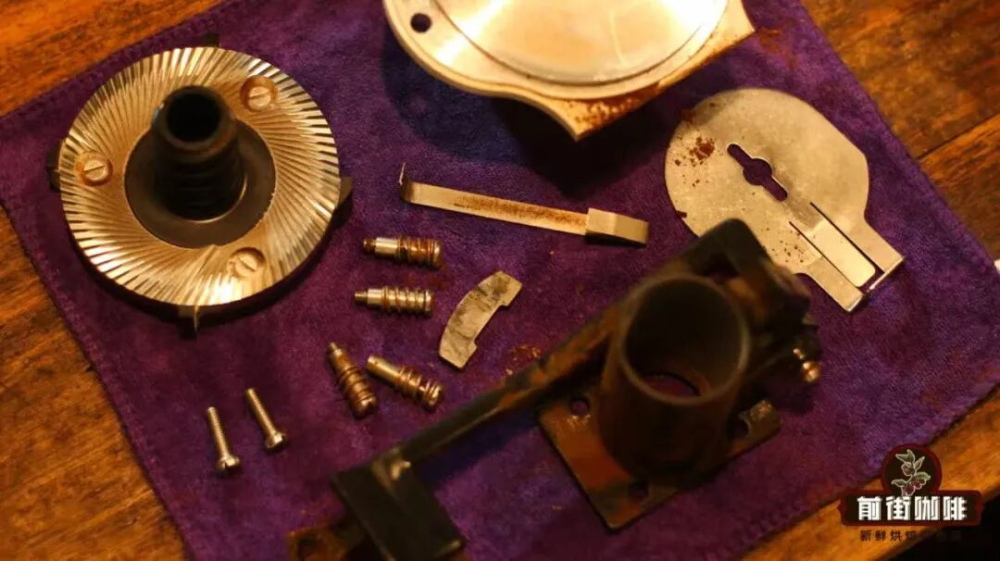
This is because dark-roasted coffee beans tend to carry more oils, and these oils are not something that can be completely removed simply by using coffee beans. When the oils remain in the burrs for too long, they will produce off-flavors due to oxidation and other phenomena. Not only that, the oils will also worsen the grinder's retention phenomenon, leaving more powder behind in the grinder.
Therefore, if dark-roasted coffee beans are ground relatively frequently, then we should also clean the grinder relatively frequently. As for how to clean it, Front Street has shared this in previous articles, and everyone can search for it to learn more. (But the structures of different grinders are not universal, so it is best to ask the manufacturer for the relevant cleaning tutorial.)

Two, start first, then add beans
This is also an operation that Front Street often shares! When grinding coffee beans, we should最好 first start the grinder, and then put in the beans for grinding. This practice has 2 benefits:
The first is that it can reduce burr wear and the probability of jamming! When the grinder starts, the burrs go from stationary to stable rotation during a brief transition period. The specific time will vary depending on the quality of the grinder, but it is generally in the range of 0.5~1 second.
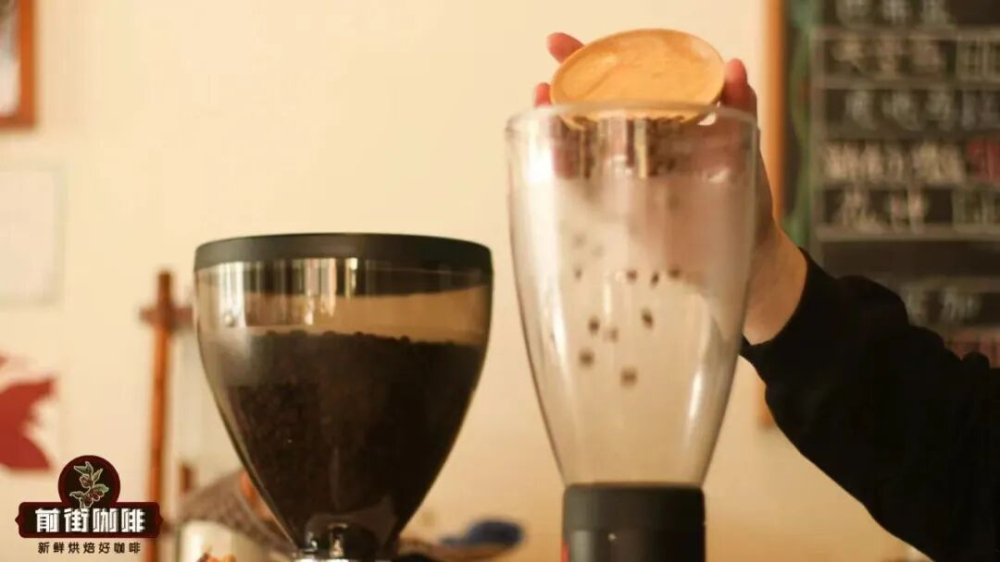
If we choose to add beans first and then start the grinder, then the presence of coffee beans will increase the resistance when the burrs start, increasing the load on the motor. For some small household grinders, if the beans being ground are relatively high in density, then jamming, or malfunctions caused by motor overload, can easily occur. In addition, this will also increase the degree of burr wear and shorten the lifespan of the burrs. Although the degree of wear is tiny, as the saying goes, many a little makes a mickle.
So Front Street recommends that when grinding coffee beans, first start the grinder, and after the burrs rotate stably, then add the coffee beans for grinding. This can not only effectively extend the lifespan of the grinder and burrs, but the quality of the coffee powder will also improve because the rotation speed is consistent.

Three, regularly check the coarseness of the ground coffee powder
Front Street often recommends that everyone buy a No. 20 sieve to measure the sieving rate of coffee powder. This is not only to allow everyone to use the same parameters/grind size to brew coffee, but also because it can be used to calibrate the grinder's grind setting.

Have you noticed that as the grinder's usage time increases, the particles it grinds become coarser and coarser? Or, in other words, the brewed coffee becomes lighter and lighter, and underextraction begins to appear?
This is the result caused by burr wear. Every time we grind coffee beans, it causes slight wear to the burrs. After many instances of wear, the gap between the burrs becomes wider and wider, and the coffee powder ground at the same setting also becomes coarser and coarser.

When the grind size becomes coarser, under the same parameters, the coffee substances extracted naturally become relatively fewer, so both the taste and mouthfeel of the coffee are, by comparison, not as rich and full as they were at the beginning.
So, if we want to brew coffee with a rich taste and full mouthfeel again, we need to adjust the grind finer and finer until it is no different from the original level, and through the No. 20 sieve, we can directly find the corresponding grind setting. It is worth mentioning that this situation is most obvious on espresso grinders. Just by looking at the dial, you can tell that the setting value will be much smaller than before.
Four, pay attention to whether there is fine powder blockage
"Spinning without grinding beans" is a situation that often occurs with espresso grinders. Simply put, when we start the grinder, although the burrs are rotating, no coffee beans are being ground.

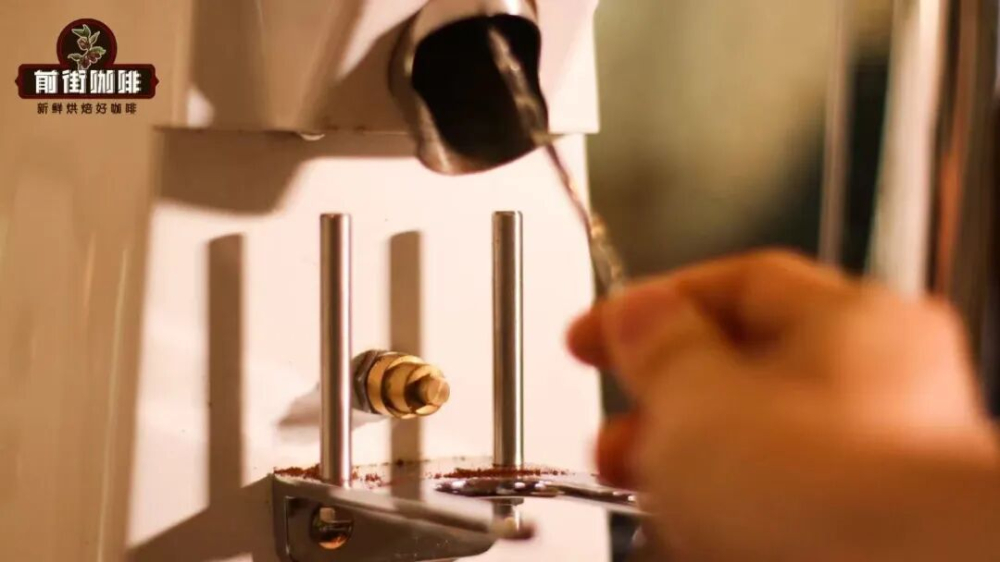
In this kind of situation, it is most likely caused by the grind being too fine and then coffee powder blocking the burrs. If friends encounter this situation, then the first step is to observe whether it is caused by fine powder blockage. If so, then we can choose one of the following two solutions to solve it: The first is to directly adjust the grind coarser and increase the gap, so that grinding can resume;
The second is, as Front Street mentioned earlier, to clean the grinder. As long as the fine powder blocking the burrs is cleared out, the grinder can resume grinding work.
So the above are some small details to pay attention to when using an electric grinder.
The above content is compiled by CoffeeHunters, a coffee news website.


