








Anyone who drinks coffee regularly knows that Americano is black coffee with nothing added—it tastes on the bitter side with a smooth, mellow mouthfeel. A latte is a flavored coffee made by mixing milk with espresso—sweet and delicious, easy to accept even for first-time coffee drinkers. Other varieties are built on this foundation with additions or subtractions; for example, a sparkling Americano means black coffee with sparkling water, and a toffee latte is a latte with toffee syrup. So every type has its corresponding method and ratio.
But for those making coffee at home, there's no need for so many rules and formalities. Take the most common Americano—some people like it stronger, so they use less water; some prefer it milder, so they dilute it more; some love adding sugar, others are used to adding milk. In short, you do it however you like. So here's the question: does an Americano become a latte once you add milk? If you're making it at home, how much should you add, and how should you add it? Don't worry—Front Street Coffee thinks we should start with the birth of the Americano.

Fun Fact: The Americano Didn't Originate in America?
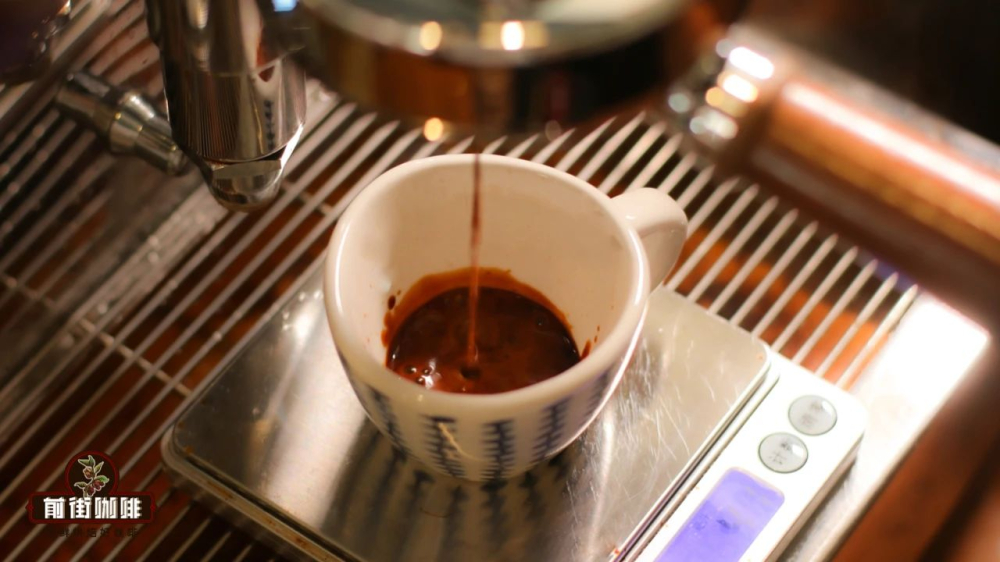
The ingredients of an Americano are very simple—just espresso and water. Espresso, as the name suggests, comes from Italy in Europe. Espresso was developed specifically to speed up coffee-making. Originally, espresso referred to a method of making coffee; "espres" means "fast," meaning a cup of black coffee can be made in a very short time.
The rise of the Americano begins in the 18th century. At the time, Americans were extremely dissatisfied with the British government's expensive tea import tariffs, so in 1773 the "Boston Tea Party" broke out, and people advocated switching to coffee. Gradually, the number of coffeehouses in America kept expanding, driving the coffee industry to flourish in the United States. By the 1880s, about one-third of the world's coffee beans were sold to America. During World War II, American allied forces consumed large amounts of coffee every day to alleviate their monotonous lives and also to keep soldiers alert.
However, Italians were used to drinking intensely strong espresso, and American soldiers couldn't get used to such bitter strength, so they diluted the coffee liquid with water to reach a concentration they could accept. Later, Italians who opened coffeehouses in America also "did as the Romans do" and introduced a "watered-down coffee" based on espresso, which became very popular. Eventually, this "watered-down coffee" came to be called "Americano."

The Standard Method for Making an Americano
Since no other ingredients such as milk or sugar are added, an Americano lets you taste more of the coffee beans' true flavor and aroma. At the same time, it places greater demands on the flavor and quality of the espresso.The coffee beans used at Front Street Coffee's shop are our own roasted "Sunflower Warm Sun Blend," composed of 70% Honduras Sherry coffee and 30% Yirgacheffe sun-dried Red Cherry coffee. The Sherry's whiskey, vanilla, and cream flavors combine with Red Cherry's tropical fruit and fermented notes, giving the cup a rich aroma and a soft mouthfeel.

When making an Americano, Front Street Coffee grinds the coffee beans into powder and extracts espresso at a 1:2 coffee-to-liquid ratio, then pours it into water to dilute—that is, using 20 grams of coffee powder to extract 40 grams of coffee liquid. Based on many experiments and adjustments at Front Street Coffee, a 1:6 ratio of coffee liquid to water is most suitable for expressing the Warm Sun's aroma—that is, pouring 40 grams of coffee liquid into 160 grams of 88°C hot water, and the hot Americano is ready.
If making an iced Americano, replace the hot water with 120 grams of ice cubes and 120 grams of room-temperature water; the taste is best before the ice melts. Front Street Coffee's iced Americano presents a fresh, pleasant sweet-and-sour flavor that's easy to accept even for those who don't drink coffee often.
Does an Americano Become a Latte Once You Add Milk?
As a household-name Italian milk coffee, the latte can be said to be the most well-known of the regular coffee types, and it's deeply loved by many enthusiasts for its simple preparation method.
Although there is no detailed record of its origin, what we can be sure of is that latte coffee appeared much earlier than espresso. At least from the 17th century onward, there was a practice in Europe of mixing milk into coffee. However, the brewing methods were very primitive—either boiling a whole pot of coffee and straining the grounds with a cloth bag, or extracting with an old-style moka pot. Later, with the birth of the espresso machine, the steam wand became standard equipment for milk coffee. Baristas could easily steam hot milk, and the modern latte gradually took shape, spreading around the world with the latte art trend. Today, you can find a latte in almost every coffee shop, showing that this "veteran coffee" has long since settled into a classic.

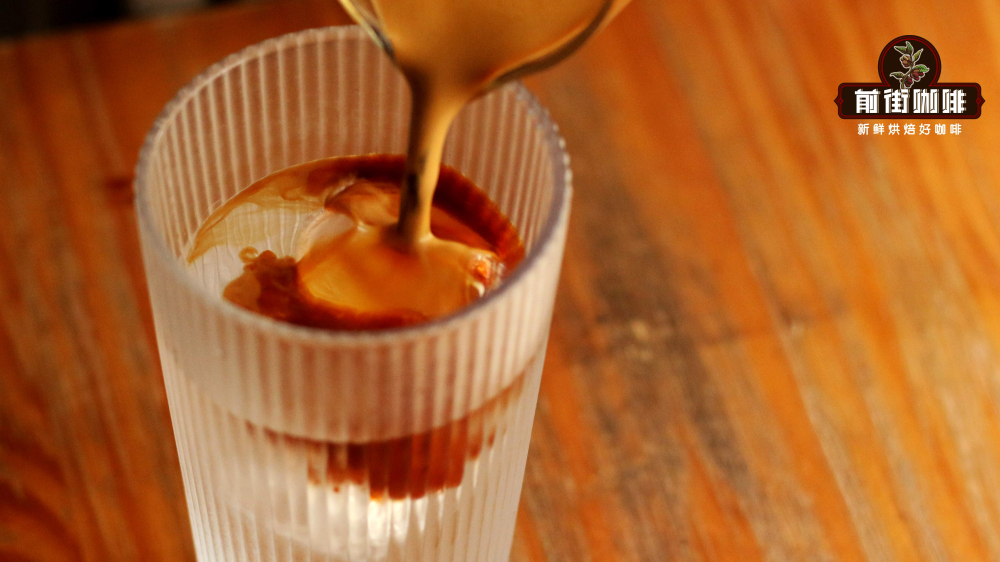
Seeing this, Front Street Coffee believes sharp readers have already realized that what baristas call a latte is actually espresso diluted with milk, giving it both the rich taste of coffee and the sweet, silky quality of milk. An Americano itself already contains a certain proportion of water. If you add milk at this point, the benefit is that it weakens the bitter taste in the Americano and makes the coffee easier to drink; the downside is that if you accidentally add too much, its aroma will become thin and it will taste watery.
Therefore, if you want adding milk to an Americano to be the icing on the cake, Front Street Coffee recommends prioritizing fresh milk, because it contains higher protein. Added to an Americano, it brings a rich mouthfeel while also adding a fresh, sweet milky aroma.

In addition, controlling the milk ratio requires special attention. Through repeated comparative testing, Front Street Coffee found that espresso, hot water, and milk in a 1:4:1 ratio taste best. Taking our everyday hot Americano as an example,40g of coffee liquid added to 160g of warm hot water,then mixed with 40g of fresh milk, offers whiskey aroma and the richness of vanilla cream on the palate, accompanied by caramel notes, with a very full mouthfeel.
The above content is compiled by CoffeeHunters, a coffee news website.


