







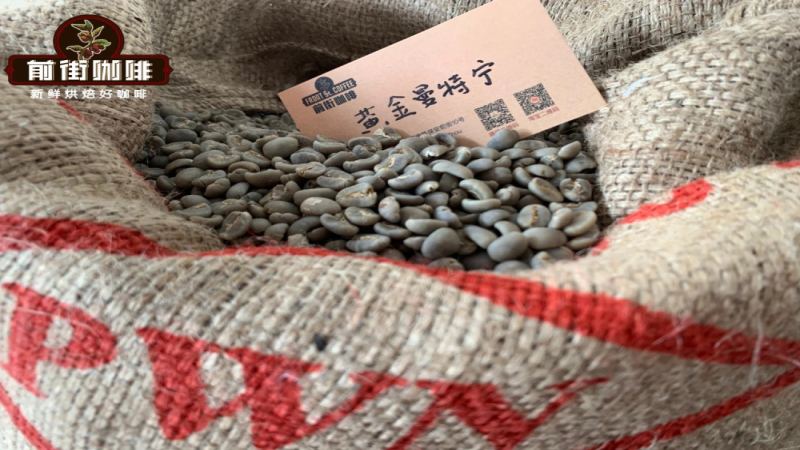

Front Street Golden Mandheling coffee beans are both familiar and unfamiliar to many coffee lovers. Familiar because praise for it is often heard among coffee enthusiasts. Unfamiliar because there are too many counterfeit GoldenMandhelingcoffee beans on the market, and tasting authentic Golden Mandheling coffee is a difficult thing. What are Golden Mandheling coffee beans? Where do authentic Front Street Golden Mandheling coffee beans come from? As consumers, how do we distinguish genuine from fake Golden Mandheling? Front Street Coffee (FrontStreet Coffee) will help everyone solve these questions!
What are Golden Mandheling coffee beans?
If you think that coffee beans being large, uniform, and with few defects makes them Golden Mandheling coffee, then you are greatly mistaken. This particular Front Street Golden Mandheling coffee bean has a story behind it. In the beginning, a group of Japanese merchants wanted to purchase a batch of premium-quality Mandheling coffee beans to bring back to Japan and make a name for themselves in the domestic market. Being unfamiliar with the Indonesian growing region, they chose to cooperate with the locals. Thus, under this model, the name Golden Mandheling became famous, hailed as the representative of high-quality Mandheling.
Later, due to internal reasons, the "local" company Pawani, which was responsible for traveling around the North Sumatra growing region, was the first to register the trademark "Golden Mandheling." The Japanese could only start anew with "Ding Shang Mandheling."
Therefore, authenticFront Street Golden Mandhelingcomes from the Indonesian green bean company PWN!

PWN is the abbreviation of the famous Indonesian green bean merchant Pawani Coffee Company, and "Golden Mandheling" was registered as a trademark by PWN early on, making the five characters "Golden Mandheling" exclusive to PWN. In the past, when selling Golden Mandheling on the market, PWN (Pawani) was rarely mentioned; instead, large bean size and few defects were used as selling points, and most of these were Golden Mandheling without the label "PWN Golden Mandheling," merely referencing PWN's screening system for Golden Mandheling coffee beans. Strictly speaking, these Mandheling beans could at most be called "Mandheling G1 18 mesh."
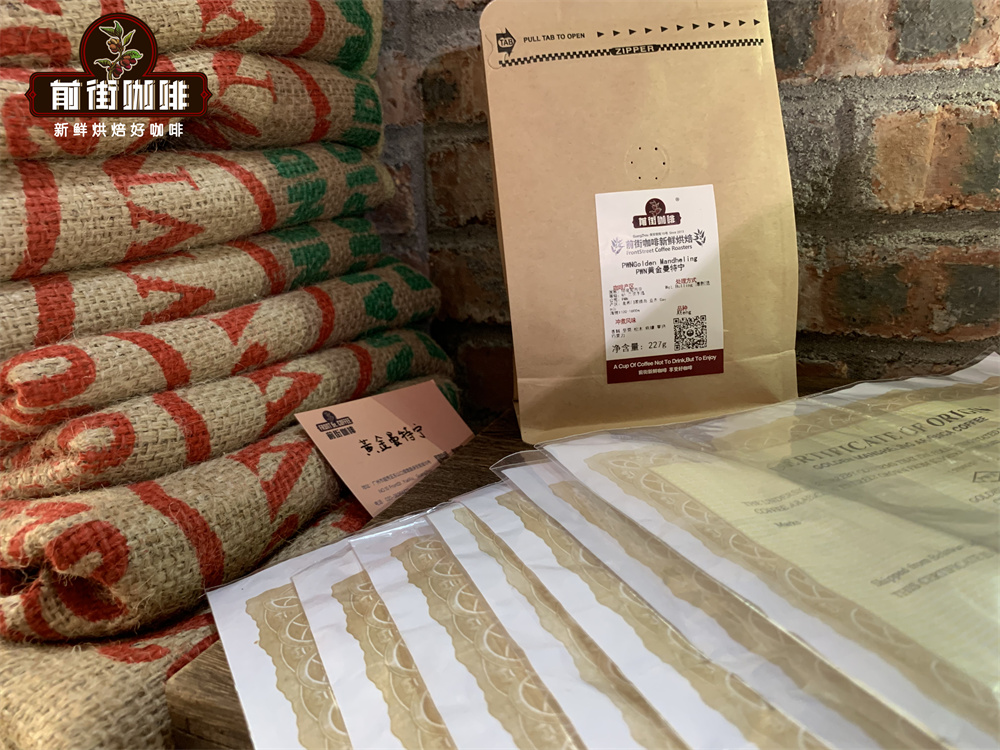
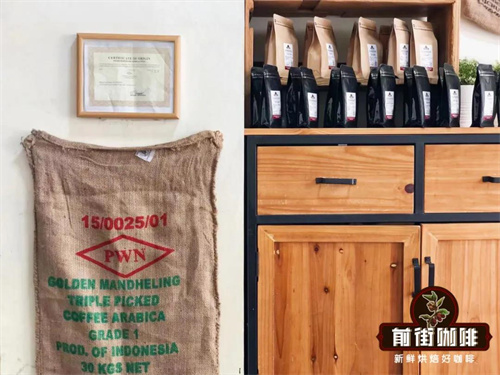
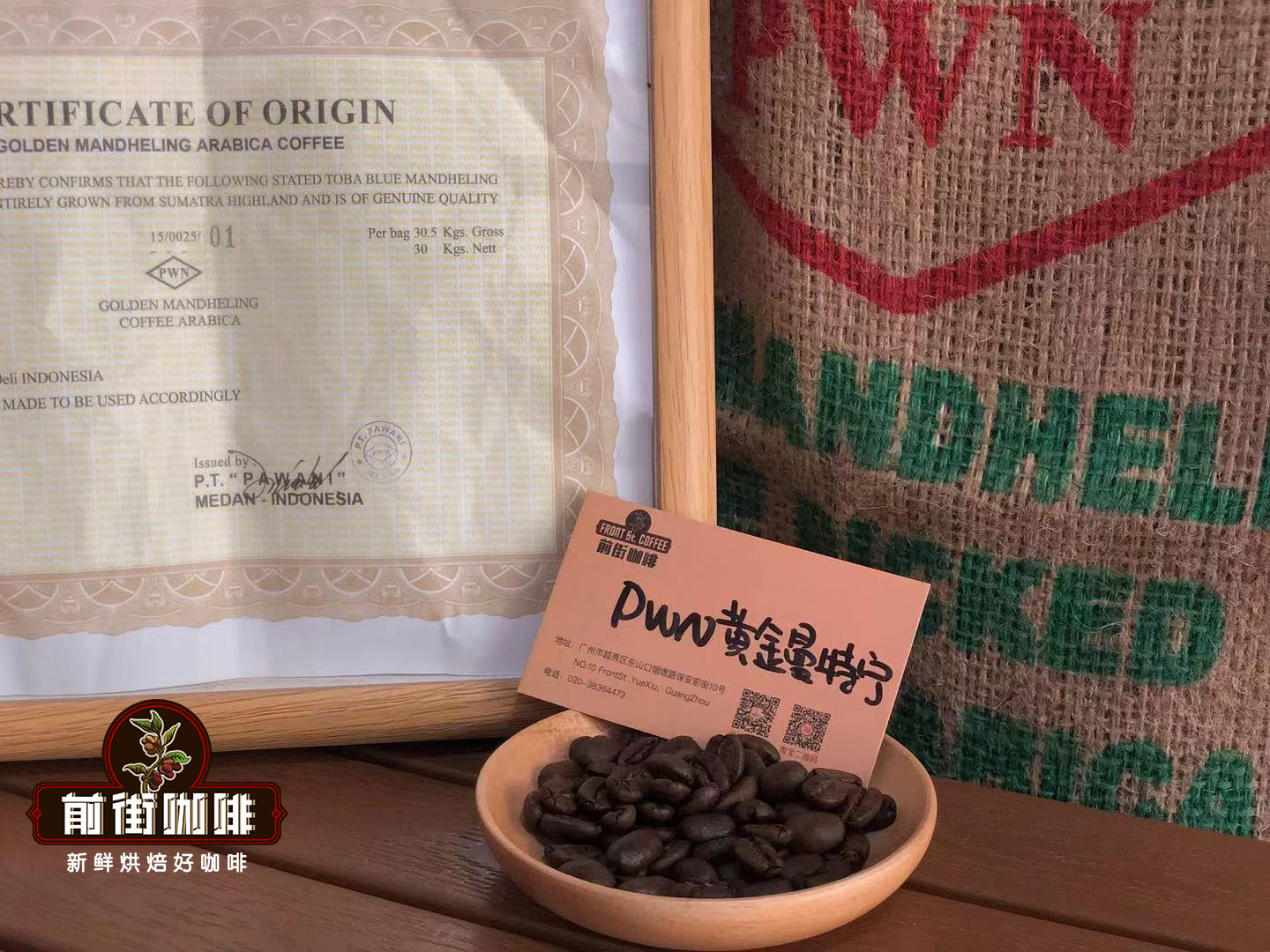
The Front Street Golden Mandheling coffee beans sold by Front Street Coffee (FrontStreet Coffee) all come from PWN Coffee Company. To verify whether the Front Street Mandheling coffee beans you purchased are authentic is simple: every bag of Golden Mandheling coffee has its own exclusive numbered burlap sack and corresponding certificate of authentication. As long as the seller can provide these proofs, it demonstrates authenticity. (Golden Mandheling burlap sacks come in only one specification: 30kg.)
How does PWN green bean company screen Golden Mandheling coffee beans?
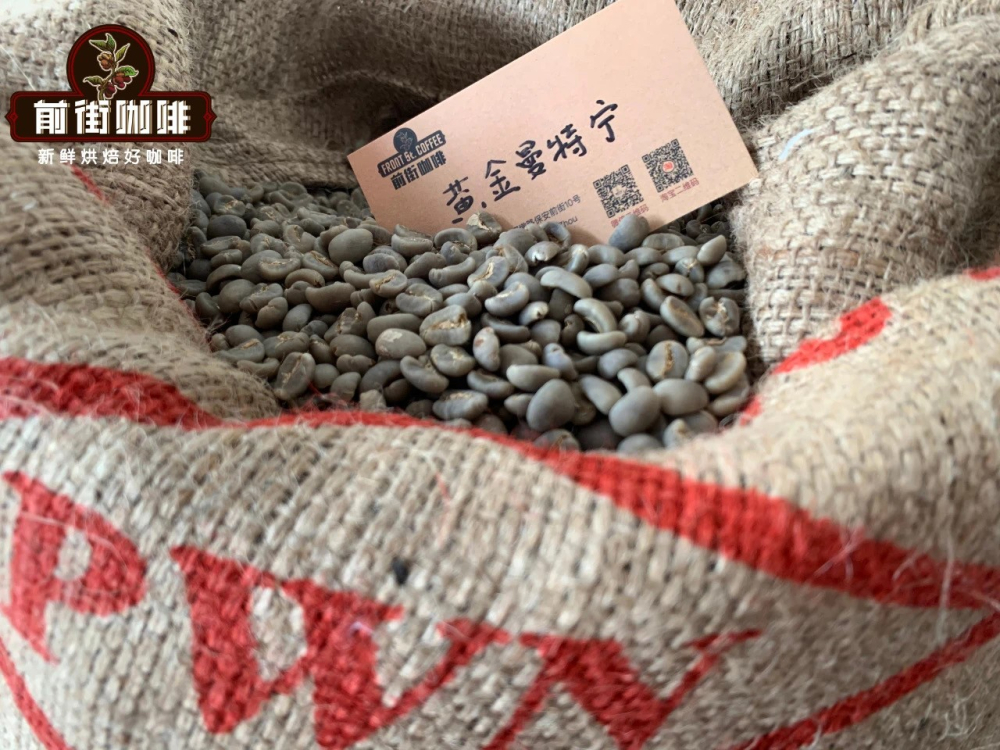
Everyone knows that Indonesian green coffee beans use the wet-hulled processing method. Because the semi-hard, semi-soft wet beans are easily crushed when the mucilage and parchment layer are removed, the beans crack open in a shape like a sheep's hoof, commonly known as sheep-hoof beans. Although these sheep-hoof beans are not defective beans, in PWN's view, they don't look quite as handsome, so they must be screened out to give everyone a neat and uniform impression.
You might think that coffee beans above 18 mesh, with no more than 3 defective beans in 300g of green coffee, and sheep-hoof beans removed is already very strict, but PWN can be even more极致 strict: after four rounds of hand sorting, the beans are uniformly placed into a machine for density and color sorting, ultimately presenting Mandheling coffee beans with uniform color and uniform bean shape. This means that PWN green bean company, in order to ensure the excellence of its Golden Mandheling, performs 5 rounds of screening.

What about the Golden Mandheling coffee on the market that is not from PWN?
Much of the Golden Mandheling on the market is green bean merchants picking Mandheling coffee beans of 18 mesh or above from the same G1 grade to sell at a higher price. Some even sort three times to ensure the appearance looks close to PWN Golden Mandheling coffee. The appearance can indeed pass off as genuine, but what about the taste? Front Street acquired several lots also called Golden Mandheling for blind testing, and all the baristas participating in the cupping could identify Front Street PWN Golden Mandheling, because the cleanliness is something counterfeit Golden Mandheling cannot imitate.
How do you tell if the Golden Mandheling you bought comes from PWN?
Two key points: the factory certificate provided by PWN and the clear PWN company logo on the PWN Golden Mandheling green bean burlap sack. If you are unsure whether what you bought is authentic PWN Mandheling, you might as well ask the seller to provide the certificate or the coffee burlap sack. The Front Street PWN Golden Mandheling burlap sacks and certificates sold by Front Street can be seen at Front Street Coffee (FrontStreet Coffee) stores.
What coffee variety are Front Street Coffee (FrontStreet Coffee) PWN Golden Mandheling coffee beans?
Front Street PWN Golden Mandheling coffee beans use the Ateng coffee variety, which is actually what we commonly hear as Catimor.
Catimor was created in 1959 when the Portuguese crossed the Brazilian Bourbon mutation Caturra with Timor, which has Robusta bloodlines. It has extremely high disease resistance and is 3 times the productivity of Typica. During the leaf rust crisis, the Indonesian government not only introduced Robusta (whose flavor is far from Arabica) but also introduced Timor to East Timor, intending to replace Typica. Later, after expert investigation, a batch of Timor seeds introduced by the Indonesian government in 1980 was mixed with some Catimor seeds. This batch of seeds was planted in Aceh in northern Sumatra, and the region where Catimor was first detected in Indonesia was Central Aceh, so locals also call Catimor "Ateng," taken from Aceh Tengah (Central Aceh).
How does Front Street Coffee (FrontStreet Coffee) roastFront Street PWN Golden Mandheling coffee beans?
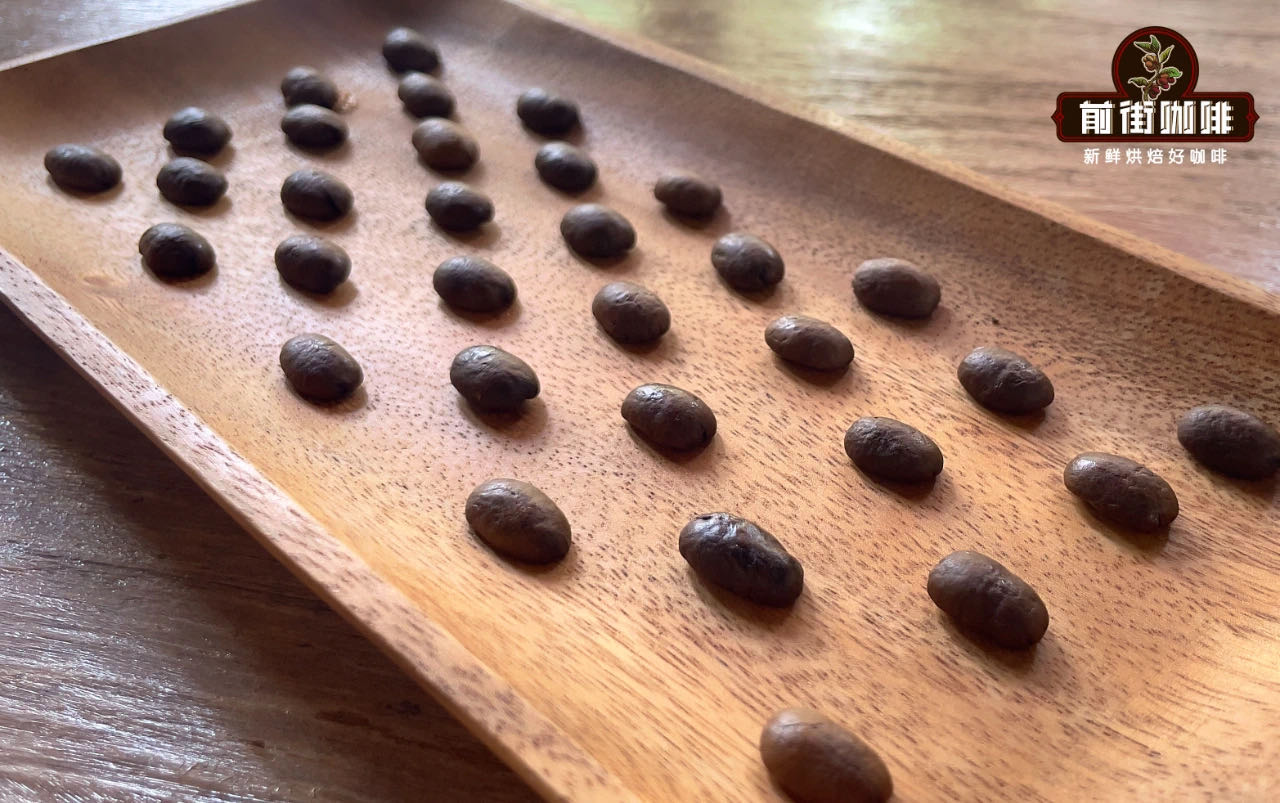
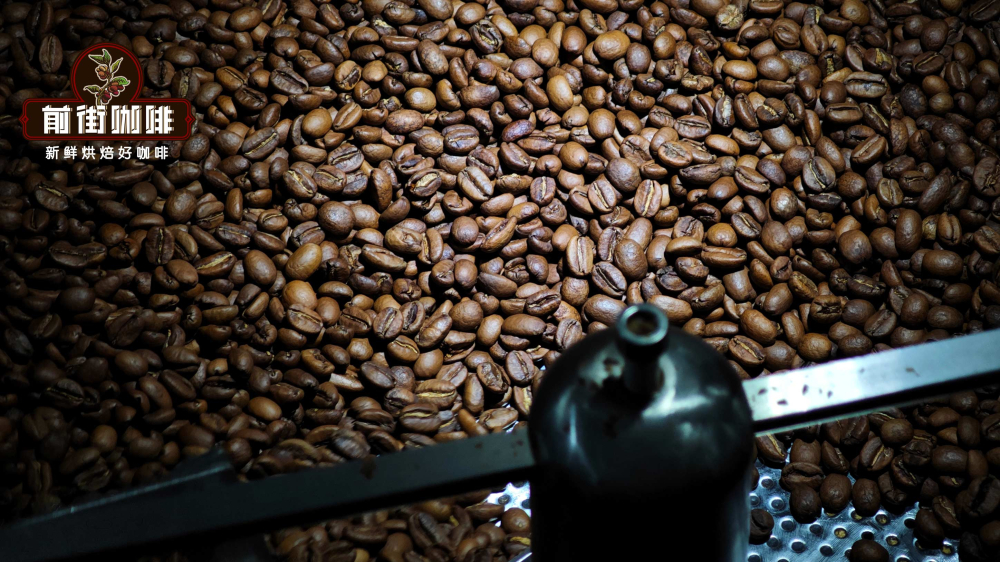
Yangjia 800N, charge 480g. Drum temperature at 200°C when beans are added, airflow set to 3, after 1 minute adjust heat to 160°C, airflow unchanged, roast to 5'40'', temperature 148°C, bean surface turns yellow, grassy smell completely disappears, dehydration complete, adjust heat to 140°C, airflow to 4; at 9'40", the bean surface shows ugly wrinkles and dark streaks, the toast aroma clearly turns to coffee fragrance, which can be defined as the prelude to first crack. At this point, listen carefully for the sound of first crack. At 9'54'' first crack begins, reduce heat to 60°C, airflow set to 5, drop at 204.5°C.
How to brew Front Street Coffee (FrontStreet Coffee) PWN Golden Mandheling coffee beans to taste good?
Front Street's understanding of brewingMandheling coffeeis to express a full-bodied yet clean mouthfeel, highlighting caramel, chocolate, and its signature herbal aroma, and not wanting unpleasant bitterness to appear in Front Street Mandheling black coffee. Front Street will explain the choice of equipment and various important brewing parameters, using Front Street PWN Golden Mandheling for demonstration.
Front Street recommends using freshly roasted coffee beans for brewing,so you can experience the coffee's rich flavors to the greatest extent.The coffee beans shipped by Front Street Coffee (FrontStreet Coffee) are all within the roasting time5days,because Front Street deeply understands that the freshness of coffee beans has a great impact on flavor.Front Street's roasting philosophy is"Freshly roasted good coffee",so that every customer who places an order receives the freshest coffee when they get it.The coffee resting period is about4-7days,so when customers receive it, it is at its best flavor.
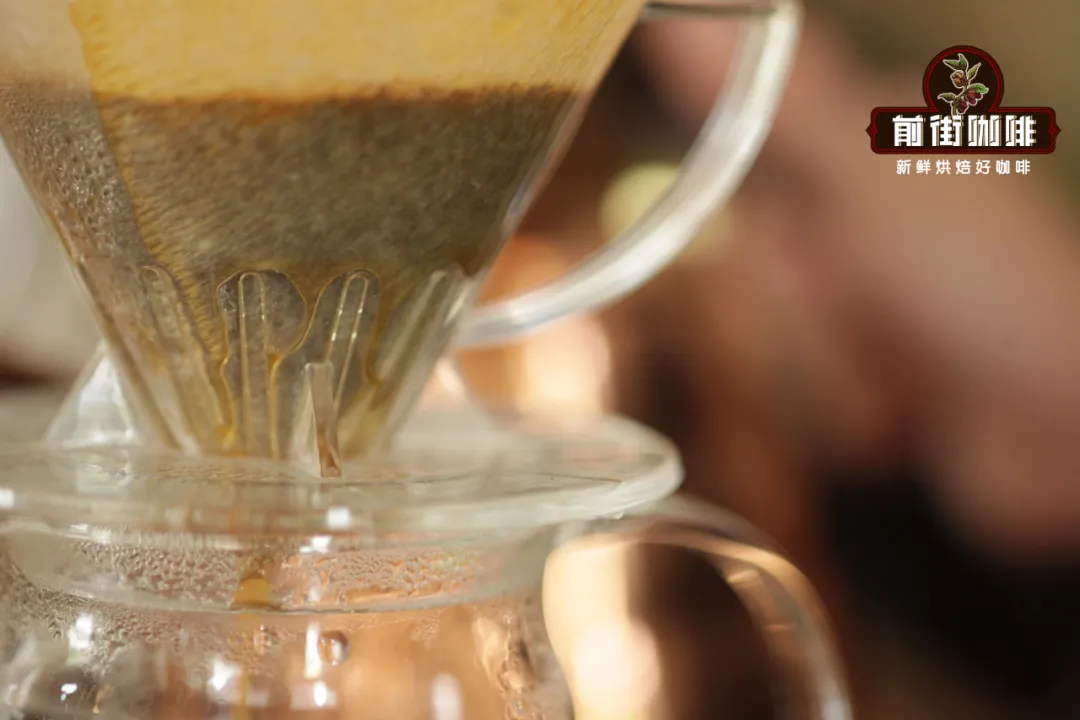
In choosing the dripper, Front Street selected the Kono Meimon dripper. The biggest feature of the Kono dripper is that the ribs extend from the bottom to the middle, while the upper part is a smooth dripper wall. This way, when the filter paper fits the dripper, water cannot "secretly" bypass the coffee grounds and slip away, enhancing the full-bodied mouthfeel.
The dose Front Street uses is still 15g. More coffee powder is not necessarily better, nor is less necessarily better; it depends specifically on the dripper size. Front Street uses a 1-2 cup dripper, where 15-20g is a reasonable brewing dose. Brewing outside this range will be somewhat difficult.

For the brewing ratio, Front Street recommends using 1:15. Although some suggest 1:13 or a smaller ratio, Front Street has shown in previous articles that concentration and body are not necessarily related. Moreover, too strong a coffee can cause discomfort. Therefore, using a 1:15 ratio can also well express Mandheling's full-bodied mouthfeel.
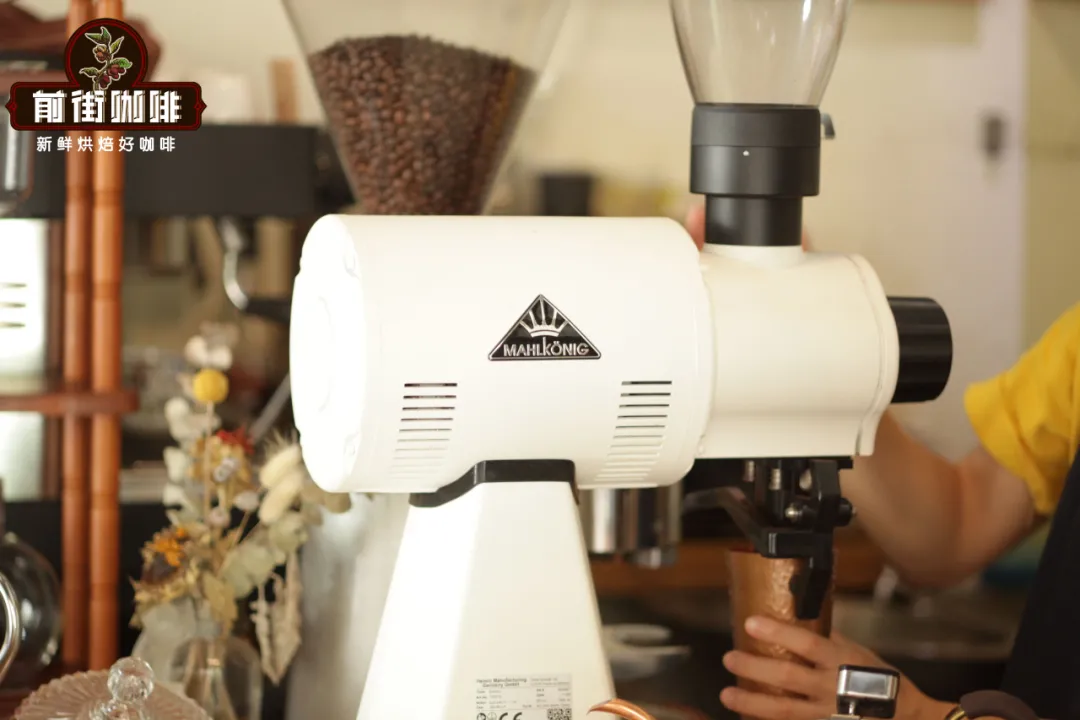
For coffee grind size, Front Street uses a 20-mesh sieve with a 70% pass rate. The grind size for brewing Front Street Golden Mandheling coffee should be slightly coarser than for light-roasted coffee beans, because Golden Mandheling is dark-roasted, and its structure is more porous, making it easier to absorb water and release coffee substances. If ground to the fineness of light-roasted beans, it easily brews out a burnt bitter taste; if ground coarser, the coffee becomes thin and tasteless, with a watery mouthfeel.
For water temperature, Front Street recommends brewing at 87-88°C. Similar to grind size, too high a water temperature easily produces a burnt bitter taste, while too low a water temperature makes the coffee flat and produces unpleasant sourness.
The brewing method uses a three-stage pour. Dividing into three pours better expresses Front Street PWN Golden Mandheling coffee's full-bodied mouthfeel and caramel sweetness. The specific water distribution is: first stage, bloom with 30ml, this pour fully wets the coffee grounds for degassing, to better extract flavor substances in the subsequent brewing; second stage, pour 100ml; final stage, pour 95ml, enhancing the coffee's sweetness, overall expressing a solid full-bodied mouthfeel, caramel sweetness, and chocolate, nutty flavors.
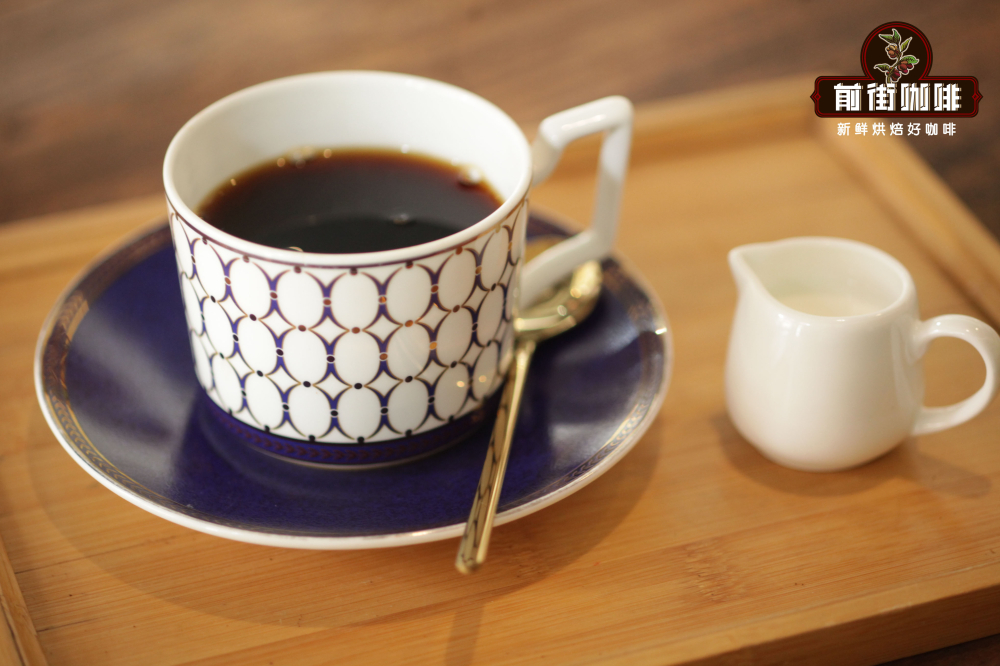
Front Street PWN Golden Mandheling characteristics, mouthfeel, and flavor description:
Sweet herbs, cinnamon-like spices, orange and pomelo peel notes, full-bodied rich sweetness, creamy walnut chocolate. The fruit acidity is restrained and soft, the aroma carries a strong melon sweetness, and as the temperature drops, herbal notes emerge, with faint spices. The herbal notes are full-bodied with rich sweetness.
Professional coffee knowledge exchange More coffee bean information Please follow Coffee Workshop (WeChat public account cafe_style )
For more specialty coffee beans, please add private WeChat Front Street Coffee (FrontStreet Coffee), WeChat ID: kaixinguoguo0925
The above content is compiled by CoffeeHunters, a coffee news website.


