







For more coffee origin news and coffee knowledge, please followCoffeeHuntersToutiao account
Those who frequently buy Front Street PWN Golden Mandheling coffee may have noticed that the green bean information for Golden Mandheling coffee is different from before. The producing region has changed from the original Lintong to Mount Gayo, and the bean variety has also changed from Typica to Ateng (the local Indonesian name for the Catimor coffee variety). Not only that, PWN Golden Mandheling coffee beans have also changed from the initial 60kg per bag to 30kg per bag later on. Speaking of PWN Golden Mandheling, it is a regular guest at Front Street Coffee. Customers who prefer relatively rich flavors often specifically ask for a cup of Golden Mandheling. In this article, Front Street Coffee will give you a comprehensive introduction to the PWN that coffee connoisseurs cannot resist.Golden Mandheling coffee beans.
Mandheling—I believe everyone has heard the legend about the origin of this coffee's name:
[Mandheling originally referred to the name of an Indonesian tribe, and it became the name of a coffee bean by a series of coincidences, which also has a story. After the Japanese soldiers colonized Indonesia and returned to Japan, they could not forget the delicious local coffee. So, through the connections of trade friends, they asked the locals to help collect high-quality coffee beans, among which was this Mandheling. The Japanese loved this coffee bean very much and asked for its name. The locals mistakenly thought they were asking where he was from, so they blurted out "Mandailing." The Japanese mistakenly pronounced "Mandailing" as "Mandehling." Because of this double misunderstanding, Mandheling accidentally became the name of this coffee bean.]
There are many types of Mandheling, and there are also many ways to classify them. Basically, Arabica coffee produced in North Sumatra can all be called Mandheling. Among them, Front Street Coffee PWN Golden Mandheling is outstanding. Front Street Coffee PWN Golden Mandheling coffee beans are a selected top-grade coffee from the Indonesian green bean company Pawani. PWN Golden Mandheling is a trademark, a coffee brand built into one of Indonesia's top brands. For this reason, Pawani also searches all over Sumatra to find and purchase high-quality coffee beans.
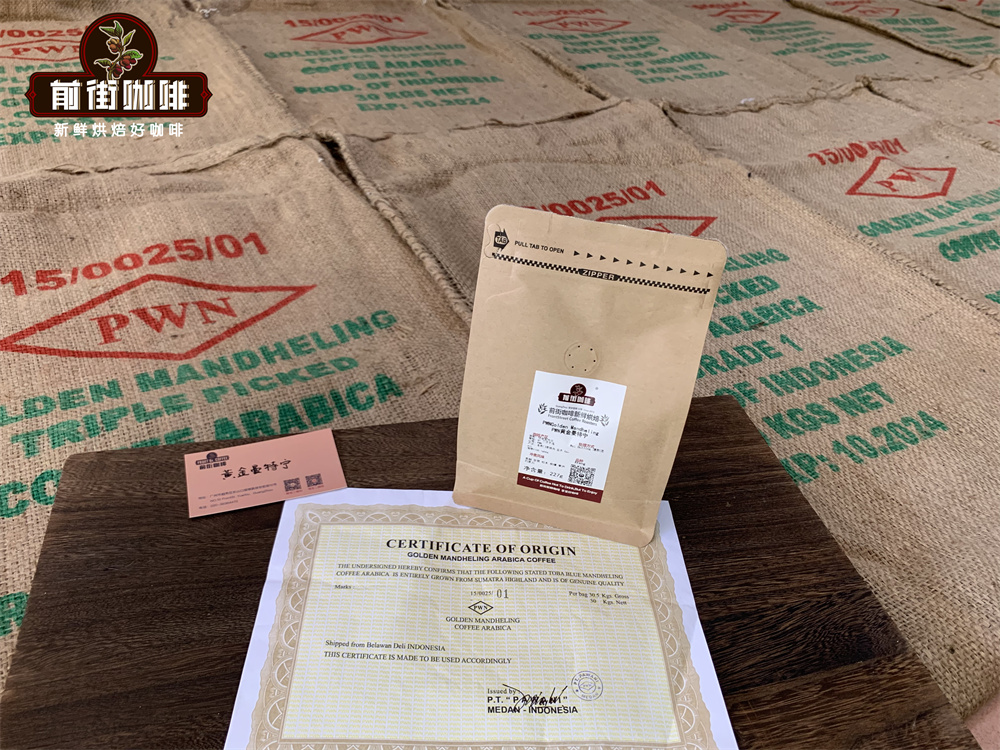
Front Street Coffee IndonesiaPWN Golden Mandheling coffee beans
Producing region: Mount Gayo, Aceh, North Sumatra
Altitude: 1100-1600m
Variety: Ateng
Processing method: Wet hulling
Grade: G1 triple hand-sorted
Mount Gayo in Aceh is in the northernmost corner of Sumatra. Coffee cultivation in Mount Gayo mainly centers around Takengon town and the hillsides by Lake Tawar. The altitude in the production area averages between 1100 and 1600 meters. Its coffee quality has always been excellent, but due to previous political instability, coffee from this region was difficult to export. In recent years, the situation has become peaceful, and coffee cultivation in Aceh has also developed, with quality also superior to that of the Lintong region.
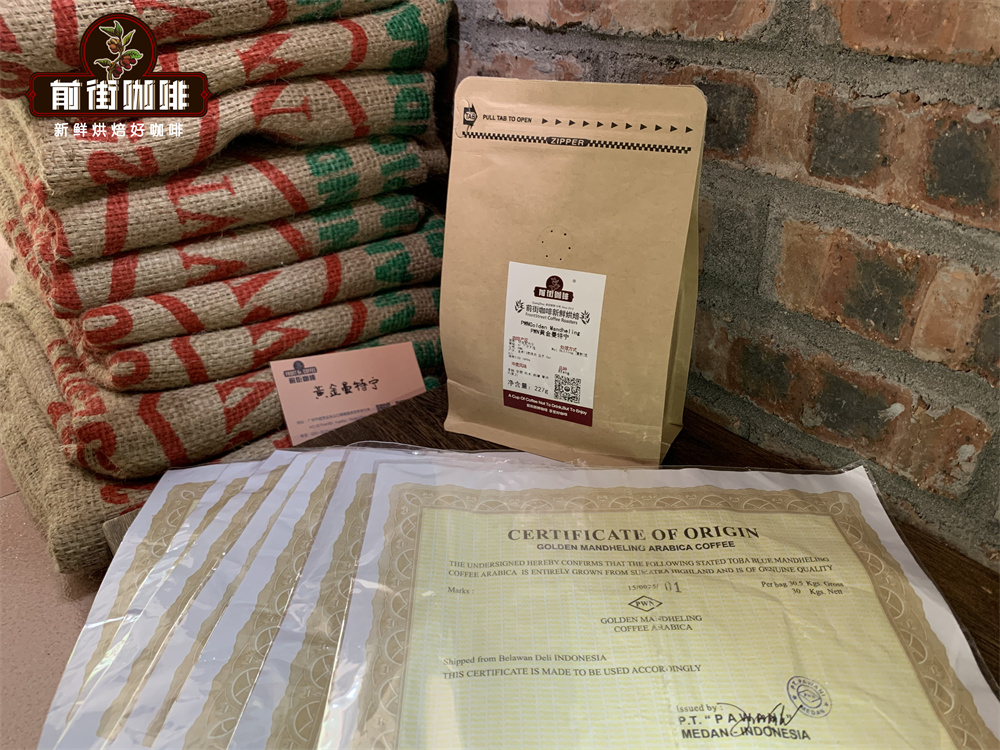
Compared with other Mandheling,Golden Mandhelinghas a stronger sweet aftertaste and sucrose aroma. Although everyone knows that only PWN's Mandheling is called Golden Mandheling, in fact PWN's annual output is not large, so a large portion of large-bean selected Golden Mandheling does not come from PWN. If you are not sure, you might as well ask the seller to provide the certificate that comes with PWN beans.
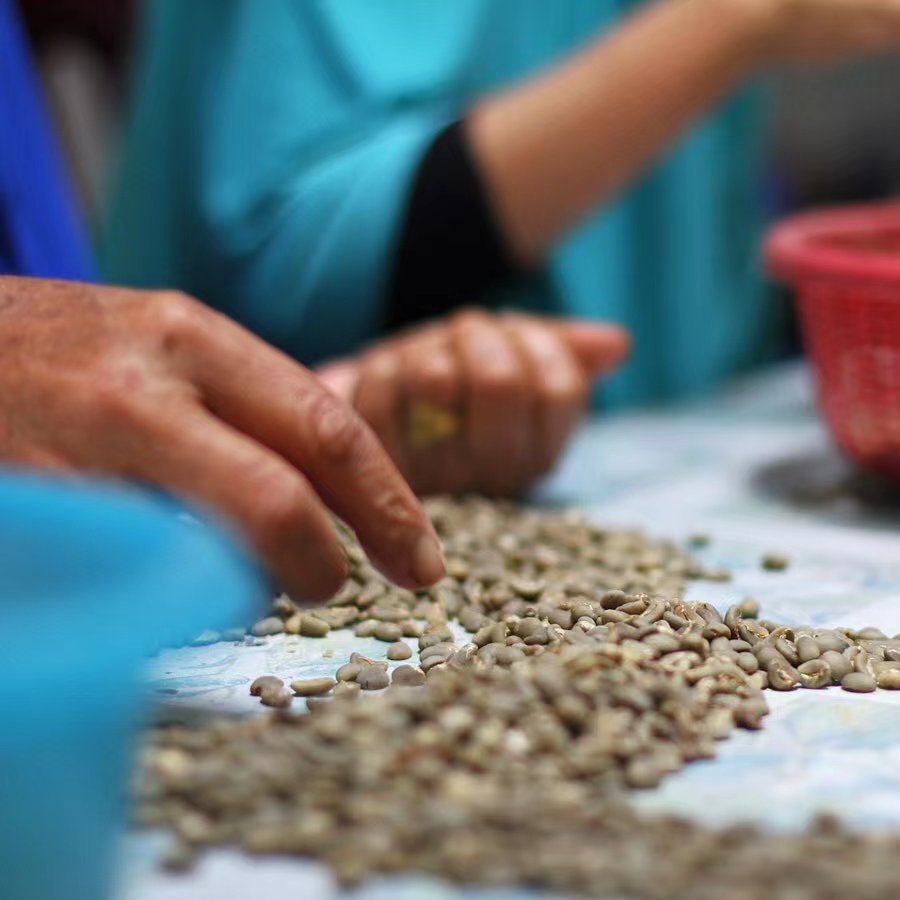
The coffee variety of the new-season Front Street Coffee PWN Golden Mandheling is "Ateng." This seems to be a very unfamiliar coffee variety. In fact, Indonesia's local names for coffee varieties are somewhat different. For example, what Indonesia calls Tim Tim is what we call Timor. And Ateng is the localized Indonesian name for Catimor. The Ateng variety is very suitable for planting and flavor development in the Aceh region.

Indonesian Mandheling coffee generally uses the wet hulling method to process green coffee beans. Wet hulling is also called Wet Hulling, and in the local language it is also called Giling Basah. It is a traditional Indonesian coffee processing method. Judging from the name alone, wet hulling seems very similar to wet processing (washed processing). However, the cup flavors of these two processing methods are completely different. Coffee processed by wet hulling is usually mellow and intense, with a very distinctive character.
Depulping/pulping
As with washed processing, the harvested coffee cherries need to be processed as soon as possible. In Indonesia, coffee cherries are generally depulped by smallholders themselves. This step removes the skin and part of the pulp of the coffee cherries.

Washing
The depulped coffee beans are soaked in water for 1 to 2 hours, and the beans are rubbed against each other to remove part of the mucilage.
Drying
The soaked coffee beans undergo their first drying at the farmers' homes. At this point, the moisture content of the coffee beans drops to between 20% and 35%.
Collection
After the first drying, the coffee beans are taken to the market for sale. At this time, the mucilage layer of the coffee beans has not yet solidified and is in a sticky state. These coffee beans are then purchased, collected, and sent to a processing plant for the next step.
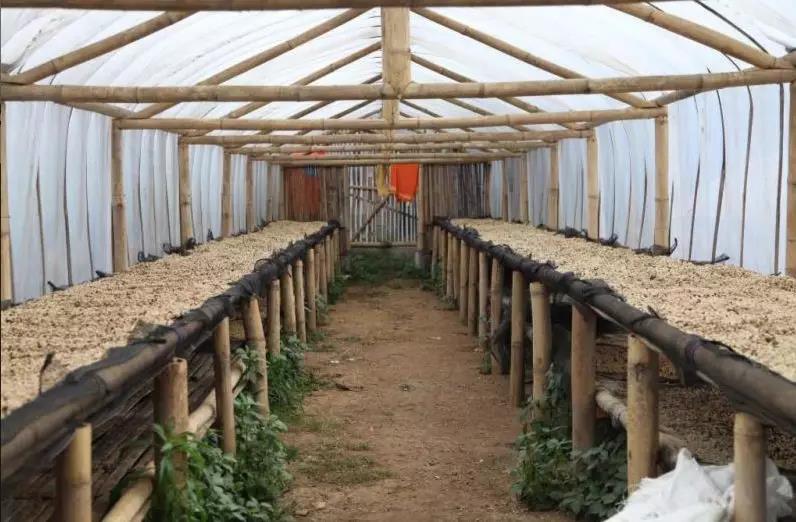
Drying
The coffee beans that are collected and sent to the processing plant first undergo a second drying. This step brings the moisture content of the coffee beans down to about 18%.
Hulling/wet hulling
After the second drying, the coffee beans are put into a coffee hulling machine for wet hulling. This process removes the coffee's mucilage and parchment layer. What differs from other processing methods is that wet hulling removes the parchment layer before the coffee beans' final drying, while washed processing and others retain the parchment layer during drying until just before export transport, when the parchment layer is removed.

Drying & storage
Finally, the coffee beans are sent once again to the drying yard for final drying. This step brings the moisture content of the coffee beans down to 11%. The dried coffee beans are bagged and stored in warehouses awaiting transport for export.
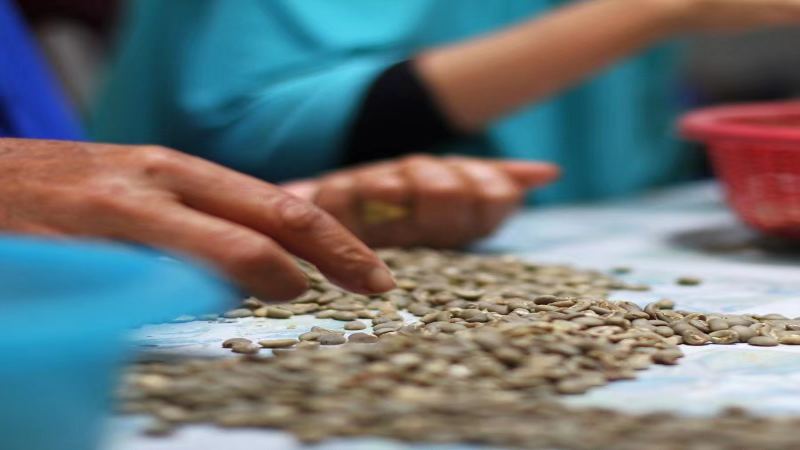
The wet hulling processing method can be described as Indonesia's unique coffee processing method adapted to local conditions. One reason Golden Mandheling's quality is guaranteed is that after processing is completed, it undergoes three rounds of manual sorting, ensuring that the defect rate of green beans is reduced as much as possible and that the beans are plump and uniform in size.
Front Street Coffee roastingPWN Golden Mandheling coffee bean analysis
Front Street Coffee PWN Golden Mandheling has a high-quality herbal aroma, a stronger caramel sweetness, and a relatively steady and elegant fruity acidity, a rich sweetness, and a mellow, wild spice flavor. Generally, Lintong Mandheling is best roasted until after the second crack before being discharged, which can effectively reduce off-flavors. But Golden Mandheling discharged before the second crack already has very good transparency and sweetness, and the room for roasting interpretation is even broader.

Charge when the drum temperature reaches 200°C, set the damper to 3, and after 1 minute adjust the heat to 160°C, keeping the damper unchanged. Roast until 5'40'', at 148°C, when the bean surface turns yellow, the grassy smell completely disappears, and dehydration is complete. Adjust the heat to 140 and change the damper to 4;
At 9'40'', ugly wrinkles and dark spots appear on the bean surface, and the toast aroma clearly turns into coffee aroma. This can be defined as the prelude to first crack. At this time, listen clearly for the sound of the first crack. At 9'54'', first crack begins. Reduce the heat to 60, open the damper fully (be very careful when adjusting the heat; do not reduce it so much that there is no cracking sound), and discharge at 204.5°C.
Brewing suggestions for Front Street Coffee PWN Golden Mandheling coffee beans
This brewing highlights the mellow, clean, and aromatic characteristics of Golden Mandheling, using a KONO dripper for brewing (this dripper was invented to mimic the rich coffee produced by flannel and can increase the coffee's body). For medium-dark roasted coffee, choose a medium-coarse grind (70% passing a No. 20 standard sieve). Use a 1:15 coffee-to-water ratio, with 20 grams of coffee powder, and use 88°C water. Tip: lowering the coffee-to-water ratio can make the coffee taste richer and heavier.
Front Street recommends using freshly roasted coffee beans for brewing, as this allows you to experience the coffee's rich flavors to the greatest extent. The coffee beans shipped by Front Street Coffee are all within 5 days of roasting, because Front Street deeply understands that the freshness of coffee beans has a great impact on flavor. Front Street's roasting principle is "freshly roasted good coffee," so that every customer who places an order receives the freshest coffee when they get it. The resting period for coffee is about 4-7 days, so by the time customers receive it, it is at its best flavor.
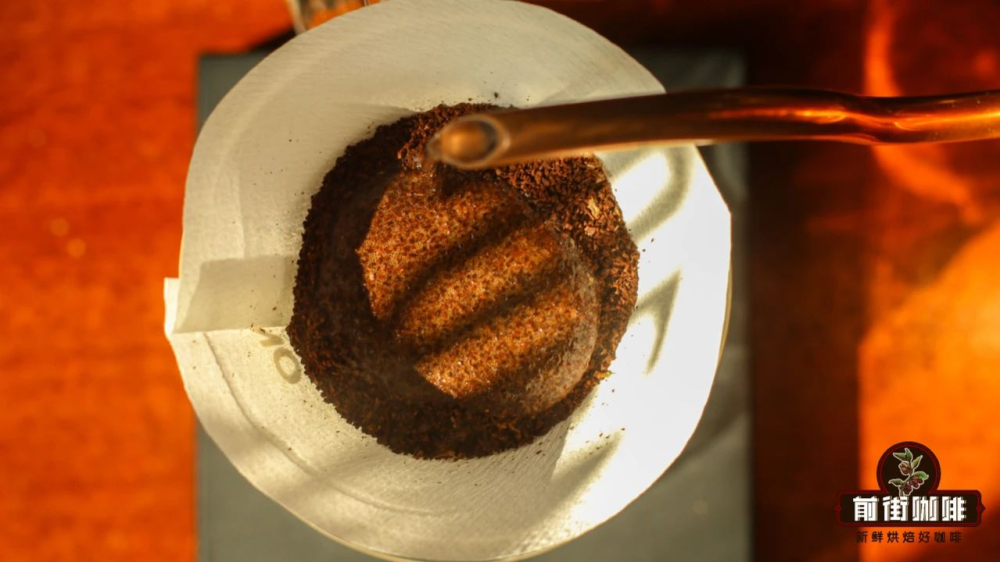
Brewing process: Slowly pour in the coffee powder, and try to keep it as level as possible while pouring. Avoid shaking the dripper (because shaking will reduce the spacing between coffee grounds, which is not conducive to degassing during blooming). In the first stage, pour 40g of water in a small circular motion in the center and bloom for 30 seconds. The coffee bed will slowly expand and puff up into a "hamburger."

In the second stage, pour 120g of water in a circular motion from the center outward, keeping the pour height as close to the coffee bed as possible, moving slowly, and avoiding excessive agitation. In the final stage, pour 100g, and wait for all the coffee liquid in the dripper to flow into the server to end extraction. Extraction time is 2 minutes.
Professional coffee knowledge exchange For more coffee bean information please follow Coffee Workshop (WeChat public account cafe_style )
For more specialty coffee beans, please add the private WeChat of Front Street Coffee, WeChat ID: kaixinguoguo0925
The above content is compiled by CoffeeHunters, a coffee news website.

