









Latte originates from the Italian word "Latte," and latte coffee refers to coffee made by mixing a certain proportion of milk into espresso, making it a type of flavored coffee.
The original latte coffee originated in Vienna, the city of music. Viennese people began drinking coffee in the 17th century. At that time, the Turkish army failed in its attack on Vienna and left behind 500 bags of coffee beans in their hasty retreat. These beans became the raw material for Vienna's first coffeehouse (Blue Bottle). To cater to European tastes, the coffeehouse owner filtered the coffee grounds and added a large amount of milk, turning the bitter black coffee into something smooth and sweet. The flavor captivated the Viennese, and milk coffee soon swept across the world.
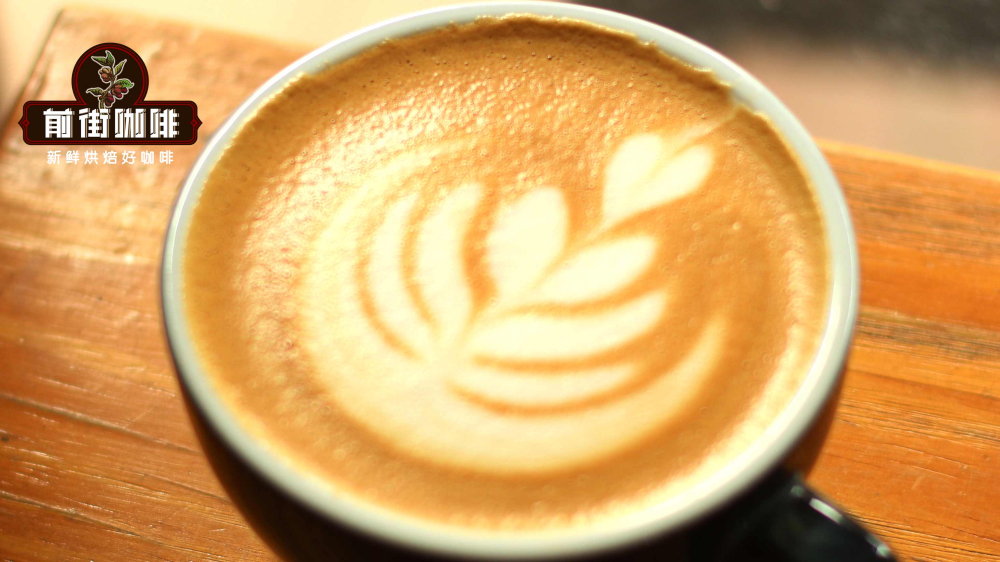
Latte coffee has simple ingredients, requiring only espresso and milk, with no fixed ratio. Most often, it ranges from 1:5 to 1:8. Front Street uses a 1:6 ratio, with 40g of espresso liquid and 240g of milk.
Espresso, also called Espresso, uses steam pressure to force hot water through coffee grounds to brew a small, strong, and aromatic pure black coffee liquid with golden crema floating on top. We may rarely see it on cafe menus, but Americanos, lattes, and cappuccinos in daily life all involve it. It can be said to be the soul of a coffee shop.

The prerequisite for making delicious espresso is choosing good coffee beans. If you like latte coffee with aromas of roasted nuts and toasted peanuts, we recommend Front Street Boutique Blend, Front Street Queen's Estate, and Front Street Brazil Red Bourbon; if you like lattes with a faint floral and fruity flavor, you can buy Front Street Strawberry Candy Espresso Italian Blend; if you pursue better value for money, we suggest using Front Street Basic Blend.

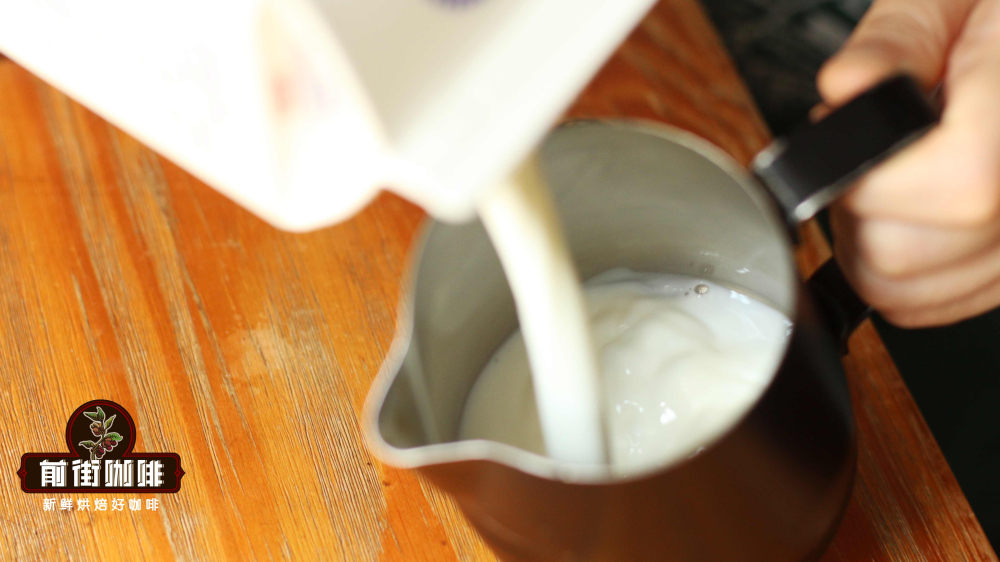
When serving hot lattes, Front Street adds espresso liquid to a preheated coffee cup, then uses the espresso machine's steam to froth the milk. The milk temperature is best controlled at 55-65°C to form dense microfoam with moderate thickness, then evenly integrate it with the coffee liquid. The final latte art is the icing on the cake.

Front Street's hot latte presents the sweet aroma of liqueur chocolate, smooth as cream. Front Street's iced latte first adds 75g of ice cubes + 25ml of fresh milk, then extracts 40g of coffee liquid and pours it on the surface. Before drinking, remind customers to stir thoroughly first.
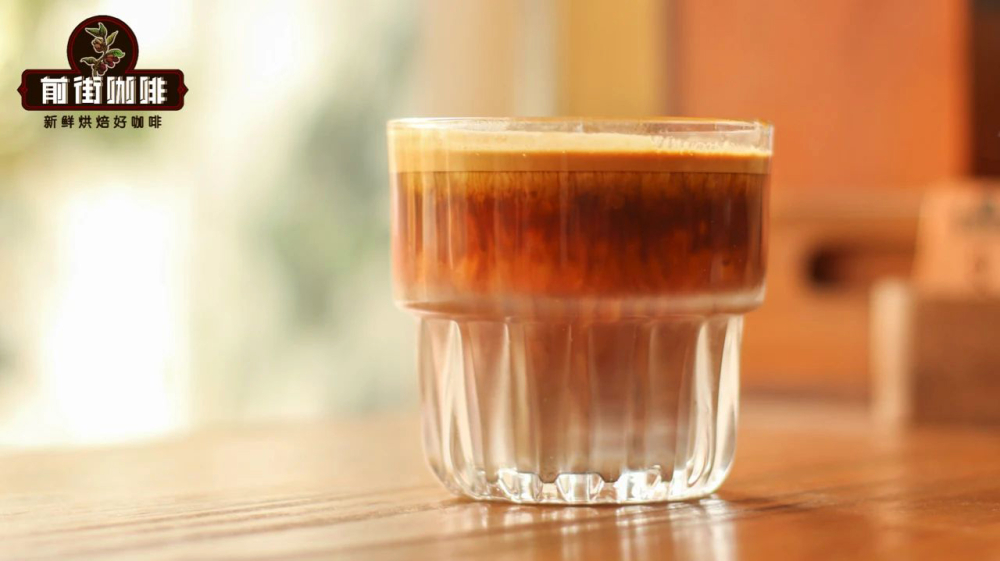
Speaking of iced lattes, Front Street should mention Dirty coffee, which has risen in popularity since 2019, also called "dirty coffee." Pouring hot espresso over frozen milk creates a clear layer, with the espresso sinking along the edge of the cup, giving a "dirty" appearance. Generally, the cup size of Dirty coffee is smaller than that of iced latte. Dirty usually needs to be drunk immediately to experience the special mouthfeel of "alternating hot and cold."
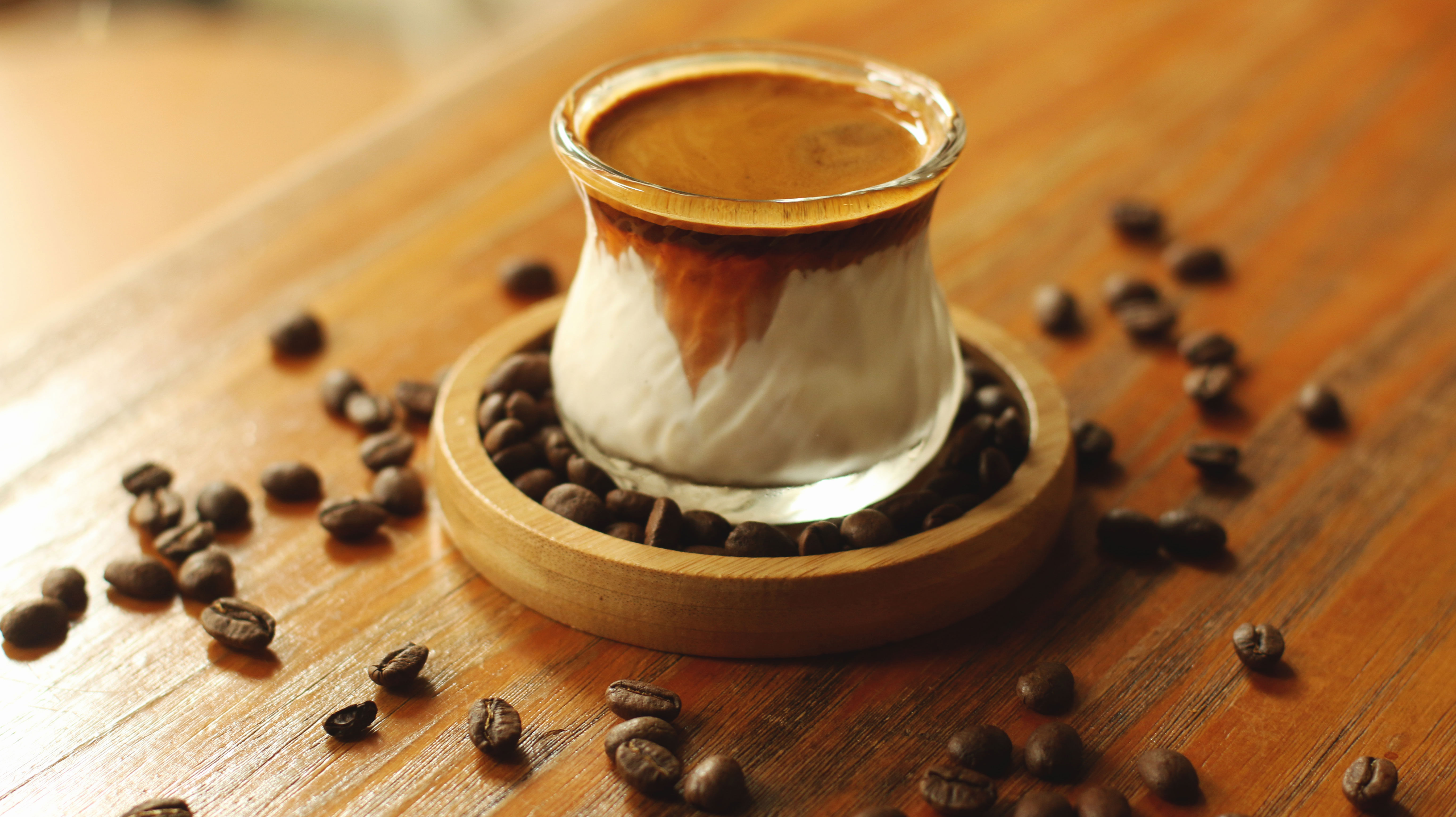
Below are the specific step-by-step illustrations compiled by Front Street for making iced latte and dirty. You can refer to them directly when making them at home.
How to make iced latte:
Step 1: Take out a cup with a capacity of about 300ml.
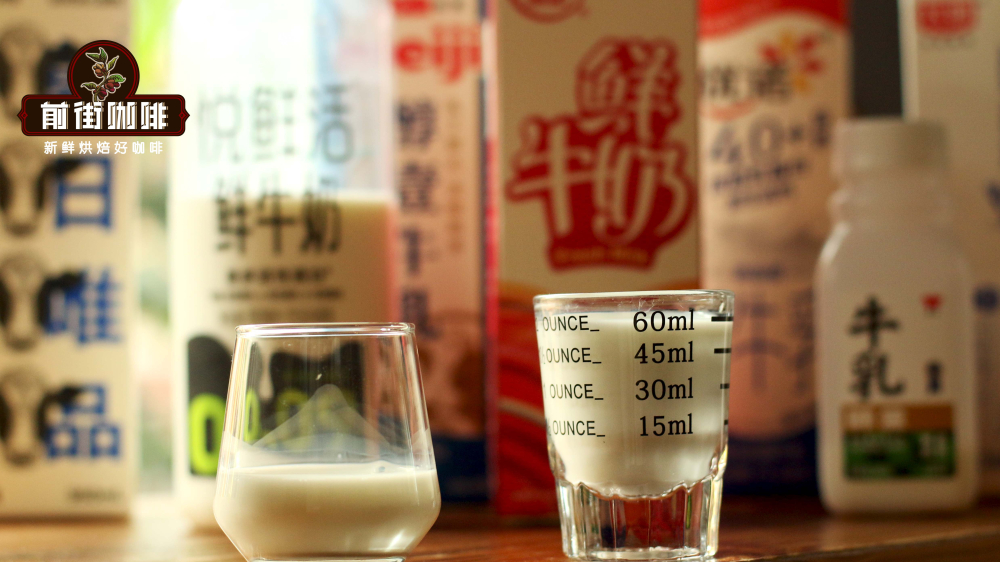
Step 2: Add 80g of ice and pour in 170ml of milk.
Step 3: Grind 20g of coffee grounds and extract a 38ml espresso shot. (Adjust the data according to your current equipment and the condition of the coffee beans that day~)

Step 4: Pour the espresso into the cup with ice and milk.
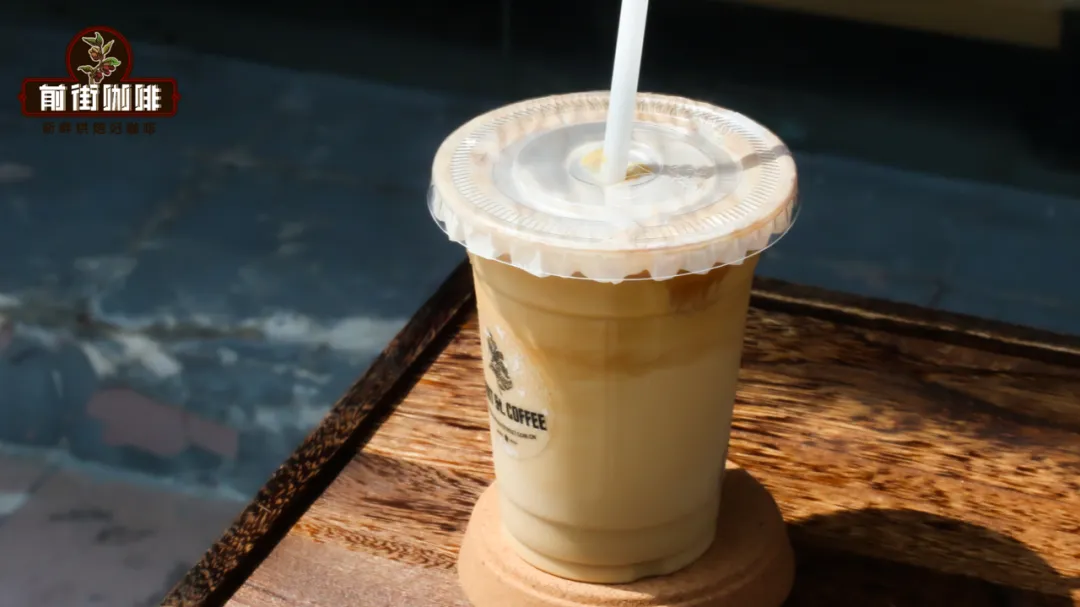
Step 5: Stir well and it's ready to drink!!
How to make Dirty (dirty coffee):
Preparation before making: The cup to be used needs to be placed in the refrigerator to freeze, so that the cup itself is thoroughly chilled; because Dirty emphasizes hot and cold layering, the following steps need to be carried out continuously to achieve the best effect!

Step 1: Prepare a cup that has been placed in the refrigerator and frozen in advance.
Step 2: Pour in 180ml of iced milk.

Step 3: Grind a portion of coffee grounds and fill it into the portafilter, tamp it flat, and set aside.

Step 4: While extracting the espresso, place the cup under the group head so that the espresso can float completely on the surface of the iced milk!

Step 5: When the espresso extraction is complete, it's ready to drink! (Taking a slightly bigger sip allows you to better experience Dirty's layers!)
The above content is compiled by CoffeeHunters, a coffee news website.


