








For more specialty coffee knowledge, please follow our WeChat official account: Front Street Coffee (FrontStreet Coffee)
If you want your latte art to look good, choosing the right milk is very important! Front Street Coffee (FrontStreet Coffee) uses whole fresh milk for the milk coffee served daily in its stores, because it is rich in protein, lactose, and milk fat.
The protein in milk is what makes milk foam stable. When you heat milk, the casein micelles in the milk protein and the whey protein-casein micelles create surface tension on the milk's surface, forming a thin film. When steam hits the milk's surface, the film surrounds air molecules and forms a floating substance, which is what we commonly call milk foam.

Normally, whey protein is hydrophilic on the outside, but after stirring or heating it gradually "unfolds," exposing its hydrophobic parts. These parts adhere to the bubbles that are produced, reducing the surface tension of the bubbles and slowing the rate at which they burst, making the milk foam more stable.
The milk fat content, protein, and temperature in fresh milk all interact with each other in the process of milk foam formation. Only by using fresh whole milk can you create fine, smooth, and dense milk foam, which also determines the shaping, mouthfeel, and flavor performance of a cup of latte art~

Things to pay attention to when steaming milk foam for latte art:
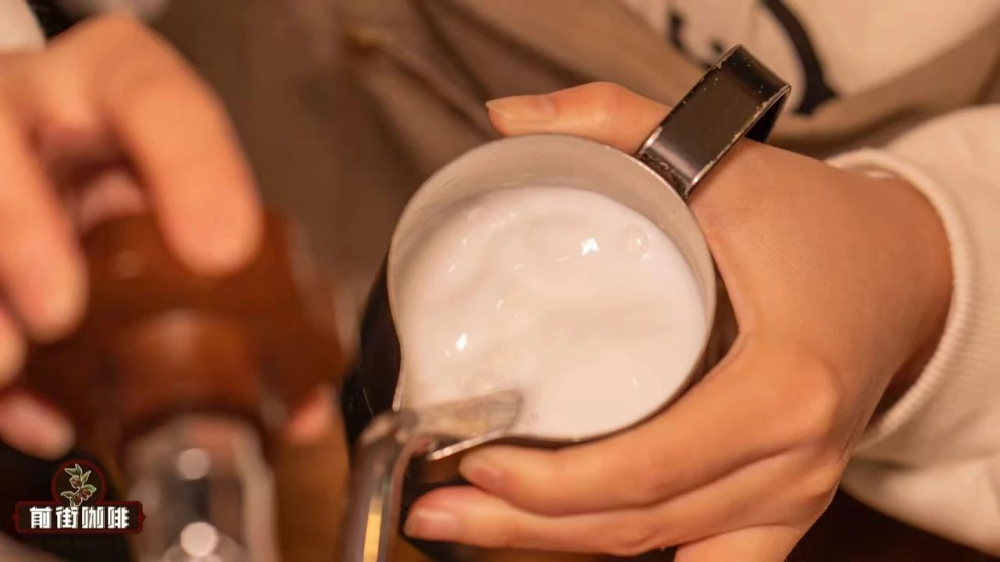
1. Hold the milk pitcher with both hands while steaming the milk
Front Street Coffee (FrontStreet Coffee) has noticed that many beginners steaming milk foam do not have stable control or a good grasp of the steam wand angle or how deep the tip of the steam wand is placed into the milk, which leads to instability when the steam is first turned on or as heating continues, and the force of the steam causes milk to splash out.

This is a very dangerous thing! Therefore, during the heating and steaming process, you must hold it high with both hands to increase stability and reduce the chance of being scalded by splashing milk.
2. Before steaming the milk, release the steam first
After the steam in a semi-automatic espresso machine's steam tube cools, it turns into water and remains in the tube. Therefore, before steaming milk each time, please release some steam first until no more water sprays out from the tube. Milk foamed with steam that contains water will produce large bubbles.
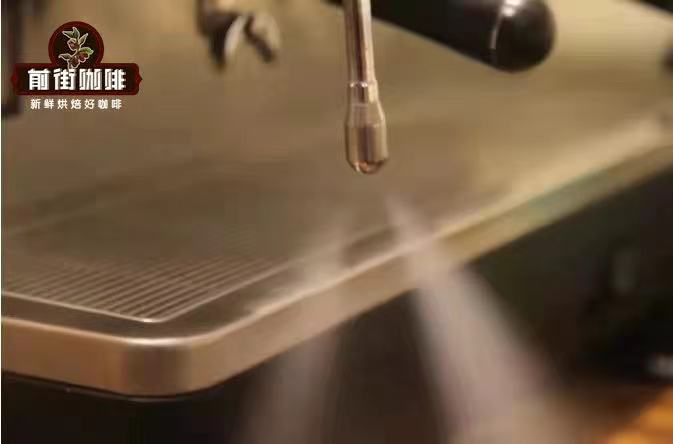
For beginners, once these large bubbles appear, before you have learned the technique for getting rid of large bubbles, the milk foam will get coarser and coarser as you steam~ So try to maintain the fineness of the milk's surface from the very beginning~
3. Place the steam wand into the milk pitcher at a 45-degree angle
A 45-degree angle means the 2-3 o'clock or 9-10 o'clock direction of the milk pitcher. Steaming milk at this angle allows the milk to form a small vortex as quickly as possible, and the appearance of the vortex can "roll" coarser milk foam into the liquid surface.
4. Place the steam tip 0.8 cm—1 cm deep into the milk surface
The steam tip is not better the deeper it is placed. After all, steaming milk is mainly about injecting air into the milk. If it is too deep, the steam holes cannot contact the air to form a vortex. If it is too shallow, the steam hits the liquid surface, forming rough bubbles and causing milk to splash.

After many experiments at Front Street Coffee (FrontStreet Coffee) placing the steam tip at different depths into the milk surface to steam milk foam, it was found that placing the steam tip 0.8 cm—1 cm deep into the milk surface and tilting the milk pitcher at 45 degrees makes it easier to form a vortex and roll away relatively coarser milk foam.
5. During aeration, just "squeak" 4-5 times
Adjust the depth of the steam tip to 0.3 cm, then turn on the steam switch, and you will hear a "squeak—squeak" sound. This is the aeration stage. The milk foam thickness for making latte art is 1 cm, so we do not need to over-aerate. After hearing the squeaking sound 4-5 times, adjust the steam wand depth back to 0.8-1 cm, maintain a 45-degree angle to create a vortex that eliminates coarse bubbles, and heat to the appropriate temperature.
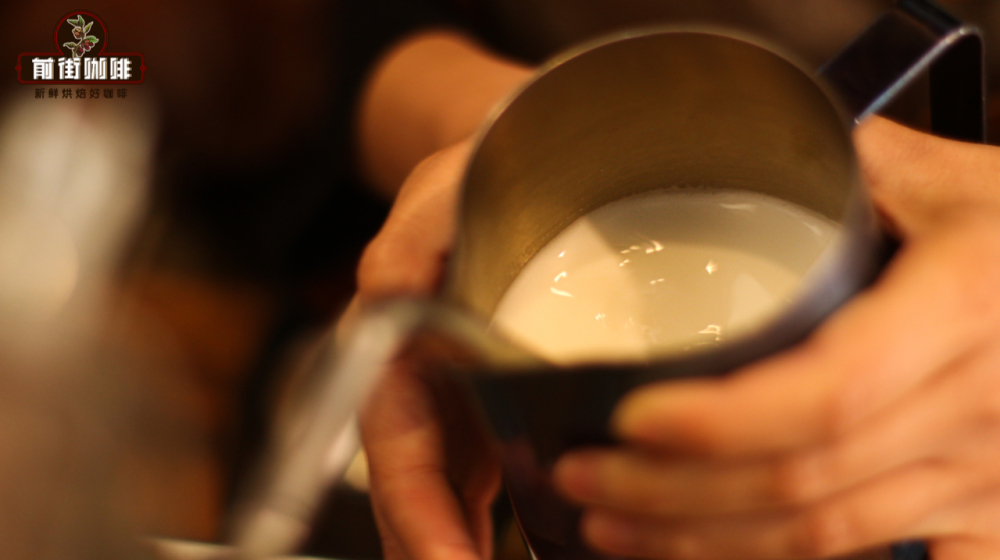
6. Milk is best heated to 55-65℃
Within this temperature range, lactose and other sugars are at their most "active." When milk is steamed to this temperature range and then integrated with coffee, you can feel that this milk coffee, even without added sugar, gives a sweet sensation in both aroma and taste.
After integrating with coffee, the sweetness in the milk can neutralize the bitterness in the coffee. Some espresso beans with fruity acidity and sweetness, after adding hot milk, can express a flavor like a fruit milkshake.

For example, the "Sunflower Warm Sun Blend Espresso Beans" used in Front Street Coffee's (FrontStreet Coffee) daily store offerings is a blend of 30% naturally processed Yirgacheffe Red Cherry coffee beans + 70% barrel-fermented Sherry coffee beans. The extracted espresso shows soft berry acidity, along with flavors of whisky, vanilla cream, and nutty caramel.
After fully blending with the steamed hot milk, the latte can present a taste and smoothness like strawberry milkshake, a flavor like whisky vanilla cream, and a lingering finish of hazelnut caramel.
The above content is compiled by CoffeeHunters, a coffee news website.


