







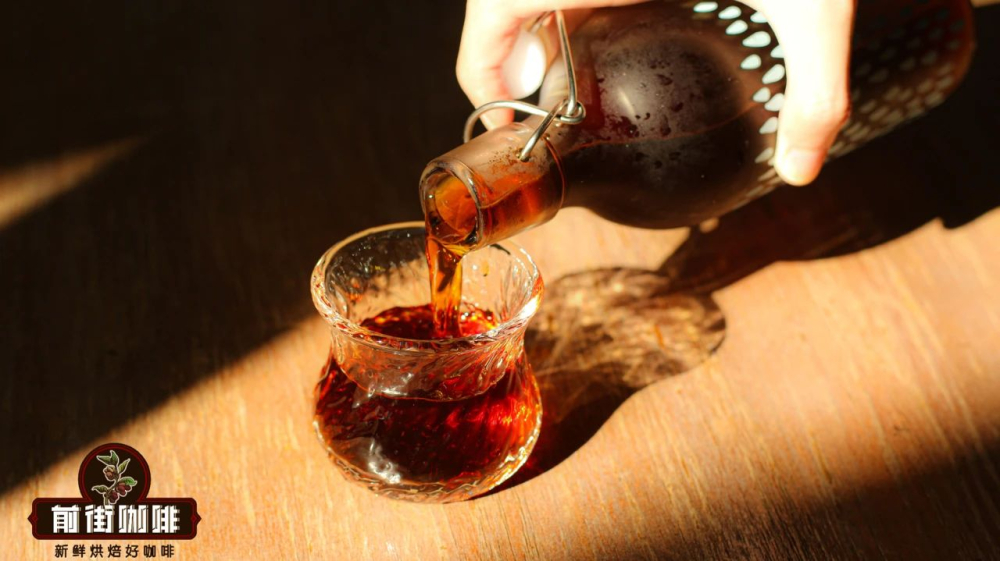
In this hot summer, a glass of iced coffee instantly refreshes you. Today Front Street wants to talk to everyone about cold brew coffee. Cold brew coffee has become a favorite among office workers. Why do we say that? Front Street believes that the reason cold brew coffee is so popular is mainly because its operation is very simple—compared to pour-over coffee, it's like comparing a small witch to a great one.
Now let Front Street have a good chat with everyone about cold brew coffee!
Since it's called cold brew coffee, then as the name suggests, cold brew coffee (Cold Brew Coffee) refers to coffee extracted at low temperatures. It is often confused with iced coffee; iced coffee usually refers to coffee that is extracted at high temperatures and then cooled with ice cubes when served. So the first biggest difference between cold brew coffee and ordinary iced coffee is the extraction temperature. So what is cold brew coffee? Cold brew coffee, English name Cold Brew Coffee, is made by grinding coffee beans into coffee powder, soaking them in cold water for generally at least 12 hours, and then extracting and filtering through professional equipment. If you want a fuller body, you can also extend the time to 24-48 hours.
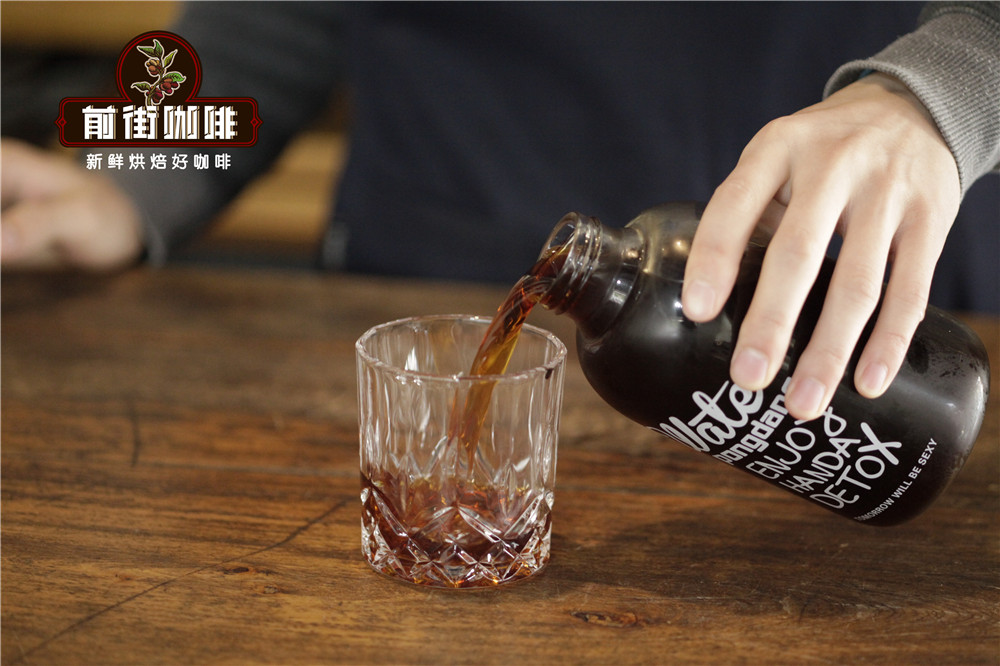
Front Street believes that although cold brew coffee takes a long time to make, it does not require any brewing skill. One bottle, one pack of beans, one night, and you can drink a full-bodied, rich iced coffee when you wake up. This is also why many people like cold brew coffee. The principle of making cold brew coffee is very simple: you only need to get the coffee-to-water ratio right, and through a long soaking time (over 12 hours), you can get a cup of icy, refreshing coffee. Grind and brew at home the night before, refrigerate overnight, and the next morning you can drink ice-cold coffee—that feeling is pretty great, right?
Cold brew coffee and pour-over coffee use different extraction methods. Cold brew extracted at low temperatures produces much fewer bitter substances, and the making method is simple. Front Street believes that anyone can make a delicious cup of cold brew coffee, though of course you need to get the coffee-to-water ratio right!

Front Street's method for making cold brew coffee
Front Street just said that the method for making cold brew coffee is very simple, especially compared with pour-over, it is even simpler and clearer. As long as the parameters are right, you can easily make delicious iced coffee. So how do you choose the grind size, coffee-to-water ratio, and other parameters for making cold brew coffee?
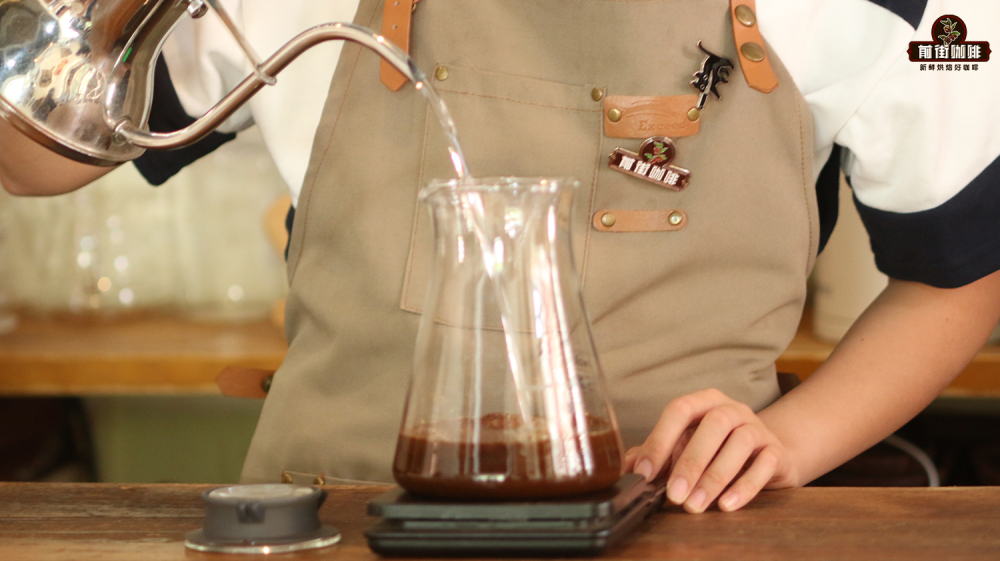
Front Street usually recommends a coffee-to-water ratio of 1:12 for making cold brew coffee, that is, based on 50 grams of coffee powder. The cold brew coffee made this way has just the right concentration and can be tasted directly without dilution. Some friends also like to add milk/soda water or use it to make specialty coffee. In that case, you need to increase the coffee concentration. Front Street recommends a ratio of 1:10 for cold brew coffee used to make specialty coffee.
Grind size for cold brew coffee
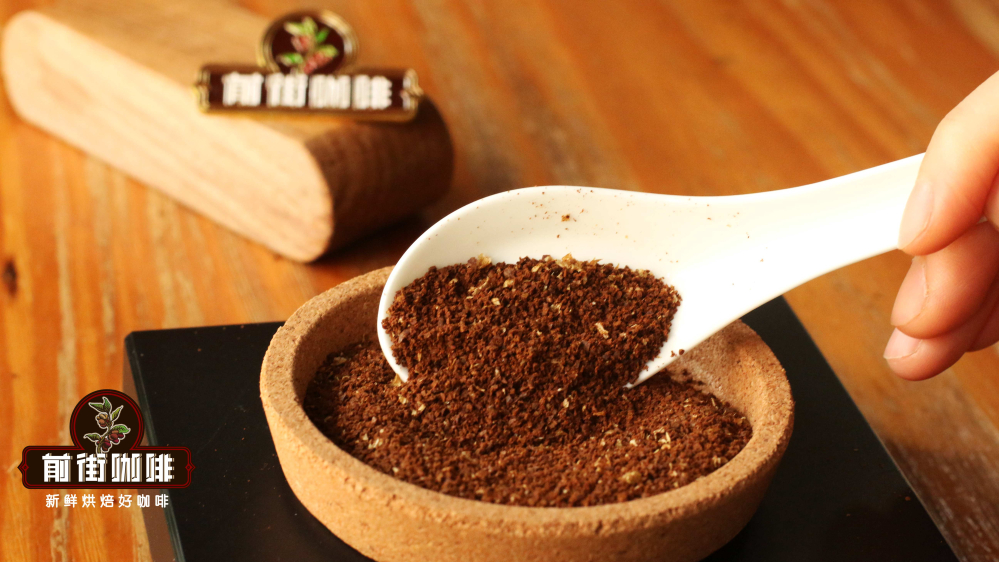
The grind size of coffee is related to brewing. Since cold brew coffee uses ice water for soaking and extraction, the extraction efficiency is extremely low. In other words, there is no need to worry about over-extraction at all. For Front Street cold brew coffee, the grind size is chosen to be slightly finer than pour-over grind, with a reference standard of 85% passing through a No. 20 standard sieve, and as few fines as possible is best. However, Front Street reminds everyone to note: although low-temperature extraction can reduce the appearance of bitter substances, it is not 100%. If the grind is too fine, after the sour and sweet substances in the coffee powder are quickly extracted, the rich and heavy substances will be released. An appropriate amount of heavy substances can improve the coffee's body, but after soaking for too long, woody flavors will begin to appear, reducing the overall cleanliness of the coffee.
Coffee-to-water ratio
Some friends may ask: so how much water is most suitable for soaking? Front Street's production standard is a ratio of coffee to water to ice of 1:8:4, meaning the actual coffee-to-water ratio is 1:12. Ice is added to ensure the water temperature is low enough and the extraction efficiency can be maintained at a stable level.
Temperature
Front Street has told everyone before: the water temperature for pour-over coffee is related to the roast level, while the temperature for cold brew coffee does not need strict control—you only need to put it in the refrigerator for low-temperature extraction. When extracting at low temperature, the extraction time needs to be 24 hours. So can cold brew coffee be extracted at room temperature? Of course cold brew coffee can be extracted at room temperature, but correspondingly the extraction time is shortened. However, when extracting at room temperature, Front Street Coffee (FrontStreet Coffee) recommends shortening the extraction time to 8 to 12 hours.
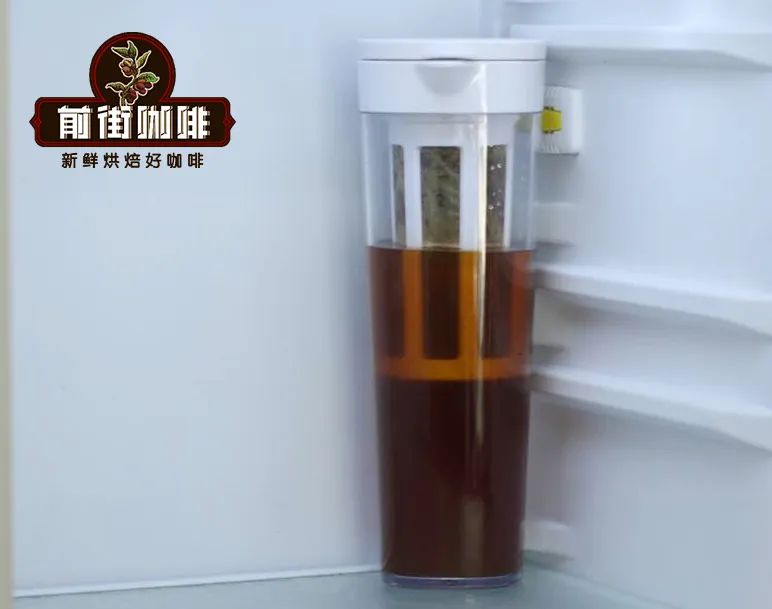
Front Street Coffee (FrontStreet Coffee)'s cold brew method is based on 50 grams of coffee powder. After grinding the coffee beans, put them into a clean, oil-free sealed container, add 400 ml of room-temperature water and 200 grams of hard ice cubes (a total of 600 grams of ice-water mixture), cover the lid and shake gently to ensure the coffee powder and ice water fully contact, then place it in the refrigerator and let it sit for 12-24 hours. After extraction is complete, use filter paper or a fine mesh strainer to filter out the coffee grounds, then use a clean sealed bottle to store the coffee liquid and refrigerate it for about 4 more hours before drinking.
How long can cold brew coffee be stored after filtering?
Front Street has talked about how to drink pour-over coffee: different temperatures, different flavors, but it cannot be left for too long either. For example, if left for a day, it still needs to be finished as soon as possible. Cold brew coffee is different. Theoretically speaking, the longer cold brew coffee is left, the stronger the fermented flavor becomes. But excessive fermentation makes the coffee lose its original flavor. For friends who do not like too strong a fermented flavor, Front Street does not recommend trying it easily. The best time to taste cold brew coffee is 2-3 days after filtering out the coffee grounds, and the recommended storage time should not exceed 7 days.
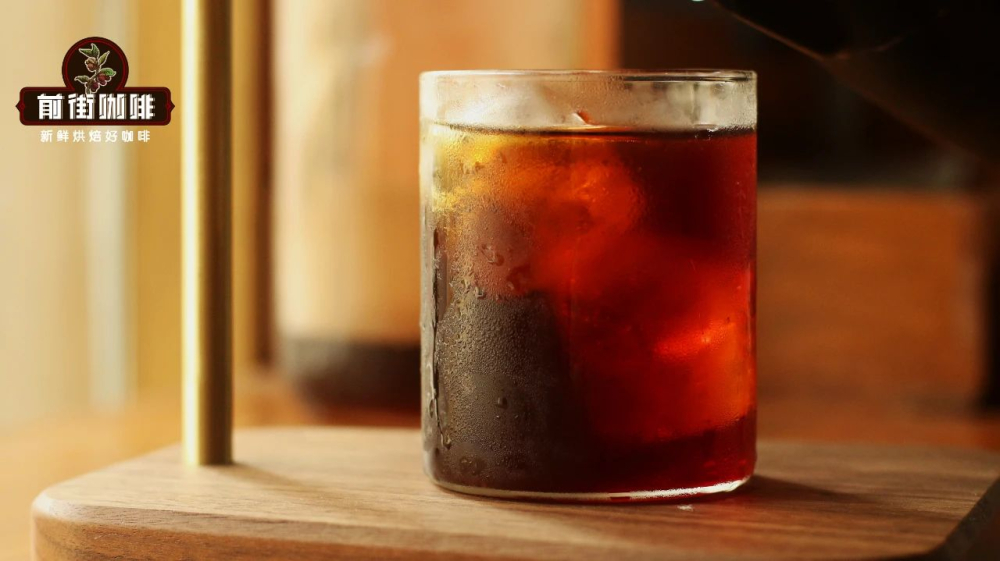
Low temperature and long extraction time are the two major characteristics of cold brew coffee, and also the two main differences between cold brew coffee and hot brew coffee. Hot brew coffee extracts coffee powder with hot water at a temperature between 88-91°C, generally not exceeding 5 minutes. The fastest espresso (Espresso) takes only 18-23 seconds, while cold brew coffee far exceeds hot brew coffee in time. Regarding the issue of cold brew coffee's longer extraction time, Front Street uses a rather poetic phrase: "What you are drinking is not just a cup of coffee, but also a long wait."
Characteristics of cold brew coffee
In terms of flavor, high temperatures cause the tannic acid in coffee to decompose into pyrogallic acid, creating sourness and bitterness. Studies have shown that the acidic substances in cold brew coffee are 67% lower than in hot brew methods. Therefore, compared with hot brew coffee and iced coffee made by adding ice after hot brewing, coffee made by the cold brew process has lower sourness and astringency and is generally welcomed by people. For friends who do not like sour coffee, cold brew coffee is just right!
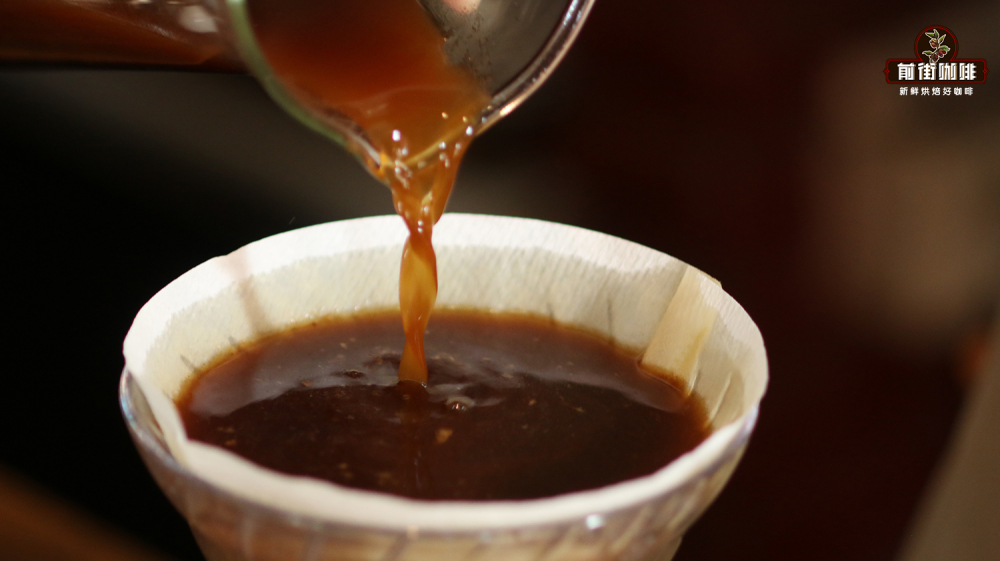
In addition, Front Street found that low-temperature conditions and long contact with coffee powder allow only small-molecule flavor substances to be extracted, such as floral and fruity aromas, while those larger-molecule flavor substances, such as smoky and baked flavors, are difficult to extract. This is why cold brew coffee does not have a very sensory-impacting aroma when smelled, but tastes smoother, richer, with distinct layers, obvious sweet aftertaste, and no greasy feeling.
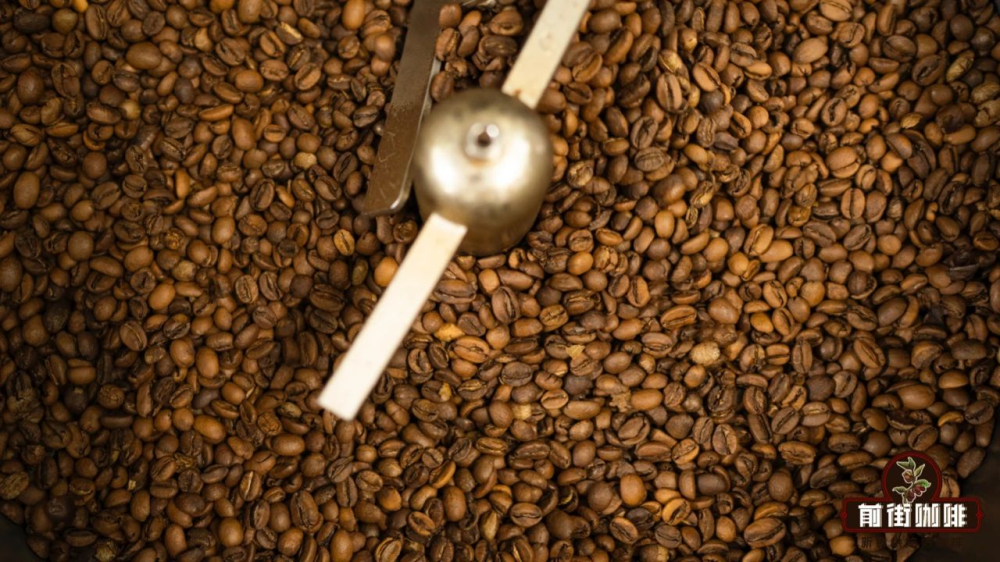
Of course, the premise for all this is ensuring the coffee beans are fresh. Front Street Coffee (FrontStreet Coffee) deeply understands that the freshness of coffee beans has a great impact on flavor. Front Street's roasting philosophy is "freshly roasted good coffee," so that every customer who places an order receives the freshest coffee. Therefore, the coffee beans shipped by Front Street Coffee (FrontStreet Coffee) are all within 5 days of roasting. The resting period for coffee is about 4-7 days, so when customers receive it, it is exactly at its best flavor.
Front Street believes that any coffee-making method requires constant practice, so that all the flavors of the coffee can be better displayed. Front Street has nearly a hundred coffees from different producing regions, allowing everyone to better taste different coffee flavors; friends can also come to Front Street Coffee (FrontStreet Coffee) to discuss coffee with our baristas!
The above content is compiled by CoffeeHunters, a coffee news website.


