







A significant reason the Coffee Flavor Wheel was created was to meet the tasting criteria that emerged as coffee became more specialty-oriented. It also drew on wine tasting and cupping practices, gradually evolving from vague, general flavor descriptions into a detailed, logical flavor wheel.
The first version of the Coffee Flavor Wheel was released in 1995, consisting of two wheels: a positive flavor wheel and a negative flavor wheel. Then in 2016, the latest version of the Coffee Flavor Wheel was released—the one we commonly see today. However, truly understanding this flavor wheel still requires some effort.
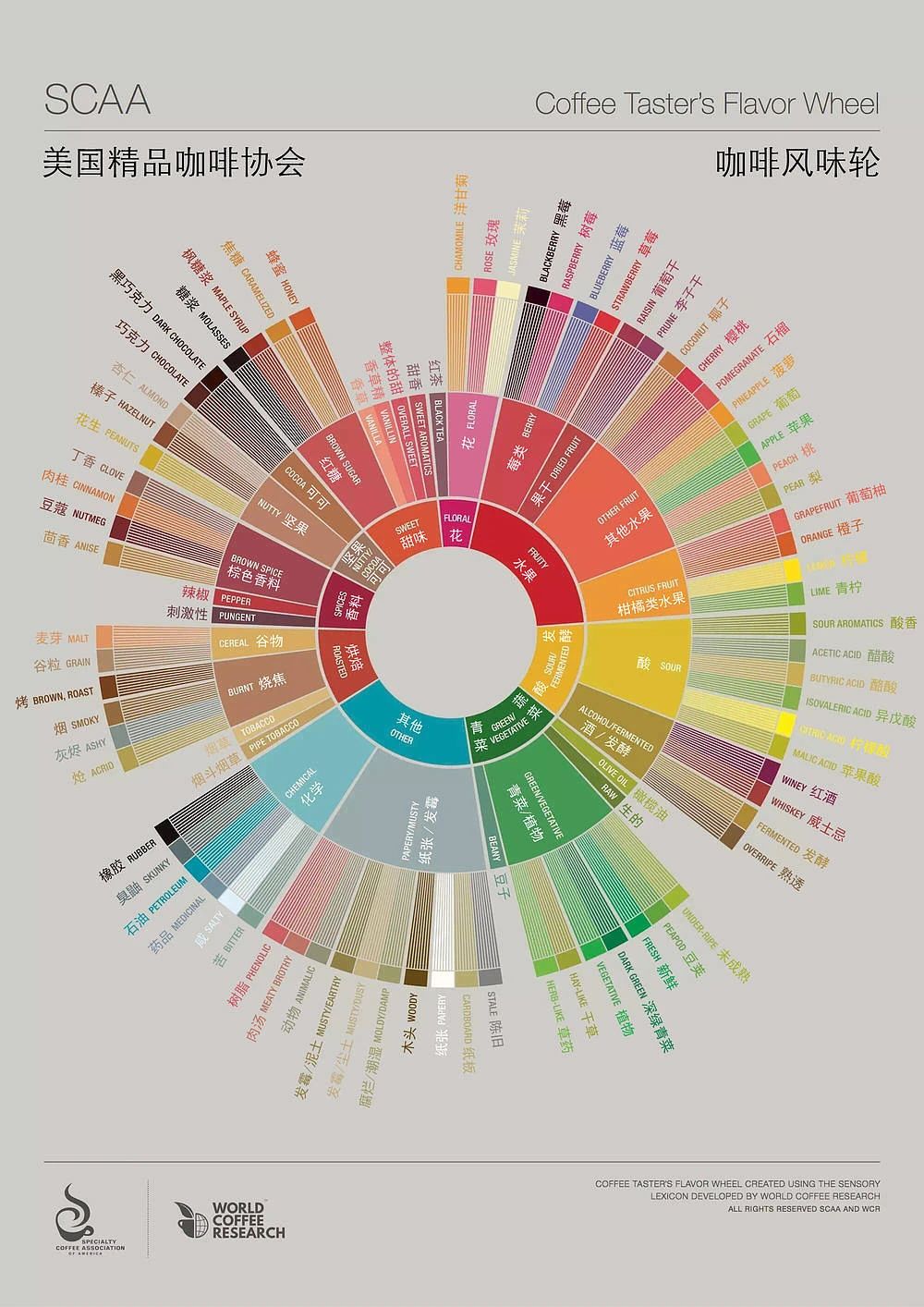
First, let's look at some of the background behind the creation of the new flavor wheel. The SCAA first partnered with the World Coffee Research (WCR), Kansas State University, the German Agricultural University, and coffee industry representatives to analyze and test the flavors of 105 different samples from 13 coffee-producing countries, compiling the "World Coffee Research Sensory Lexicon" as the foundation for the new Coffee Flavor Wheel.
Then the SCAA, together with a team from the University of California, Davis, used a novel adaptation of traditional sensory and statistical methods, in which 72 experts ranked the flavor attributes in the lexicon. The data was then compiled and arranged into a wheel.
Finally, the London creative agency One Darnley Road carefully color-matched the flavor wheel, with each color and shade carefully chosen to better match the corresponding flavor. To put it simply, this version of the flavor wheel offers flavor descriptions that better fit how coffee flavors actually present themselves, and the colors are easier for people to associate with—for example, herbaceous plants use grass green, and citrus uses orange.
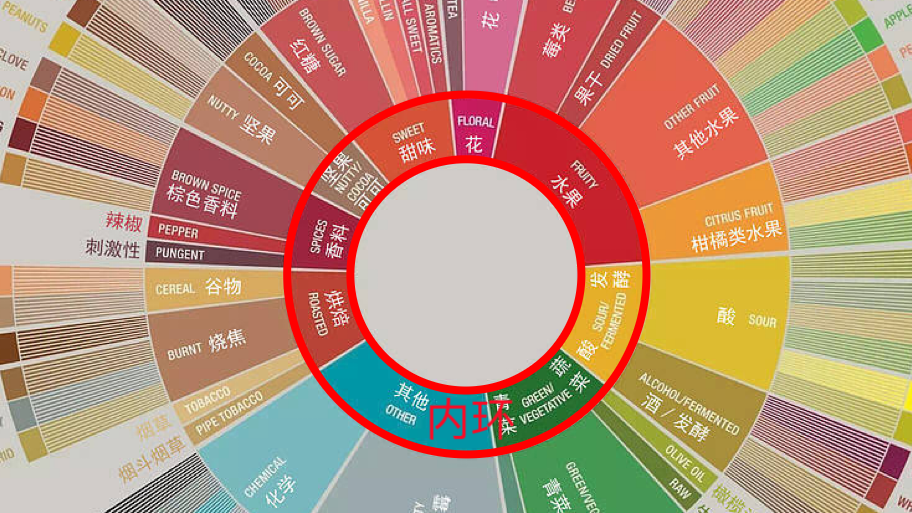
This flavor wheel is divided into 3 rings: the inner ring, the middle ring, and the outer ring. The inner ring consists of categories, divided into herbaceous plants, sour/fermented, fruits, flowers, sugars, nuts/cocoa, spices, roasted flavors, and other categories.
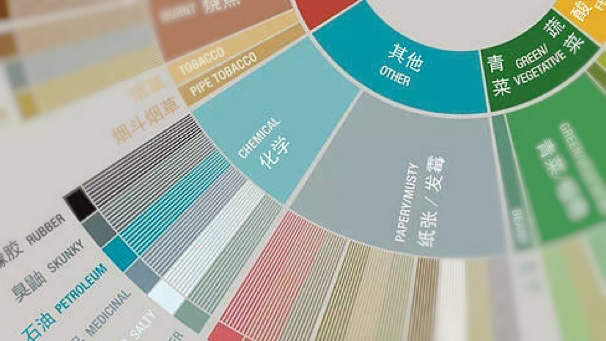
The middle ring consists of the secondary subcategories under each inner-ring category. For example, fruits include citrus, other fruits, dried fruits, and berries.
The outer ring consists of tertiary details, broken down to individual items. For example, citrus includes lime, lemon, orange, and grapefruit.
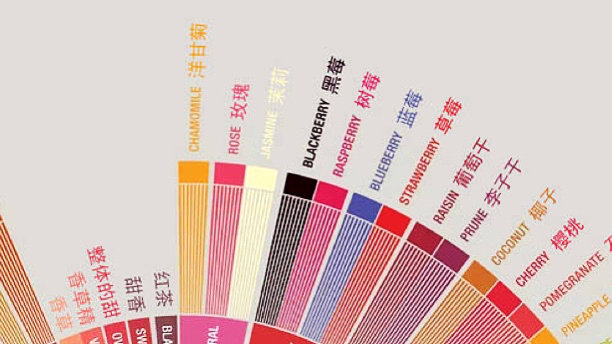
The benefit of this layout is that when you taste lemon, you can know it comes from the citrus subcategory within fruits, making it easier to categorize, archive, and learn. And when you cannot distinguish the detailed flavor, you can also gradually identify it through this first-, second-, and third-level classification.
In addition to reading from the inside out, the gaps between categories also reflect how closely or distantly they are related. For example, although blueberry and strawberry both belong to berries, the gap between blueberry and strawberry is relatively small, while the gap between blueberry and raspberry is relatively large. Similarly, although rose and jasmine both belong to flowers, the gap between rose and jasmine is relatively small, while the gap between rose and citrus is relatively large. From this, we can also see their flavor similarity.
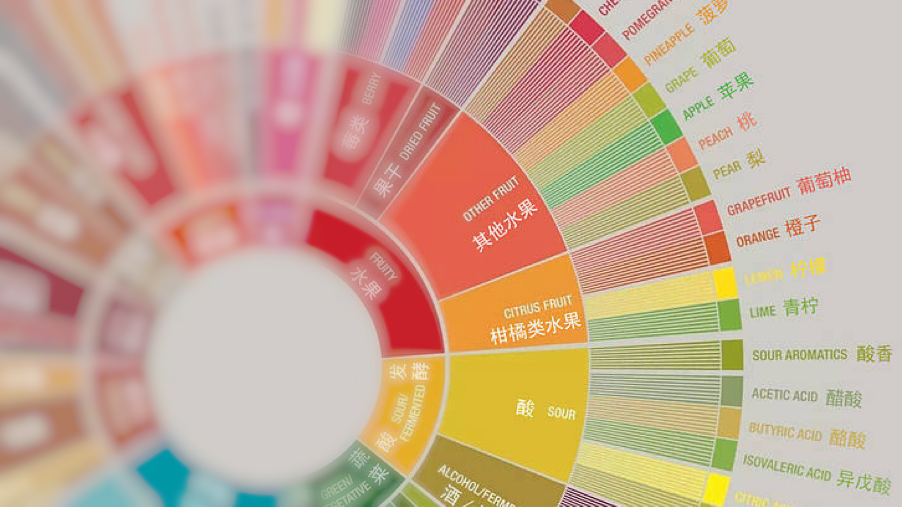
In addition, the colors of the outer ring match the described types very well. For most common food descriptions, the colors are basically consistent. For example, jasmine uses yellow-white, rose uses rose red, and chamomile uses orange. Friends often describe "white floral aroma," and we can then understand that white floral aroma generally refers to that type of floral scent.
Of course, relying on the flavor wheel alone is like discussing military tactics only on paper; it must be combined with practice to maximize its effect. After understanding the flavor wheel, you should also regularly eat or smell the foods on the flavor wheel (except for the other category), and also regularly drink coffee to experience the flavors in coffee.
The above content is compiled by CoffeeHunters, a coffee news website.


