







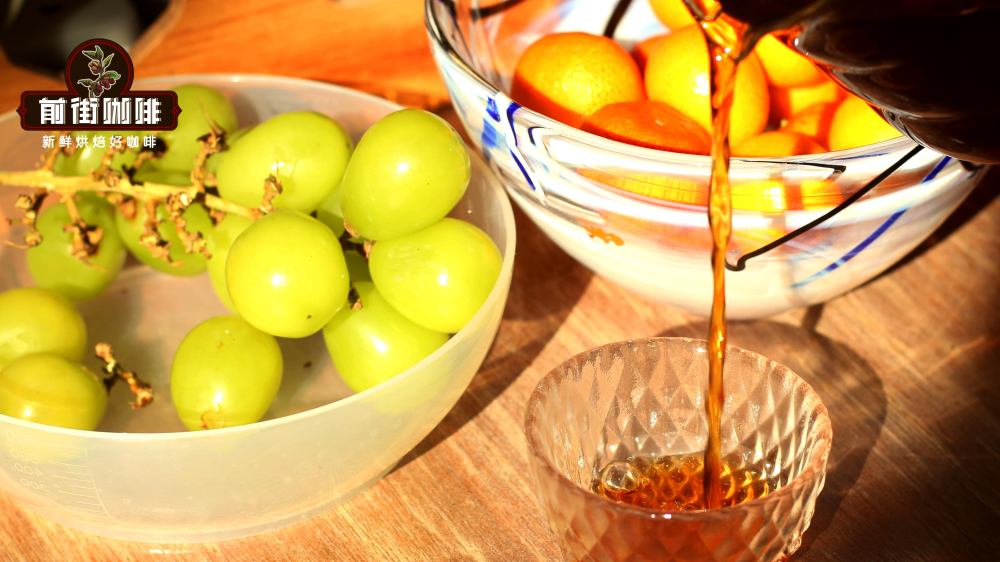
“This coffee has rich fruity notes, with flavors of citrus, lemon, oolong tea, and jasmine!!!” For those who have just been introduced to specialty coffee, this might seem unbelievable—how can you taste so many flavors in a single cup of coffee! (Is it just made up?) In this installment of Barista Development Diary, we’ll share the journey of a beginner training their senses.
Are coffee flavors tasted by the taste buds?
No, it needs a partner——Smell~
That’s right, coffee flavors cannot be fully perceived by the taste buds alone, and when it comes to identifying flavors, the taste buds actually play a “supporting role.” Our taste buds can only sense five basic tastes—sour, sweet, bitter, salty, and umami—and coffee has no “umami” taste, while saltiness is normally completely masked by sourness, sweetness, and bitterness.
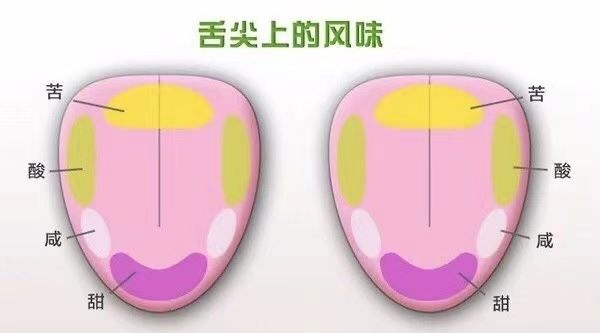
I wonder if you’ve noticed that when we take the first sip of coffee, we first perceive the sour and sweet tastes, and only then the bitter taste. That’s because the tongue also has its own “workflow” for distinguishing tastes. The tip of the tongue senses sourness, the sides near the tip sense saltiness, the sides near the back sense sourness, and the back of the tongue senses bitterness.
Truly identifying flavors still depends on the sense of smell. (Can we still smell food after it enters the mouth?) Yes! The throat and nasal cavity are connected. After coffee is brewed, some flavor molecules are wrapped in oils, and at this point, we can’t clearly perceive them by smelling directly. When these aroma-wrapped oils enter the mouth, the taste buds first judge the coffee’s taste, and then the oils melt on the tongue, releasing aroma. These aromas “travel” to the nasal cavity during swallowing, which is called retronasal olfaction, while what we can directly judge by smell is orthonasal olfaction.
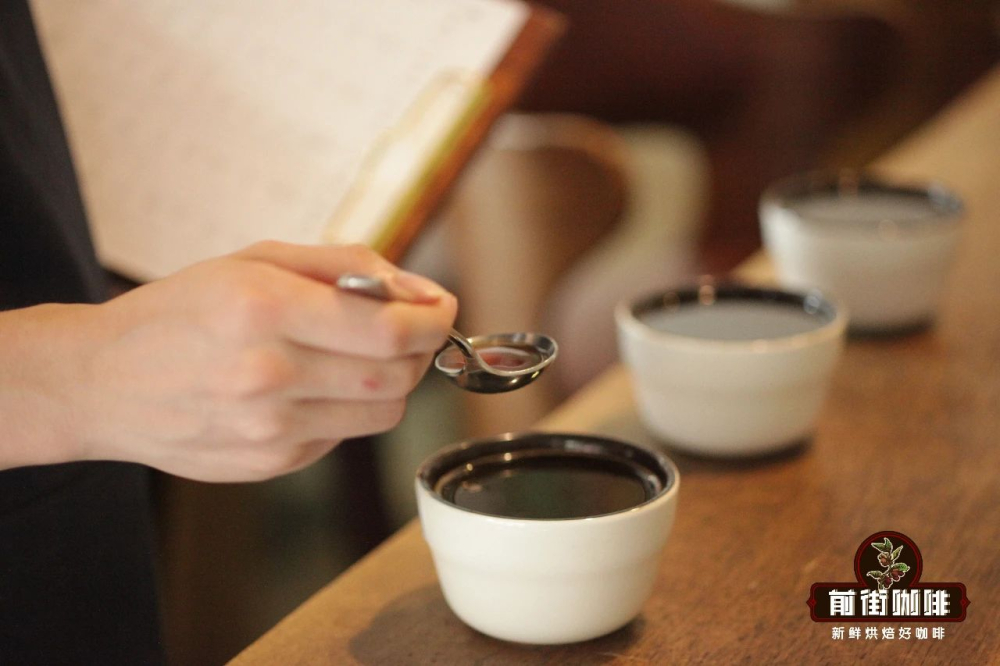
When our taste buds perceive taste and our sense of smell perceives aroma, our brain will associate them with specific objects. So why can some people associate a specific object while others cannot? This is related to one’s own taste memory. Moreover, coffee flavor itself is a very general definition. For example 🌰: when it comes to the acidity of a cup of coffee, some people think of lemon, some think of pomelo, and so on—all very normal. The fun of tasting coffee lies in sharing and discussing what you perceive with the people around you.
From which angles do we discuss coffee flavors?
Aroma, sweetness, acidity, mouthfeel, flavor, aftertaste, balance
「Aroma」——Orthonasal olfaction
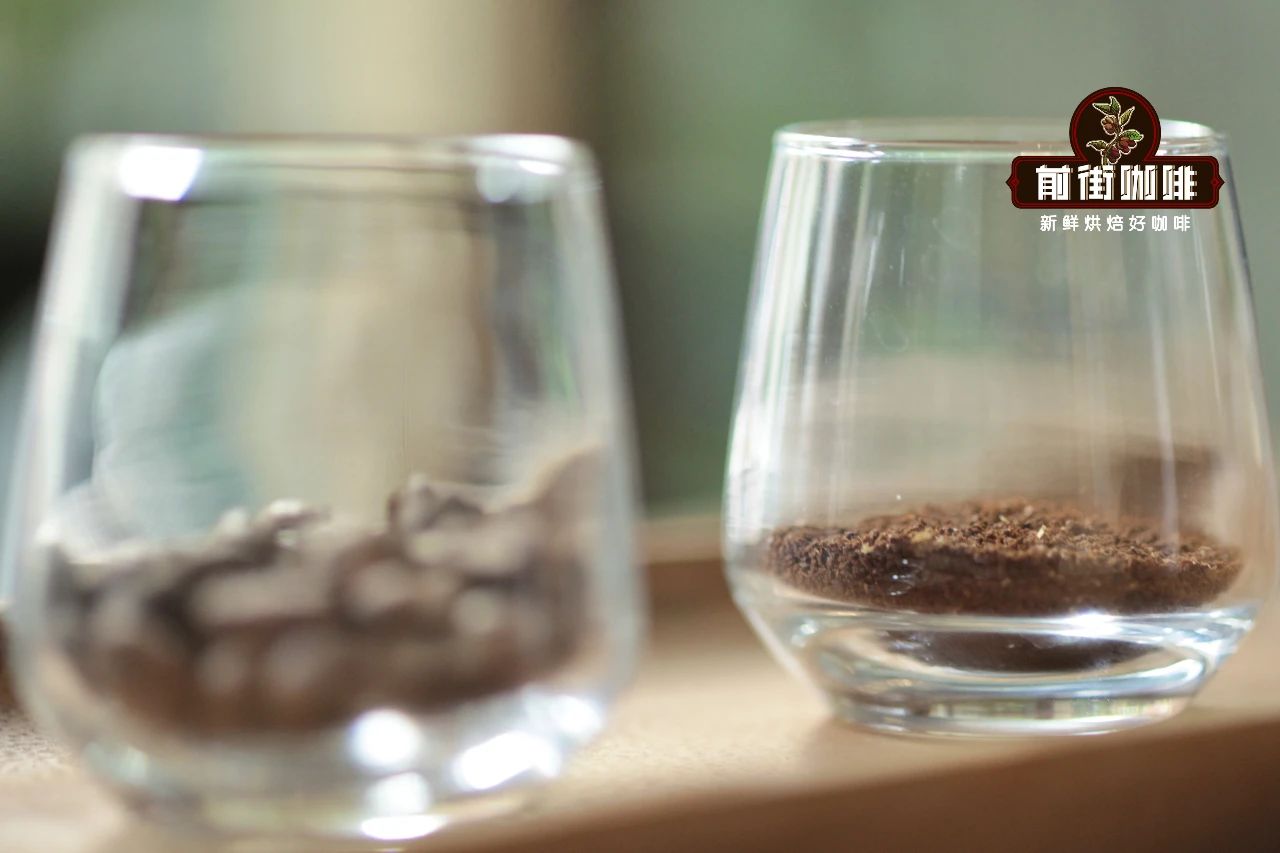
The aroma of coffee is divided into dry aroma and wet aroma. Dry aroma refers to the aroma released when coffee beans are ground into particles in a dry state; wet aroma refers to the aroma released by the coffee liquid extracted from coffee particles with water. The same coffee bean can release different aromas in dry and wet states, because many specific aroma molecules need a certain temperature to volatilize. For example, when a barista at FrontStreet Coffee smelled the dry aroma of Emerald Estate Green Label Geisha coffee, they detected the fresh scent of sugarcane, while the wet aroma revealed the fragrance of ginger flower.
「Cleanliness」——Retronasal olfaction
Cleanliness refers to coffee having no defective or unpleasant flavors. For example, some poor-quality coffee beans may have an earthy/woody taste after brewing, or an unpleasant off-flavor.
「Sweetness」——Taste buds
Sweetness refers to the perception of taste. A cup of coffee with good sweetness can improve people’s evaluation of it. Of course, this sweetness is not as obvious as sucrose; in many cases, sweetness is expressed in the sweet aftertaste.

「Acidity」——Taste buds
Whether the acidity of coffee is strong can be distinguished by how much saliva is secreted on both sides of the tongue. The stronger the acidity, the more saliva is secreted. Good-quality coffee generally tends to have fruit acidity (fresh, soft sourness), while poor-quality coffee may show acetic acidity (strong, pungent sourness).
「Mouthfeel」——Oral tactile sensation
The body/smoothness/astringency of coffee are all perceived through oral tactile sensation. Body can be described as light–full–solid. This feeling is like drinking skim milk–whole milk–cream; your tongue will feel different degrees of “pressure on the tongue.” Astringency is the rough tactile sensation produced by polyphenolic compounds in coffee, opposite to smoothness. The appearance of astringency directly lowers your evaluation of that cup of coffee.

「Flavor, Aftertaste」——Taste buds+Retronasal olfaction
Flavor refers to the overall impression we get from drinking this cup of coffee, combining sensations produced by smell and taste. This requires combining one’s own memory of tastes, and then whether one can associate them after drinking the coffee. Aftertaste refers to the various tastes and aromas remaining in the mouth after drinking coffee. If a pleasant flavor can linger in the nasal cavity for a long time, we can describe this coffee as having a long aftertaste. Just like the Green Label Geisha coffee mentioned earlier by Front Street, the aftertaste it shows after drinking is a light floral fragrance and green tea aroma.
「Balance」——Taste buds
Balance refers to whether the various indicators of the coffee are well balanced, for example, whether it is too sour or has a prominent bitterness.
How can beginners scientifically develop their sensory flavor descriptions?
Build a flavor memory bank
For those who have just come into contact with coffee, you may not understand why a barista can blurt out what flavor a coffee has. In fact, if you look at it from another angle, you’ll find it very normal [when eating rice normally, if you eat the same rice every day, and suddenly one day you switch to another rice, you can clearly feel the difference]. This skill is innate, but being able to say “what exactly is different” requires constant accumulation and training.
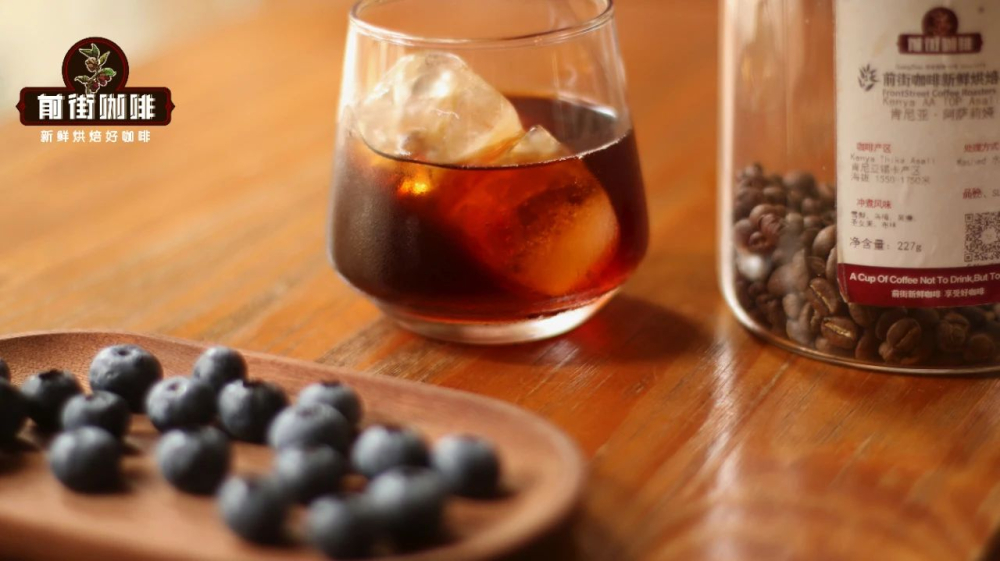
Therefore, if you want to quickly taste coffee flavors, you first need to taste or smell the actual items described as coffee flavors to build your own sensory memory. Otherwise, when someone says this coffee has a strawberry flavor, if you’ve never even tasted a strawberry, how can you know what flavor it is! The coffee flavor wheel published by the SCAA is a very good reference object; you can try to experience one by one the actual items described on the coffee flavor wheel.
Build your own sensory system
In flavor description and communication, we need to reach consensus. The scientific aspect of the coffee flavor wheel is that it categorizes many flavors. For example, citric acid and acetic acid are categorized as acidity, lemon and citrus as citrus fruits, while berries, apples, peaches, etc. are categorized as other fruits, honey, caramel, maple syrup, etc. as brown sugar types, and chocolate, almonds, walnuts, hazelnuts, etc. as nut/cocoa types. The entire flavor wheel goes from green herbaceous plants to yellow fermented acidity to red fruits, then pink flowers, orange sugars, and brown nut/cocoa types. All of these reflect the main ranges of coffee flavors expressed at different roast levels.
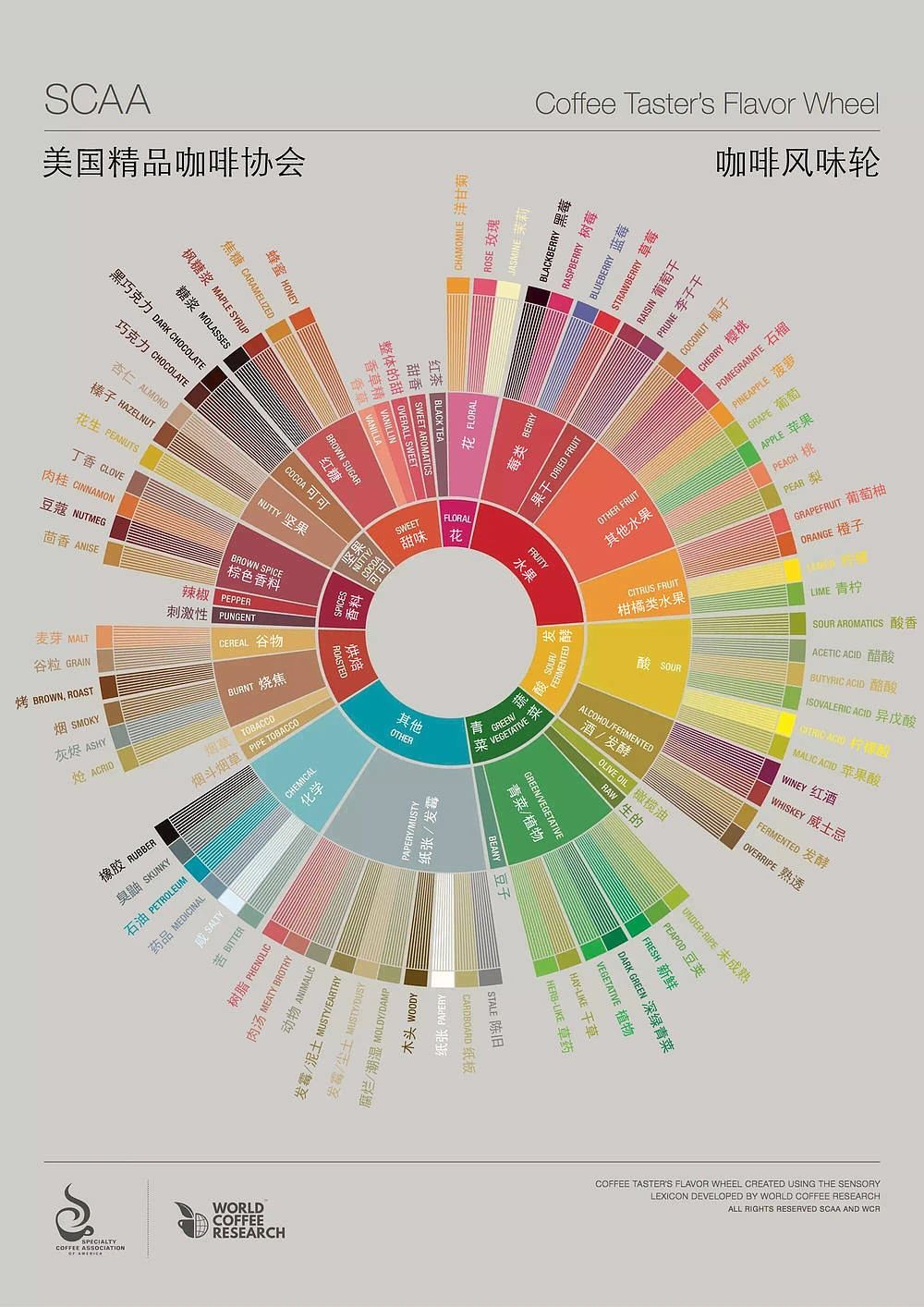
For example, light-roasted coffee will be concentrated in fermented acidity, fruits, and flowers. Medium-roasted coffee will be concentrated in sugars, flowers, berries, and dried fruits. Dark-roasted coffee will be concentrated in brown sugar, nuts/cocoa, and spices. The flavor wheel can help you more systematically build connections between real objects and coffee.
You need some imagination
You should know that a cup of coffee cannot be 100% that taste. For example, describing it as citrus flavor does not mean it is 100% citrus flavor, otherwise it would become a cup of citrus juice. For example, when we taste a cup of Yirgacheffe [a rush of aroma comes forward, with some floral notes mixed with berry aroma, and the acidity when tasted is like eating citrus, the sweetness is like honey, and the aftertaste is like the feeling after drinking green tea.] These are not a 100% match, but at least there is a feeling of 70%-80% similarity.
Communicate more and accumulate often
Normally, you can communicate more with the outside world to help calibrate your senses. Dare to express the flavors you perceive. Everyone’s expression of things will differ because of different environments and experiences. For example, foreign countries often use red currant to describe coffee flavors, which is very unfamiliar in China. Besides communication, you also need to keep accumulating to enrich your flavor memory bank.
Pay attention to diet in daily life
Maintaining your taste buds is the foundation. Eating less spicy and other stimulating things and drinking less alcohol can keep your taste buds active and allow you to perceive more flavors.
The above content is compiled by CoffeeHunters, a coffee news website.


