







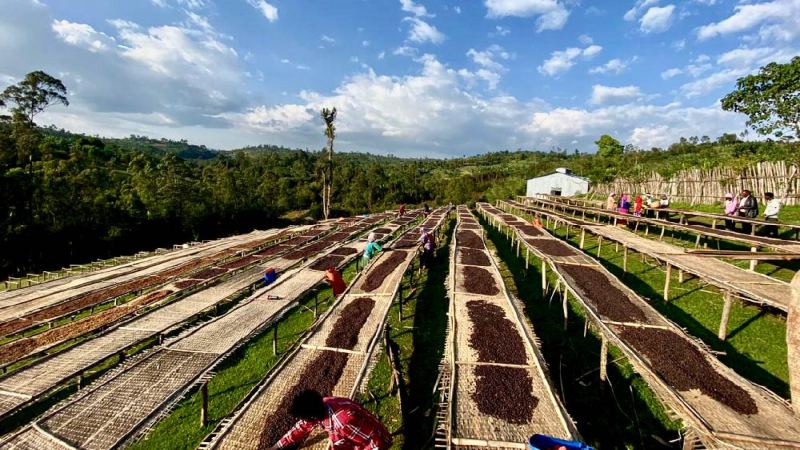

YirgacheffeAs a coffee that is renowned across the African continent and throughout the entire coffee world, it can be said to be one of the synonyms for specialty coffee. First, let me teach you how to distinguish authentic Yirgacheffe from fake. We can judge from the following three points:
1. The flavor of Yirgacheffe
The so-calledYirgacheffe flavoris a distinctive lemon, white floral, and honey-like sweetness, with soft fruit acidity and citrus notes, a fresh and bright mouthfeel, and a finish as refreshing as green tea, forming a sharp contrast with traditional bitter coffee.

2. The variety of Yirgacheffe
As a classic Ethiopian coffee, the variety of Yirgacheffe is the Ethiopian native species, which is a "collection" of many different coffee trees, so we can see that Yirgacheffe beans are uneven in size, but this does not affect its ability to express superior flavor. If the variety is not Ethiopian native species, then thecoffeeis most likely not Yirgacheffe.

3. Origin information of Yirgacheffe
YirgacheffeYirgacheffe is a small town located in southern Ethiopia, and its name means "settling down in a wetland." The growing altitude here is about 1,700-2,100 meters. The higher the altitude, the lower the temperature, the longer the coffee cherries take to mature, and the more nutrients and flavor compounds they absorb, so the resulting coffee has a unique and elegant flavor. At the same time, it can also refer to more refined coffee processing stations, such as Front Street Yirgacheffe Gedeb Cooperative and Front Street Yirgacheffe Red Cherry Konga Cooperative.
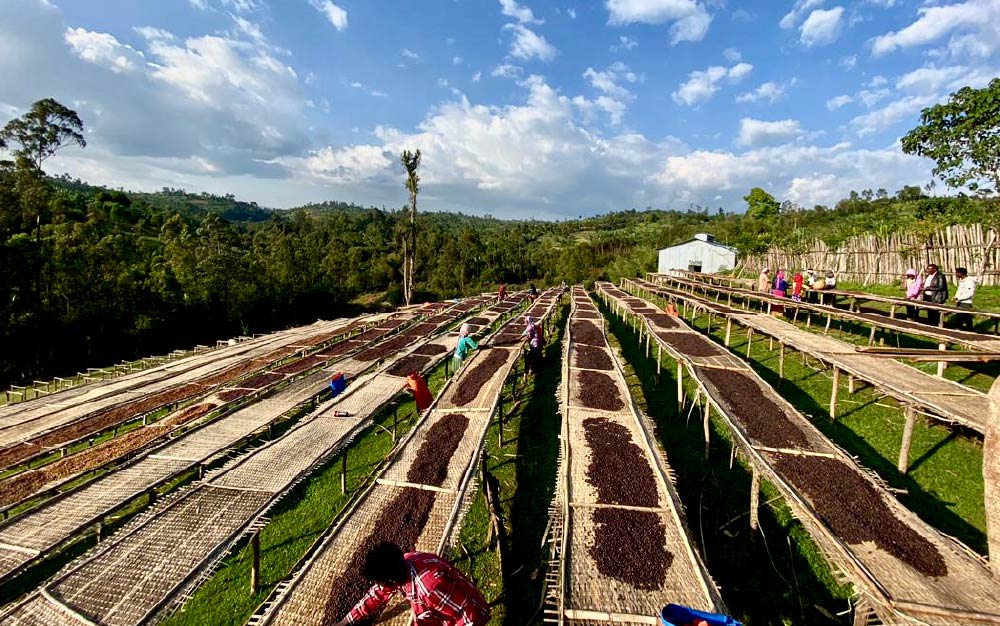
In Yirgacheffe, almost every household grows coffee beans. There are relatively few large plantations here. Generally, farmers grow coffee in their own fields or yards, mixed with other crops, thereby ensuring stable income throughout the year—truly garden coffee. Since each household's coffee production is not large, the harvested coffee cherries are packed and sent to the town's cooperative for unified processing, and afterward are also sold under the cooperative's name.
The Yirgacheffe region established the Yirgacheffe Coffee Farmers Cooperative Union (YCFCU) in June 2002, with a total of 28 member cooperatives. One cooperative is roughly the size of a village. After farmers harvest coffee cherries, they can send them to the nearest cooperative for green bean processing.
Washed processing method
Yirgacheffe previously used the traditional natural sun-drying method to process green coffee beans. Because the Ethiopian government wanted to improve coffee quality, thereby driving the income of the local coffee industry, it introduced washed processing technology from Central and South America, allowing Yirgacheffe coffee to achieve a qualitative leap.
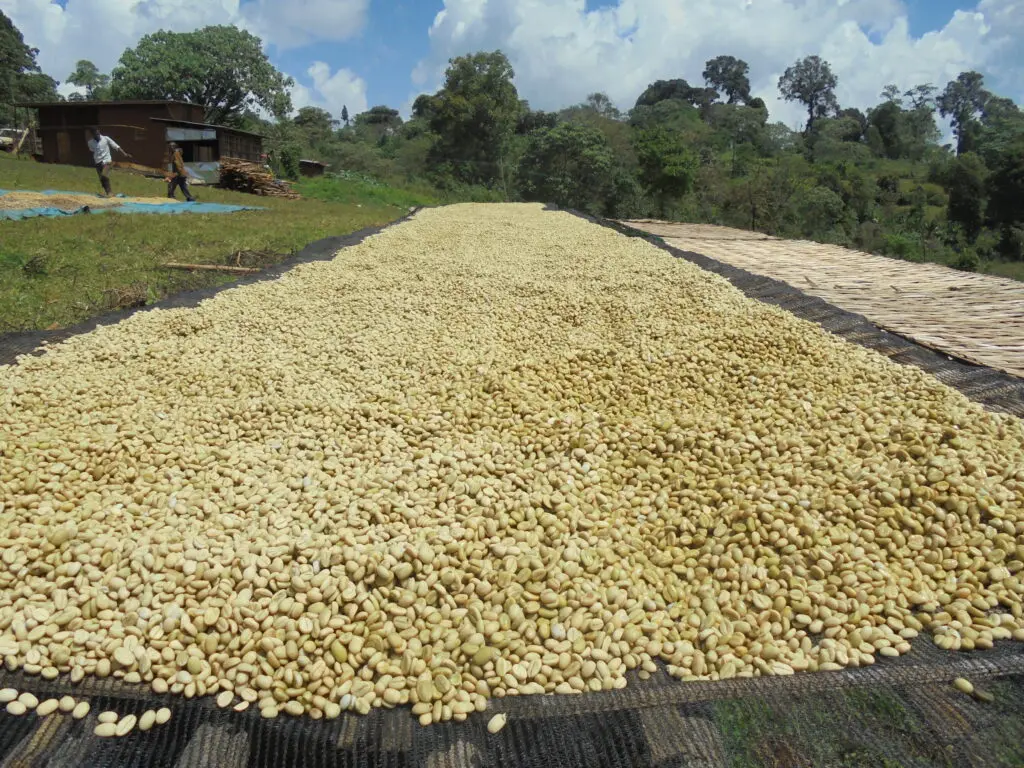
In washed processing, the coffee cherries are first placed in water. Immature and defective fruits float to the surface, and this is the first step of removing defective beans. Then a machine is used to remove the coffee pulp and skin, followed by fermentation for 12-36 hours, using the mucilage layer to produce microorganisms during fermentation that decompose and detach it. Next, the beans are placed in a clean water tank and scrubbed clean with tools, then spread out in the sun to dry. This makes the coffee beans' flavor fresher and the acidity brighter, and most importantly, it greatly reduces the defect rate compared with traditional natural processing.
Generally speaking, washed processing better presents the basic flavor of the region, while naturally processed coffee beans add a rich fermented aroma and tropical fruit sweetness on top of the basic flavor. So for a first try, it is recommended to start with Front Street washed Yirgacheffe.
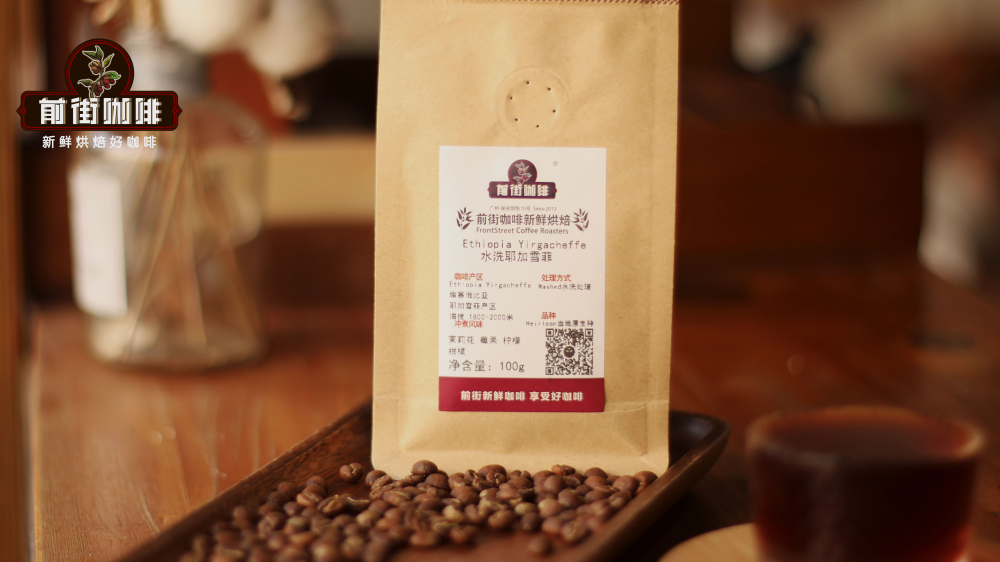
Front Street. Washed Yirgacheffe Coffee Beans
Region: Yirgacheffe region
Altitude: 1900-2000m
Processing method: Washed
Variety: Heirloom native species
Flavor: Jasmine, citrus, berry
"Red Cherry Project"
Of course,Yirgacheffealso has specialty-grade naturally processed coffee beans. The improved sun-drying technique givesYirgacheffea richer berry aroma. The selected red coffee cherries are placed on drying beds for sun drying and need to be turned manually at regular intervals to ensure the coffee beans do not over-ferment due to high temperatures. Once the moisture content of the coffee beans reaches 11-12%, they can be hulled and bagged. Front Street's Red Cherry coffee uses naturally processed Yirgacheffe, so everyone can compare the flavor differences between the two processing methods.
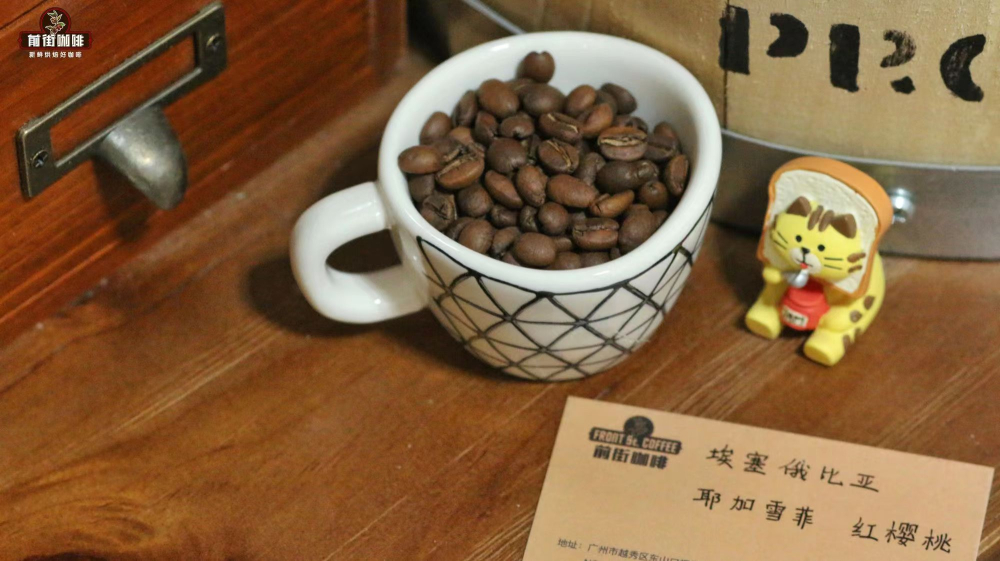
Front Street. Natural Red Cherry Coffee Beans
Region: Yirgacheffe region, Aricha Estate G1
Altitude: 1700-2200m
Processing method: Natural
Variety: Heirloom native species
Flavor: Berry Jasmine Lemon
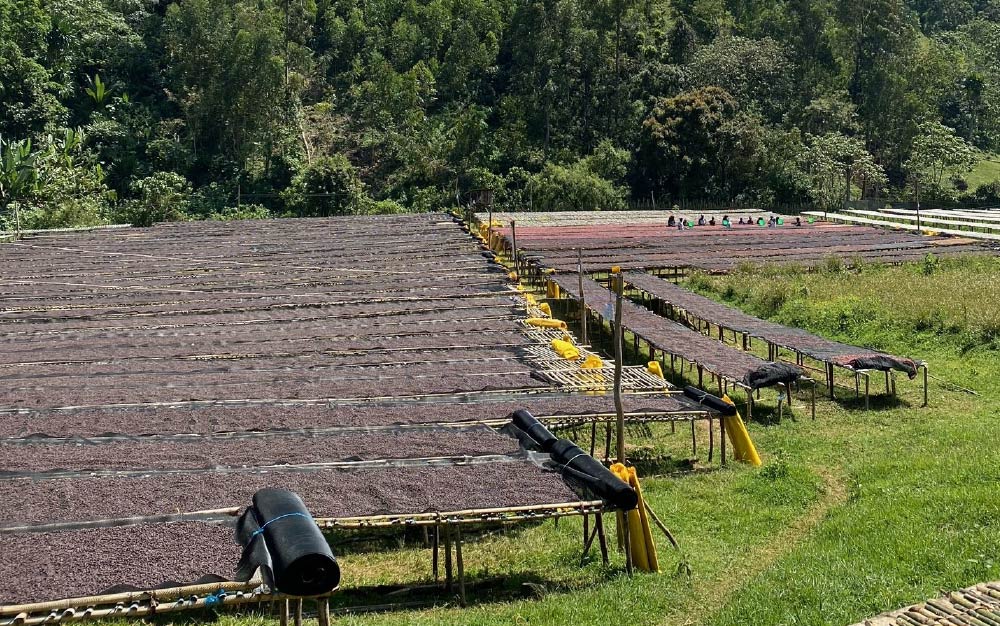
Green bean grading
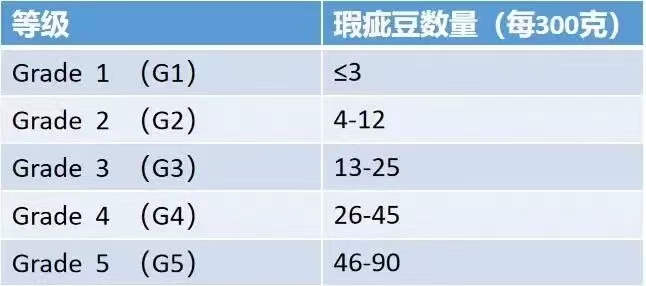
Yirgacheffe is first divided into two major categories according to processing method: washed and natural. Then it is graded according to the SCAA cupping standards of the Specialty Coffee Association of America. The smaller the number, the higher the grade. For example, Front Street's Gedeb Cooperative coffee beans are washed Yirgacheffe G1 grade, with a clear and clean flavor, distinct aroma, and a sweet-tart balance of floral and fruity notes that is just right.
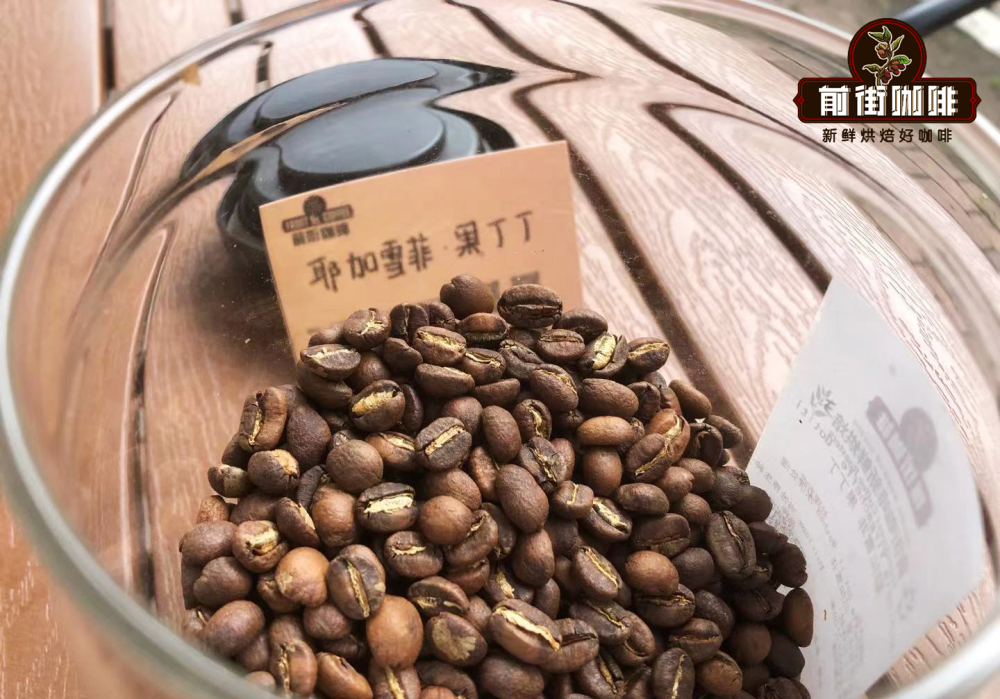
Front Street Yirgacheffe Gedeb Cooperative Coffee Beans
Region: Yirgacheffe Gedeo Zone region
Producer: Gedeb Cooperative
Altitude: 1900-2300m
Variety: Local native species (Heirloom)
Processing method: Washed processing
Grade: G1
Flavor: Citrus, berry, lemon, cane sugar, green tea
Brewing flavor
To brew out the bright acidity and aroma of Yirgacheffe, Front Street believes that choosing freshly roasted coffee beans is very important. If the coffee is left for too long and loses its flavor, then even with highly matched parameters it will be difficult to present the original rich aroma. Therefore, the coffee sold by Front Street is freshly roasted within 5 days. Adding the time required for logistics, by the time you receive it, it is just within the best tasting period and can be enjoyed directly.
For a high-altitude coffee bean like Yirgacheffe with floral and fruity notes, Front Street uses a water temperature of 92-93°C and a grind size like fine granulated sugar.
Dripper: V60
Water temperature: 92-93°C
Dose: 15g
Coffee-to-water ratio: 1:15
Grind size: Fine granulated sugar size (78% passing through a No. 20 sieve)

Three-stage extraction: In the first stage, use 30g of water for a 30-second bloom. In the second stage, pour in 95g of hot water. When the coffee bed drops halfway, begin pouring the third stage of 100g until all the coffee has dripped through. Note: start pouring from the center point, using a gentle low-flow circular pour throughout to avoid uneven extraction.
The ground Gedeb Cooperative coffee has an elegant jasmine aroma. On the palate, you can feel a clear, bright lemon acidity, with prominent sugarcane sweetness. As the temperature drops, it shows a green tea-like mouthfeel with a long-lasting finish.
The above content is compiled by CoffeeHunters, a coffee news website.


