





Where are Blue Mountain coffee beans grown?
Blue Mountain coffee beans are grown on the island of Jamaica in the Caribbean. Several mountain ranges cross the island, and their slopes form the country's main coffee areas. The Blue Mountain itself sits northeast of the capital and is one peak among those ranges, not the whole growing zone. The name likely came from British soldiers who saw a blue halo around the peak.
Beans genuinely from the Blue Mountain region can qualify as specialty grade, and the No. 1 grade sits at the top of the local scale. Blue Mountain No. 1 is known for a balanced structure across acidity, sweetness, and bitterness, with a full body and clean mouthfeel. FrontStreet Coffee selects Clifton Estate Blue Mountain No. 1 and brews it as pour-over.
When Blue Mountain coffee is mentioned, many coffee enthusiasts are familiar with it, yet they often delay trying it because of its relatively high price. As one of the most globally renowned specialty coffees, where exactly do authentic Blue Mountain coffee beans come from, and what tier does Blue Mountain No. 1 occupy? This article will examine, layer by layer, the complete information behind this "King of Coffee"—from Blue Mountain coffee's origin environment, altitude and climatic conditions, and grading standards, to the variety, processing method, flavor performance, and brewing parameters of the Clifton Estate Blue Mountain No. 1 selected by FrontStreet Coffee—helping you understand the producing region and the logic of quality while also mastering a reusable pour-over approach.
Professional coffee knowledge exchange. For more coffee bean information, please follow Coffee Workshop (WeChat public account: cafe_style).
For more specialty coffee beans, please add the private WeChat of FrontStreet Coffee: qjcoffeex
As people gradually come into contact with coffee, the name Blue Mountain coffee is almost impossible to avoid, and many also regard it as "the best coffee." However, its price is often not low, so quite a few enthusiasts remain at the stage of merely having heard of it and delay actually trying it.
As the specialty coffee industry continues to mature, coffee beans truly from the Blue Mountain producing region can still be classified as specialty grade. It enjoys extremely high fame worldwide and has long been sought after by experienced coffee lovers everywhere. FrontStreet Coffee believes that the key reason Blue Mountain coffee is so popular is its relatively balanced flavor structure across acidity, sweetness, and bitterness—it has both a rich, full-bodied texture and a clean, full mouthfeel.
Where does Blue Mountain coffee come from?
Blue Mountain coffee comes from the island of Jamaica in the Caribbean. Several mountain ranges are distributed across Jamaica, and the slopes of these mountains are the country's main coffee-growing areas. The Blue Mountain, located northeast of Jamaica's capital, is only one peak among these ranges. As for the origin of the name, one theory is that early British soldiers who arrived in Jamaica saw the peak surrounded by a blue halo and shouted, "Look, a blue mountain!"—and the name Blue Mountain spread from there. In fact, Jamaica is surrounded by the Caribbean Sea on all sides. On clear days, sunlight shines on the sea surface, and the distant mountains take on a faint blue atmosphere due to the refraction of the azure seawater, appearing indistinct and adding a touch of mystery.
Most of the Blue Mountain range lies above 1,800 meters in altitude, with the highest peak reaching 2,256 meters, also the highest peak in the Caribbean region, and the area is a famous tourist destination as well. The unique flavor of Blue Mountain coffee is closely related to Blue Mountain's superior geographical location and climatic conditions. Blue Mountain lies within the coffee belt between 25 degrees north and south latitude, with fertile new volcanic soil, clean air with little pollution, abundant rainfall year-round, and a noticeable temperature difference between day and night. More crucially, every afternoon clouds and mist cover the entire mountaintop, providing natural shade for the coffee trees and bringing ample moisture, making Blue Mountain coffee's taste and aroma even more outstanding.
Only coffee grown in the Blue Mountain range at altitudes above 900–1,700 meters is eligible to be called Blue Mountain coffee. One American coffee fanatic had an even "stricter" requirement, insisting: "Only coffee grown at an altitude of 2,256 meters is Blue Mountain coffee." Relatively speaking, coffee grown at moderate altitudes often has more ideal quality. The specific altitude, together with factors such as air humidity, rainfall, and sunlight, jointly create this renowned "King of Coffee."
FrontStreet Coffee - Jamaica Blue Mountain No. 1 Coffee Beans Producing region: Blue Mountain producing region Farm: Clifton Altitude: 1310m Variety: Typica Processing method: Washed processing Grade: NO.1
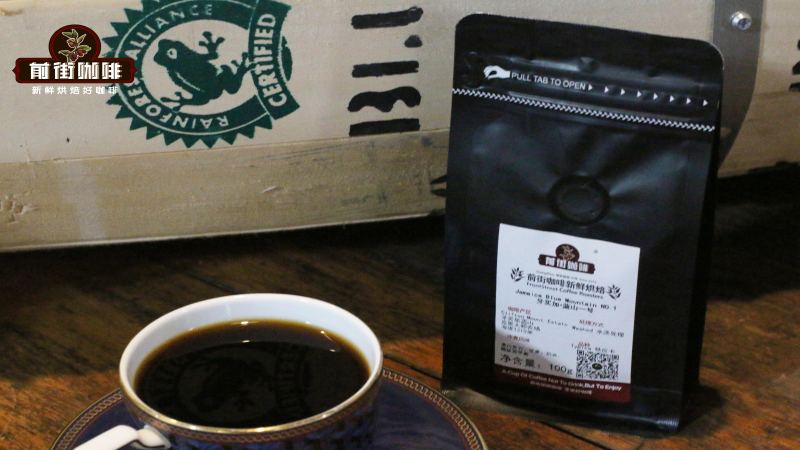
FrontStreet's Jamaica Blue Mountain coffee uses products from Clifton Estate, an export company designated by the Jamaica Coffee Industry Board. The wooden barrels containing the green coffee beans are printed with the English name of Clifton Estate, along with the green frog logo. At the FrontStreet Coffee shop, you can see the coffee barrels and Clifton Estate's certification certificates.
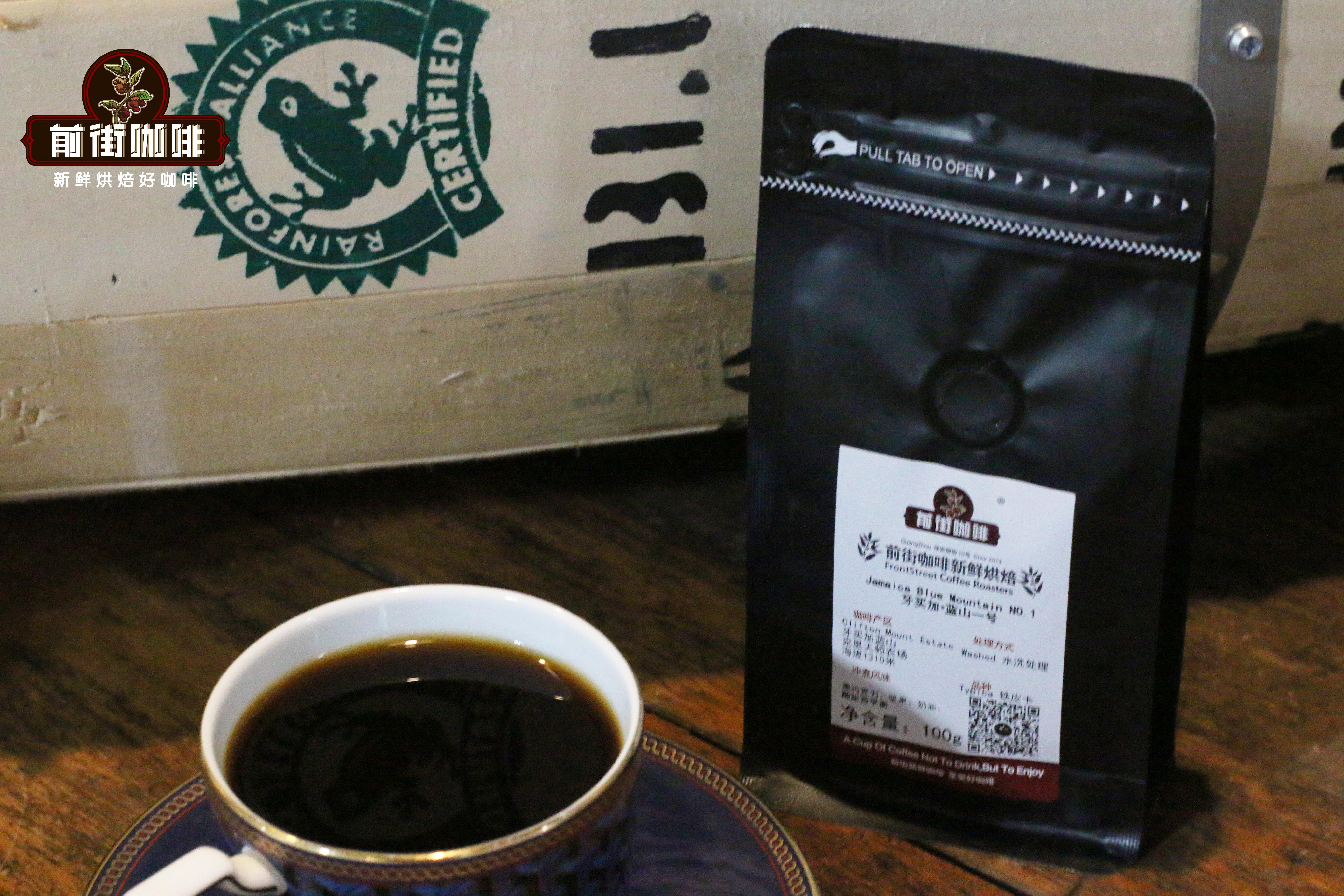
According to FrontStreet Coffee's understanding, the standards for Blue Mountain No. 1 green coffee beans include: beans of 17 mesh or above, a defect rate below 2%, and a moisture content of about 13%. After each batch of Blue Mountain No. 1 green coffee beans arrives at the FrontStreet Coffee factory, the baristas conduct careful inspections. Clifton Estate's coffee beans generally appear plump and evenly sized, and show the blue-green color common to washed coffee beans.
Through cupping confirmation by FrontStreet Coffee, Blue Mountain No. 1 coffee beans possess a relatively comfortable balance of acidity, sweetness, bitterness, aroma, and body, with rich dark chocolate and nutty flavors accompanied by a creamy, smooth mouthfeel.
FrontStreet Coffee Brewing Recommendations
Kono dripper, 88C water temperature, 1:15 coffee-to-water ratio, 15g coffee dose, medium grind (70% passing a No. 20 standard sieve), extracted using a three-stage pouring method.
For the first stage, pour 30 grams of water for blooming, with a blooming time of 30 seconds. For the second stage, pour to about 125 grams of water, then wait for the coffee liquid to descend. When it has dropped by half, pour the final stage of water up to 225 grams. After all the coffee has dripped through, end the extraction. The total extraction time is generally about 2 minutes and 10 seconds.
The above content is compiled by CoffeeHunters, a coffee news website.


