







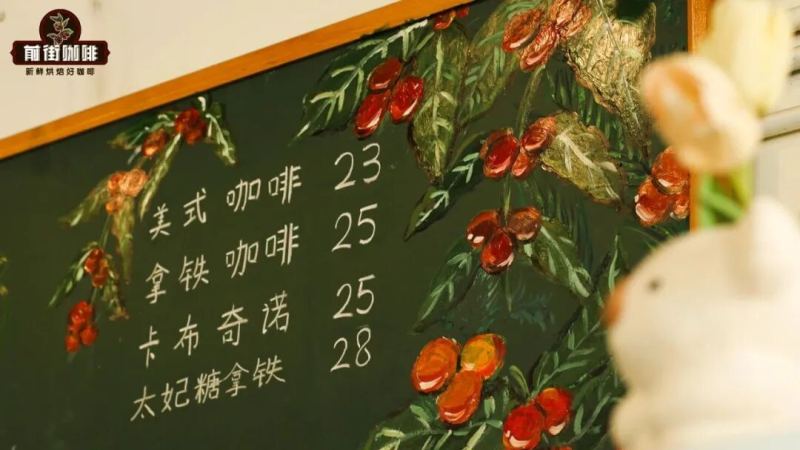
To start a refined day for the working crowd, often all it takes is a cup of freshly ground coffee, and Americano is the top choice for countless office workers.

No matter what factors are at play, the Americano is always the "pillar" of a coffee shop, so its taste often directly shapes people's first impression of the place, even prompting remarks like "If they can't even make a decent Americano, there's no point talking about their other coffees." In their view, if an Americano tastes good or at least decent, they'll probably come back next time; but if it sits largely untouched long after it's served, that means it isn't very likable, and they most likely won't buy it again.
But as the saying goes, it's impossible to please everyone. From the consumer's perspective, whether a cup of coffee tastes good is highly subjective—some prefer bold, rich, bitter coffee, while others favor light, crisp, acidic coffee. Different preferences deeply shape our final impression of an Americano. So if we set aside personal preference and look purely from a tasting standpoint, what should a good-tasting Americano taste (and feel) like?

What Are the Differences Between Americanos at Different Coffee Shops?
At Front Street Coffee, we often hear people say, "An Americano is nothing more than espresso diluted with water—black coffee that tastes pretty much the same at every shop."
Actually, that's not the case. Front Street Coffee believes that the simpler something is, the more it tests your skill. Although almost all Americanos are essentially a cup of hot (or iced) coffee with a concentration of about 7–12%, under the influence of different coffee beans, espresso states,extraction ratios, how much water is added, the temperature, and water quality and other details, significant differences can arise.

As for the last three, they usually depend on each store's customized recipe—one could say they're already fixed factors. Only the espresso is the variable adjusted on the day. For example, at Front Street Coffee, an iced Americano is served in a 350ml glass with 90g ice cubes + 180g drinking water + a double shot of espresso; while a hot Americano is made in a 250ml ceramic cup with 180g warm water + a double shot of espresso.

In other words, an excellent Americano requires not only high-quality coffee beans, but also a reasonable extraction tailored to those beans, and finding the right concentration for the final product. With these aspects in place, a good-tasting Americano comes down to the following three points:
1. Smooth Mouthfeel, Clean Finish
We all know that coffee crema is the soul of an espresso, because espresso with crema smells richly aromatic, has a full body on the palate, and leaves lingering fragrance after swallowing.
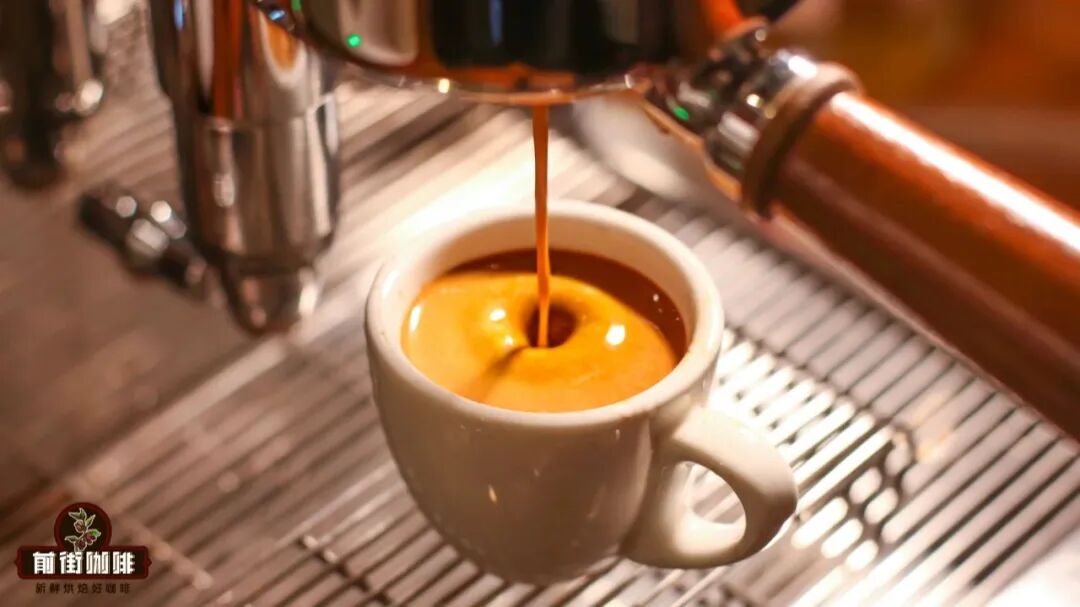
So to ensure consistency and give the espresso both aroma and crema, most coffee shops prioritize medium-dark roasted espresso beans. For example, the espresso extracted from Front Street Coffee's signature blend is dominated by caramelized aromas, mostly showing chocolate, cocoa, and roasted nut flavors—these beans produce rich, dense crema. But once over-extracted, the crema will carry a large amount offines, which tend to clump and harden, resulting in a rough, drying, and unpleasant mouthfeel in the Americano.
Therefore, a good Americano should first be smooth on entry, with no uncomfortable experience after swallowing. Conversely, if it tastes sharply stimulating like a tire, or is drying, rough, and catches in your throat, then there's no need for Front Street Coffee to emphasize it—you surely know this cup is definitely not a "good coffee."

2. Noticeable Aroma, Not Bland
Although people often say that premium ingredients usually only need simple cooking methods, in daily life, where do so many premium ingredients come from? So when we have the most everyday ingredients, what we can do is find the right parameters to bring out a better result.
As a coffee that is extracted and then diluted with water, whether hot or iced, the flavor core of an Americano lies in that tiny shot of espresso. At this point, finding the rightbrew ratiobecomes the key to a good-tasting coffee. Precisely because it's the base, the espresso's concentration can't be too low, and it must also have a complete flavor expression—otherwise, once poured into water, it will either be bland and tasteless or full of a "watery" feel.

Take Front Street Coffee'sHuakui SOEcoffee beans as an example. Considering it's a fruity, acidic coffee, the proportion of water shouldn't be too large. If you want the Americano to show citrus and berry flavors, Front Street Coffee will adjust the parameters as follows: 20g coffee grounds, extracted for 28–33 seconds to yield 36g of coffee liquid, then poured into 160ml warm water. This way, the ratio of coffee liquid to water will land at roughly 1:4, tasting sweet-and-sour with a clear fragrance and an obvious black tea note.
3. Balanced Flavor, Neither Bitter Nor Sharply Sour
Compared with other extraction methods, espresso extraction seems somewhat "extreme." It's a process that requires an ultra-fine grind like flour and uses high temperature and speed to obtain coffee liquid. At this point, both the good and the bad are directly amplified—in short, bitter coffee tends to become more bitter, and acidic coffee tends to become more sour.

Therefore, to judge whether an Americano is good, besides feeling its mouthfeel, finish, and aroma, you also need to see whether the finished espresso, once added to water, achieves a balanced and palatable taste. For example, whether a dark-roasted Americano has a burnt taste, whether a medium-dark roasted bean tastes bitter, and whether a light-medium roasted Americano has sharp acidity—all of these are things we need to pay attention to.
The above content is compiled by CoffeeHunters, a coffee news website.


