





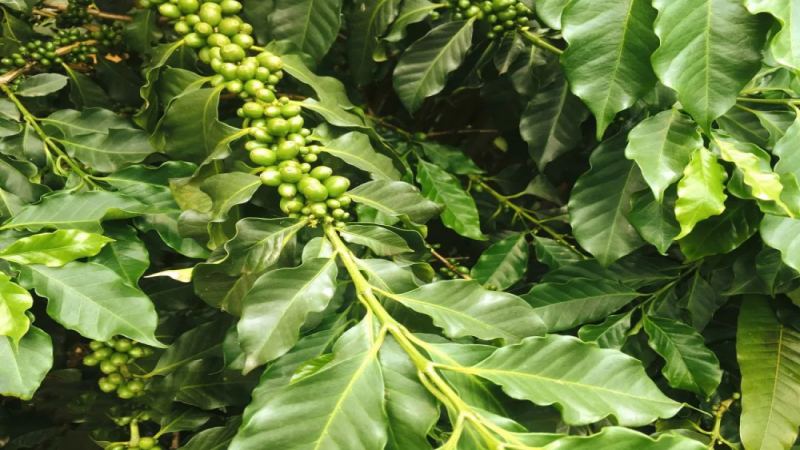
How did arabica beans in Yunnan shift from Typica to Catimor?
Yunnan small-bean coffee is arabica beans, a term used to separate it from the medium-bean Robusta grown in Hainan. Most Yunnan production areas now grow Catimor for its disease resistance and yield, while small amounts of Typica and Bourbon survive around Baoshan. Catimor carries Robusta genes, which shows up as both hardiness and flavor limits.
Coffee cultivation in Yunnan began in 1904, when a French missionary planted the first tree, later verified as Typica. Typica resists leaf rust poorly and yields little, so farmer income suffered. After leaf rust spread worldwide in the 1980s, Nestle and other foreign-funded companies pushed Catimor's introduction from Central and South America in 1990, and washed processing followed.
Yunnan small-bean coffee is actually a general term for the Arabica species, used to distinguish it from the medium-bean Robusta grown in Hainan. At present, most production areas in Yunnan grow the disease-resistant, high-yield Catimor, while a small amount of Typica and Bourbon is still preserved around Baoshan. This article sorts out the evolution of coffee cultivation in Yunnan over more than a century, from the first Typica tree planted by missionaries, to Nestlé's promotion of the large-scale replacement with Catimor, and then to the disease-resistant advantages and flavor limitations that Catimor shows because it carries Robusta genes. It also introduces the complete steps of washed processing, and how Front Street insists on using traditional processing methods to present the true character of the Yunnan production area, including the flavor performance and bean-selection logic of the washed daily-drinker beans and the natural-process Typica "Front Street 2013."
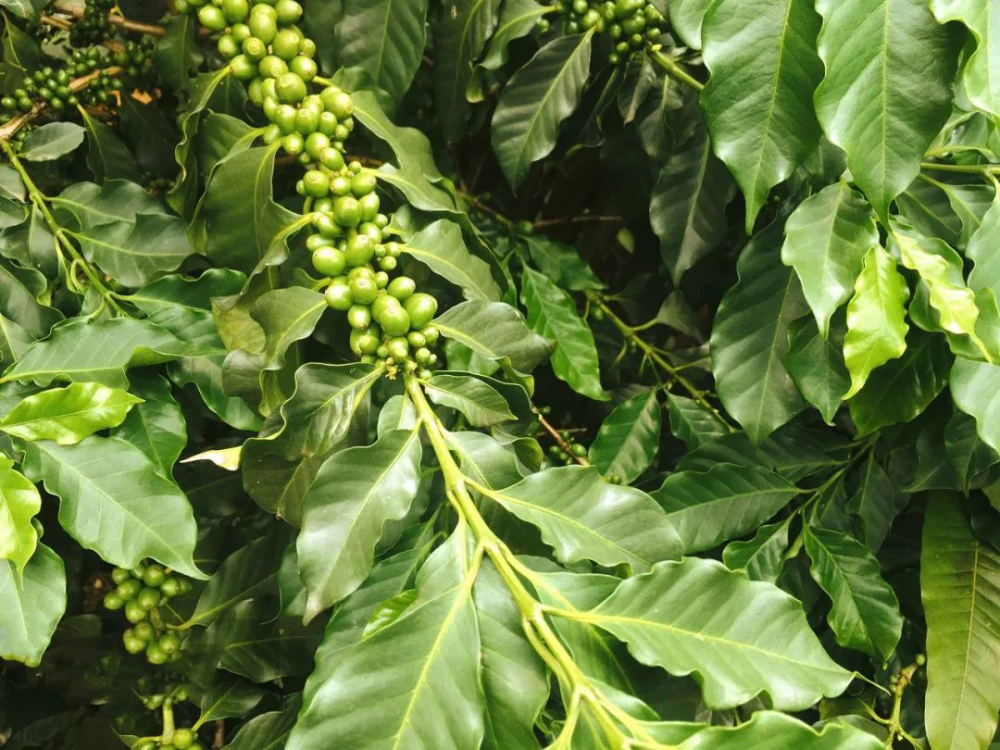
Small-bean coffee refers to the Arabica species. The term "Yunnan small bean" is used to distinguish it from the medium-bean Robusta coffee beans produced in Hainan, China. Among the coffees currently grown in Yunnan, Catimor occupies a dominant position because of its strong disease resistance and high yield; a small amount of Typica and Bourbon can still be found in the Baoshan area. On Front Street's bean list, the Yunnan small-bean daily drinker uses the Catimor variety, while another one belongs to the Typica variety.
Cultivation of Yunnan small-bean coffee
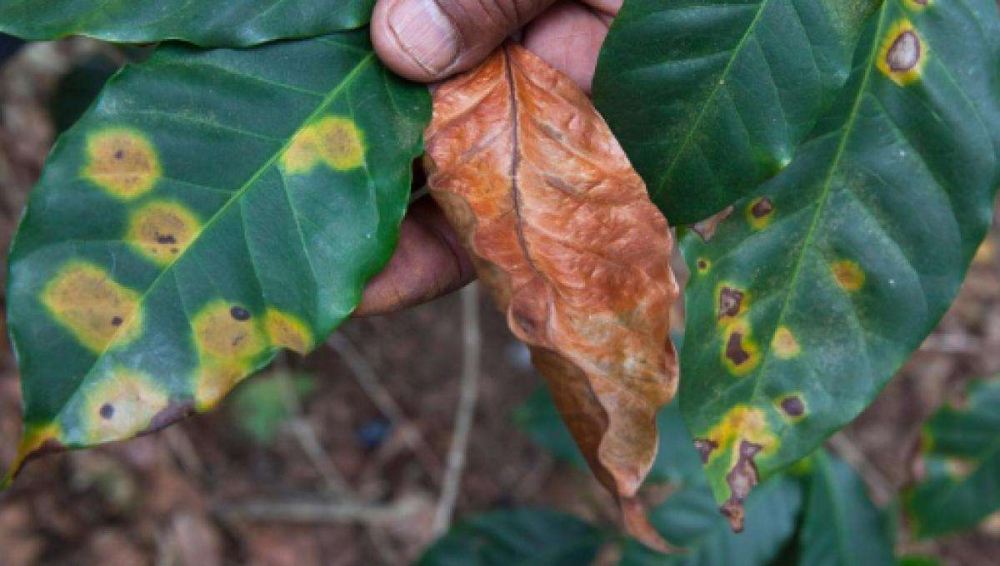
In 1904, a French missionary planted the first coffee tree in Yunnan, and since then this land has been tied to coffee for more than a century. Later verification showed that what the missionary planted back then was precisely Typica. But today, the vast majority of coffee grown in Yunnan has been replaced by Catimor. Typica plants are inherently poor in disease resistance and are prone to leaf rust once it strikes. In addition, their yield is really too low, so if farmers rely on coffee to make a living, their income is hard to guarantee.
In the 1980s, leaf rust swept through major coffee-producing regions around the world, and people in the industry sought ways to respond. In 1990, driven by Nestlé and other foreign-funded enterprises, Yunnan introduced Catimor from Central and South America, which had stronger disease resistance and higher yield, to replace those "unprofitable" Typica trees. As a result, Catimor spread into large-scale cultivation in Yunnan, and production rose steadily, but its flavor performance was not outstanding; in addition, local green bean processing technology at the time was still not mature enough, so the resulting batches could often only be sold at low prices to Europe as raw material for instant coffee.
Characteristics of the Catimor variety coffee
From a genetic perspective, Catimor is a hybrid of Arabica and Robusta. It comes from a cross between Caturra and Timor (a Robusta species), and carries about 25% Robusta ancestry in its body. Friends who know a little about coffee varieties all know that Robusta beans are often labeled with the "devil's flavor." Catimor inherits both Robusta genes and Arabica genes, so it is both disease-resistant and high-yielding. After roasting, the bean surface is rich in oil, and in flavor it can also retain the acidity of native Arabica varieties.
High-quality Arabica coffee cannot do without the nourishment of high altitude and microclimates. When Yunnan farmers plant Catimor on slopes above 1,200 meters, the local fertile soil, abundant sunshine and rainfall, plus the pronounced temperature difference brought by high altitude, create ideal growing conditions for Catimor plants. However, because Catimor carries Robusta genes, while gaining pest and disease resistance and yield, it also loses the refined flavor of pure Arabica beans. In cupping, its score often falls short of varieties such as Caturra and Catuai.
Washed processing
Washed steps: First pour the coffee cherries into a tank and use buoyancy to remove impurities and unripe berries. Then use a depulper to remove the outer skin and most of the pulp, and put the coffee beans into a clean tank to ferment, allowing the mucilage layer to produce acidic substances during fermentation and thereby separate. Then rinse off the remaining mucilage with clean water to obtain green beans still wrapped in parchment (parchment beans). Finally, dry them depending on the weather (or use a machine to dry them), lower the moisture content of the green beans to about 12%, and then use a huller to remove the parchment, yielding the coffee bean itself.
Front Street has noticed that many Yunnan coffees on the market today use special processing methods to add flavor to the beans and make the aroma more striking. Front Street has always believed that understanding Yunnan coffee should start from the flavor of the coffee itself, rather than using novel processing methods to cover up its original taste. Therefore, several coffees on Front Street's bean list all use traditional washed and natural methods. The daily-drinker beans representing Yunnan small bean use washed processing, presenting the coffee flavor unique to the production area. Front Street also has a very popular bean, "Front Street 2013." You can guess from the name that this is Front Street's exclusive product. It is produced from Front Street's own estate in Lincang, Yunnan, uses the elegant-flavored Typica variety, and is naturally processed to take the coffee's sweetness to an even higher level.
Flavor characteristics of Yunnan small-bean coffee
Front Street believes that the flavor profile of Yunnan coffee should be classified as neutral, meaning it has both acidity and a mellow bitterness, so in terms of roast level we chose medium roast. Through cupping, Front Street tasted the sweet-and-sour note of plum in "Front Street 2013 Yunnan Typica," as well as the aromas of dried fruit, chocolate, and nuts, with all the flavors blending just right.
In order to let more people appreciate the flavor of Yunnan small bean, we also launched the Front Street Dark Cocoa Basic Blend specially for moka pots and espresso machines. It combines the creamy nuttiness of Brazilian coffee with the soft fruit acidity of Yunnan small bean. Made into espresso, it has a balanced taste and moderate crema, and it is very suitable for making lattes and iced Americanos with milk or ice water.
In terms of coffee bean selection, Front Street uses freshly roasted Front Street Yunnan small-bean coffee. After roasting, coffee undergoes a 4-to-7-day resting period, and then enters its optimal tasting window. Once this period passes, the aroma dissipates faster, and the flavor and mouthfeel decline noticeably. In order to let every customer drink coffee at its best flavor stage, Front Street only ships fresh beans within 5 days after roasting, so that when everyone receives them, the aroma is at its best.
The above content is compiled by CoffeeHunters, a coffee news website.


