





Why is cappuccino called cappuccino and how do espresso styles differ?
Espresso is a small, concentrated black coffee made by forcing hot water under steam pressure through a bed of finely ground coffee in roughly a few tens of seconds, leaving a golden foam layer on top. It is the base for Americanos, lattes, cappuccinos, and flat whites. The name cappuccino traces to the drink's resemblance to the brown hooded robes of Capuchin monks, not to a specific ingredient.
Each espresso style differs mainly in milk ratio and volume. A latte uses more steamed milk and a thin foam layer, while a cappuccino balances espresso with equal parts milk and foam. Americanos add hot water instead of milk, and an iced version can taste different from a hot one. Whether a cafe latte is bitter depends mostly on the roast, grind, and extraction time rather than the milk itself.
Espresso is a core category in contemporary coffee shops, and the Americano, latte, cappuccino, flat white, and other styles derived from espresso each have their own distinctive character. This article sorts out the most common types of espresso-based coffee found in cafés, analyzing their origins, preparation methods, and flavor characteristics to help coffee beginners build a clear cognitive framework. It also combines Front Street Coffee's in-store practices to introduce the specific parameters and tasting points of different styles, including how to drink espresso, the hot-versus-iced differences of Americanos, the milk-to-coffee ratio of lattes, and the ristretto used in flat whites, providing practical reference for enthusiasts.
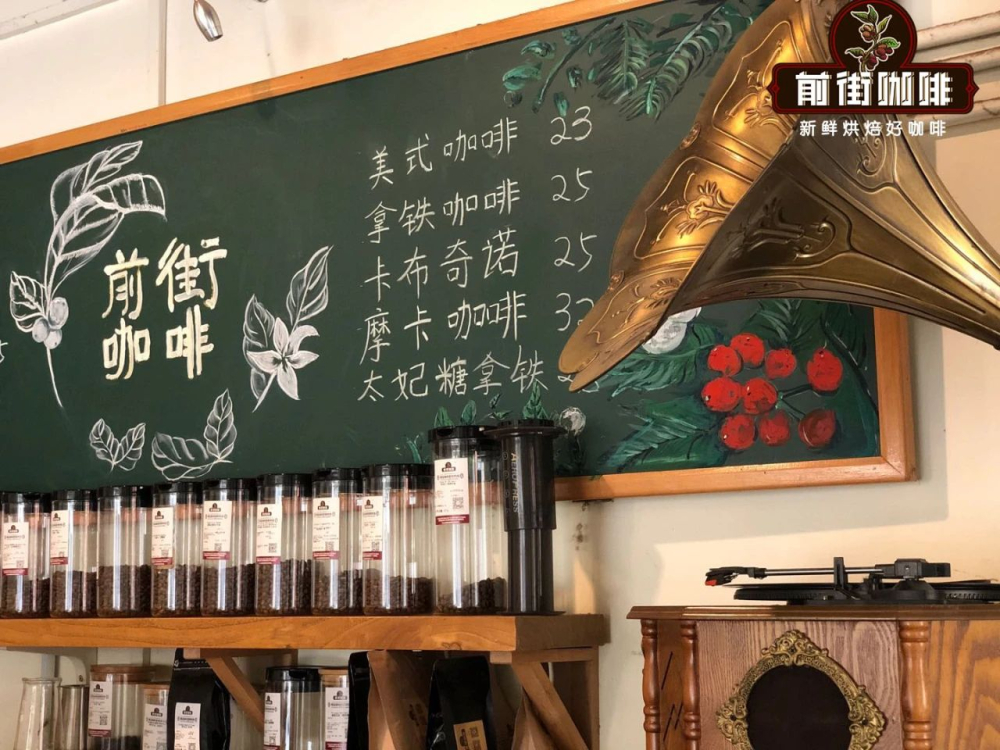
In recent years, China's coffee market has expanded rapidly, and choosing a café with a comfortable atmosphere to chat with friends has become the norm. Espresso-based coffee is basically a standard offering at every shop; Front Street's stores serve classics like Americanos, lattes, cappuccinos, and flat whites, while many shops also add various ingredients to create creative specialty drinks. Below, Front Street rounds up the most frequently seen espresso-based coffees in cafés, so newcomers can get a sense of them.
Espresso
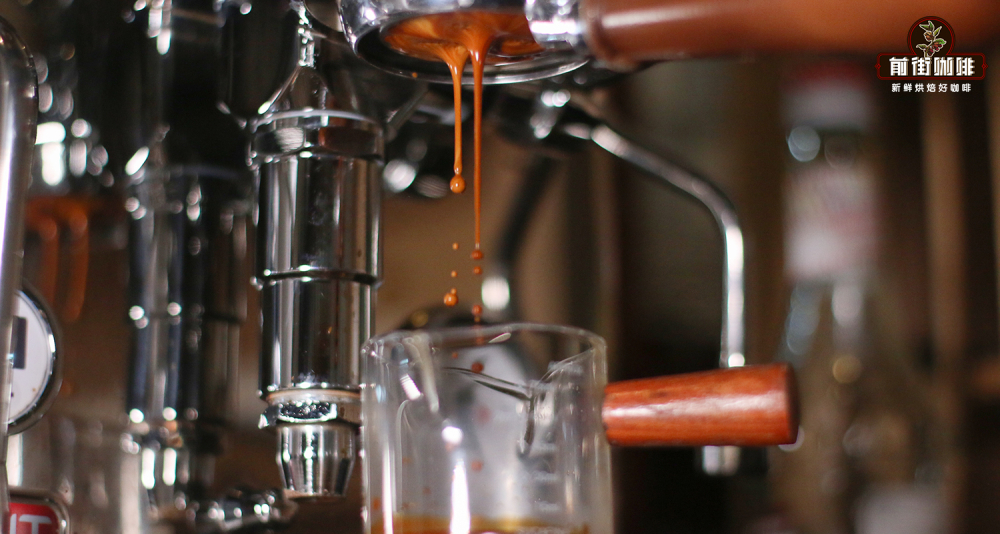
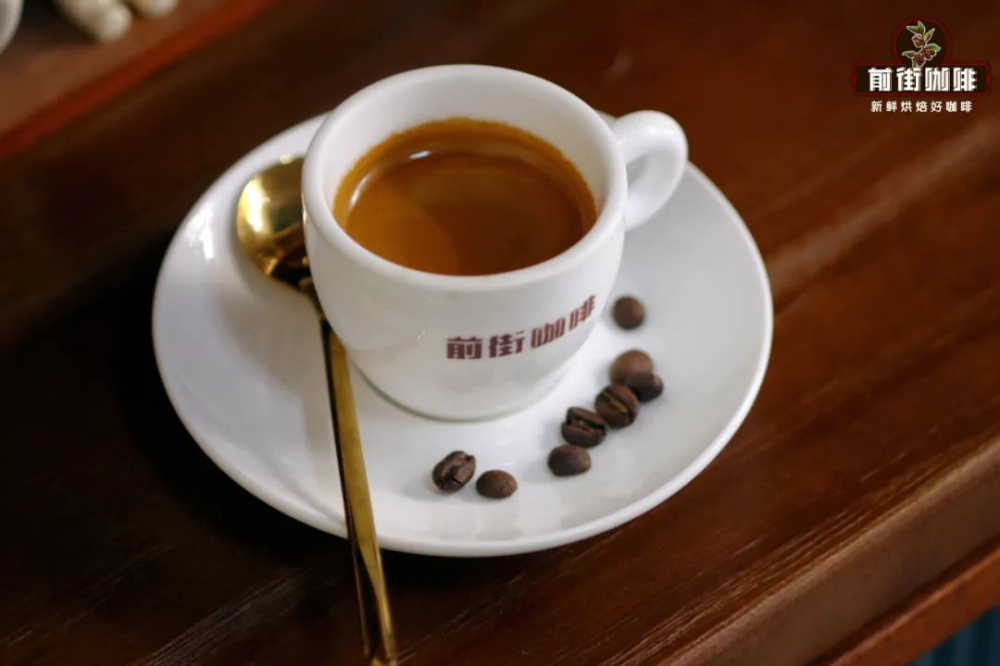
Espresso is a small cup of pure black coffee liquid obtained by using steam-generated pressure to force hot water quickly through a bed of coffee grounds, resulting in extremely high concentration, concentrated aroma, and a golden foam layer on the surface. Although not many shops write Espresso directly on the menu, drinks like Americanos, lattes, and cappuccinos all depend on it—it can be called the soul and cornerstone of the café.
Early coffee used immersion extraction, requiring beans to be ground very fine and a long wait—at least a dozen minutes—before you could drink it. Espresso was born in the early nineteenth century with the aim of getting a strong-tasting cup of coffee in a short time, so Italians thought of using steam pressure to complete the extraction. In just a few tens of seconds, high pressure pushes hot water into the coffee puck, drawing out its soluble aromatic substances. Precisely because the extraction time is extremely short and the pressure extremely high, espresso's flavor intensity far exceeds other methods. To make a delicious espresso, every operational step must be especially rigorous, and every parameter that affects the result must be carefully controlled.
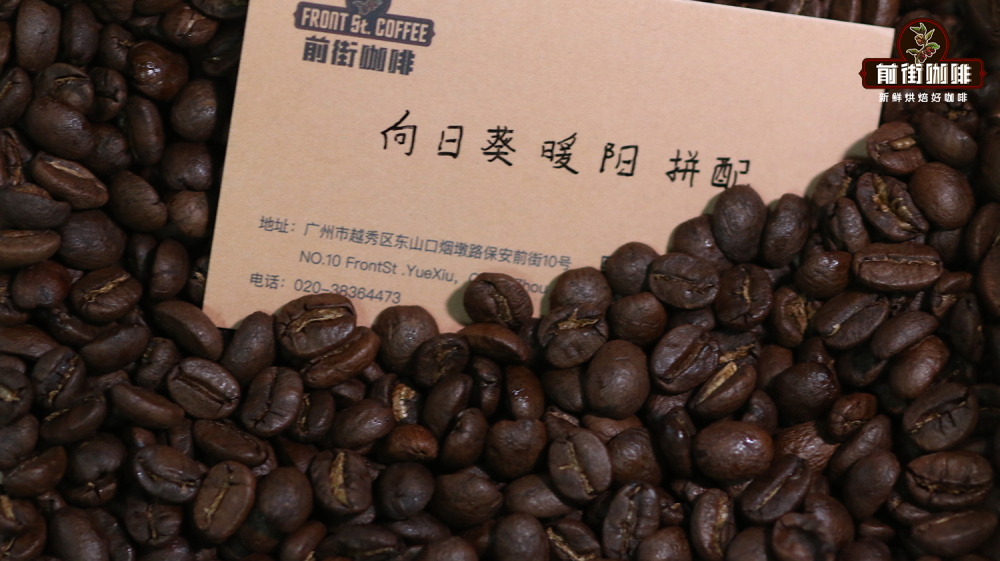
When a customer orders by saying, "I'll have an Espresso," the barista at Front Street Coffee (FrontStreet Coffee) begins making it, and after about two minutes serves a glass of water and a small cup of rich coffee with a golden-brown crema layer. Before drinking the espresso, take a sip of water to clean the palate and avoid interfering with taste perception. A standard espresso has a thick crema and a full-bodied mouthfeel, though each shop's espresso shows its own character depending on the beans used. The espresso beans used in Front Street's stores are their own roasted "Sunflower Warm Sun Blend," made from 30% naturally processed Yirgacheffe Red Cherry and 70% Honduras Sherry.
When tasting a freshly extracted espresso, Front Street first takes in its aroma; this bean carries full whisky notes along with vanilla, nuts, and cream. You can drink it directly or add sugar or milk according to preference.
Use the prepared metal spoon to gently stir the coffee liquid to make it uniform; the first sip reveals dense crema and a full roasted aroma. What follows is the warm coffee liquid, with rich notes of nuts, chocolate, berries, and whisky emerging in turn. Take another sip of water midway to experience the sweet, clean finish left in the mouth.
Americano
Americano belongs to the category of black coffee; its ingredients are simply espresso plus water, with no other additives mixed in. During World War II, coffee was extremely popular among American soldiers, but Americans couldn't handle the intense bitterness of espresso, so they added water to dilute it to a concentration they could accept. Later, when Italians ran cafés in the United States, they likewise introduced a "watered-down coffee" based on espresso, and this drink then became popular.
There is no rigid ratio for Americano; every shop has its own standards, with the core goal of presenting the coffee's own flavor. According to the 1:6 ratio Front Street determined after repeated testing, pour 40 grams of coffee liquid into 240 grams of 88°C hot water, and the hot Americano is done.
To make an iced Americano, replace the hot water with 120 grams of ice cubes plus 120 grams of room-temperature water; the taste is best before the ice cubes fully melt. Front Street's iced Americano has rich whisky notes with berry tartness and sweetness—refreshing and cutting through heaviness—so it sells especially well at the Guangzhou store in hot weather; the hot Americano highlights the mellow notes of roasted nuts and chocolate, along with the fermented tartness and sweetness of tropical fruit, with vanilla in the finish.
Latte
Latte is a transliteration of the Italian word Latte; latte coffee refers to a drink made by adding milk in a certain proportion to espresso, and it is a type of flavored coffee.
The earliest latte coffee appeared in Vienna, the city of music. Viennese people began drinking coffee in the seventeenth century; at that time, the Turkish army, after failing to attack Vienna, abandoned 500 bags of coffee beans in its hurried retreat, and these beans became the raw material for Vienna's first coffee shop (the Blue Bottle). To suit European taste preferences, the shop filtered out the coffee grounds and added a large amount of milk, turning the originally bittersweet black coffee smooth and sweet; this flavor captivated the Viennese, and milk coffee subsequently became popular around the world.
The ingredients for a latte are very simple—just espresso and milk—and there is likewise no fixed ratio; most range between 1:5 and 1:8. Front Street uses a 1:6 ratio, that is, 40g of espresso liquid with 240g of milk. When serving a hot latte, Front Street first pours the espresso liquid into a preheated cup, then uses the espresso machine's steam to froth the milk, preferably keeping the milk temperature at 55-65°C to form dense, moderately thick microfoam, then fully integrates it with the coffee liquid; the final latte art is a bonus. Front Street's hot latte has a sweet aroma like chocolate liqueur, with a creamy, smooth mouthfeel. Front Street's iced latte first adds 75 grams of ice cubes plus 25ml of fresh milk, then extracts 40 grams of coffee liquid and pours it over the top; before drinking, customers are reminded to stir it evenly.
Speaking of iced lattes, we must mention the Dirty coffee that Front Street is about to introduce, also called "dirty coffee," which has been popular since 2019. The method is to pour hot espresso over cold milk, forming a clear layer; the espresso liquid sinks down along the wall of the cup, making it look as if the milk has been "dirtied." Usually a Dirty is served in a smaller cup than an iced latte and needs to be drunk immediately to experience its unique "alternating hot and cold" mouthfeel.
Cappuccino
Cappuccino is translated from "Cappuccino," and the name comes from the Capuchin order and the Italian word for hood (Cappucio). Cappuccino is similar to latte—both belong to milk coffee and are also made from espresso and frothed milk; the difference is that cappuccino has thicker, denser foam, a smaller cup size, and a more prominent coffee flavor.
A traditional cappuccino is made with a 1:1:1 ratio of espresso, milk, and milk foam; this way the bitterness of the espresso is softened, the richness of the milk foam becomes more evident, and it is more widely accepted. Among the espresso family, cappuccino has the thickest milk foam, and its dense, delicate foam adds considerably to the mouthfeel.
When making a cappuccino, Front Street Coffee (FrontStreet Coffee) uses a 180ml tulip cup, first pouring a freshly extracted shot of espresso into the cup, then adding frothed, dense, thick milk foam and milk.
Flat white
As for the origin of the Flat white, both Australians and New Zealanders insist their own country invented it, and this debate remains unresolved to this day. Before the 1970s, Australian cafés used French presses, manual pour-over, and other methods to brew black coffee. In the early 1970s, Italians brought espresso machines to Australia, sparking a new wave of coffee culture. Compared with traditional lattes, Australians preferred milk drinks with thinner foam and a stronger coffee flavor. From the 1980s onward, Australians put the Flat White on their regular menus, and it soon spread to cafés in Europe and the United States.
When making a flat white, Front Street grinds 20 grams of coffee grounds and extracts 27 grams of coffee liquid in 20-25 seconds, taking only the front and middle stages of the Espresso—that is, Ristretto. Then pour a double Ristretto into a pre-prepared cup of about 200ml capacity. The ratio of coffee to milk is 1:5, that is, about 150ml of fresh milk. Choose a comfortable milk pitcher, pour in the milk, and prepare to froth. Because a thinner, denser foam layer is needed, the amount of air introduced during frothing should be less than for a latte, and the temperature is best kept at 55-60°C, making it more comfortable to drink. Finally, evenly integrate the frothed milk into the coffee liquid; latte art is optional.
Front Street's flat white presents aromas of vanilla, cream, chocolate milk, and chocolate liqueur, along with the tartness and sweetness of berries; it is smooth, fragrant, and full-bodied on the palate, with a very long finish.
For professional coffee knowledge exchange and more coffee bean information, please follow Coffee Workshop (WeChat public account: cafe_style)
For more specialty coffee beans, please add the private WeChat of Front Street Coffee (FrontStreet Coffee), WeChat ID: qjcoffeex
The above content is compiled by CoffeeHunters, a coffee news website.


