





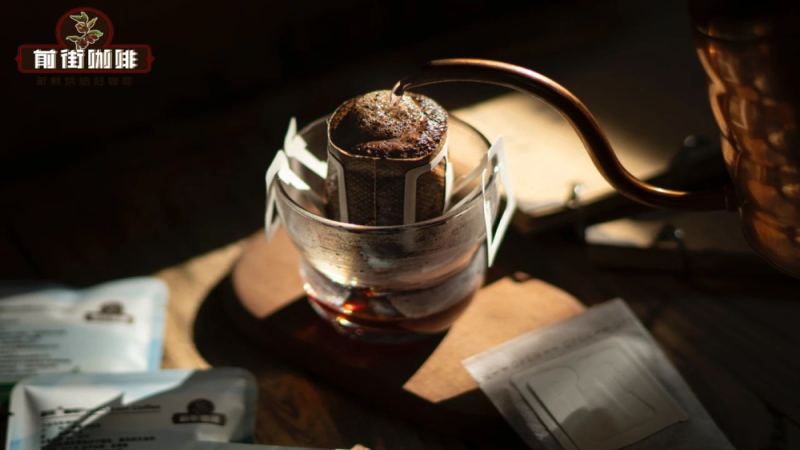
How should Golden Mandheling coffee be brewed as a drip bag?
Golden Mandheling coffee comes from Sumatra, Indonesia, and is a dark roast known for caramel, spice and pine notes with a full body and a sweet aftertaste. To brew it as a drip bag, water temperature, the coffee-to-water ratio and the pouring method matter most. Get those three right and a desk-side cup stays rich and full-bodied.
The name is tied to wartime Sumatra. Indonesia was a Dutch colony when Japan entered in 1942, and Japanese soldiers met wet-hulled Mandheling coffee in the north, becoming loyal drinkers. One account says a soldier asked a cafe owner what the coffee was called, and the owner answered Mandailing, his place of origin, which later became Mandheling. For busy workers, drip bags keep the routine simple.
Golden Mandheling is the fullest-bodied coffee on Front Street Coffee's bean list, originating from Sumatra, Indonesia, and known for its caramel, spice, and pine notes with a rich, sweet aftertaste. For busy office workers, turning Golden Mandheling into drip bags to take to their desks is both convenient and time-saving. But whether a drip bag brews up well depends on water temperature, coffee-to-water ratio, and pouring method. This article starts with the origin and quality characteristics of Golden Mandheling, demonstrates each step of brewing drip bags at home in detail, and explains what to pay attention to when buying drip bag coffee, helping you consistently brew a cup of rich, full-bodied black coffee at the office or at home.
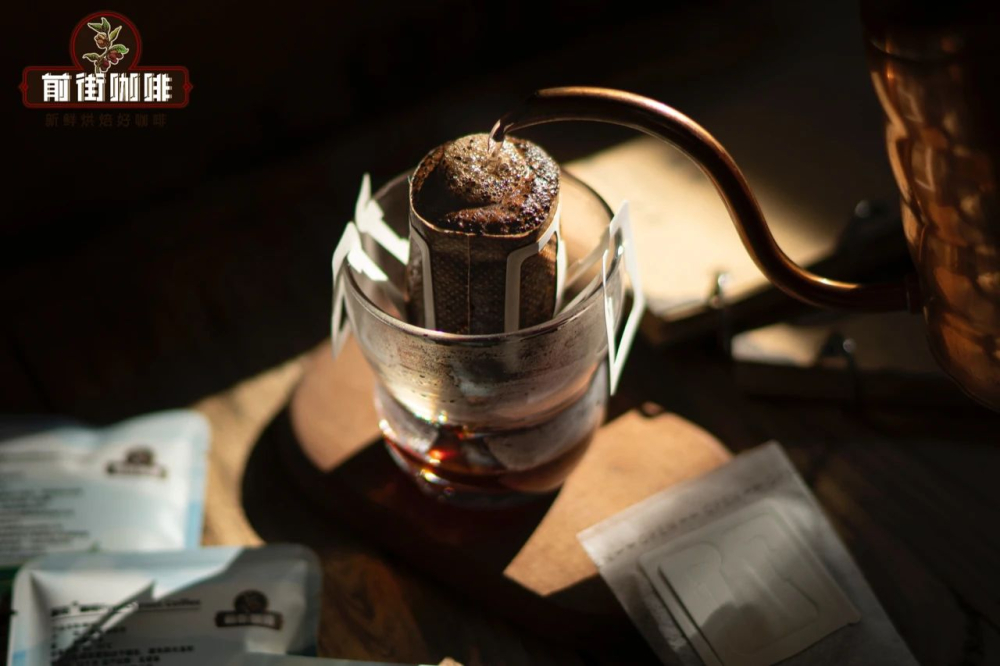
If anyone asks which coffee on Front Street Coffee's bean list is the fullest-bodied, the answer is definitely Golden Mandheling. This bean comes from Sumatra, Indonesia, and is a high-quality dark roast coffee, with solid caramel, spice, and pine aromas, a rich and full mouthfeel, and a clear sweet aftertaste. Many people who prefer black coffee list it as their first choice. Especially for office workers with a fast pace of work, in order to drink Mandheling at their desks, they often make the coffee beans into individually packaged drip bag coffee, which is both hassle-free and time-saving.
How did the name "Golden Mandheling" come about?
During World War II, the flames of war spread from Europe to Asia. Indonesia was still a Dutch colony at the time. Because the Netherlands declared war on Japan, the Japanese army entered Indonesia in 1942 and landed on Sumatra in February of the same year. At that time, the Japanese, who were already accustomed to drinking coffee, encountered wet-hulled Mandheling coffee in northern Sumatra and were drawn in by its flavor, becoming loyal fans of Mandheling ever since.
As for the origin of the name Mandheling, one explanation is also related to the Japanese, said to have been caused by a pronunciation misunderstanding. During World War II, a Japanese soldier happened to drink a cup of rich, aromatic coffee in a local café and was very impressed, so he asked the owner what the coffee was called. Because of the language barrier, the owner mistakenly thought the soldier was asking about his place of origin and answered "Mandailing." After the war ended, this soldier entrusted an Indonesian middleman to ship 15 tons of the "Mandheling coffee" he remembered to Japan, where it became hugely popular. It can be said that this middleman made Mandheling, and Mandheling also made the PWN coffee company he later founded famous far and wide.
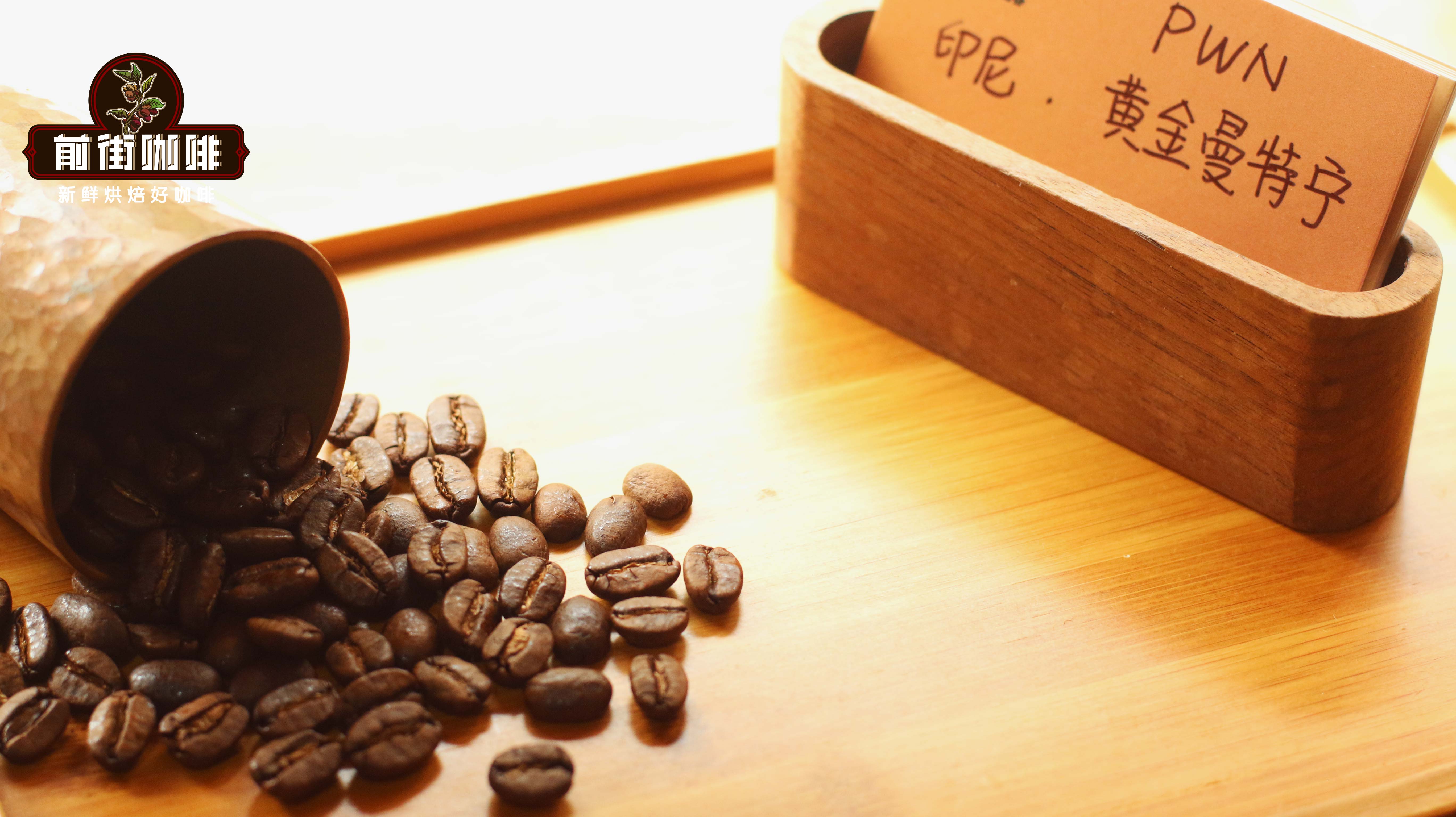
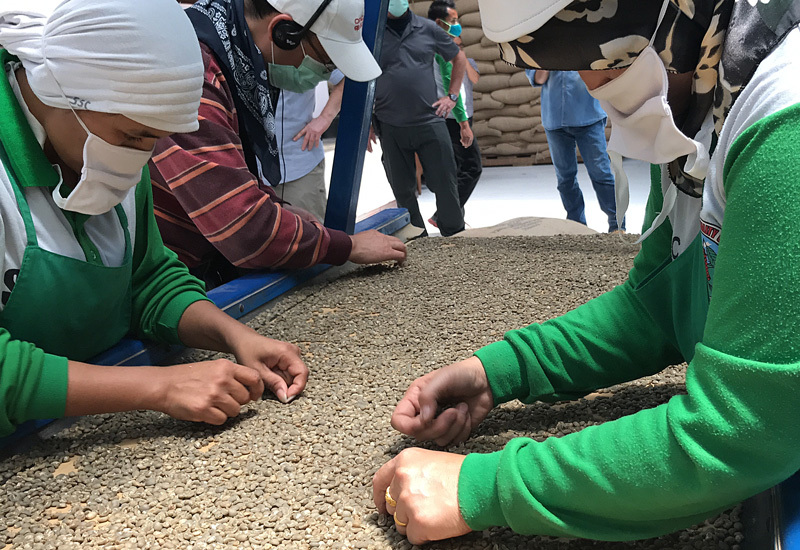
PWN's full name is "N.V. Pawani Medan company." It mainly purchases high-quality local batches of Mandheling green beans and only deals in specialty-grade Mandheling, with its signature product being "Golden Mandheling." After the Japanese took a liking to Sumatra coffee back then and purchased it long-term, they gradually discovered that local beans varied greatly in quality. So they put more thought into Mandheling production and established strict defect-screening standards and methods, starting from values such as bean density, size, shape, and color. The resulting Mandheling needed to undergo one machine sorting plus four rounds of manual hand sorting to remove defects, ensuring the beans were complete, uniform, large, and translucent, while also reducing earthy and grassy flavors. It is said that in sunlight they take on a golden, glistening appearance, which is why it was named "Golden Mandheling."
What makes Golden Mandheling coffee so good?
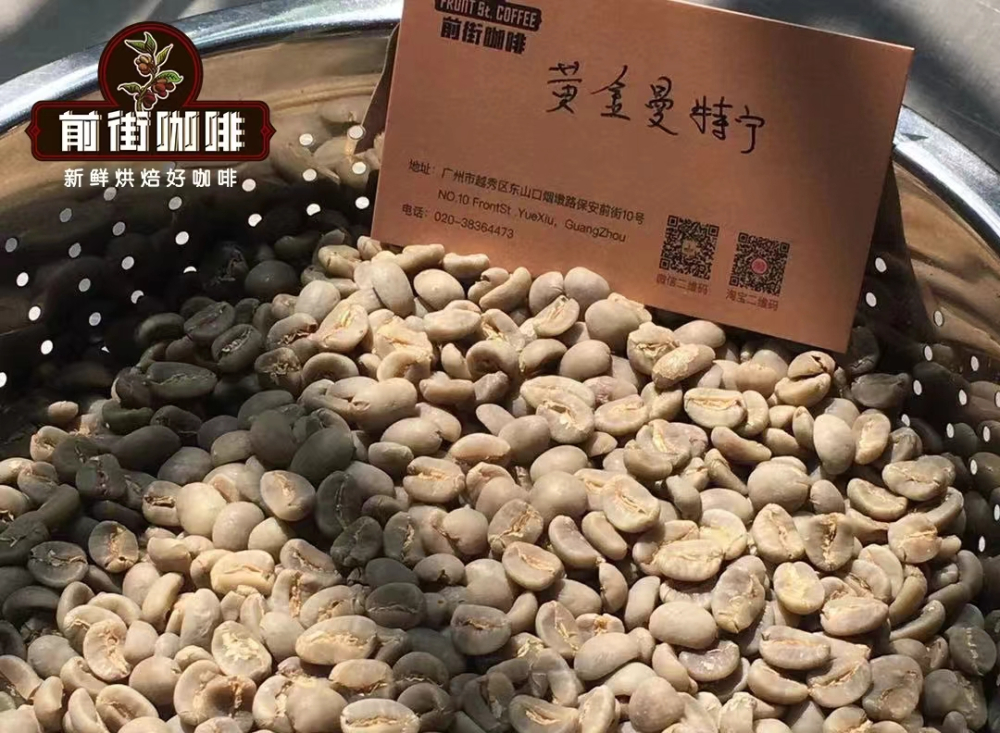
The characteristic of Golden Mandheling is that the green beans undergo multiple rounds of screening, so the overall quality is very high, and the brewed coffee therefore has quite good clarity in the cup. When purchasing, PWN only accepts Mandheling green beans of screen size 18 and above, G1 grade, meaning fewer than 3 defective beans in a 300-gram sample, which is the highest grade for Indonesian green beans. After that, it also undergoes one machine sorting plus three rounds of manual selection according to standards, removing defective beans in all aspects and ensuring the color, shape, and size of the Mandheling coffee beans are uniform.
After Front Street Coffee obtained PWN's Golden Mandheling, it used a medium-dark roast, hoping to present Mandheling's classic caramelized mouthfeel. After the freshly roasted Golden Mandheling was ready, Front Street Coffee first conducted a cupping evaluation. In the dry aroma stage, cedar wood, nuts, spices, and herbal plants can be smelled. After hot water is poured in, there are notes of licorice and caramel. When drunk, it has flavors of dark chocolate, cocoa, nuts, and spices. The overall cup is clean, with an obvious sweet aftertaste and high body. It is not only suitable for extraction methods such as pour-over, French press, and siphon, but also, when made into drip bags, can present the essence of Golden Mandheling.
Next, Front Street Coffee will demonstrate for everyone how to brew a cup of rich, full-bodied Golden Mandheling coffee at home:
Brewing a drip bag can be very simple. Just pour a certain amount of hot water into the coffee grounds, wait for the coffee liquid to drip through, and the entire extraction process is complete. The flavor of drip bag coffee is related to many factors, such as the coffee-to-water ratio, water temperature, pouring method, and so on. If you want to brew a cup of drip bag coffee with good flavor and mouthfeel, Front Street Coffee suggests paying more attention to the following details during operation, which can make the coffee in your cup taste better.
First, we need to prepare enough piping hot water, because only when the water temperature is high enough can more aromatic substances be released from the coffee grounds. When making pour-over coffee, Front Street Coffee suggests brewing at a water temperature of 86–93°C. If the temperature is only around 80°C, the brewed coffee tends to be weak and tasteless, while boiling water easily extracts burnt, bitter flavors. Therefore, Front Street Coffee lets boiled water sit uncovered at room temperature for 1–2 minutes to let the water temperature drop slightly to around 90°C.
When making pour-over coffee, the coffee-to-water ratio is very important. If a cup uses a 1:12 coffee-to-water ratio, the coffee easily becomes too strong and only bitter; when using 1:18, there is too much water, making the coffee flavor flat and the aroma insufficient. Front Street Coffee suggests first brewing at 1:15, with 10 grams of coffee grounds corresponding to 150 grams of hot water. The extracted flavor is relatively balanced, and the extraction is also more stable. If you do not have a scale, you only need to find a cup with markings.
Before brewing, first boil the water, tear open the sealed packaging, take out the coffee drip bag, and tear open the non-woven pocket along the dotted line on top. Then pull apart the two ears, open the entire drip bag, and hang them on the edge of a cup or serving pitcher.
First, pour in a small amount of hot water for the first stage to wet all the coffee grounds, and let it bloom for about 10–20 seconds to help release the gases in the coffee grounds, with the aim of making the later extraction more stable. For the second stage, pour steadily in a small stream until the liquid level is nearly full, then wait for the coffee liquid to drop until it has all flowed through. Pour in the final stage of water until full, and wait for all the coffee liquid to finish dripping, which ends the extraction.
Before drinking, Front Street Coffee gently swirls the coffee liquid to even it out, then drinks it directly to taste the pure flavor of black coffee. You can add an appropriate amount of sugar or milk according to your personal preference.
What should you pay attention to when buying drip bag coffee?
Although brewing a drip bag coffee packet is very simple, quite a few customers still tell Front Street Coffee that the coffee they brew themselves is very weak, and the aroma is not as rich as pour-over. Compared with pour-over, brewing a drip bag requires no complicated tools, and the pouring technique, time, and ratio do not need to be controlled as rigorously as with pour-over. You only need to ensure sufficiently hot water and a suitable ratio. But precisely because of the "casual" operation, the coffee flavor is often not as rich and varied as pour-over coffee. In addition, because drip bags are pre-ground and placed into packaging bags, the aroma is not as full as freshly ground coffee. If stored too long, more than a few months, some woody flavors may also develop, so after purchasing we need to enjoy it as soon as possible.
In order to preserve the coffee's original flavor to the greatest extent, the coffee grounds used in drip bag coffee are usually ground from freshly roasted coffee beans. The coffee beans shipped by Front Street Coffee are all freshly roasted within 5 days. If made into drip bag coffee, when we receive it, it is usually 4–5 days after roasting, just the right time to start brewing and tasting. Front Street Coffee suggests drinking it as soon as possible after receiving it, otherwise long storage can easily cause the coffee's aroma to be lost. If you want to taste coffee with the fullest flavor, Front Street Coffee suggests buying whole beans and grinding and brewing them fresh, for better flavor layering.
The above content is compiled by CoffeeHunters, a coffee news website.


