








How Does the Most Exotic Coffee-Style Milk Tea Jinwu Fuyao Divide Drinkers?
On September 14, Bawang Chaji released Jinwu Fuyao, an original-leaf fresh milk tea that pairs Xinhui green tangerine with Yunnan Pu'er. Reaction to the drink has been split: some drinkers praise its layered profile, while many describe a heavy oolong note, a medicinal edge, or even a dog-poop-like taste. Experienced tea drinkers suggest ordering it with normal sugar to soften the bitterness.
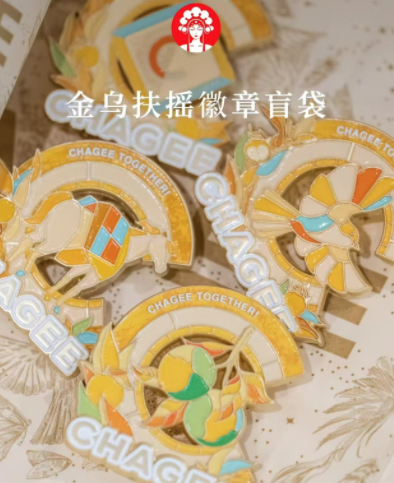
The launch also came with merchandise. From September 13, buying the double large cup set at any nationwide store earned a star card, a double-cup paper bag, or one random badge. The four zinc alloy badges, sized 13.5cm by 10.5cm, arrive as blind bags with a one-in-four chance each, which pushed collectors to trade and hunt for the full set.
On September 14, Bawang Chaji launched a new original-leaf fresh milk tea product called "Jinwu Fuyao," combining Xinhui green tangerine with Yunnan Pu'er, promoting the concept of modern Oriental tea. The "Jinwu Fuyao Badge Blind Bag" merchandise released alongside the new product sparked a collecting frenzy, with four zinc alloy badges becoming the new target for figure collectors. However, reviews of the drink itself were polarized—some praised its rich layers, while more people complained about an overwhelming oolong taste, a medicinal flavor, or even a dog poop taste. Seasoned tea drinkers suggest drinking it with normal sugar to alleviate the bitterness. This article sorts out the taste controversy surrounding the new product and the merchandise collection guide, offering reference for coffee and tea beverage enthusiasts.
On September 14, Bawang Chaji launched a new product called "Jinwu Fuyao," continuing the brand's original-leaf fresh milk tea line. According to the official promotional poster, this drink blends sweet and refreshing Xinhui green tangerine into Yunnan Pu'er, aiming to create a modern Oriental tea experience with rich layers and a long-lasting sweet aftertaste.
Along with the launch of the new drink, Bawang Chaji simultaneously released a new round of merchandise. The official announcement stated that starting September 13, purchasing a double large cup set at any nationwide store would earn a star card, a double-cup paper bag, or a random badge. The random badges are distributed in the form of "Jinwu Fuyao Badge Blind Bags," with a full set of four designs named "Jinwu," "Green Tangerine," "Tea Horse Road," and "Meeting Friends," each with a one-in-four probability of appearing.
These four badges are made of zinc alloy, measuring 13.5cm×10.5cm, with the Chaji logo stamped on the front and two butterfly clutch pins on the back. It must be said that the "Jinwu Fuyao Badges" are quite appealing—figure enthusiasts, upon seeing these high-appeal badges that blend mosaic elements with exotic church stained-glass window styles, immediately want to collect the full set.
Judging from feedback on social platforms, most people approve of the badge quality, considering the metallic texture excellent and the surface smooth. The only trouble is how to collect all four. "This new blind box is too hard to feel out." "I'm desperate—two staff members couldn't even feel out the Jinwu!" "The thing I feared came true, I'm so mad." What started as buying tea to drink has turned into a card-drawing game.
To complete the badge set, collectors stayed up researching patterns and quickly compiled guides to share online. One woman discovered that the badge weight held hidden clues and posted the weighing results for each design: after removing the packaging bag, Jinwu 32g, Green Tangerine 31g, Meeting Friends 32g, Tea Horse Road 30g—quite the dedication.
In this era of "buying the box and returning the pearl," after the badge hype faded, everyone finally turned their attention back to the true protagonist—the "Jinwu Fuyao" tea drink itself. Under the post asking "Does anyone know what Bawang Chaji's new Jinwu Fuyao tastes like, I want to know," netizens' discussion immediately boiled over.
Comment styles varied—the direct type: "Jinwu Fuyao is the worst drink I've ever had in my life. Don't call it Fuyao anymore, drinking poison would be better than this!" The lyrical type: "Promise me, if you hate someone, treat them to Jinwu Fuyao." The descriptive type: "Disgusting, the oolong taste is too strong, like kissing a middle-aged man who smokes and loves tea." Some netizens even detected a dog poop taste and a Chinese medicine taste.
Some netizens reported that previous Bawang Chaji products were all decent, but this one was truly hard to accept—like Pudilan mixed with milk. They managed to drink half before pouring it out and ordering a Boya Juexian instead. Others said "Jinwu Fuyao" reminded them of the taste of oral liquid, the kind they drank for coughs as a child—truly something you don't see every day.
There were also netizens who refused to believe it, adopting the mindset of "knowing there's a tiger on the mountain, yet still heading toward it"—thinking how could Chaji's new product possibly taste like dog poop, and insisting on trying it. After drinking, their impression was: "First sip! Wow, Pu'er flavor! Not bad! Second sip! Hmm? Something's off! Two more sips! Because I ordered one hot and one iced! Although I've never tasted dog poop, well... it really tastes more and more like dog poop, hilarious."
Meanwhile, some netizens said they saw others' reviews saying it tasted like dog poop, and out of curiosity ordered a cup, only to find it somewhat bitter like "My September." Regarding the bitterness, someone described it more specifically, feeling that this "Jinwu Fuyao" tastes very much like "Oriental Leaf" green tangerine Pu'er plus milk, with a hint of orange peel bitterness, a bitter aftertaste, not worth trying.
For this drink, seasoned tea drinkers suggest choosing normal sugar for better drinkability. If you choose half sugar, a large cup will indeed taste bitter all the way through. Although they can accept the bitterness of green tangerine Pu'er, they predict that opinions on this drink will clearly split into two camps.
Image source: Internet
The above content is compiled by CoffeeHunters, a coffee news website.


