






How Does Ethiopia's Coffee Grading System Work?
Ethiopia grades its coffee differently from most origins. Instead of sorting by bean size or growing altitude, the country relies mainly on defect count and cupping score. That is why a washed Yirgacheffe lot can be marked G1 or G2 even when the beans look similar, and why grade alone does not tell the whole story of cup quality.
The system also reflects Ethiopia's plant material: most coffee grows wild or semi-wild and is traded under the catch-all name Heirloom, so lots are naturally uneven in size and shape. Defect rate and cupping score, not screen size, therefore decide the grade of a green coffee bean.
Ethiopia, as the genetic treasure trove of Arabica coffee, has a unique green bean grading system. Unlike Kenya, which grades by bean size, or Blue Mountain, which grades by altitude, Ethiopia primarily classifies grades based on defect rate and cupping score. This article will systematically review the evolution of Ethiopia's old and new grading systems, provide an in-depth analysis of the specific standards for grades G1 through G9, and use Yirgacheffe as an example to compare the actual differences between washed G1 and G2 in green bean appearance and flavor performance. It will also share Front Street Coffee's brewing parameters and tasting experience to help coffee enthusiasts fully understand the logic of Ethiopian coffee quality grading.
For more specialty coffee knowledge, please follow: Front Street Coffee ( Frontsteet Coffee )
The grading standards for green coffee beans vary by origin, with each country having its own evaluation logic. For example, Front Street Kenya coffee is graded AA by bean size, Front Street Blue Mountain coffee is graded by altitude with the best quality marked as No.1, while Front Street Ethiopian coffee beans such as Gutingding and Red Cherry are both G1 grade.
Ethiopia is a genetic treasure trove of Arabica coffee, with extremely rich coffee varieties within its borders, making identification work extremely difficult. To protect these insufficiently recognized variety resources and prevent operators from various countries from competing to acquire them, the local government named them collectively as "Heirloom." Green beans labeled as Heirloom are typically smaller in size, inconsistent in shape and size, and relatively rounded in appearance.
In Ethiopia, coffee trees are mostly in a wild or semi-wild state. During harvest season, ripening coffee cherries can be seen in fields, courtyards, and even forests. It is common for dozens of varieties with different forms to grow mixed together in a single coffee forest. Coffee farmers do not deliberately distinguish varieties but harvest them in a mixed manner, then send the coffee cherries to nearby processing stations for unified processing. It is precisely this seemingly "unrigorous" production and harvesting model that causes Ethiopian coffee beans to often exhibit uneven sizes and diverse forms.
Based on the above situation, it is difficult to grade by green bean size like Kenya does when exporting, so the Ethiopian government decided to use defect rate as the basis for classification.
Ethiopia's Old Grading System (Based Purely on Coffee Bean Defect Rate)
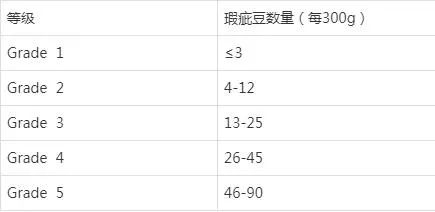
Before 2009, that is, before the establishment of the Ethiopia Commodity Exchange (ECX), Ethiopia's coffee export grades were set by the CLU department (Cupping and Liquoring Unit) under the Ministry of Agriculture, with coffee beans divided into five grades. At that time, only washed coffee beans were eligible for G1 and G2 ratings, and only these two grades qualified as specialty coffee. Before 2009, all washed beans exported from Ethiopia were G2 grade; G1 washed beans were extremely rare and difficult to find on the market.
The traditional natural processing method was relatively rough, and every coffee farmer could do it in their own small courtyard, directly spreading coffee cherries on rooftops or the ground to dry. Rough processing methods easily produced unpleasant flavors and could even mix in stones, twigs, and other debris, resulting in inconsistent coffee quality. In the 1970s, Ethiopia introduced the washed processing method from Central and South America. Compared to natural processing, washed processing added a "flotation" step, which removes underripe beans and debris floating on the water surface, thereby obtaining more consistent coffee quality. Washed processing was considered a more advanced processing method at the time. At that time, only washed beans could reach G1 or G2 grades, while natural beans were typically below G3.
Grade 1 (G1) indicates that washed beans contain 0 to 3 defective beans per 300 grams;
Grade 2 (G2) indicates that washed beans contain 4 to 12 defective beans per 300 grams.
ECX New Grading Method (Combining Defect Rate and Comprehensive Cupping Score)
In October 2009, with the endorsement and witness of the Specialty Coffee Association of America and the Specialty Coffee Association of Europe, the Ethiopia Commodity Exchange (ECX) officially launched its new grading system. The new system, on the basis of the original defect rate grading, also requires comprehensive rating combined with cupping scores. Natural coffee beans were no longer limited to G3, G4, and G5 grades. As long as they were evaluated by ECX cuppers, high-quality natural beans could also obtain Grade 1 and Grade 2, breaking the half-century "convention" that natural beans could not reach the first and second grades. Today, natural Ethiopian coffee beans labeled G1 and G2 are commonly seen on the market, while G3 grade is gradually decreasing.
ECX classifies coffee into two types by processing method—natural processing and washed processing—and defines three categories:
1. Specialty coffee: Few defective beans, high cup quality;
2. Commercial coffee: Does not reach specialty grade but is above domestic coffee consumption grade;
3. Domestic coffee: Many defective beans (including underripe beans), relatively poor flavor due to being out of season or poorly stored.
Overall Summary:
1. All coffee is first classified by processing method into natural and washed;
2. Each is divided into 9 grades from G1 to G9 based on physical characteristics and basic cup quality scores;
3. G1 to G3 are re-cupped according to SCAA standards for more detailed flavor attribute evaluation, with G1 and G2 scoring no less than 85 points rated as Q1 grade;
4. G1, G2, and G3 scoring between 80 and 85 points are rated as Q2 grade, and all G1, G2, and G3 scoring below 80 points are rated as G3 grade;
5. Q1 and Q2 are classified as Specialty Grade for export. G4 to G9 remain in their original grades and are classified as Commercial Grade for export together with G3.
How Big Is the Difference Between Washed Yirgacheffe G1 and G2?
Here Front Street uses Yirgacheffe as an example, comparing Kochere coffee beans (G1) and washed Yirgacheffe daily coffee beans (G2) through observation and comparison, to see just how big the difference is between the two grades.
From the unroasted green beans, G1 green beans are generally more uniform in size, more consistent in color, and have noticeably fewer defective beans; while G2 green beans are slightly more uneven in size and have more defective beans. In terms of green bean defect rate, G1 is inevitably superior to G2, because fewer defects mean better bean quality and naturally a higher price. This is like buying apples—compared to uneven-sized ones, although there may not necessarily be a difference in taste, at first glance the uniformly sized ones always seem more attractive and tastier, and are more expensive.
Front Street considered that Yirgacheffe uses a light roast, and light-roasted beans are harder in texture, requiring higher-temperature water for brewing. Front Street uses a V60 dripper, water temperature of 91 degrees, grind size of 80%, and a coffee-to-water ratio of 1:15 for brewing.
Front Street G1 Washed Kochere flavor: jasmine, bright citric acidity, clean on the palate, tea-like smoothness, low bitterness, long finish.
Front Street G2 Washed Yirgacheffe flavor: white floral, lemon, citrus, tea-like.
Since both lots belong to washed Yirgacheffe and have undergone screening at both the green bean and roasted bean stages, the coffee's flavor profile does not differ too greatly, with both presenting bright acidity and floral notes. However, through direct comparison, G1's mouthfeel is noticeably cleaner than G2, and its aroma is more refined and complex.
The above content is compiled by CoffeeHunters, a coffee news website.


