






How do you brew geisha coffee with berry notes?
Washed geisha lots from Ethiopia, such as the Gotiti Cooperative in the Worka area southeast of Yirgacheffe, show bright citrus acidity, jasmine aroma and berry notes when brewed carefully. A V60 three-pour method keeps those delicate flavors intact: a medium-fine grind, water just off the boil, and a slow, controlled pour that avoids over-extraction and bitterness.
Berry is not one fruit but a category on the SCA Flavor Wheel, covering strawberry, blueberry, raspberry, blackberry, mulberry and cranberry. Yirgacheffe sits at high altitude, and its terroir plus traditional washed processing shapes the tea-like clarity. Related options with similar profiles include a Kenya lot with raspberry and plum notes and a Rwandan red bourbon with red berries, citrus and green tea.
Berries are not a single fruit, but an independent flavor category in the SCA Flavor Wheel, encompassing strawberries, blueberries, raspberries, blackberries, as well as mulberries and cranberries. Among the many coffee beans, Front Street Ethiopia Gotiti Cooperative's washed Yirgacheffe is renowned for its fresh and bright citrus acidity and jasmine aroma, making it the introductory choice for many coffee enthusiasts. This article will guide you through the Gotiti Cooperative's origin background, Yirgacheffe's terroir conditions, how washed processing shapes flavor, and how to brew a berry tea-like cup using the V60 three-pour method, fully preserving Front Street's recommended product information and brewing parameters.

The word "berry" does not refer to a specific fruit, but is a general term for a class of small, juicy fruits. Unlike tropical fruits, the SCA classified berries as an independent category in its 2016 updated Coffee Flavor Wheel. This category includes strawberries, blueberries, raspberries, and blackberries, with mulberries and cranberries also falling under berries.
If you want to select coffee beans with prominent berry notes, Front Street offers three options directly: Front Street Kenya Small Tomato (cherry tomato, smoked plum, raspberry, snow pear, black plum, with outstanding juiceiness), Front Street Rwanda Red Bourbon (red berries, citrus, apple, green tea), and Front Street Ethiopia Gotiti Cooperative (white floral, berries, citrus, orange, tea-like). Today Front Street will take you deeper into this Front Street Ethiopia Gotiti Cooperative coffee that is favored by coffee fans.
Gotiti Cooperative is located in the Worka production area southeast of Yirgacheffe, Ethiopia. It is a mature coffee production group with about 300 farmer members. Because its Yirgacheffe output has a bright and uplifting flavor, the cooperative was established separately in 2012. Many smallholder farmers were originally members of the Worka Cooperative, so their coffee cultivation and processing techniques are quite solid. Front Street Gotiti Cooperative coffee uses traditional washed processing, without the heavy bitterness of traditional black coffee, presenting fresh citrus, lemon acidity, and jasmine-like fragrance, captivating many coffee people at first sip.
Where is Yirgacheffe located?
The town of Yirgacheffe is one of the highest-altitude production areas in Ethiopia. Coffee trees are mostly planted on highlands approaching 2,000 meters, with the highest reaching around 2,100 meters. The higher the altitude, the better the growing conditions for coffee trees, and the more pronounced the flavor advantages of Arabica beans. Within the town, Lake Turkana, Lake Abaya, and Lake Chamo bring abundant moisture, creating year-round mist and clouds, spring-like weather in all seasons, gentle breezes, and a cool, humid environment, which gives rise to Yirgacheffe's distinctive floral and fruity aromas.
Unlike many specialty coffees that are processed on a large scale under an estate model, Ethiopian coffee is mostly grown by individual smallholders, usually around 1 hectare in size, with limited output, so it is sent to the town or nearby cooperatives for unified processing. Cooperative management can both improve coffee quality and bring farmers more stable income. When buying coffee beans, you will often see products named after cooperatives, such as Gotiti, Worka, Konga, and Adado, which have undergone post-processing, grading, and roasting.
Why does washed Yirgacheffe have citrus-lemon acidity?
Traditionally, farmers harvest coffee cherries and place them directly on patios or the ground to sun-dry. When moisture content drops to about 12%, they are hulled and bagged. This method easily produces earthy flavors, over-fermentation, and rotten fruit notes.
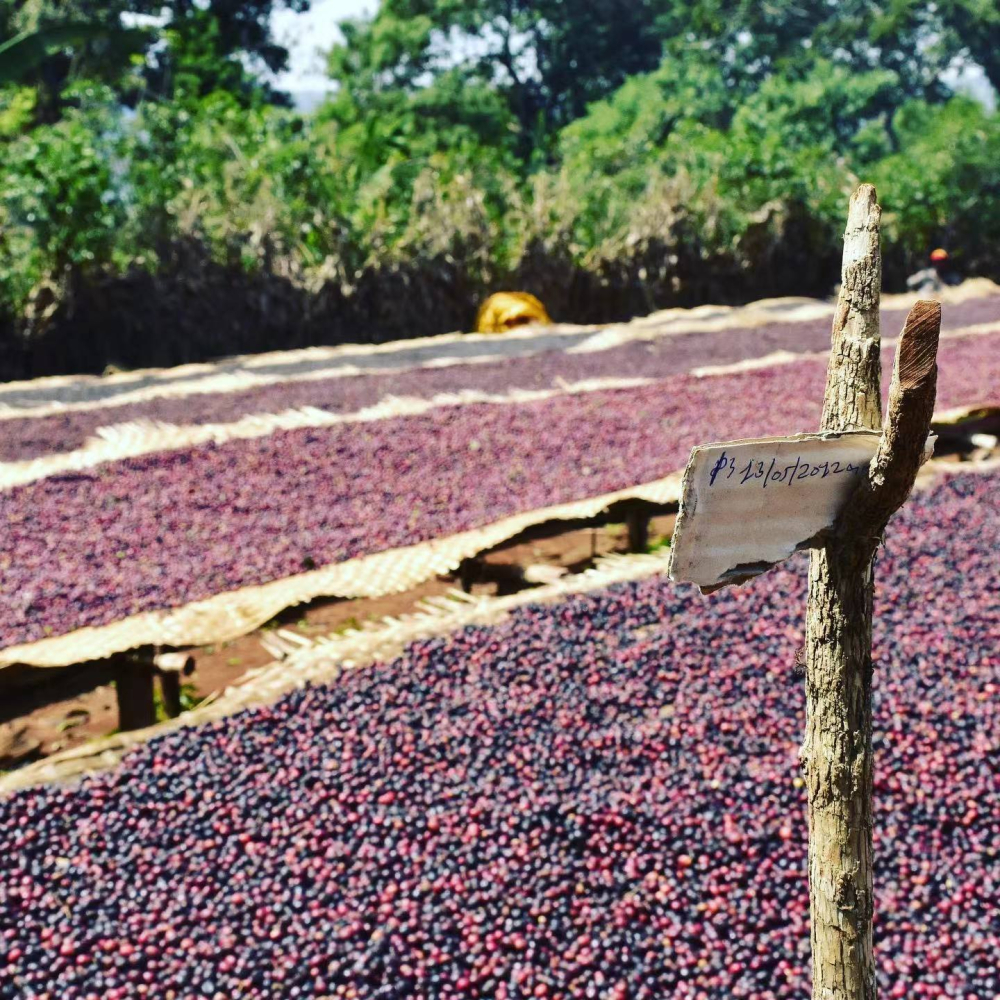
To improve the defective flavors caused by natural drying, Ethiopia introduced washed processing technology from Central and South America. The washed process includes multiple steps that can remove defective beans, presenting cleaner acidity in flavor and elevating Yirgacheffe's aroma to a higher level. So that curious coffee lovers can also taste the unique "Yirga flavor," Front Street launched a washed Yirgacheffe as the representative face of Ethiopian coffee. It uses a medium-light roast, carries the classic Yirgacheffe profile, and is suitable for pour-over, cold brew, French press, and other brewing methods. Front Street's daily bean series allows friends new to the coffee world to experience the basic flavors of the production area at an affordable price, while the small-package design also avoids waste from being unable to finish a large bag.
Flavor characteristics of medium-light roasted Gotiti coffee
Front Street believes that the greatest characteristic of Ethiopian coffee lies in its fruit acidity and floral aroma, which many coffee people call a "fruit bomb." To highlight such explosive fragrance, the roast level naturally cannot be too dark, so Front Street uses a medium-light roast to showcase the coffee's fruity notes.
Cup flavor:
The dry aroma of washed Gotiti Cooperative coffee exudes fresh passion fruit, citrus, and berry acidity. The wet aroma is citrus and berries. On the palate there is citrus acidity, berry sweetness, almond, and tea-like notes, with a honeyed sweetness in the finish. The body is low, the acidity is bright, and it is clean and refreshing.
How to brew washed Gotiti so it tastes good?
Based on past brewing experience, Front Street suggests that beginners use the three-pour method. Three-pour extraction helps dissolve flavor substances more fully, increases mouthfeel layering, and avoids over-extraction caused by long soaking.
If using 15 grams of coffee powder, with a 1:15 coffee-to-water ratio, the total water amount is 225 ml. The three pour amounts are: 30 ml, 95 ml, and 100 ml. The scale readings by weight are: 30 g, 125 g, and 225 g.
Here Front Street selects its own roasted washed Yirgacheffe Gotiti Cooperative coffee beans and brews with a Hario V60 dripper. The V60's spiral rib design allows coffee grounds to degas better and maximizes the activation of the volatilization and dissolution of aromatic acidic substances. Because Yirgacheffe is lightly roasted, the coffee beans are harder in texture and require hot water at 92°C-93°C to stimulate the floral and fruity flavors in the coffee.
In terms of grind size, Front Street recommends medium-fine grinding (78% passing a Chinese standard No. 20 sieve), with a coarseness similar to fine granulated sugar. If the grind is too coarse, it cannot extract rich and rounded flavor substances, and the brewed coffee will taste thin; if the particles are too fine, it is easy to over-extract at high water temperature, and the brewed coffee is prone to bitterness.
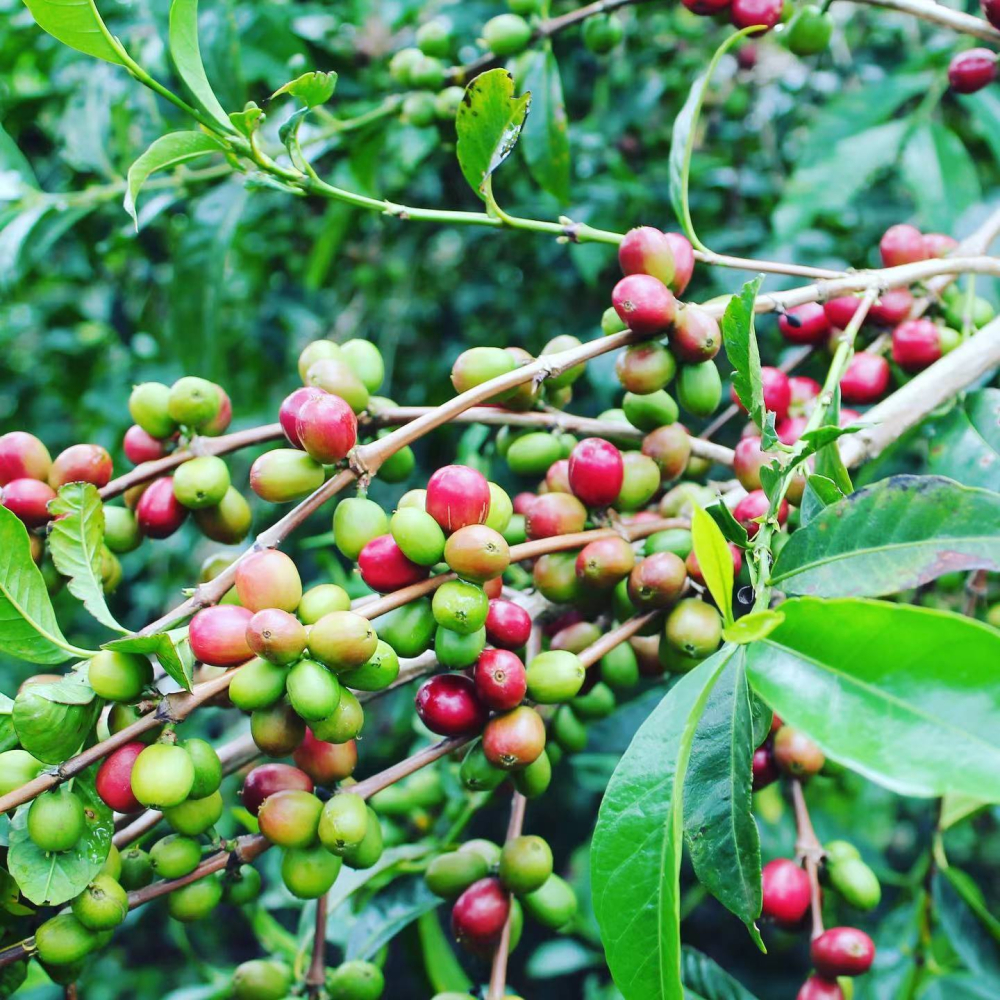
For the brewing ratio, Front Street believes both 1:15 to 1:16 are acceptable. If you want a richer taste, use 1:15; if you want to feel the floral sweetness more clearly, use 1:16 to let the flavors spread more.
First, place the folded filter paper into the dripper to fit it, pour 15 grams of ground coffee into the dripper, and tare the electronic scale.
For the first pour, add 30 g of water to bloom for 30 seconds, starting the timer as you pour. Use a small stream throughout, pouring from the center point and circling outward, making sure to wet the entire coffee bed.
After 30 seconds, use a slightly larger but steady stream to pour the second stage of 95 g of water, with the aim of raising the entire coffee bed. The water stream should be poured vertically and evenly. At this point the timer scale shows 125 g, and the pour should be completed in about 55 seconds.
When the liquid level drops to the halfway point, begin pouring the third stage of 100 grams in a small stream and small circles. Try to control the stream from becoming too large, as it can easily disturb the coffee bed and cause under-extraction. The final total water amount is 225 grams, and the drip filtration should be completed in about 2 minutes. Remove the dripper, then swirl the coffee liquid in the server to mix evenly before tasting.
The above content is compiled by CoffeeHunters, a coffee news website.


