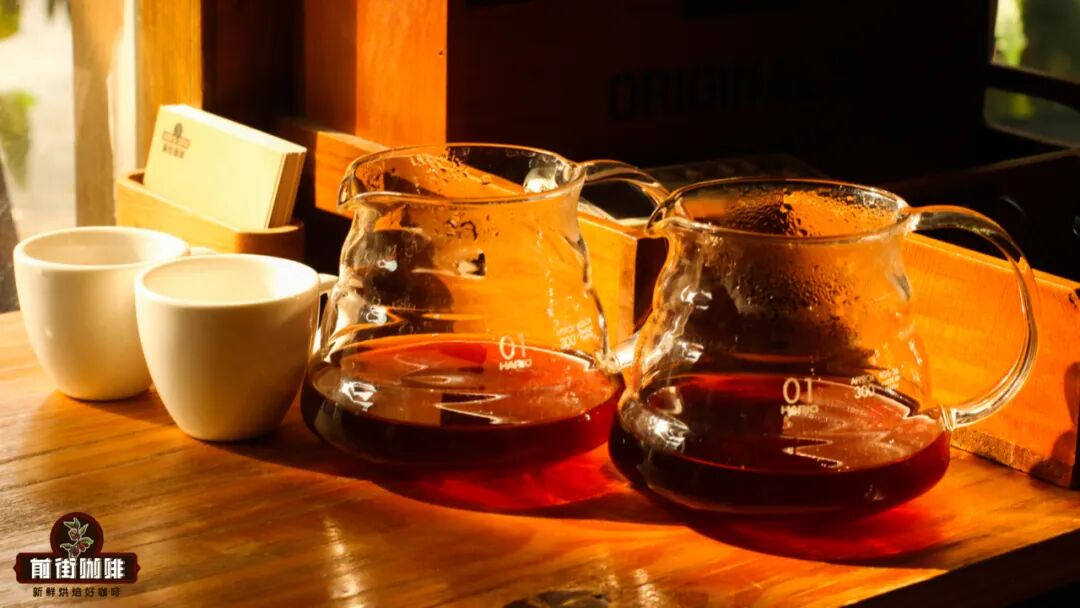
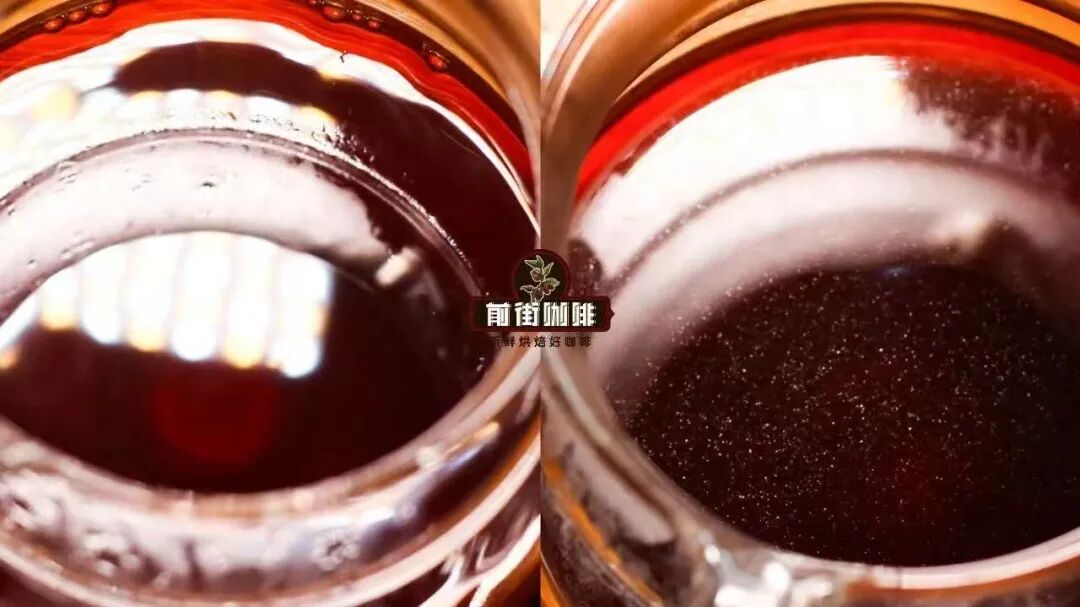
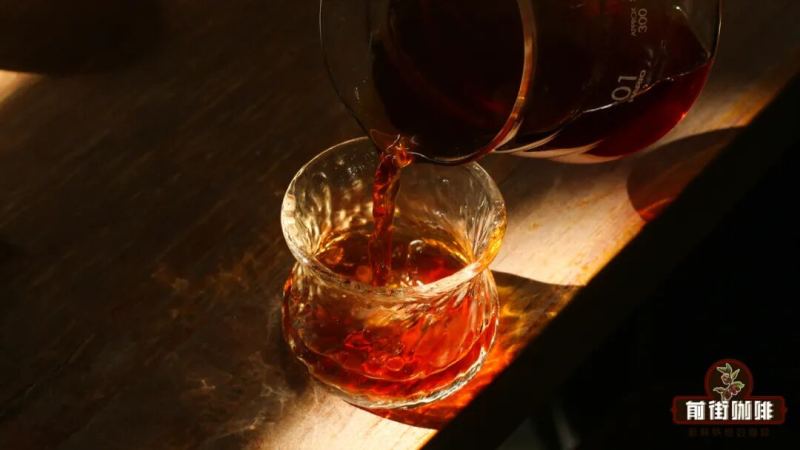
Customers and friends often chat about coffee-related topics at Front Street Coffee shops, such as the origin of the coffee, brewing parameters, steps, or the taste of the coffee, and so on. Then occasionally, some friends will discuss more niche topics, for example—coffee'sliquor color."Liquor color" is a professional term from tea evaluation, referring to the color and visual characteristics presented after the tea is brewed, and this is one of the standards people use to judge the quality of tea leaves. So for coffee, can liquor color also serve as a standard for evaluating quality?Obviously not. Coffee's liquor color is affected by many factors, such as the extraction method, the filtration device, the coffee's roast level, and the coffee's concentration. These are not closely related to the coffee's quality, so coffee's liquor color cannot become a defining standard for its quality.But inevitably, cloudy coffee always easily makes friends associate it with poor quality. So today Front Street Coffee will share how the above factors actually affect coffee's liquor color.Deepandlight,blackandred/Coffee's colorFront Street Coffee will first talk about coffee's color! I believe everyone can easily find that when using the same parameters to brew different coffees, the colors of these coffees are not all the same! For example, some are brownish-red, while some tend toward black.What mainly determines coffee's color is the coffee's roast level. When the coffee's roast level is darker, the brewed color is darker; when the coffee's roast level is lighter, the brewed color is lighter.The picture below shows two pots of pour-over brewed by Front Street Coffee using the light-roast coffee bean Front Street Ethiopia·Hambela(left)and the dark-roast coffee bean Front Street Sumatra·Golden Mandheling(right). You can compare their differences.In addition, coffee's concentration also affects the color. When the coffee's concentration is higher, the coffee's color saturation is deeper; when the coffee's concentration is lower, the color is lighter. We can see an obvious difference in this from espresso and Americano.Next is coffee's cleanliness(here referring to the visual characteristics of the coffee liquid)! Many friends also have this misunderstanding: when the coffee's color is darker, the coffee will be cloudier; and when the coffee's color is lighter, the coffee will be cleaner. But in fact, coffee's cleanliness is not affected by the depth of color; it is related to the water solubility of the extracted substances.For example, in pour-over coffee, when we use filter paper for brewing, the coffee we finally get is often bright and clean, looking very clear. And if we use ametal filter, or flannel filter cloth for brewing, the coffee obtained will by comparison be somewhat cloudy and not as transparent. The reason for the difference between the former and the latter lies in the filtration tool'sfiltration performance.In a previous article on non-woven filter paper, Front Street Coffee introduced that filter paper's filtration performance is excellent, able to filter out most substances other than coffee, such as coffee grounds and oils, so the coffee brewed with it is very clean.Tools such as metal filters and non-woven filter paper, however, because their gaps are larger, cannot filter out some extremely fine coffee grounds and oils, so the brewed coffee becomes cloudy due to the presence of these substances. The same is true for the cloudiness of espresso, moka pot coffee, French press coffee, and so on.But that does not mean these tools are not as good as filter paper. The presence of some fine particles can enhance coffee's body, while oils can give coffee more aroma. Although the coffee brewed without filter paper does not taste as clean as that brewed with it, they will have better body and aroma(a tiny bit).In summary, we can know why coffee's liquor color cannot be used as a standard for judging coffee quality. What it can reflect is only the coffee's roast level, concentration, and the performance of the filtration tool used. Do not make sweeping generalizations~ The above content is compiled by CoffeeHunters, a coffee news website.