







Should coffee beans go in the fridge, and how long does ground coffee last?
Roasted coffee beans enter a stable state roughly 30 to 45 days after roasting, when only 30 to 40 percent of their carbon dioxide remains and the release rate slows. Refrigeration can slow staleing, but moisture and odors are the main risks. Ground coffee loses aroma far faster than whole beans because its exposed surface area increases sharply.
Most of the carbon dioxide built up during roasting escapes in a concentrated burst within four to seven days, the stage when blooming forms a full dome. Grinding before shipping is convenient, yet oxidation starts immediately, so the shorter the gap between grinding and brewing, the fresher the cup.
Coffee enthusiasts often agonize over storage: should the coffee beans they buy be kept in the fridge? And once the shop grinds them into powder, how long can they last? The impact of freshness on flavor is self-evident, but ground coffee's surface area exposed to air increases dramatically, and its aroma dissipates far faster than whole beans. Drawing on Front Street Coffee's practical experience and comparative experiments, this article sorts out the optimal flavor window for coffee beans, the finer points of storage conditions, and how ground coffee's flavor evolves over different storage days, helping you find a balance between convenience and quality. If you also tend to stock up on ground coffee or grind in advance, this piece is worth a read.
The claim that freshly ground coffee has superior aroma has long been repeatedly verified, and the close link between coffee flavor and freshness needs no elaboration. In reality, however, to save effort, many people directly ask the shop to grind the beans before shipping when placing an order—no need to fuss over grind settings when brewing, and no manual grinding effort required. It is indeed quite convenient.
As more and more customers opt for pre-ground coffee, Front Street Coffee has received a growing number of questions: How long can coffee beans last once turned into powder? What is the flavor window in days? And what is the correct storage method? Don't worry—let's start with the core concept of the flavor window and answer these one by one.
The Optimal Flavor Window for Coffee Beans
When green coffee beans are roasted, the interior of the bean continuously absorbs heat and expands while accumulating a large amount of carbon dioxide. These gases are not entirely a bad thing: on one hand, if too much remains, it interferes with the hot water extraction of flavor compounds; on the other hand, they act as a barrier, slowing the loss of volatile aromatics.
Based on past experience, within four to seven days after roasting, about sixty to seventy percent of the carbon dioxide is released in a concentrated burst (this is the stage when blooming most easily produces a full, domed "hamburger"). When only thirty to forty percent of the gas remains in the beans, the release rate slows significantly, and the coffee beans enter a relatively stable state. Between thirty and forty-five days after roasting, the brewed flavor typically reaches its peak—this window is what we call the optimal flavor period.
Of course, you cannot judge flavor by roast date alone; storage conditions are equally critical. Generally speaking, after receiving fresh coffee beans, it is recommended to store them in a sealed, cool, dry, and dark place, and to minimize the number of times the bag is opened. Just imagine: a bag of beans opened several times a day, or repeatedly exposed to humid air—even if still within the flavor window, the coffee grounds have likely already gone stale.
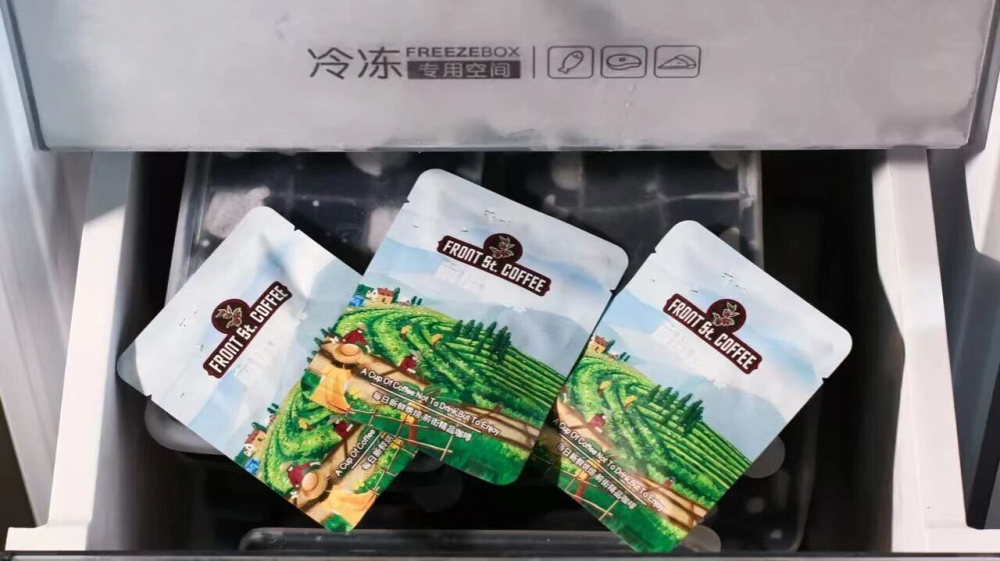
Some people also think of putting ground coffee in the refrigerator. This does indeed slow aroma loss to some extent, but when the coffee returns to room temperature, condensation occurs, forming small water droplets on the inner walls of the packaging, which causes the ground coffee to absorb moisture and ultimately compromises the flavor. Therefore, Front Street Coffee does not recommend this storage method.
After Grinding, How Long Can the Flavor Be Preserved?
Everyone knows that the moment coffee beans are freshly ground, the aroma is at its most abundant. These aromas are essentially volatile flavor compounds that drift through the air and are captured by our noses. Before grinding, the coffee bean structure is intact, and carbon dioxide can only escape slowly from the surface; once ground, the surface area exposed to air increases dramatically, and a large amount of carbon dioxide carries aroma compounds as it escapes at an accelerated rate, naturally shortening the flavor window.
To determine the optimal flavor window for ground coffee, Front Street Coffee once conducted a controlled experiment: using Front Street Coffee Panama Boquete Geisha beans roasted on the same day, ground at 30 days, 21 days, and 14 days in advance respectively, each stored independently in sealed containers, then brewed and compared side by side.
The results showed that, provided the seal is good and the package is not opened too frequently, coffee within three weeks of grinding still delivers decent flavor, but quality declines day by day; once ground coffee has been stored for over a month, the aroma is almost entirely gone, leaving only a bland cup of "coffee flavor."
So if you buy a large quantity at once and your daily consumption is not fast, Front Street Coffee suggests that upon receiving pre-ground coffee, immediately divide it into multiple sealed jars or sealed bags for storage, opening only as needed. This way you need not worry about the aroma of the remaining coffee quietly escaping through repeated openings.
What Flavor Changes Occur in Coffee Ground in Advance?
Out of curiosity, last week Front Street Coffee ground up a bag of unused washed Yirgacheffe (roast date: December 29, 2024) into powder, then tested its flavor state day by day, observing exactly how ground coffee storage time relates to brewing performance and final flavor.
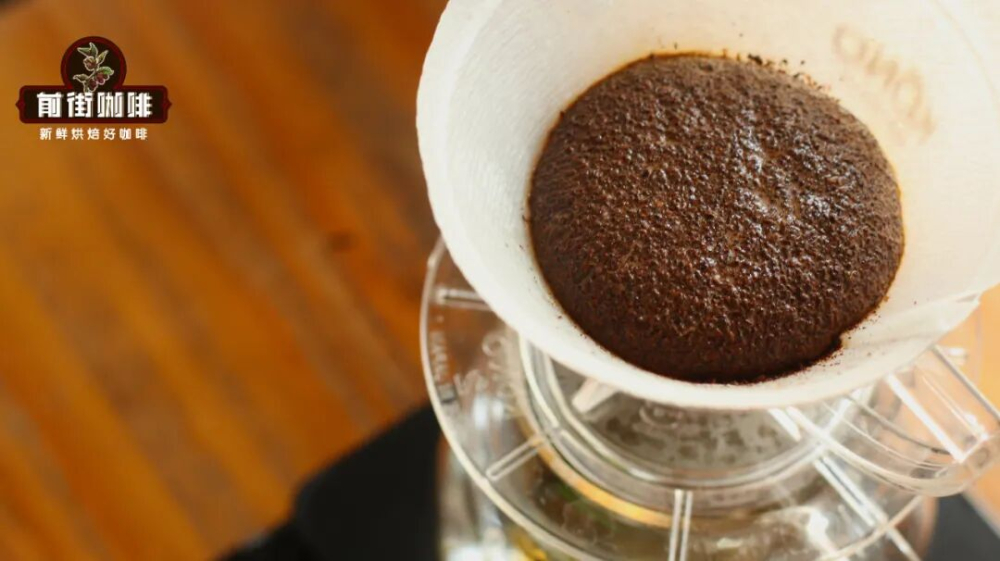
Freshly ground and brewed: rich layered dry aroma, distinct white flowers and citrus fruit notes, with a honey-like sweetness; blooming puffed normally, with the coffee bed continuously bubbling. The flavor presented fresh orange peel, delicate floral notes, lemon, snow pear, and plum-like acidity; as the temperature dropped, notes of melon seeds, caramel, and green tea emerged, with a light and transparent acidity.
Day one after grinding: the dry aroma had clear citrus and lemon peel freshness, floral notes weakened, with some nutty and milk candy sweetness; bubbles released during brewing were still abundant. The flavor was dominated by sweet orange, pomelo, and tea-like notes, with lively acidity and a clear sweet aftertaste.
Day two after grinding: the dry aroma was slightly fainter, still with citrus freshness; blooming no longer puffed up, and only a few bubbles emerged from the coffee bed during extraction. The flavor was led by citrus and pomelo sweet-tartness, with overall character not far from the previous day, a caramel sensation on the palate, and a green tea note in the finish.
Day three after grinding: the dry aroma shifted to a blend of honey, citrus, and nuts, with bubbles during blooming and extraction further reduced. The flavor showed pomelo, lemon, and tea notes; the acidity was less bright than the previous day, and the caramel sensation was noticeably heavier.
It can thus be seen that once coffee beans are ground, not only does carbon dioxide continuously dissipate with each passing day of storage, but the brewed coffee's aroma also decreases step by step. Take the light-roast Yirgacheffe used in this Front Street Coffee test as an example: when freshly ground it displayed a crisp, bright character; as the ground coffee was exposed to air more often and stored longer, the overall style gradually shifted from fresh fruity sweet-tartness toward a heavier caramel sensation. At this point, no matter how you adjust the brewing parameters, it is very difficult to replicate the flavor performance of the freshly ground moment.
In fact, this type of medium-light roast coffee is prized for its floral and fruity notes, and within just a few hours of grinding, much of its essential aroma has already been lost. So if you favor this kind of flavor profile, when conditions permit, Front Street Coffee recommends investing in a grinder—only then can you truly experience the complete aroma that fresh-roasted, freshly ground, and freshly brewed coffee has to offer.
The above content is compiled by CoffeeHunters, a coffee news website.


