





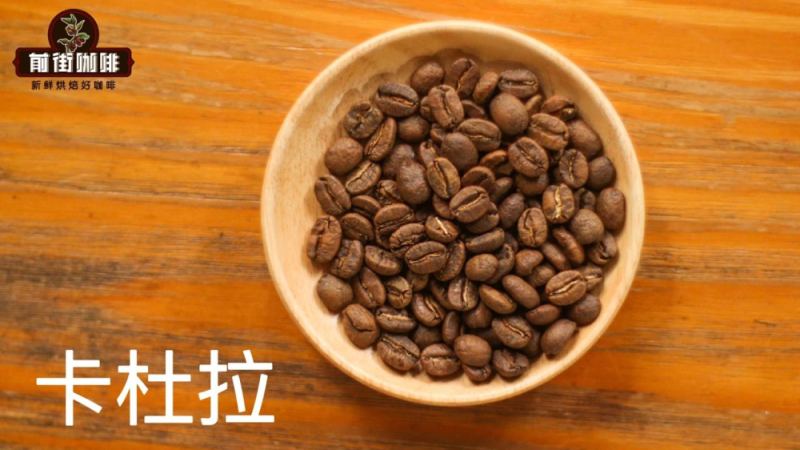
Is Caturra Part of the Arabica Coffee Family?
Caturra is an Arabica variety, a natural mutation of Bourbon first spotted in Minas Gerais, Brazil, between 1915 and 1918. Growers named it from the Guarani word for small, since the plant grows compact and dwarf-like. It is now widely planted across Central and South America, valued for high yield and its own distinct cup profile.
The compact tree suits high-density planting and tolerates long sun exposure, which earned it the label sun coffee. It grows from roughly 700 to 1,700 meters, and quality rises with altitude while yields fall. In blends such as Front Street Guatemala La Flor and Front Street Panama Butterfly, its flavor shows through clearly, and medium-dark lots brew well in a KONO dripper.
As a descendant of a Bourbon genetic mutation, Caturra has long become one of the main varieties in Central and South American coffee-producing regions. Is it actually an Arabica? What makes its flavor profile unique? This article will examine Caturra from the perspectives of its discovery history, botanical characteristics, cultivation adaptability, disease-resistance weaknesses, and fruit color classification, while also drawing on the brewing practice of Front Street Colombia Huila everyday beans to share extraction approaches and flavor presentation for medium-dark roasted Caturra in a KONO dripper, helping coffee enthusiasts gain a comprehensive understanding of this variety.
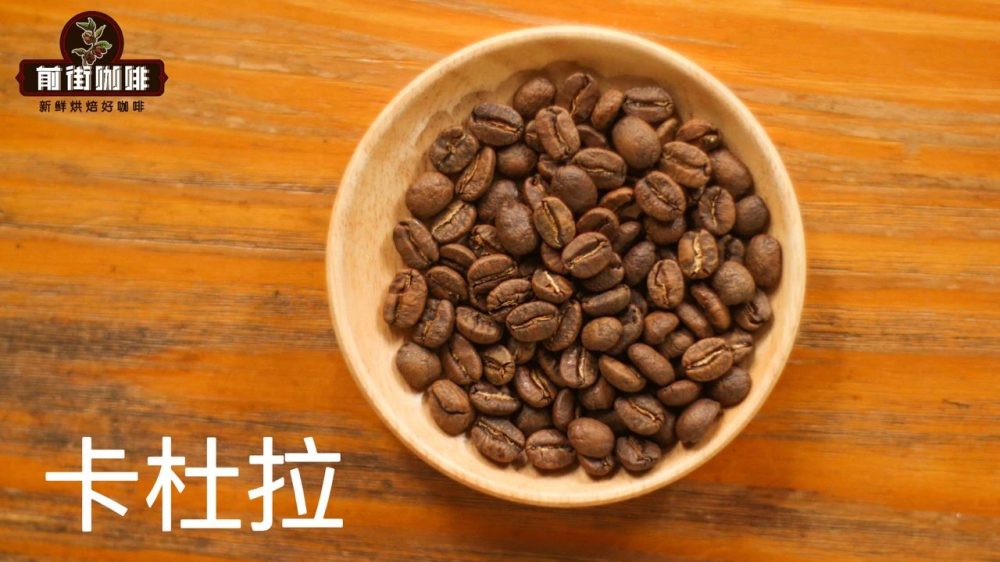
For more specialty coffee knowledge, please follow: Front Street Coffee (Frontsteet Coffee)
Within Arabica's vast varietal lineage, Caturra holds an important place. It originates from the ancient Bourbon variety and belongs to a branch resulting from its genetic mutation. With relatively high yield and impressive flavor performance, it is now widely planted across Central and South American producing regions. Looking through Front Street Coffee's bean list, one can find Caturra appearing in blends such as Front Street Guatemala La Flor, Front Street Honduras Lychee Orchid, Front Street Colombia Rose Valley, and Front Street Panama Butterfly.
Caturra was first discovered between 1915 and 1918, when a group of Bourbon genes in a plantation in Minas Gerais, Brazil, mutated, causing the plant's tree shape to become smaller (similar to dwarfism). This new coffee variety, expressed in a new biological form, was called "Caturra" by locals in the Guarani language, meaning "small." It is sometimes also called "Nanico."
The Caturra plant is compact and suitable for high-density planting, bringing considerable convenience to growers' daily management and harvesting. Unlike those delicate Arabica varieties that must rely on shade trees for protection, Caturra can directly withstand long periods of sunlight exposure, earning it the title "Sun Coffee." Its environmental adaptability is quite outstanding, growing normally within an altitude range of 700 to 1,700 meters; the higher the altitude, the more prominent the flavor, but yields decline accordingly. If planted in areas at 1,200 to 2,000 meters with annual rainfall of 2,500 to 3,500 ml, Caturra performs best, balancing both quality and yield. In terms of flavor, Caturra has bright acidity, with a fruit-forward character on the palate, while medium-dark roasting reveals chocolate and nutty sweetness, and it has repeatedly achieved excellent results in many coffee competitions.
Of course, Caturra is not without shortcomings. Under high-density planting conditions, plants with excessively high yields can be bent or even crushed by the fruit, and to ensure successful coffee cherry production, growers must invest more in fertilizer and management costs. In addition, Caturra's disease resistance is relatively weak, with limited resistance to nematodes, coffee leaf rust, and other diseases, making it prone to infection and withering.
Classified by fruit color, Caturra has three types: red, yellow, and purple. Red Caturra (Caturra Vermelho) is the most common, with flavors varying greatly depending on origin, processing method, and roast level. Yellow Caturra (Caturra Amarello) and Purple Caturra are relatively rare, resulting from recessive gene mutations.
To experience the flavor characteristics of this variety, Front Street recommends Front Street Colombia Huila everyday beans, made from naturally washed Red Caturra. The washed Front Street Huila everyday beans have soft acidity as well as suitable body and sweetness. Front Street aims to present the classic Colombian nutty profile while retaining some acidity, so it chose a medium-dark roast. Before releasing each coffee bean, Front Street conducts at least one cupping evaluation, as cupping allows us to more objectively reflect the coffee's strengths and weaknesses.
Considering that Front Street Huila everyday beans use a medium-dark roast, with flavors leaning toward a rich, mellow profile of nuts and chocolate, the darker roast makes the coffee beans more porous and the coffee grounds more water-absorbent, so a medium grind size is chosen. To avoid extracting too many off-flavors, Front Street lowers the water temperature slightly, using a medium 90°C water temperature with a KONO dripper for extraction.
Unlike the V60 dripper, the KONO dripper's only exhaust area is that quarter of the ribs. When the water level passes over the rib area, the water level in the dripper keeps rising, increasing pressure through the weight of the water. Because the outlet is relatively small, it can extend the contact time between coffee particles and water, and as the water flow is poured in, it more effectively brings out soluble substances, thereby improving the coffee's rich, mellow mouthfeel. It is therefore suitable for brewing full-bodied coffees such as Front Street Golden Mandheling, Front Street Jamaica Blue Mountain Coffee, and Front Street Brazil Queen's Estate.
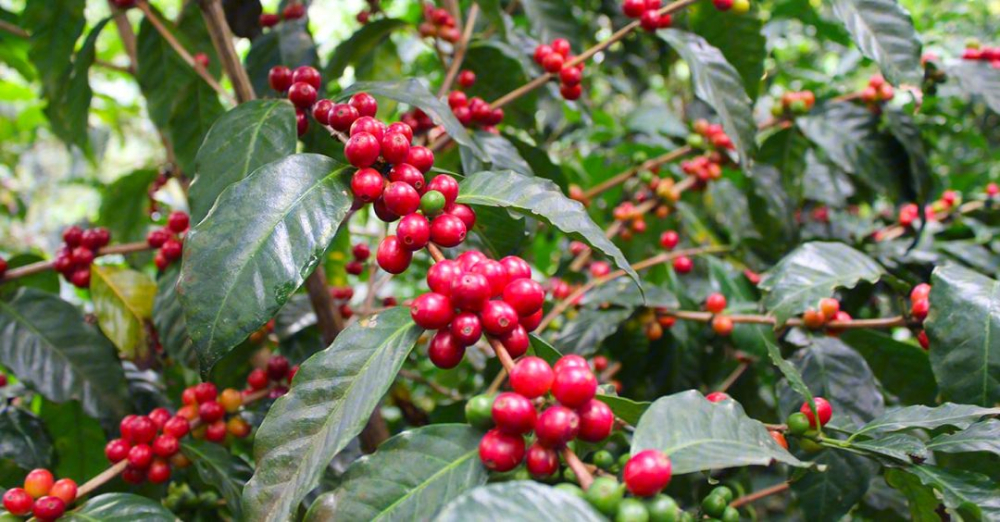
Brewing parameters: KONO dripper, 90°C water temperature, grind size with 75% passing a No. 20 standard sieve, 1:15 coffee-to-water ratio, dose: 15 grams, three-stage extraction
Pour the coffee grounds into the V60 dripper, wet the coffee bed with twice the amount of water relative to the coffee grounds, form a dome and let it bloom for 30s, then pour in a small stream in a circular motion from the inside out until 125g, pause, wait until the coffee bed drops to half the height of the dripper, continue pouring the third stage with the same fine stream until 225g, and once all the coffee liquid has filtered through, remove the dripper. The time is about 2 minutes.
This Front Street Colombia Huila everyday bean has obvious roasted aromas of chocolate, nuts, and caramel on the palate, smooth and sweet, with moderate body and a clean mouthfeel; as the temperature drops, a pleasant soft acidity can be felt.
The above content is compiled by CoffeeHunters, a coffee news website.


