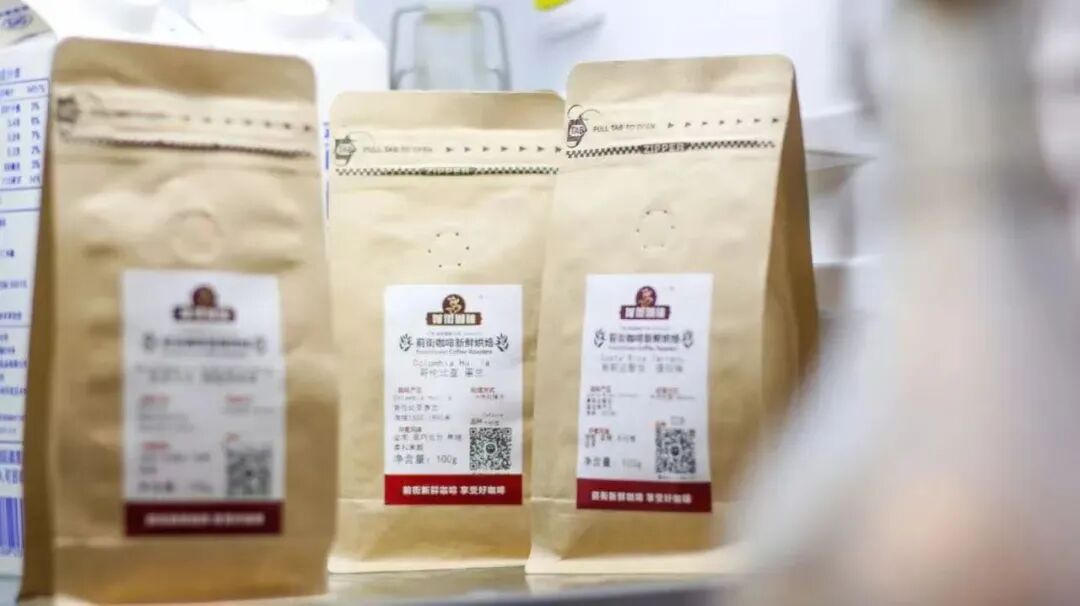
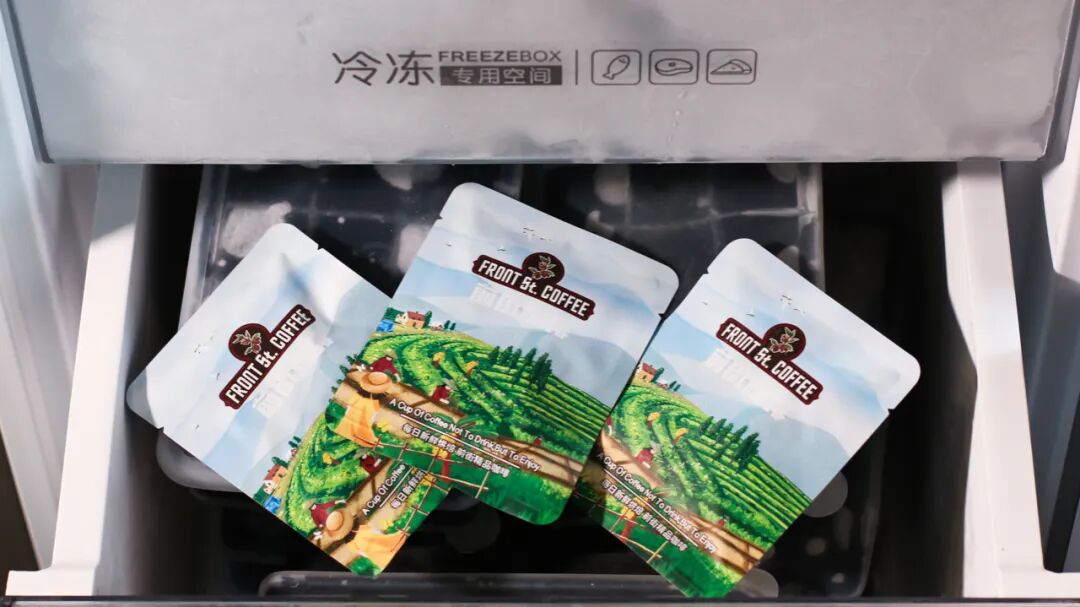
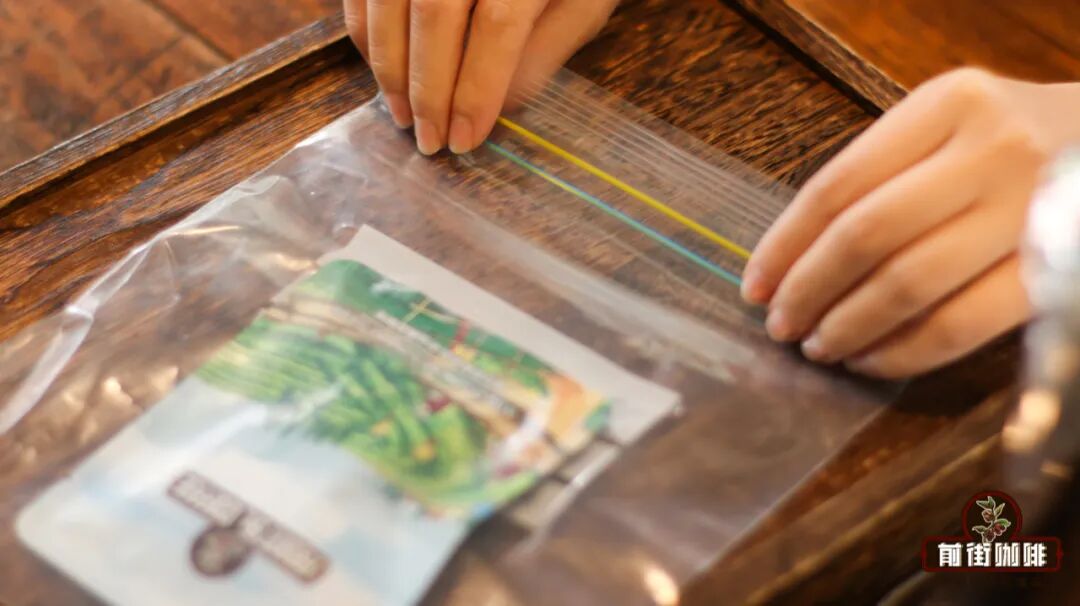
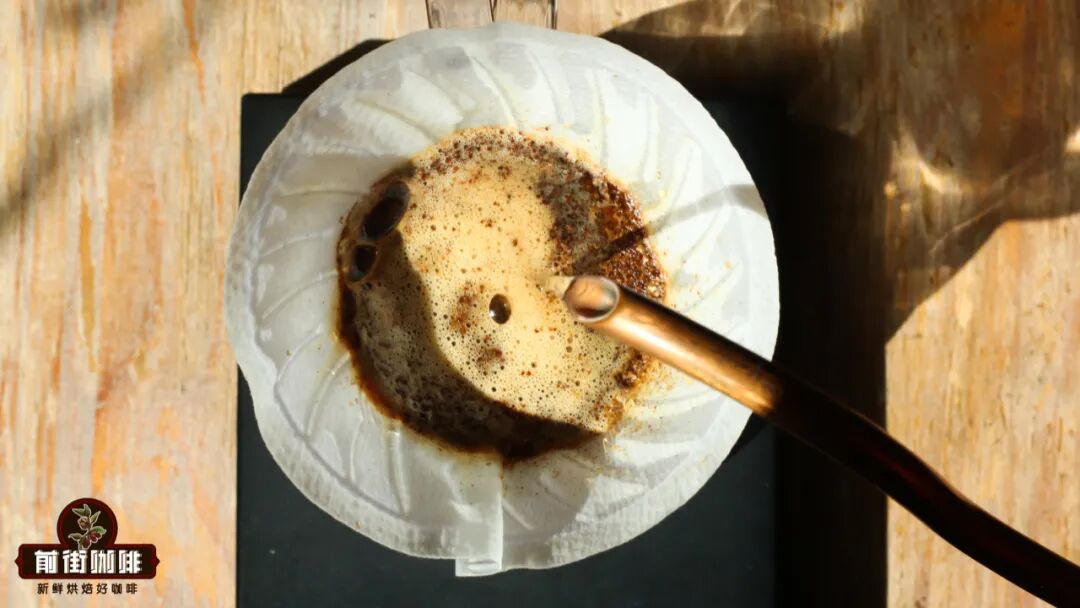
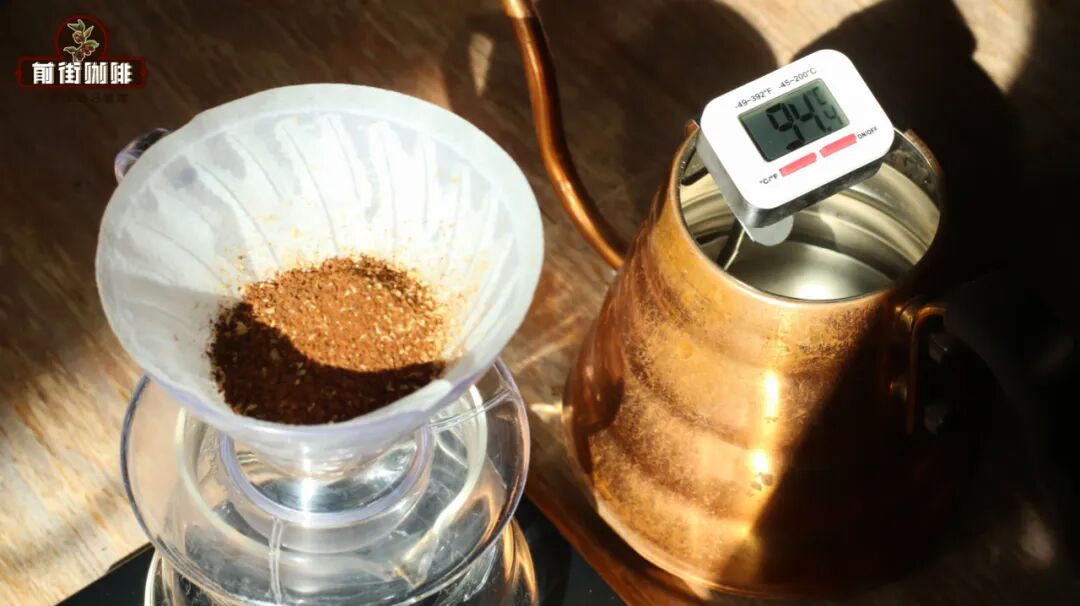
Freezing is a very popular way to "preserve" coffee beans in recent years. You just need to seal the coffee beans and put them in the freezer compartment of the refrigerator, and the flavor loss of the coffee beans will slow down, thereby extending the shelf life. Many friends have adopted this method to stock up on large quantities of coffee beans purchased during Front Street Coffee's discount events.However, recently a friend reported that he also used freezing to store coffee beans. But he found that after freezing, the coffee brewed from these beans was not as aromatic as when stored normally, and the taste was not as full. So he suspected that freezing was ineffective and could not extend the shelf life.Although Front Street Coffee rarely mentions the topic of freezing coffee beans, it is undeniable that freezing can indeed have a certain "preservation" effect. This is because low temperatures reduce the thermal motion of molecules, and the degassing rate of coffee beans slows down(only slows down). The specific degree of slowdown mainly depends on the temperature of the freezer compartment. The lower the temperature, the slower the degassing rate, and the longer the shelf life of the coffee.So the question arises: why did the aroma and flavor of the friend's coffee beans become less rich after freezing than when stored normally?In fact, there are only two reasons: incorrect frozen storage and the wrong brewing "method."What is correct frozen storage?Some friends put the coffee beans directly into the refrigerator for freezing after receiving them, without taking any measures. But in fact, coffee beans, like many frozen foods, also need to be sealed when frozen. The purpose of this is not only to prevent the coffee from absorbing moisture and accelerating the loss of aroma, but also to prevent the coffee beans from absorbing odors in the refrigerator and being contaminated by off-flavors.(For those with a degassing valve, use a sticker to cover the valve)But sealing alone is not enough! If conditions permit, it is best to divide the coffee beans into portions when freezing them. The specific method is to split a bag of coffee beans into several sealed portions, each just enough for one serving.The reason for doing this is to reduce the impact on the other coffee beans each time we take out beans. What does that mean? It means that if we seal and freeze the entire bag of coffee beans directly, then every time we take out coffee beans for brewing, the remaining coffee beans in the bag will also be taken out and exposed to room temperature.Although this time is very short, it is enough for the coffee beans to produce condensation, then absorb moisture, affecting the flavor and condition of the coffee beans. So if conditions permit, it is best to divide the coffee beans into portions before sealing and freezing them.Of course, more diligent friends can also put another sealed bag outside the packaging bag, which can further slow down the loss of aroma. Or you can replace the plastic sealed bag with a sealed bottle, which is more convenient than a bag and can be reused~Why do we need to adjust parameters when brewing frozen coffee beans?Because coffee beans are kept in a frozen environment for a long time, their various states and structures will change. For example, the temperature becomes lower, the brittleness becomes higher... These are changes that directly affect brewing. And if we brew such frozen coffee beans without making any adjustments, the final result will most likely be like this friend's: a cup of coffee with less fragrant aroma and less full flavor.How big is the specific difference? Front Street Coffee had already prepared frozen coffee beans in the refrigerator for brewing comparison. It was the Front Street Coffee Yirgacheffe · Gutingting from the bean list used in yesterday's article.In yesterday's article, Front Street Coffee used conventional parameters to brew Gutingting in its conventional state, and the finalextraction yieldwas 19.46%. In terms of flavor, it had a very rich expression: white floral, lemon, berry, oolong tea, with a balanced taste, rounded mouthfeel, and a long aftertaste. But when Front Street Coffee used the same brewing parameters to brew the frozen Gutingting, the extraction yield obtained was 18.06%. The flavor expression tended to be consistent, but much weaker, and the mouthfeel was not as full, tasting somewhat thin.As you can see, the difference is quite large. Although it is not to the point of being undrinkable, it is also not that good. So, if we want to brew a delicious cup of coffee with frozen coffee beans, we can choose the following two methods①. Improve the extraction efficiency during brewing: The first method is relatively simple—just improve the extraction efficiency during brewing. The reason many friends cannot brew frozen coffee beans well is that they take them out of the refrigerator without thawing and brew directly.Front Street Coffee is not saying this behavior is bad. Brewing frozen coffee beans without thawing actually has more advantages. For example, the coffee powder particles will be ground more evenly because the coffee beans are more brittle; at the same time, because the temperature of the coffee beans is lower, too much aroma will not be lost during grinding; and there is no need to worry about moisture absorption, etc...But! If we want to brew frozen coffee beans that have not been thawed, we need to improve the extraction efficiency during brewing. Because when the coffee beans are not thawed, their lower temperature will absorb a large amount of heat from the hot water during brewing, thereby reducing extraction efficiency and making the brewed coffee less aromatic.Therefore, appropriately improving the extraction efficiency through parameters can solve this well. There are many parameters that can be improved, such as increasing the water temperature during brewing, extending the blooming/extraction time, adjusting the grind finer, etc.~If we do not want to make changes to the parameters, we can choose to thaw the coffee beans. This method is simpler by comparison. Because when the coffee beans return to normal temperature, we no longer need to adjust the parameters.The thawing method should not need much explanation from Front Street Coffee~ Just take the coffee beans out of the refrigerator and leave them for more than half an hourand that is enough. But note that during thawing we should not open the seal; let the coffee beans remain in the sealed environment of the bean bag.Because once we open the seal, condensation will immediately form on the surface of the coffee beans due to the huge temperature difference. This will cause the coffee beans to absorb moisture and soften, affecting coffee extraction, flavor, and various other aspects. So everyone still needs to pay attention to this point~So the above are some points to note when freezing coffee beans and brewing frozen coffee beans. Although we have said so much, Front Street Coffee does not recommend that beginners, or friends who are not yet familiar enough with brewing, use freezing to store coffee beans. Because freezing has a relatively large impact on brewing, using freezing for "preservation" before becoming familiar with it may backfire and prevent you from brewing delicious coffee. So, everyone can decide for themselves~ The above content is compiled by CoffeeHunters, a coffee news website.