







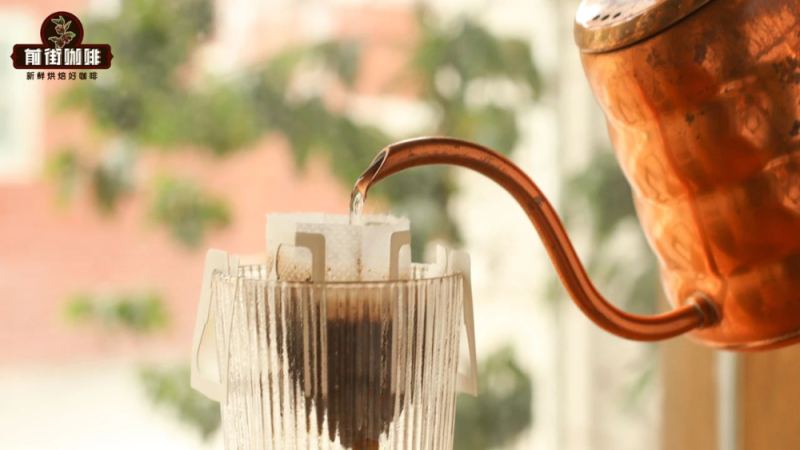
Drip bag coffee is essentially a form of drip filtration, combining the flavor expression of pour-over with the convenience of being ready to brew straight from the packet. It requires no grinder or specialized equipment, and in just a few minutes you can have a cup of freshly ground-quality coffee. However, if you want a drip bag to produce layers approaching those of a pour-over, the water temperature, coffee-to-water ratio, and pouring rhythm all need to be handled with care. Drawing on Front Street Coffee's production experience, this article outlines the structural features of drip bags, the extraction principle, and the staged pouring technique, and recommends three single-origin beans suited to drip bags—washed Yirgacheffe Guddina, Jamaica Blue Mountain No. 1, and Costa Rica Mozart—to help you reliably reproduce great flavor at home.
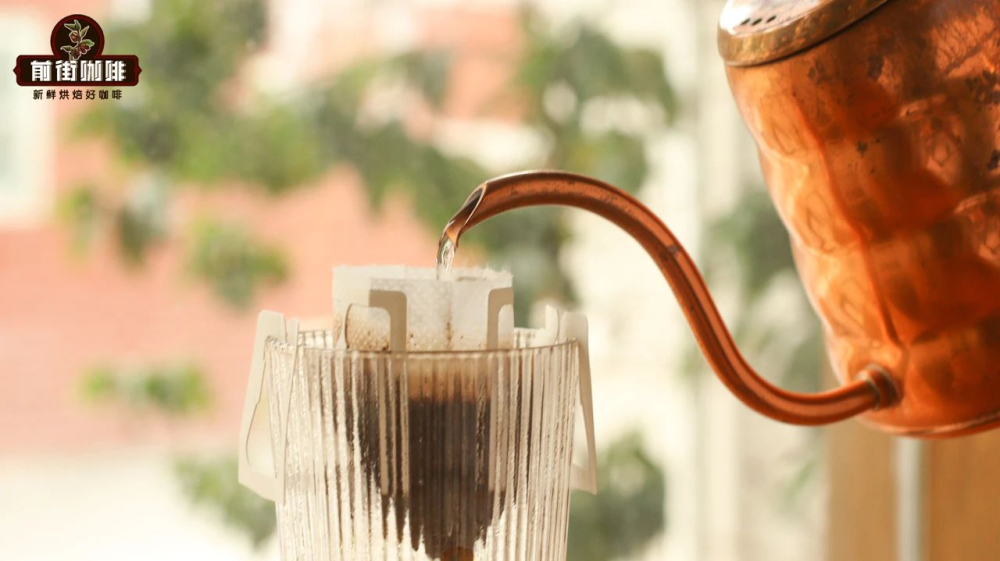
Drip bag coffee and pour-over both belong to drip filtration, but the former skips the cumbersome timing process and requires no expensive coffee machine or grinding equipment. You can enjoy a cup of richly aromatic coffee within minutes, and convenience is precisely its most outstanding advantage. Below, Front Street Coffee discusses several operational details to help your drip bag perform even better.
Features of Drip Bag Coffee
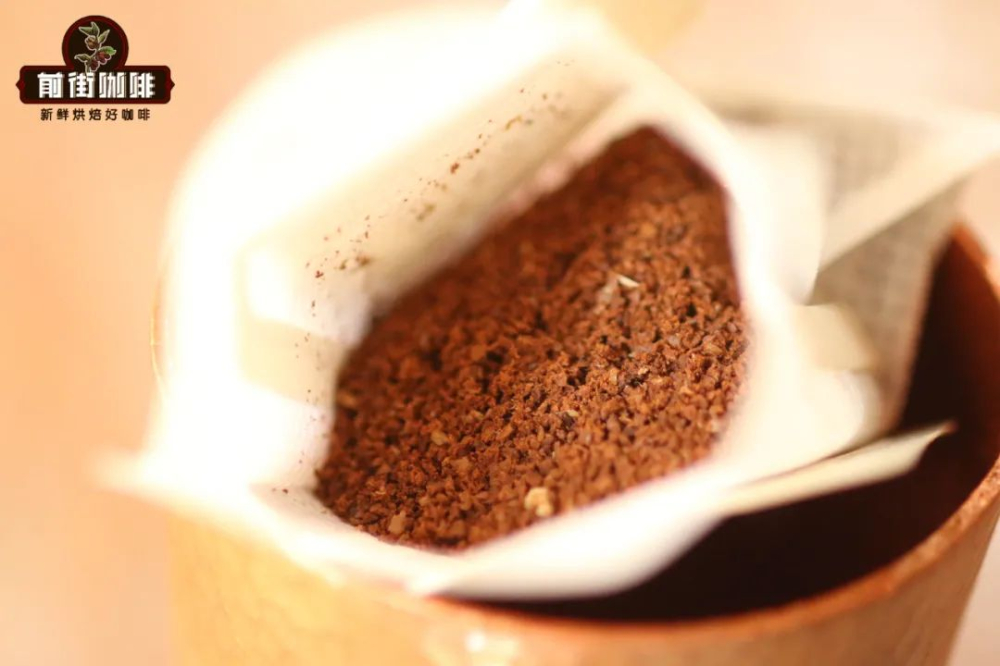
A drip bag is simply roasted coffee beans ground in advance and sealed into a filter pouch, with "ears" on both sides of the opening that hook onto the rim of a cup. With just hot water and a receiving cup, you can complete the brew anytime, anywhere.
After tearing open the outer packaging, inside is a degradable non-woven filter bag containing the coffee grounds. Once extraction is complete, the insoluble portion of the coffee—the grounds—is intercepted by the filter bag. Hot water passes through the coffee bed carrying flavor compounds, while the filter bag keeps the residue out of the cup.
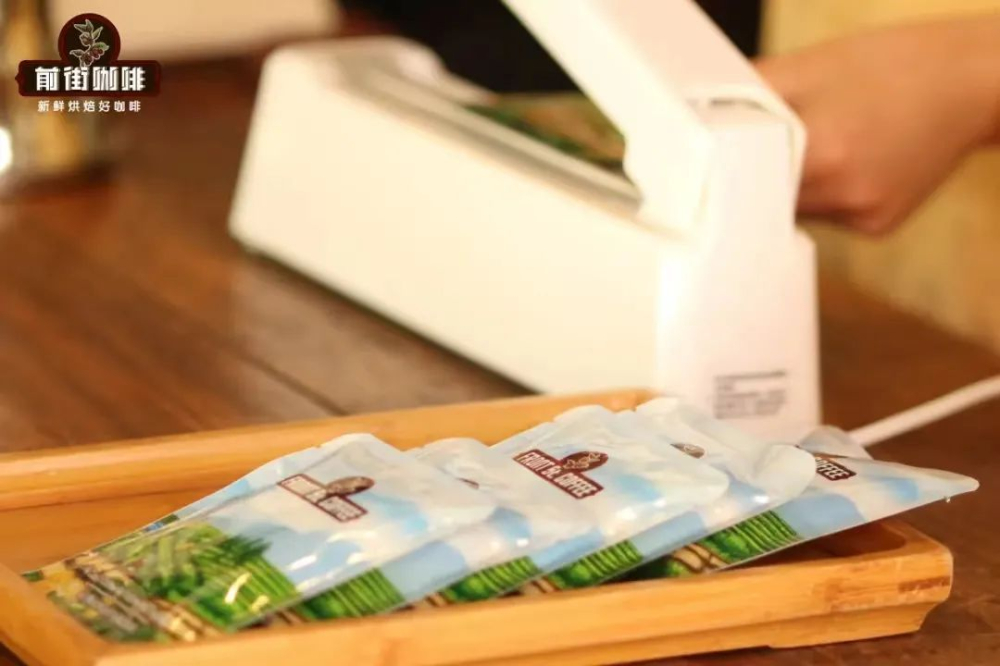
The coffee in a drip bag is generally ground from freshly roasted beans, the aim being to preserve as much of the beans' original aroma as possible. After roasting, coffee beans need 4–7 days of degassing and resting before entering their peak flavor window. Take the beans we ship at Front Street Coffee as an example—all are freshly roasted within 5 days. By the time they are made into drip bags and reach your hands, they are usually 4–5 days post-roast, exactly the point at which they can begin to be brewed and enjoyed.
Since drip bags and pour-over share the same extraction principle, the grind size should also match pour-over standards. To facilitate extraction, drip bags are mostly packaged individually in small doses; the drip bags produced by Front Street Coffee contain 10 grams per bag.
How to Brew Drip Bag Coffee
The action of brewing a drip bag is not complicated in itself: pour an appropriate amount of hot water over the coffee grounds and wait for the coffee to finish dripping—extraction is done. But flavor is affected by multiple factors such as the coffee-to-water ratio, water temperature, and pouring technique. If you want an excellent-tasting cup of drip bag coffee, Front Street Coffee suggests paying attention to the following details during brewing to get the best out of the coffee in your cup.
First, prepare enough hot water—only sufficiently high temperatures can release more aromatic compounds from the coffee grounds. For pour-over, Front Street Coffee recommends a water temperature range of 86–93°C; if the water is only around 80°C, the brewed coffee often tastes thin and weak, while boiling water easily draws out burnt, bitter notes. So Front Street Coffee's approach is: let boiled water sit uncovered at room temperature for 1–2 minutes to bring the temperature down to around 90°C before use.
The coffee-to-water ratio is equally critical in pour-over. Brewing at 1:12 tends to make the coffee too strong with only bitterness left, while at 1:18 too much water makes it flat and lacking aroma. Front Street Coffee suggests starting at 1:15—10 grams of coffee grounds to 150 grams of hot water—which gives a more balanced flavor and a steadier extraction. If you don't have a scale on hand, a graduated cup will do.
Before brewing, boil the water first, tear open the sealed packet and take out the drip bag, then tear open the non-woven pouch along the dotted line. Next, pull open the "ears" on both sides, spread the drip bag open, and hang it on the rim of your cup or sharing pitcher.
For the first pour, add a small amount of hot water to wet all the coffee grounds and let it bloom for about 10–20 seconds, helping the coffee bed release gases and laying a stable foundation for the subsequent extraction. For the second pour, use a thin, steady stream until the liquid level is nearly full, then wait for the coffee to drop, until it has finished flowing. Then pour the final stage of water until full, and once all the coffee has dripped through, extraction is complete.
Before drinking, Front Street Coffee gently swirls the cup to even out the coffee, then drinks it straight to appreciate the pure flavor of black coffee; you can also add sugar or milk to taste.
Front Street Coffee's bean list features more than fifty single-origin coffees from different regions, including classics such as Ethiopia Yirgacheffe Guddina, Jamaica Blue Mountain No. 1, and Costa Rica Mozart, all of which can be made into drip bags. However, drip bags require pre-grinding, and ground coffee has a far larger surface area exposed to air than whole beans, so aromas are lost more easily. Front Street Coffee suggests drinking them soon after receiving them, as prolonged storage tends to sacrifice aroma. If you want the fullest flavor experience, Front Street Coffee recommends buying whole beans and grinding fresh for each brew, for better layering.
Drip Bag Coffee Recommendations
1. Front Street Coffee Washed Yirgacheffe Guddina Cooperative Drip Bag Coffee
This Guddina Cooperative coffee from Front Street Coffee comes from Ethiopia's renowned Yirgacheffe region and is washed after harvest. Traditionally, Yirgacheffe mostly used the oldest natural (dry) method, but early natural beans were often spread on the ground to dry, inevitably picking up earthy and dusty off-flavors, and sorting was not rigorous enough, so quality was generally mediocre. In 1972, Ethiopia introduced Central and South American washing techniques to improve coffee quality, making Yirgacheffe's jasmine florals and bright citrus-lemon acidity clearer and more transparent, and it has since joined the ranks of the world's representative specialty coffees.
Front Street Coffee (FrontStreet Coffee): Yirgacheffe Guddina Cooperative Coffee Beans Region: Yirgacheffe, Gedeo Zone Producer: Guddina Cooperative Altitude: 1900-2300m Variety: Local Heirloom Processing: Washed
Grade: G1
Flavor: Citrus, berries, lemon, cane sugar, green tea
2. Front Street Coffee Jamaica Blue Mountain No. 1 Drip Bag Coffee
Front Street Coffee's Jamaica Blue Mountain No. 1 green beans come with a certificate of origin from Clifton Mount Estate and the wooden barrels used to transport Blue Mountain coffee. Unlike other countries, Blue Mountain is the only region that ships green beans in wooden barrels; elsewhere burlap sacks are the norm. The Rainforest Water Frog logo indicates that Clifton Mount Estate meets the "Sustainable Agriculture Standard" and has received Rainforest Alliance certification. The Jamaica Blue Mountain No. 1 on Front Street Coffee's bean rack is the highest grade of Blue Mountain coffee, i.e., No. 1: green beans must be 17–18 screen size, with a defect rate below 3%, uniform in size and plump in body. After medium-dark roasting, Blue Mountain No. 1 shows the classic Blue Mountain flavor profile, dominated by chocolate and nutty notes.
Front Street Coffee (FrontStreet Coffee): Jamaica Blue Mountain No. 1 Coffee Beans
Region: Jamaica Blue Mountain
Altitude: 1310m
Processing: Washed
Variety: Typica
Flavor: Chocolate, nuts, cream, cocoa
3. Front Street Coffee Costa Rica Mozart Coffee
This Costa Rica Mozart from Front Street Coffee belongs to the Musician series and uses raisin honey processing. Raisin honey processing can be understood as a double-fermentation honey process: on the day of harvest, the coffee cherries are poured into a large water tank; ripe, plump cherries sink, while underdeveloped or overripe ones float and need to be removed. The selected cherries are then dried on raised beds to a raisin-like state, after which the skin and pulp are removed, and the mucilage is retained for drying. Front Street Coffee finds that raisin honey-processed beans have a more intense fermented character and richer, fuller layers in the cup.
Front Street Coffee (FrontStreet Coffee): Costa Rica Canet Musician Series · Mozart
Country: Costa Rica
Region: Tarrazú
Altitude: 1800m
Processing: Raisin honey
Grade: SHB
Flavor: Raisins, dried fruit, starfruit, berries
For professional coffee knowledge exchange and more coffee bean information, please follow Coffee Workshop (WeChat official account cafe_style)
For more specialty coffee beans, please add the private WeChat of Front Street Coffee (FrontStreet Coffee), WeChat ID: qjcoffeex
The above content is compiled by CoffeeHunters, a coffee news website.


