







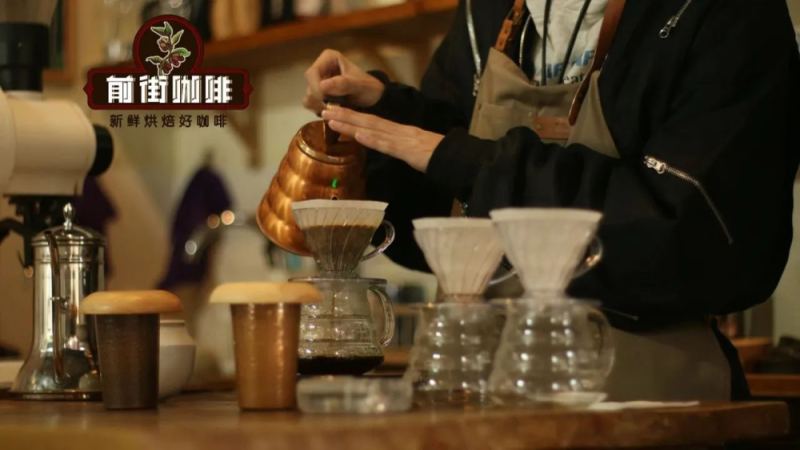
Pour-over coffeeis a brewing method that places great emphasis on technique and coffee expertise. Factors such as the amount of pour-over coffee beans, coffee grind size, powder-to-water ratio and time, and brewing technique all affect the flavor extracted in pour-over coffee. So how can you perfectly brew out the flavor of a pot of pour-over coffee? In this next article, Front Street Coffee (FrontStreet Coffee) will explain to coffee lovers the brewing techniques for pour-over coffee and some pour-over parameters that need attention.
How much pour-over coffee beans should be used?
For Front Street Coffee (FrontStreet Coffee) pour-over coffee, generally a cup of coffee uses 15g of coffee beans. This is based on the concentration recommended by the SCAA, the Specialty Coffee Association of America. According to their experiments, a coffee concentration between 1.2-1.45% is most suitable.
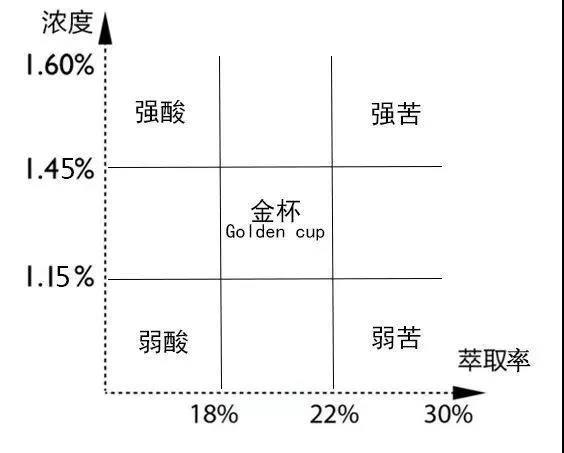
Here Front Street Coffee (FrontStreet Coffee) can calculate for everyone: in order to reach this concentration range, the ratio of coffee grounds to poured water should be between 1:12-1:15. With a powder-to-water ratio of 1:15, assuming 10g of grounds are used for brewing, then the total water amount is 150g.
So that is to say, the best ratio of coffee grounds to water is 1:15. At present, the pour-over coffee powder-to-water ratio used in Front Street Coffee (FrontStreet Coffee) stores is 1:15. The reason this parameter was settled on is that Front Street Coffee (FrontStreet Coffee) had already carried out multiple verifications before. Although 1:12-1:15 is only a suggested range, Front Street Coffee (FrontStreet Coffee) still tested several parameters outside that range.
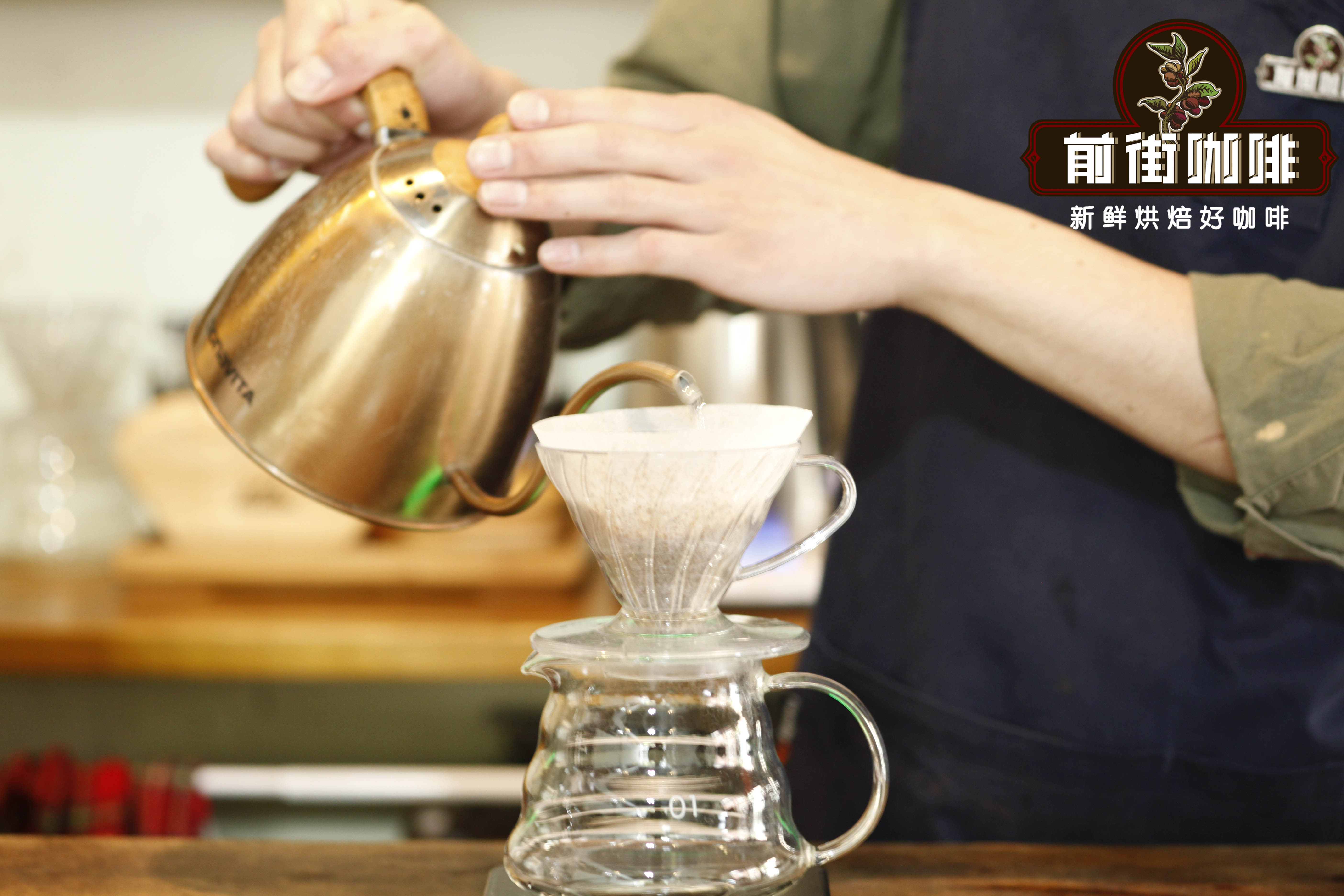
Among them, drip coffee with a powder-to-water ratio of 1:20 has a very light mouthfeel, while 1:10 is very strong. Through adjustment and testing, 1:15 is what Front Street Coffee (FrontStreet Coffee) considers more suitable for brewing most coffee beans. Of course, some people will use 1:14 or 1:17, and all of these are acceptable. The key is whether you yourself can accept it. What Front Street Coffee (FrontStreet Coffee) provides is only a parameter acceptable to the general public, and everyone can use it as a reference.
After determining the powder-to-water ratio, next determine the size of a cup of coffee. Front Street Coffee (FrontStreet Coffee) generally brews a cup of coffee to 225g, exactly one serving, which means using 15g of coffee grounds to extract 225 milliliters of water.
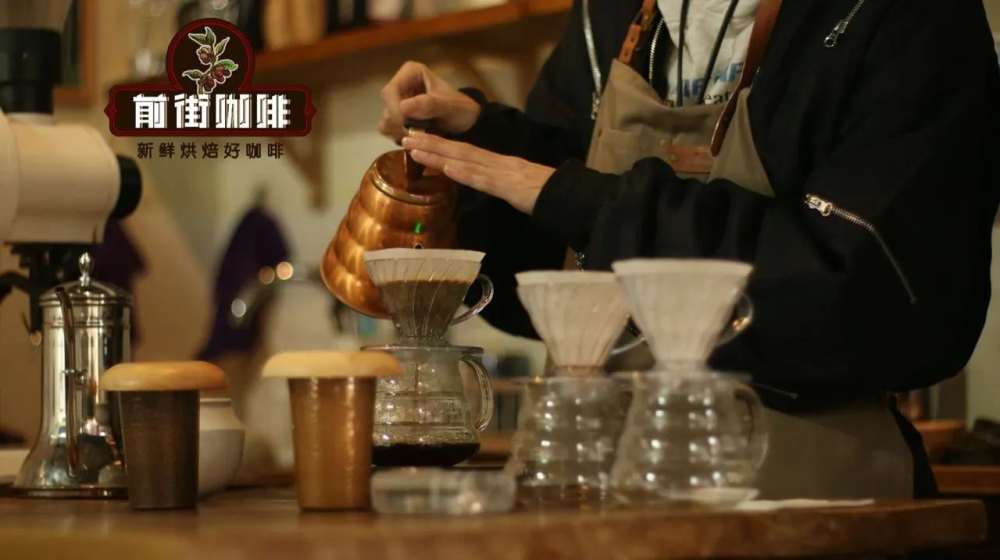
Therefore, the amount of coffee beans needed for 225 milliliters of coffee liquid is 15g. This conclusion is derived from the optimal water-to-coffee ratio for pour-over coffee.
So is there any difference between the powder-to-water ratio of espresso coffee and pour-over coffee?
According to Front Street Coffee (FrontStreet Coffee)'s understanding, the models of espresso machines in every coffee shop are different, so the extraction parameters are also different. This also leads to different powder-to-water ratios for making espresso coffee in every coffee shop. Taking the extraction of espresso as an example, Front Street Coffee (FrontStreet Coffee) notes that generally 10g of coffee grounds extracts 20ml of espresso liquid, which is a 1:2 ratio.

However, there is actually no completely universal parameter for extraction ratios. After all, adjustments need to be made according to the condition of the espresso machine. But there are unwritten rules across the industry: extraction parameters used by respected coffee leaders in the industry are taken as common values, forming benchmarks in the industry. At the same time, Front Street Coffee (FrontStreet Coffee) understands that espresso extraction differs according to duration. Short-time ristretto extraction shows a more conventional ratio than long-time extraction.
The following are the espresso water-to-coffee ratios commonly used by major coffee shops at present:

Ristretto extraction ratio is between 1:1 or 1:1.5
Normal espresso extraction ratio is between 1:1.5 or 1:2.5
Lungo espresso extraction ratio is between 1:2.5 or 1:3
The above is Front Street Coffee (FrontStreet Coffee)'s organized answers regarding pour-over coffee bean amount and the water-to-coffee ratio and time for pour-over and espresso coffee. Next, Front Street Coffee (FrontStreet Coffee) will share Front Street Coffee (FrontStreet Coffee)'s parameter process for extracting espresso and the brewing process for pour-over coffee for everyone's reference!
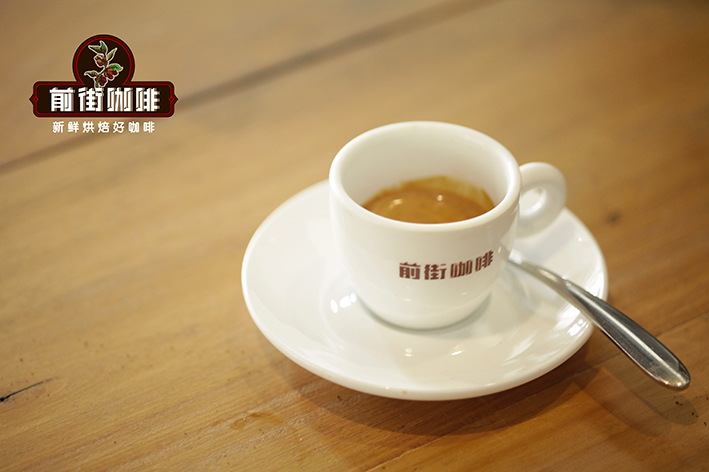
Front Street Coffee (FrontStreet Coffee) espresso extraction parameter sharing:
Front Street uses its own Sunflower Warm Sun blend beans (70%Honduras·Sherry coffee beans + 30% Yirgacheffe Red Cherry coffee beans).
Pressure: 9 bar
Temperature: 90.5~96 degrees
Time: 20~30 seconds
Powder-to-water ratio: 1:1.7~1:2
Dose: 10g (single espresso) 20g (double espresso)
Extracted espresso amount: 20ml (single) 40ml (double)
Flavor: obvious fruit acidity, faint berry aroma, wine aroma, rich chocolate flavor, with a clear sweet aftertaste.
Front Street Coffee (FrontStreet Coffee) pour-over coffee process parameter sharing:
Front Street Coffee (FrontStreet Coffee) uses Ethiopian Yirgacheffe washed Gutingting coffee beans for demonstration:

Front Street Coffee (FrontStreet Coffee): Yirgacheffe·Gutingting coffee beans
Country: Ethiopia
Region: Yirgacheffe
Altitude: 1900-2300 meters
Variety: local heirloom varieties
Processing method: washed processing
Flavor: tropical fruit, cream, honey, berries, citrus
Front Street Coffee (FrontStreet Coffee) Yirgacheffe coffee bean brewing data sharing

Dripper: V60 # 01
Water temperature: 90-91 degrees
Dose: 15g
Powder-to-water ratio: 1:15
Grind size: medium-fine grind (screened to 80% with a No. 20 sieve)
Brewing technique: three-stage extraction
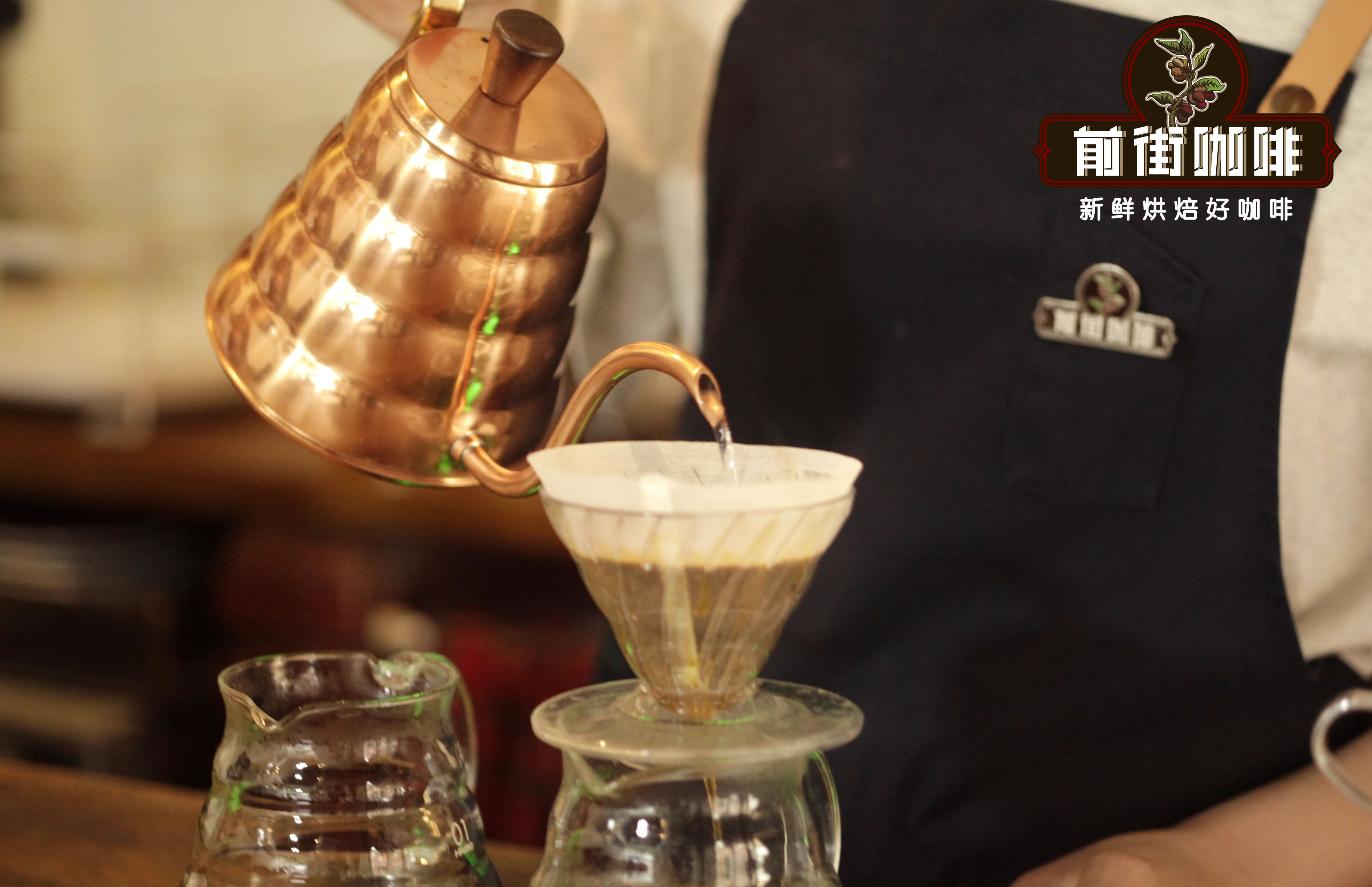
In the first stage, pour 30 grams of water for a 30-second bloom, then pour 95 grams (electronic scale shows about 125 grams), finishing the pour in about 1 minute. When the water level drops to 2/3 of the coffee bed, pour the remaining 100 grams (electronic scale shows about 225 grams), finishing the pour in about 1 minute 35 seconds. Drip filtration is completed at 2‘00”-2'10", then remove the dripper and complete the extraction.
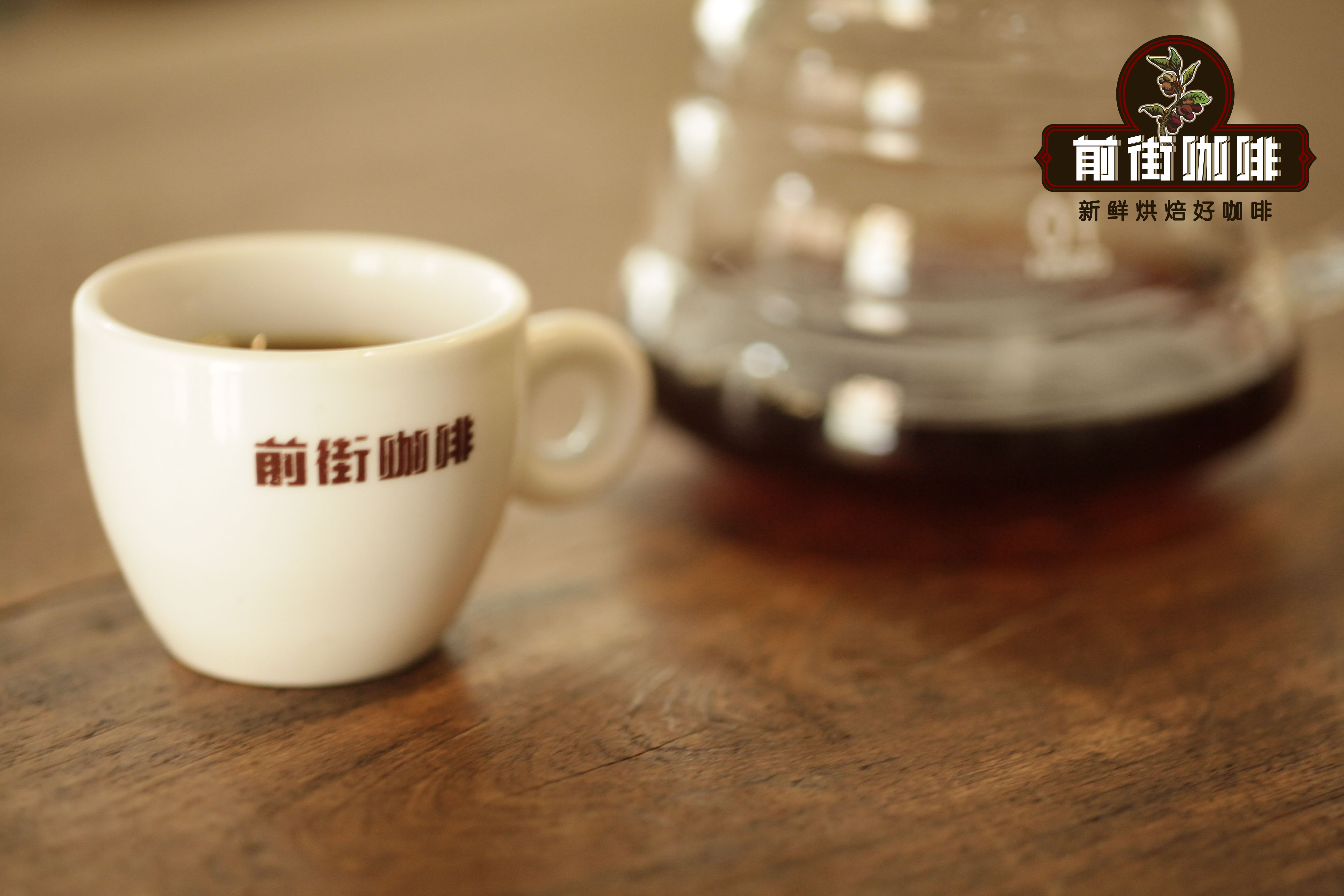
Washed Gutingting brewing flavor:On the palate there are citrus and black tea. As the temperature changes, there are cream, caramel, and almond. The sweet aftertaste is obvious and the mouthfeel is clean and sweet.
From the above, it can be seen that the brewing technique Front Street Coffee (FrontStreet Coffee) uses for pour-over coffee is three-stage extraction. This is also the part of the entire pour-over coffee process that places demands on one's own operational skill. So exactly how can three-stage extraction be controlled well? What is blooming? Next, Front Street Coffee (FrontStreet Coffee) will explain it for everyone!
Coffee brewing methods——Three-stage brewing technique
At present, there are many kinds of pour-over coffee brewing techniques seen in coffee shops. Commonly seen ones include three-stage, one-pour flow, and drip methods, among others. Here Front Street Coffee (FrontStreet Coffee) suggests that beginners use the three-stage pouring method to brew, because this technique is suitable for light-roasted, medium-light, and medium-roasted coffee beans. The staged extraction method of three-stage pouring can clearly define the front, middle, and back-end flavors of the coffee, and can relatively ensure the presentation of the coffee's flavor.
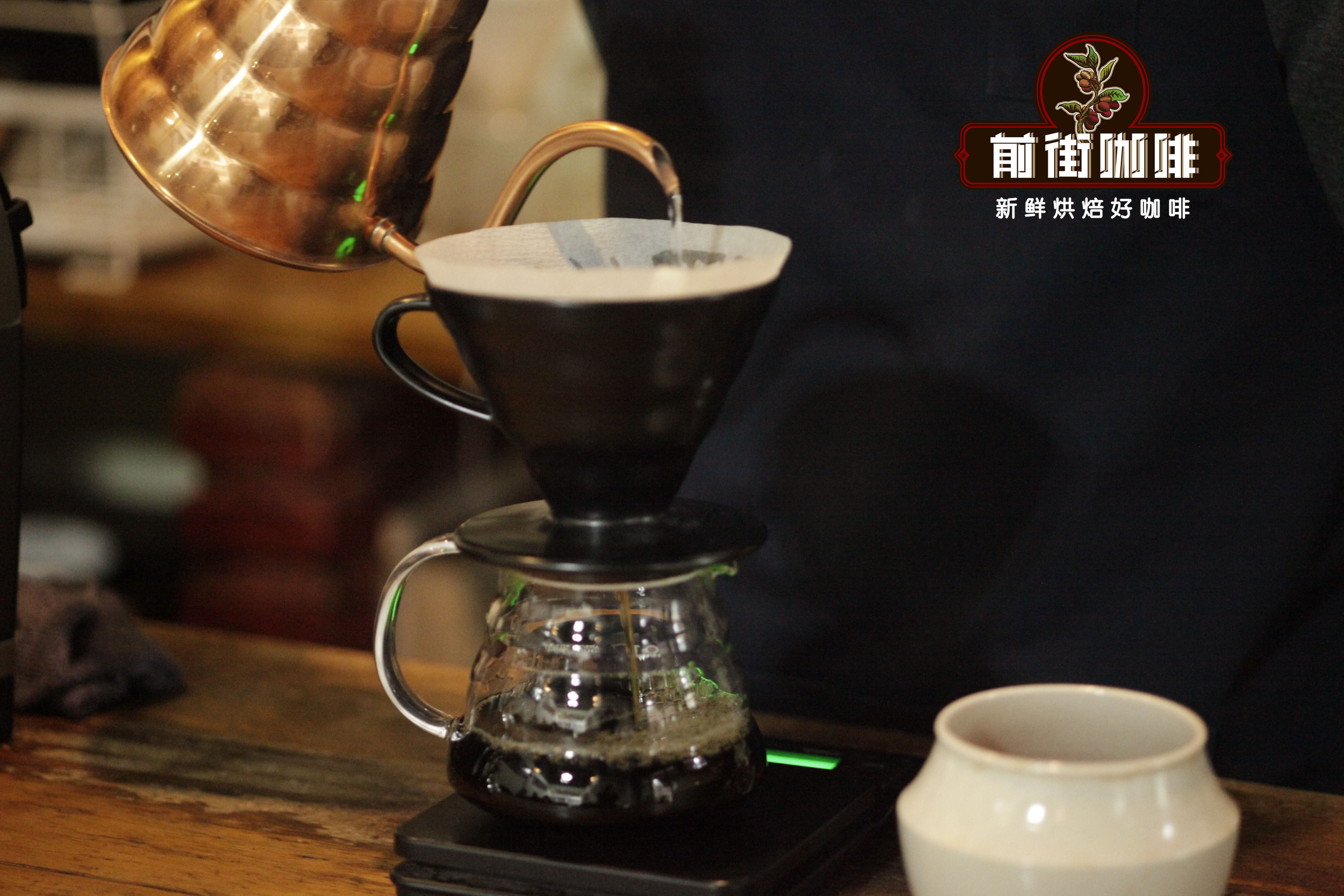
First pour: bloom (helps release gas)
Many coffee lovers do not know the meaning of blooming in pour-over coffee. In fact, blooming is needed because during the roasting process in which green coffee beans become roasted beans, a series of chemical reactions and physical changes occur. After reaching a certain degree of roasting, a large amount of gas (mostly carbon dioxide) accumulates inside the coffee beans.
Generally speaking, the fresher the beans and the closer to roasting, the more bubbles usually appear during blooming. Dark-roasted beans also release more gas during blooming than light-roasted beans. Front Street Coffee (FrontStreet Coffee)'s coffee beans are all freshly roasted, so customers are generally advised to rest the beans for three days first, letting the coffee beans release carbon dioxide first, so that in brewing unstable and under-extraction problems can be avoided.
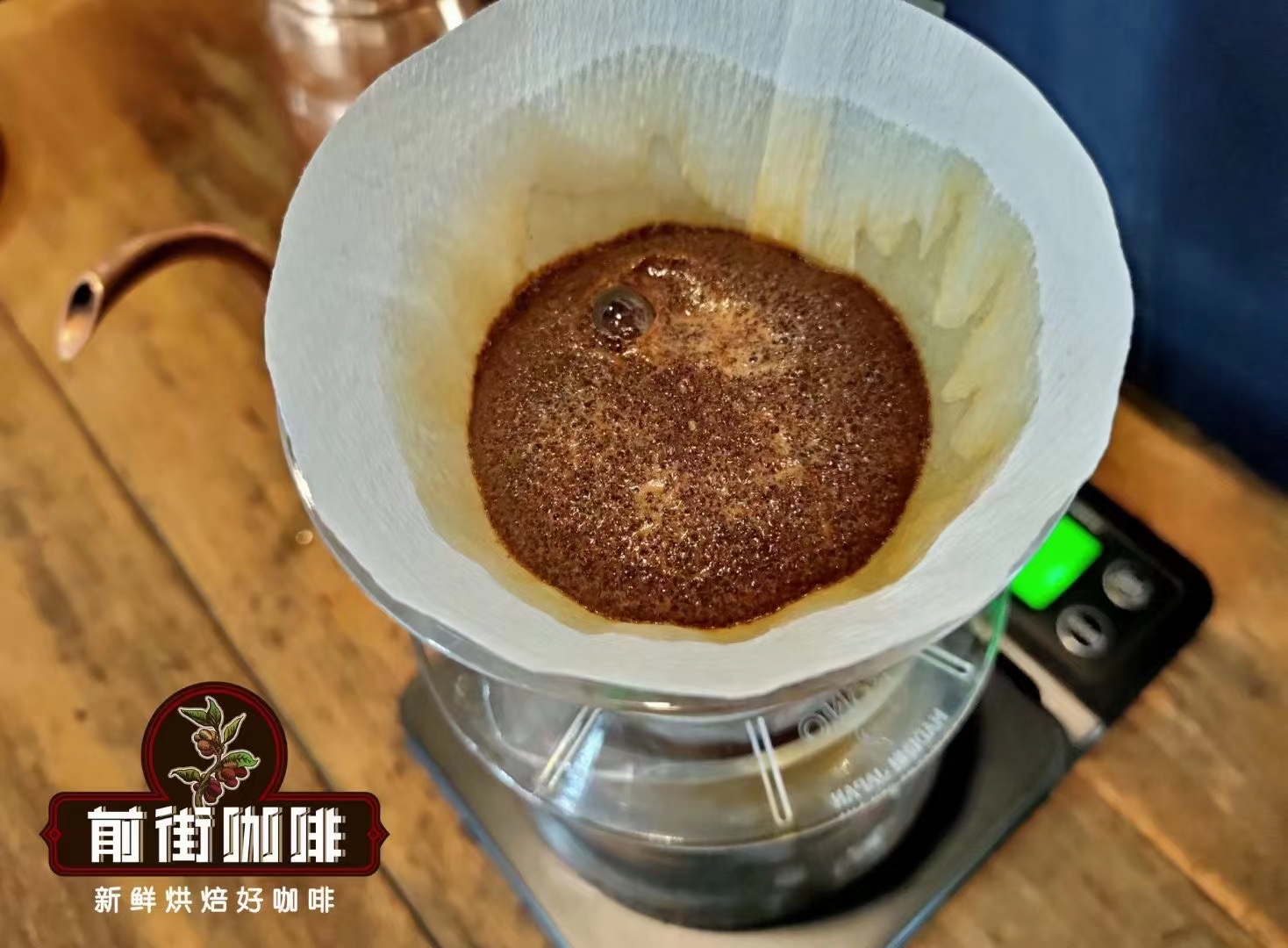
After the bloom releases gas, the coffee particles can absorb water evenly, which allows the later extraction to be even. A good bloom can allow the coffee grounds to fully and evenly release gas quickly while also allowing the coffee grounds to fully and quickly contact water, helping the coffee grounds be extracted evenly. These are precisely the purpose and significance of blooming in pour-over coffee.
When blooming pour-over coffee, pay attention to the following four points:
1. Before pouring water for the bloom, first level the coffee grounds.

2. When pouring water during the bloom, do so gently.
3. During the bloom, let as little extracted liquid drip down as possible. When too much extracted liquid appears in the server, reduce the amount of water poured, or pay attention to the grind size. (If too much water is used for the bloom and a large amount of coffee liquid drips down, the falling water does not stay but directly carries out substances from the outside of the coffee grounds; the off-flavors and astringency in the outer layer of the coffee grounds also begin to dissolve out. The coffee brewed this way is both weak and yet has off-flavors from over-extraction. If the bloom water amount is insufficient and no water drips down at all, then the coffee grounds have not absorbed enough water, part of the coffee does not release gas sufficiently, and this will cause under-extraction.) Based on this situation, after many bloom experiments, Front Street Coffee (FrontStreet Coffee) found that pouring water at twice the amount of the coffee grounds during the bloom is relatively suitable.
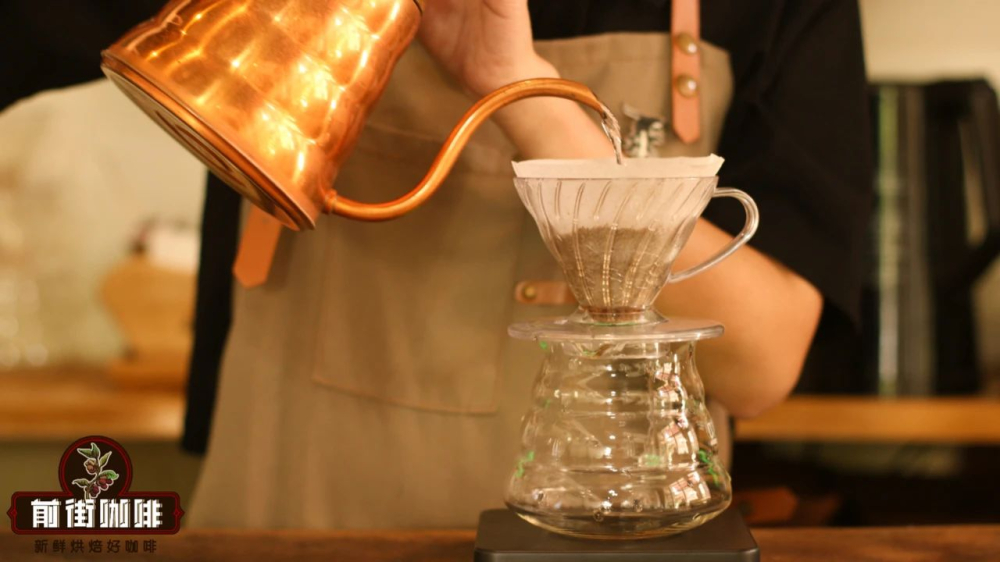
4. The bloom time is about 30 seconds. When the expansion on the surface of the coffee grounds ends, you will see the coffee surface begin to wrinkle. At this point it means the bloom is complete and you can begin pouring water. (In terms of time, if the bloom time is too long, the coffee is prone to bitterness and astringency; if the time is too short and soaking is insufficient, the coffee may be under-extracted or the coffee may not be able to fully display itself.) Generally speaking, the end time of the bloom will differ for each bean, but Front Street Coffee (FrontStreet Coffee) found that this is not conducive to beginners' operation. After all, what beginners value is standardization and ease of handling. Therefore, under the premise of ensuring the coffee beans are still in a freshly roasted state, Front Street Coffee (FrontStreet Coffee) recommends a bloom time of 30 seconds. Of course, experienced people can adjust the time themselves.
Second pour

The second pour starts from the center, with a small stream poured into the bottom of the coffee bed. In order to concentrate the penetrating force of the water stream, the range of circular movement should be small, about the size of a one-yuan coin, and then spiral outward. From the start of the second pour, pay attention to the water amount and try not to exceed the height of the coffee bed. That is, when the water stream circles to near the filter paper, you can stop pouring.
Third pour
As the originally thicker coffee bed at the edge of the filter paper becomes heavier from absorbing water, it slides down and becomes thinner as the water level drops. When the water level drops to halfway, the third pour can begin. From the start of the third pour, observe the extent of the water level drop. Likewise, start pouring from the center in circles, and do not let the water amount exceed the height of the coffee bed. At this time you will also observe that foam has already covered the entire surface. In the third pour, increase the tumbling of the coffee particles so that all the settled particles tumble, thereby dissolving soluble substances.
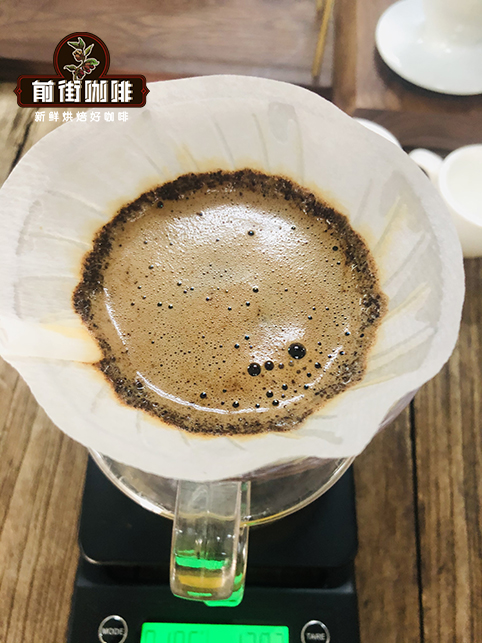
The rolling particles will begin to stop once pouring stops. At this point, the flow rate caused by the dropping water level is needed to make the coffee particles rub against each other. So once pouring stops, the coffee grounds sink downward, causing clogging, so pay special attention to the rhythm of pouring. If pouring is interrupted too many times, it is equivalent to letting the coffee grounds soak in water all the time. In this way, it will cause astringency and off-flavors in the final stage of coffee extraction. If pouring is interrupted too many times, it is equivalent to letting the coffee grounds soak in water all the time. In this way, it will cause astringency and off-flavors in the final stage of coffee extraction.
The above is how to operate the three-stage extraction process for pour-over coffee. I hope it can help coffee lovers who want to try pour-over coffee themselves, so that in the future they can brew a cup of coffee they are satisfied with!
For more specialty coffee beans, please add the private WeChat Front Street Coffee (FrontStreet Coffee), WeChat ID: kaixinguoguo0925
The above content is compiled by CoffeeHunters, a coffee news website.


