







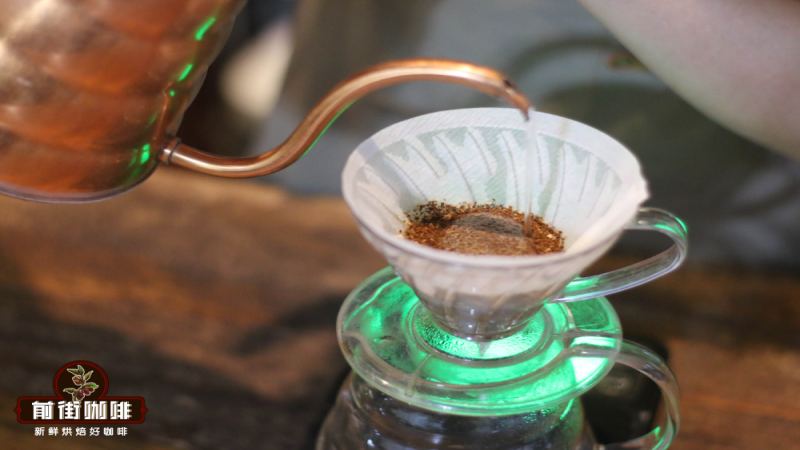
Pour-over coffeeWhy is it so fascinating? A good cup ofpour-over coffeewhat's the key? In the following article, Front Street Coffee (FrontStreet Coffee) will introduce the basics of pour-over coffee, so you can brew great coffee at home too!
What is pour-over coffee?
Pour-over coffee, as the name suggests, is pouring hot water over coffee grounds and extracting the coffee through a paper filter and dripper. The whole brewing process takes about 3 to 4 minutes. Since the flow rate, direction, and temperature of the hot water are all controlled by the brewer, the flavor of the coffee comes out almost different every time. Although the equipment is simple, it places great demands on technique and experience.
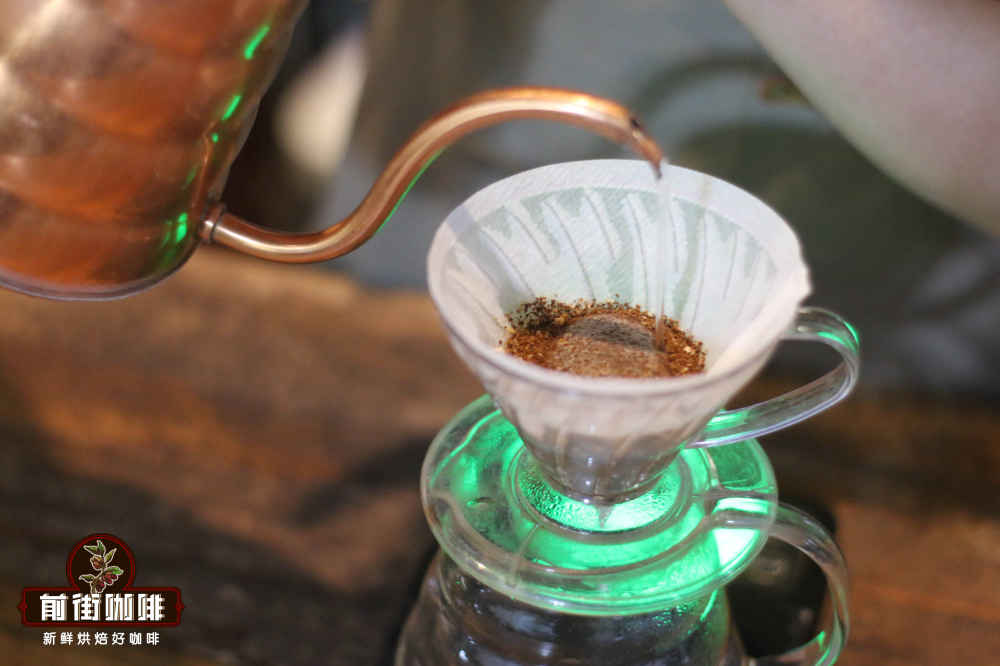
Pour-over kettle: There are pour-over kettles of all sizes and materials on the market, so you can choose according to your needs. What affects the brewing result most is the size of the spout, because it relates to the flow of water. Front Street Coffee (FrontStreet Coffee) recommends that beginners use a narrow-spout gooseneck kettle (as shown below), as it is easier to control. In addition, each kind of pour-over kettle is suited to a different heating method (induction cooker or gas stove), so pay special attention when buying.
Dripper: The size and material of drippers also vary, and they mainly come in three shapes:扇形, conical, and wave. The size of the opening at the bottom of the dripper affects the flow rate of the extracted coffee, and in turn the coffee's flavor. 扇形 drippers have a small opening and a slow flow rate, giving a fuller body;
conical drippers have a large opening and a fast flow rate, giving a lighter body; wave drippers have a flat bottom and are paired with special wave filters, producing the most even-tasting coffee. More unusual is the metal mesh dripper, which does not need a paper filter and can retain more coffee oils, giving a richer taste, though some finer coffee grounds may not be filtered out.

Paper filter: Different drippers have their own suitable paper filters. Paper filters can absorb some of the off-flavors and oils in coffee, and unbleached paper filters may have a slight papery taste.

Grinder: Freshly ground coffee is the freshest, and the particle size and uniformity of the coffee grounds are also key to the flavor of pour-over coffee. The ideal particle size for pour-over coffee is about the size of granulated sugar. The more uniform the particles, the better the taste of the brewed coffee. (The image below shows a coffee grind correction sieve / China No. 20 standard sieve.)

Coffee beans of different roast levels each have their own suitable grind size. Based on Front Street Coffee's (FrontStreet Coffee) brewing experience, light-to-medium roast coffee beans are suitable for a medium-fine grind (75-80% passing through a China No. 20 standard sieve); medium-dark to dark roast coffee beans are suitable for a medium-coarse grind (65-70% passing through a China No. 20 standard sieve).
Coffee pot and coffee cup: Used to hold the filtered coffee; it is best to warm them first to maintain the coffee's temperature.

Auxiliary equipment: A digital scale, thermometer, and timer can make the coffee brewing process more accurate. Coffee beans of different roast levels each have different suitable brewing water temperatures~ Based on Front Street Coffee's (FrontStreet Coffee) brewing experience, light-to-medium roast coffee beans are suitable for 90-92°C; medium-dark to dark roast coffee beans are suitable for 87-89°C.
Pour-over coffee extracts coffee quickly
Characteristics of pour-over coffee
Fast and efficient extraction: Compared with other coffee brewing methods, pour-over coffee continuously has fresh hot water passing through the coffee grounds during extraction, so the extraction speed is faster, and more substances can be extracted from the surface of the coffee. But because it is fast, poor control can lead to over-extraction. This is like searing fish in a frying pan over high heat: the fish has a large surface area exposed to heat, but poor control can burn it.
Many influencing factors: Although it is only a matter of a few minutes, everything from the water flow rate, water temperature, coffee particle size, and dripper shape will affect the final flavor of the coffee, so thorough study and preparation are needed before brewing.
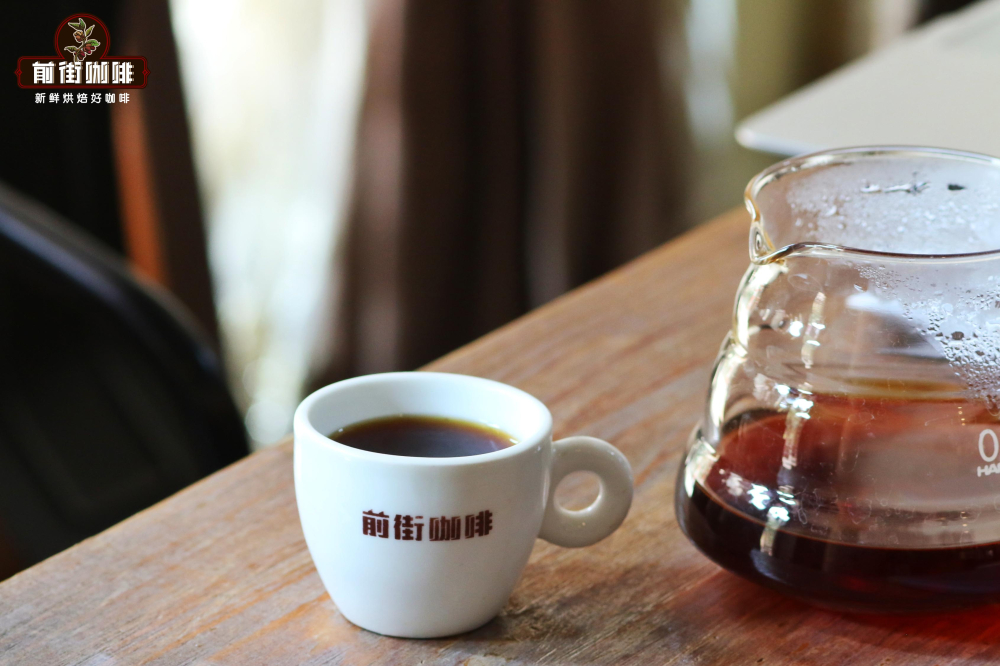
Diverse coffee flavors: Coffee brewed under different conditions tastes different, and different types of beans are suited to different conditions.
By now, you may feel that pour-over coffee is complex and technique-heavy, and seems not so easy to get the hang of. That's true; pour-over coffee is certainly harder than brewing coffee with a machine, but just like buying your own flour and kneading dough, every detail can be controlled by you, and the coffee you finally brew will naturally have a unique flavor. And by adjusting each variable, you can try all the possible tastes of coffee—this is what makes pour-over coffee so fascinating!
Excited? Even better, next we're going to tell you that pour-over coffee is actually not difficult at all.
Advanced section: Easily master pour-over coffee
People who are just getting to know pour-over coffee are often intimidated by the dazzling array of equipment and things to pay attention to. Just the pouring kettle and dripper alone can leave you not knowing where to start. In fact, different pour-over conditions each have their pros and cons, and everyone's preferences differ. Rather than comparing the differing opinions of experts everywhere, Front Street Coffee (FrontStreet Coffee) suggests that you first understand the principles of pour-over coffee, so you can truly understand how to brew a cup that suits your taste.

The principles of pour-over coffee
So-called coffee brewing is actually the process of extracting molecules from coffee cells, and this process includes the following three steps: wetting, dissolving, and releasing. These three steps happen in succession and influence one another, ultimately producing coffee's special flavor. Below we explain them one by one:
Step one:Wetting / blooming
It means exactly what it says: the coffee grounds get wet when they meet water. This is the starting point for the coffee cells to begin releasing molecules.

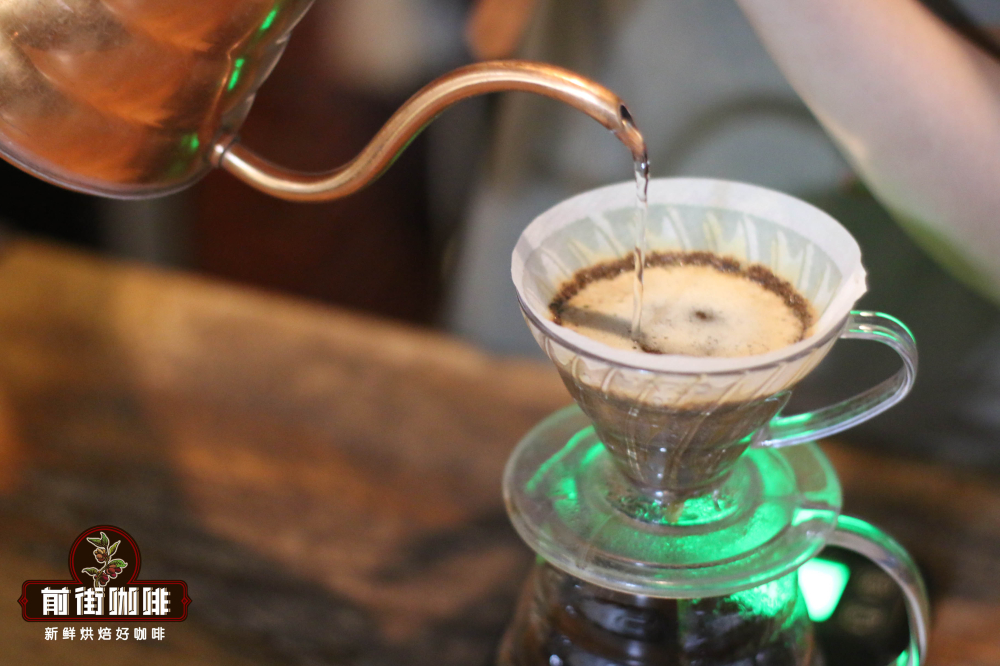
It should be noted that roasted coffee beans are full of carbon dioxide, and the fresher the coffee beans, the more carbon dioxide they contain. When hot water meets the coffee grounds, the carbon dioxide comes out first and forms a layer of bubbles on the surface. During pour-over brewing, you will see the coffee grounds in the dripper begin to expand (as shown below). At this moment, the coffee cells are like a supermarket with many people trying to squeeze out from inside, while the people outside simply cannot get in.

By the same logic, the hot water outside the cells cannot get inside either. Therefore, after wetting the coffee grounds, we stop pouring and wait for the carbon dioxide to be fully released and the coffee grounds to stop expanding before continuing to add hot water, so as to achieve a better extraction result.
When hot water meets the coffee grounds, the carbon dioxide comes out first and forms a layer of bubbles on the surface.
Step two: Dissolving
This refers to the process in which soluble molecules in the coffee cells dissolve into the hot water. This is the most important step, determining the flavor extracted from the coffee.

Two-thirds of a coffee bean is made up of insoluble cellulose, and the other one-third consists of soluble aroma molecules, which, upon contact with water, are dissolved out in order according to molecular size. The first small-molecule substances to be dissolved out include acidity and aroma, then medium-molecule sweetness, and finally large-molecule bitter and roasted notes. This is how coffee's different layers of taste come about. Therefore, if you prefer a sweeter, more fragrant taste, the extraction time should be shorter, because the longer the hot water stays on the coffee grounds, the more bitter molecules will be dissolved out.
Step three: Diffusion
After the aroma molecules dissolve, they leave the coffee cells by osmosis, a process called diffusion. After the aroma molecules diffuse into the hot water, the final coffee extract is formed.
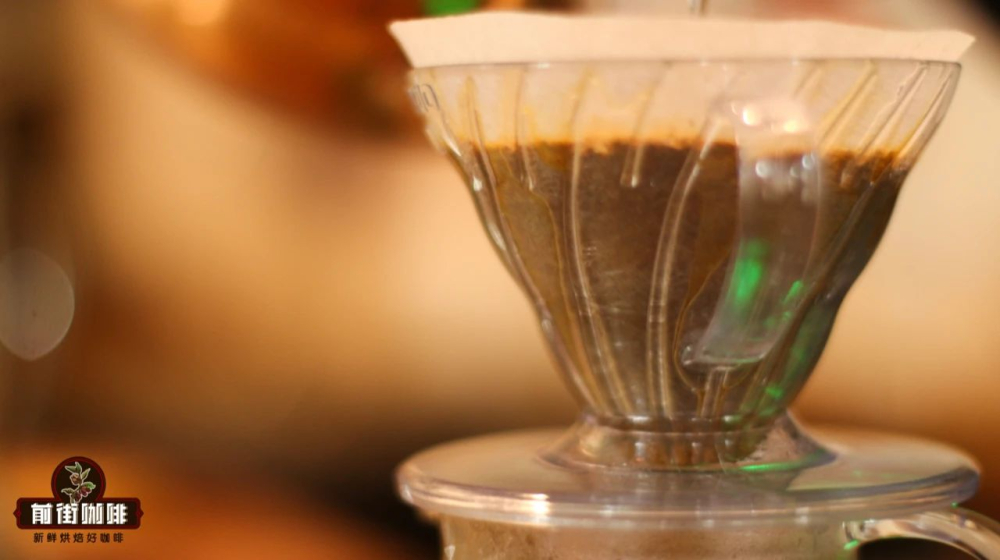
Coffee extraction
Factors affecting pour-over coffee
After understanding the principles, you should be able to understand the effects that different pour-over conditions have on coffee flavor. All the different variables actually revolve around one core: extraction time, that is, the time the coffee grounds interact with the hot water. Below we have organized some important variables:
Uniformity of coffee particle size: Fine coffee grounds extract quickly, while coarse coffee grounds extract slowly, and each requires a different total extraction time. If the particles are not uniform, it is possible that the fine coffee grounds have already begun releasing bitter molecules while the coarse coffee grounds have not yet been fully extracted, resulting in a poor final coffee flavor. If the coffee particles are uniform, there will be no such problem.

Coffee particle size: The finer the coffee grounds, the longer the hot water takes to pass through them.
Paper filter thickness: The thicker the paper filter, the slower the flow rate of the extract, and the longer the hot water interacts with the coffee grounds.
Pouring speed and method: Only even, steady pouring can make the extraction rate of the coffee grounds consistent. In addition, the pouring height also affects the water temperature. It is recommended to keep as close to the dripper as possible and pour in repeated circular motions.

Water temperature: The higher the water temperature, the faster the extraction. Front Street Coffee (FrontStreet Coffee) recommends brewing medium-dark to dark roast coffee beans at 89-90°C, and light-to-medium roast coffee beans at 90-91°C.
Most of these variables have no fixed standard, because everyone likes a different coffee taste. How to adjust the different variables to brew the flavor you like is the most interesting part of pour-over coffee. For example, if you want a more bitter coffee, you can use finer coffee grounds, a higher water temperature, or a longer pouring time to achieve the taste you want.
Practical section: How to brew pour-over coffee at home
After understanding the background knowledge, the next step is practice. Below we list the detailed steps of pour-over coffee and the points to note:
Grinding coffee beans: The standard particle size is as mentioned above, like granulated sugar. It can be adjusted; the key point is that the particles should be uniform. You can use a sieve to first sift out overly fine powder to avoid clogging. The amount of coffee grounds should be about one-half to two-thirds of the dripper. Too little and you cannot control the hot water flow rate; too much and it will overflow during brewing.
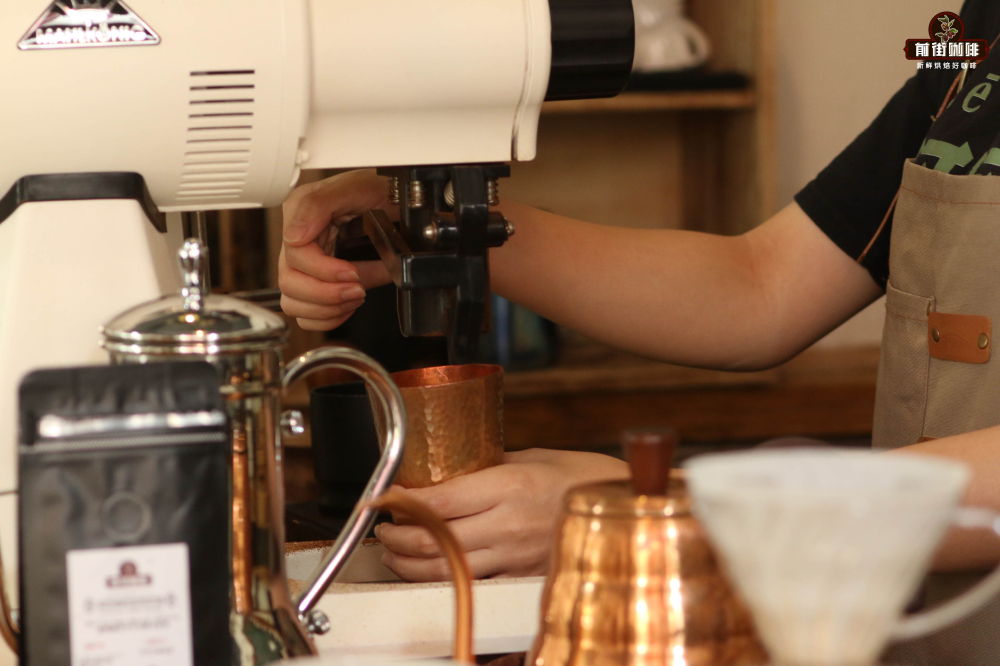
Boiling water: The coffee-to-water ratio for pour-over is about 1:15, and it can likewise be adjusted according to personal preference. The suitable water temperature is around 90°C, which can be measured with a thermometer after boiling.
Preheating: Fold the paper filter so it sits flat against the dripper, then first use a little hot water to wet the paper filter and preheat the dripper. This can also eliminate the papery taste of the filter. After preheating, pour the water away.

Adding grounds: Pour the coffee grounds into the dripper and tap the side of the dripper to make the surface of the coffee grounds slightly level.
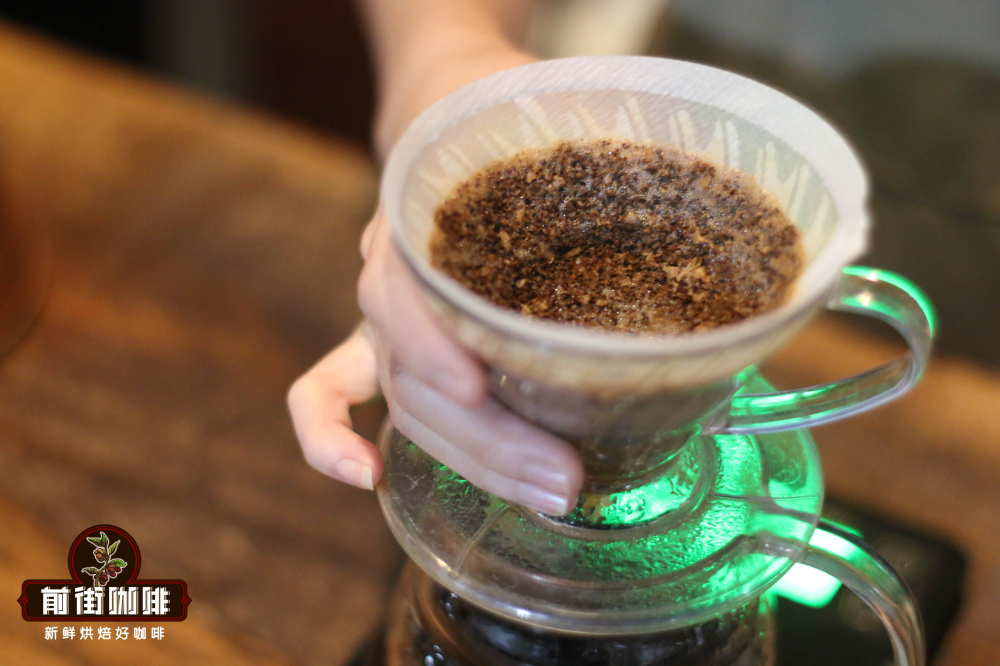
Start timing, first pour: Bring the kettle spout close to the edge of the dripper and begin pouring from the center of the dripper, circling from the center to the outer edge and then back to the center, wetting all the coffee grounds, then stop. Be careful not to use too much water. At this point, white bubbles will appear on the surface of the coffee grounds and they will begin to expand.
Blooming: Wait for the coffee grounds to stop expanding, about 30-40 seconds. By this time, some extract may already have begun dripping through below.
Second pour: When you see the foam begin to collapse downward, start the second pour, again circling repeatedly from the center and pouring continuously and evenly. This pouring process needs to last more than 2 minutes, depending on the planned brewing time (generally recommended: 2 minutes to 2 minutes 20 seconds for dark roast coffee beans, and about 2 minutes to 2 minutes 10 seconds for light-to-medium roast coffee beans).
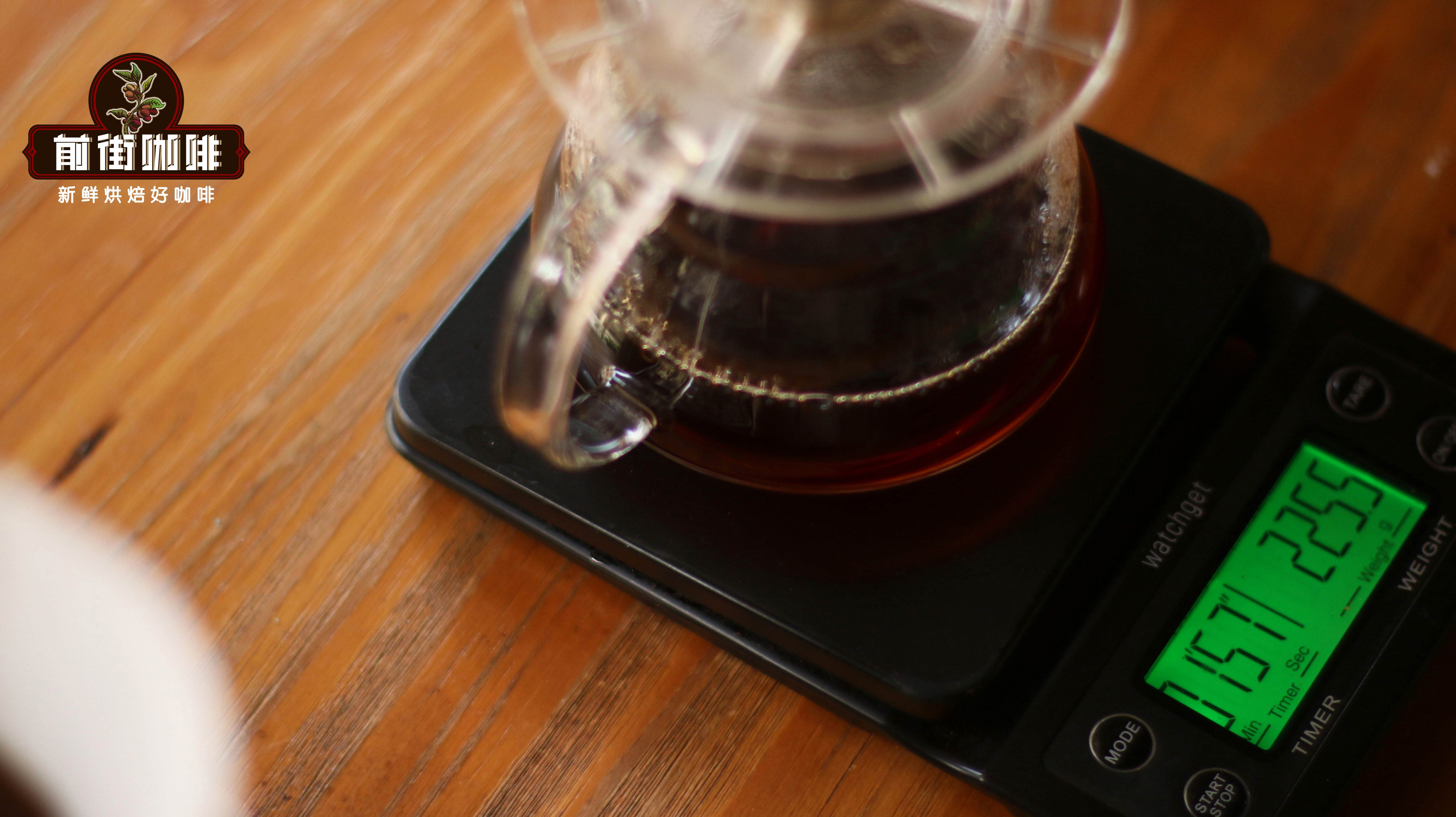
Swirling: After stopping the pour and finishing drip filtration, first swirl the coffee liquid in the pot evenly, since different concentrations may exist, and then pour it into the coffee cup for quality.
Pour-over coffee is not just about brewing coffee; it is also an art worth cultivating deeply. After more than fifty years of research and development, the Japanese have come to regard pour-over coffee as a discipline of practice, much like the tea ceremony. After reading this article, are you also eager to try? Step together into the wonderful hall of pour-over coffee and brew your own personal signature cup!
The above content is compiled by CoffeeHunters, a coffee news website.


