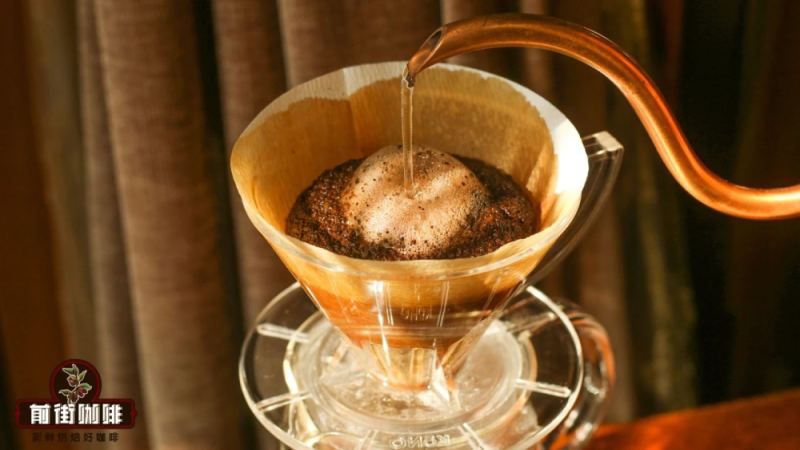
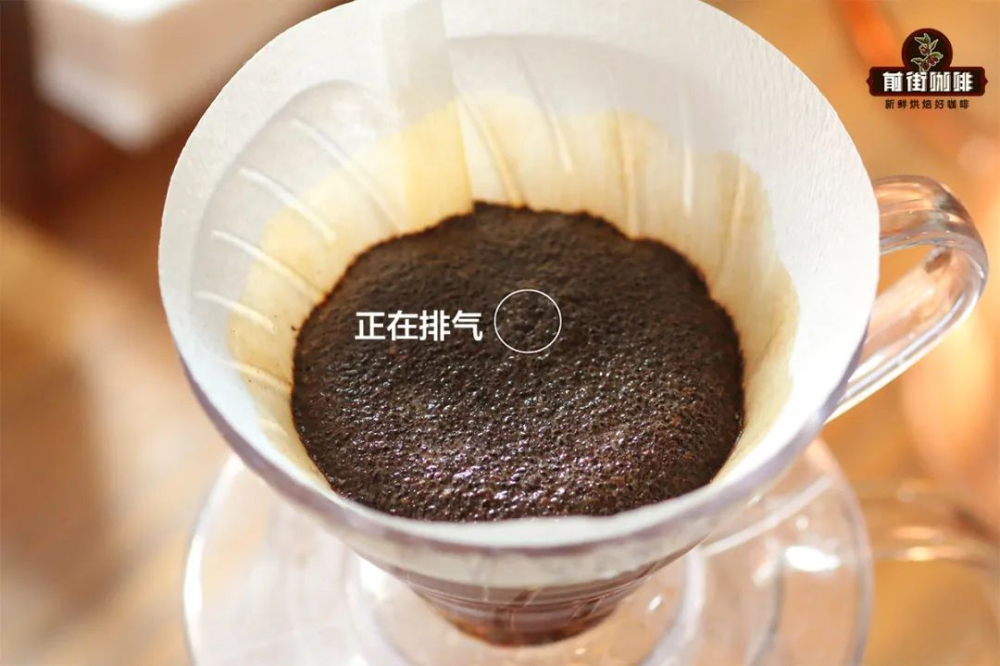
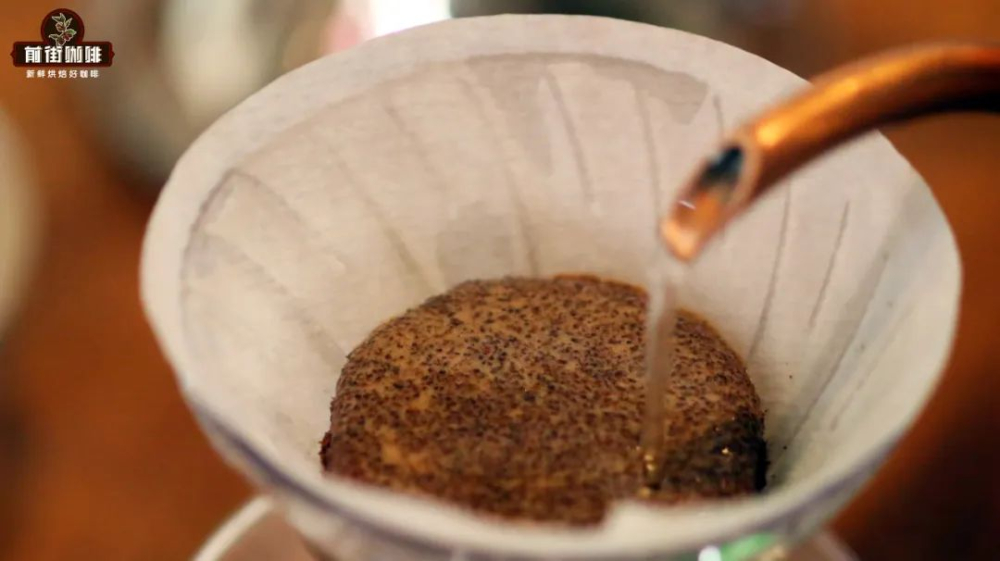
Blooming is an important step in brewing coffee, and there's a saying going around: "You can tell if a coffee tastes good just by looking at its bloom." So when people learn to brew coffee, they all intentionally or unintentionally "practice" making a perfect "coffee burger." But if you understand the logic behind blooming, you'll find that blooming is actually this simple.
Why do we bloom coffee when brewing? The most direct way to explore this question is to do a comparison with a pour-over that skips the blooming step. We can easily find that without blooming, bubbles will continuously emerge from the coffee bed during pouring, and when comparing the coffee flavors, the coffee without blooming has a noticeably thin body, watery mouthfeel, and very weak taste.These emerging bubbles are precisely the "culprits" causing this cup of coffee to taste poor. These bubbles are actually carbon dioxide in the coffee beans. When coffee beans are freshly roasted, they contain abundant carbon dioxide. This carbon dioxide normally inhibits the loss of flavors, and during brewing it also inhibits the release of flavor compounds. So during brewing, the blooming step is used to release this carbon dioxide first, and then extraction proceeds.
The "coffee burger" that appears during blooming is because when coffee grounds absorb water, they squeeze out carbon dioxide. When a lot of carbon dioxide is released at the same time, since the gaps between coffee grounds are too small, these gases have nowhere to go, so they push up the coffee bed, looking for channels to escape.
Front Street Coffee hasn't found when blooming first appeared, but we know that the purpose of blooming is to release carbon dioxide, and only fresh coffee beans have carbon dioxide gas. So the place where blooming first appeared must have been where coffee was locally roasted.
Before the concept of valuing fresh roasting of coffee beans had formed, freshly roasted coffee actually didn't taste good, because its extraction flavor was not as stable as coffee beans that had been rested for a while. In the pour-over field, some people noticed that this instability came from the gases ejected by the beans during brewing. When there was less gas, the coffee taste was more stable.
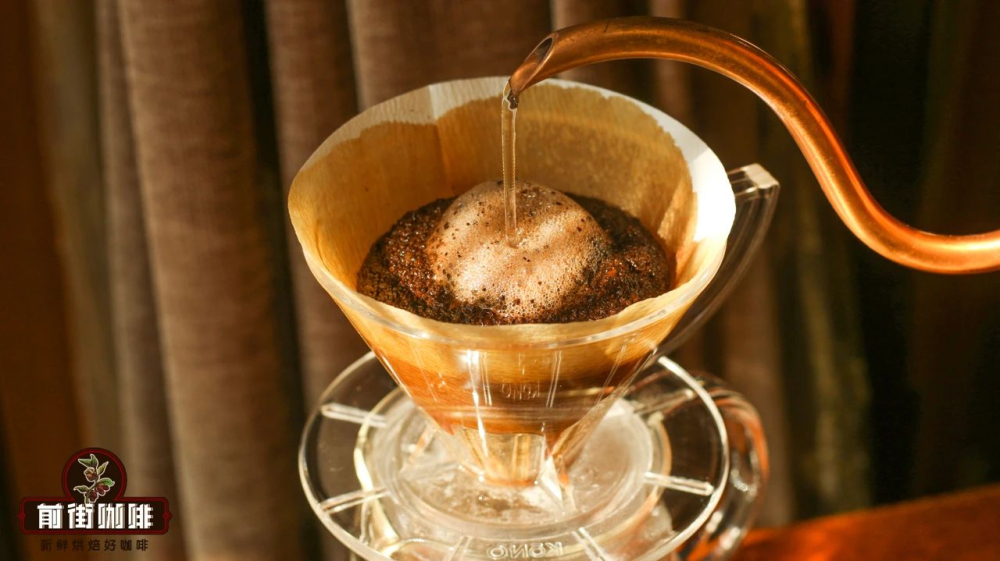
Then various brewing methods to avoid gas interference with extraction appeared. For example, the most common one now is pouring a small amount of water, waiting a while, letting the gas escape, and then pouring more water. There's also the method of using a drip form to slowly wet the coffee grounds, so that the gas has enough time to escape. Although their methods differ, the essence is to use as little water as possible to complete the gas release.
Later, a simple blooming method gradually evolved: bloom with 2 times the water amount for 30 seconds. This involves two parameters: blooming water amount and blooming time. The reason for using 2 times the water amount for blooming is that coffee grounds can only absorb water equal to 2 times their own weight; any more water is wasted. As for the blooming time, it was observed that for most coffee beans, the gas is almost fully released in about 30 seconds. After summarizing this conclusion, beginner enthusiasts who don't know the principle can follow this method and still brew decent-tasting coffee.But once you understand the function and principle of blooming, you'll know that blooming is nothing more than fully wetting the coffee grounds and then reserving enough time for them to release gas.Then you can set the blooming water amount and time according to the actual state of the coffee grounds. For example, dark roast coffee beans have better water absorption; during blooming, they can absorb most of the water, with only a little coffee liquid dripping into the server early, so use 2 times the water amount. But some particularly hard light roasts have poor water absorption, with a lot dripping into the server, so you can bloom with less water, for example 1.5-1.7 times the water amount.At the same time, whether the bloom is good also depends on the pouring technique. Front Street Coffee generally recommends pouring in small circles from the center outward, which can prevent some water from flowing directly off the edge of the dripper. But also be careful to ensure all coffee grounds are wet, at least with no dry coffee grounds visible on the surface.Some coffee grounds don't expand as noticeably, so you need to pour in larger circles. You'll get a feel for it after practicing a few times. Some friends focus too much on the blooming water amount and time, but their water control ability still needs improvement. After pouring the blooming water, some of the coffee bed is still dry, which means the bloom is not thorough, and the brewed coffee naturally won't taste very good. Front Street Coffee's advice is: if you really can't wet all the coffee grounds within 2 times the water amount, then pour a bit more water. Remember, the purpose of blooming is to fully wet the coffee grounds and release gas.
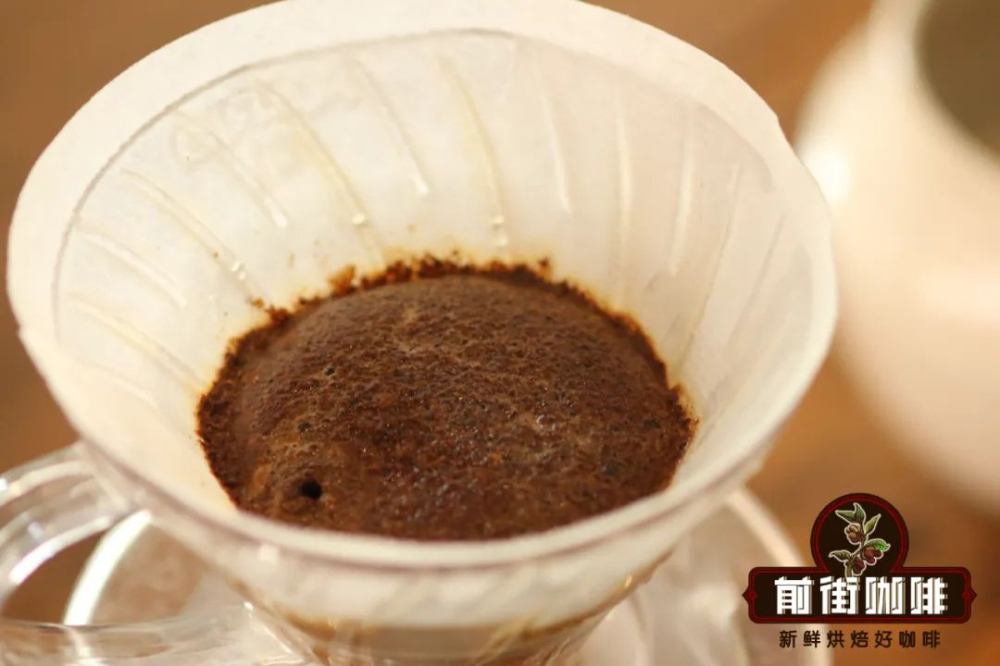
Next is the time issue. Coffee beans at different rest periods after roasting have different gas contents. For example, coffee beans 4 days after roasting and coffee beans 15 days after roasting differ in expansion degree and gas ejection activity. So blooming time is determined by the actual degree of gas release. For example, if some coffee grounds are still expanding and releasing gas after 30 seconds, then you need to wait until they finish before pouring. Some stop moving after just over 20 seconds. Here Front Street Coffee recommends pouring again 3 seconds after the expansion stops.
To sum up, what you need to do in the blooming step is very simple: wet all the coffee grounds with the planned water amount, then wait until the coffee burger stabilizes and stops changing, and the blooming stage is complete. What remains is the extraction stage.
Finally, let's talk about this: the saying "You can tell if a coffee tastes good just by looking at its bloom" mainly isn't about whether your blooming pour is good, but about judging the freshness of the coffee beans by the bloom state. If the gas is very active and bubbles are everywhere, it means the beans are too fresh, and there may be a dry, astringent sensation. If the expansion is even with no rapid bubbles emerging, it means this bag of coffee has been well rested. If there's no expansion during blooming, it means the beans may not be fresh, or the pouring technique wasn't well controlled, or the roast level is too light. First, some light roast coffee beans are inherently hard and release gas slowly, so there's no obvious doming. Many people use whether the bloom domes as a basis for coffee freshness, which easily leads to misjudgment. Second, it's not that coffee beans that don't bloom are necessarily bad-tasting or not fresh. Front Street Coffee has also tested quite a few coffee beans over 1 month old, and many showed little change during blooming, but the brewed flavor and mouthfeel didn't show the signs of being stale. So it's still best to judge based on actual circumstances.
The above content is compiled by CoffeeHunters, a coffee news website.