







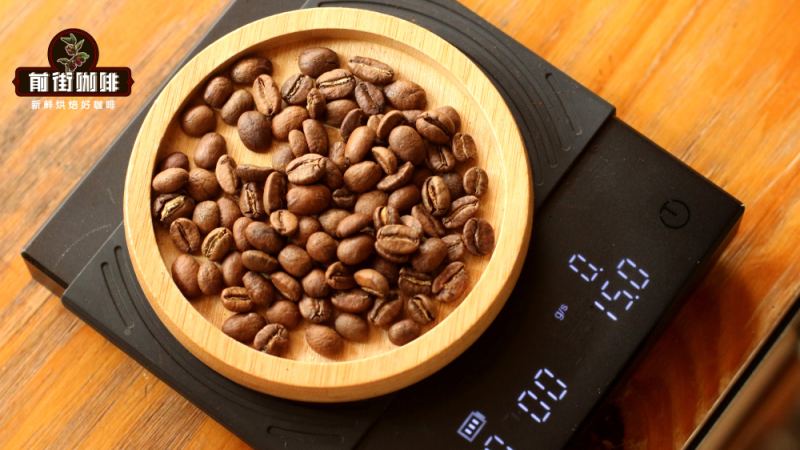
Why does FrontStreet Coffee insist on using a 1:15 coffee-to-water ratio when brewing pour-over? Is this the result of a random coincidence, or was it derived from different brewing experiments based on data? In this article, FrontStreet will explain why a 1:15 coffee-to-water ratio is suitable for pour-over brewing~
What is the difference between coffee-to-water ratio and water-to-coffee ratio?
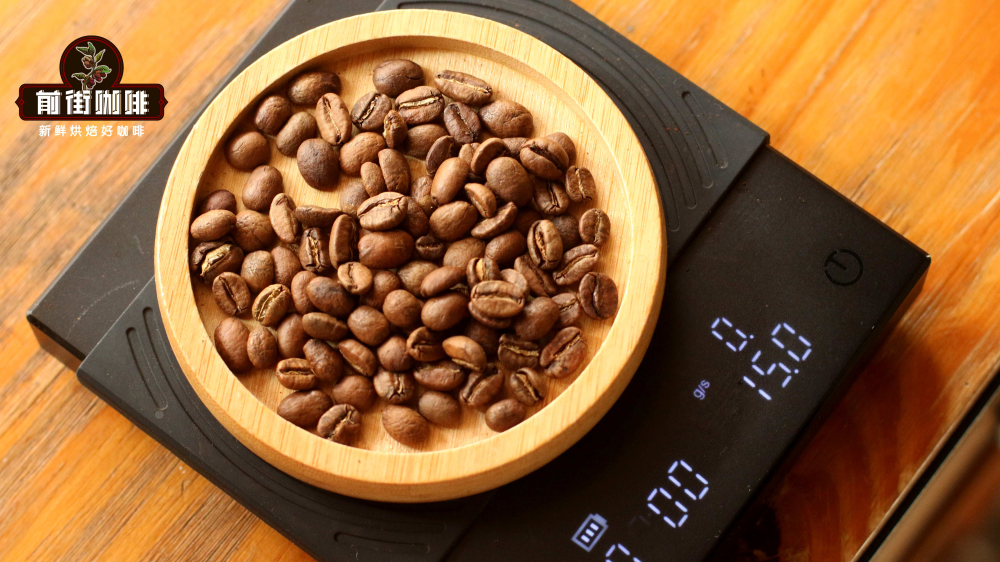
First, FrontStreet uses 15g of coffee grounds to brew 225ml of water, in other words, 15g of grounds brewed with 15 times the water. If we describe 1:15 as a water-to-coffee ratio, that would mean 1ml of water brews 15g of coffee grounds, which is "absurd." So when describing the brewing ratio, FrontStreet refers to the water-to-coffee ratio as 15:1 or the coffee-to-water ratio as 1:15.
When brewing with a 1:15 coffee-to-water ratio, is the brewed coffee also 1:15?
FrontStreet just mentioned brewing 15g of coffee grounds with 225ml of water. Many people assume 225ml is the amount of coffee liquid after extraction is complete. In fact, 225ml refers to the total amount of water poured. The water actually passing through the coffee bed is only 1:13, and after extraction is complete, there is only 195ml of coffee liquid.

Why is that? Generally, coffee grounds absorb about twice their own weight in water during the blooming process (not all beans, but basically 2 times). Therefore, the coffee liquid we get is not the total amount of water we poured. Still confused? FrontStreet takes a 1:15 coffee-to-water ratio as an example: the coffee grounds will absorb 30ml of water, 225-30=195, 195➗15=13, so we ultimately get 195ml of extracted coffee liquid, with a ratio of 1:13.
Why does FrontStreet Coffee insist on using a 1:15 coffee-to-water ratio?
According to the SCA Golden Cup extraction range—extraction yield: 18%-22%, concentration: 1.15%-1.45% is considered the Golden Cup extraction range, which we can simply understand as the "delicious zone." Based on the description in the chart, FrontStreet observed that a 1:17 ratio passes through the Golden Cup range the most, meaning it's easiest to hit the Golden Cup range, followed by 1:16 and 1:18 coffee-to-water ratios. Surprisingly, 1:15 has a very hard time hitting the Golden Cup range. So does that mean FrontStreet's recommendation is wrong?
After a long period of operation and experimentation, FrontStreet found that when baristas increase the coffee-to-water ratio and brew with 1:18, although the extraction yield and concentration fall within the Golden Cup extraction range, it easily extracts unpleasant flavors (concentration is maintained, but extraction yield is hard to ensure).
When brewing with a 1:16 ratio, extraction yield and concentration are ensured, but the flavor always feels a bit thin. If brewing medium-dark roasted coffee beans, it cannot present a full-bodied feel. A 1:16 ratio is suitable for brewing coffees that need to express clear layers of flavor, such as FrontStreet Coffee's La Esmeralda washed Green Label Geisha coffee beans. Geisha beans themselves are very resistant to extraction, and their flavors are also very concentrated. So in extraction, we can appropriately increase the coffee-to-water ratio to clearly express the rich floral aromas and bright acidity of Green Label Geisha.
Back to the point, FrontStreet conducted multiple experiments brewing light-roasted coffee and found that the concentration of 1:15 is roughly 1.35-1.42%, with a corresponding extraction yield of 17.79%-18.73%. Although on the Golden Cup chart it's only on the edge of qualifying, sensory testing revealed that the flavor is very suitable, with no sharp acidity or astringency from under-extraction. It adapts to the output ratio of the vast majority of coffee beans. Compared to larger coffee-to-water ratios that easily cause over-extraction or bitterness, 1:15 is a conservative and stable coffee-to-water ratio, and over 80% of coffee beans can be brewed with this ratio.
Is the Golden Cup extraction parameter wrong?
No! The Golden Cup extraction range is a parameter obtained by the SCA using immersion extraction (e.g., cupping), while our daily pour-over coffee is drip coffee, which improves extraction efficiency by agitating coffee grounds with water flow. So FrontStreet slightly reduces the coffee-to-water ratio during brewing. A 1:15 ratio isn't necessarily right, and 1:16-1:18 isn't necessarily wrong. Ultimately, it depends on the freshness of the beans, grind size, brewing water temperature, brewing equipment, etc., as well as the brewer's taste preferences. Parameters vary from person to person—there's no right or wrong. As long as the coffee you brew is one you enjoy, that's the best result.
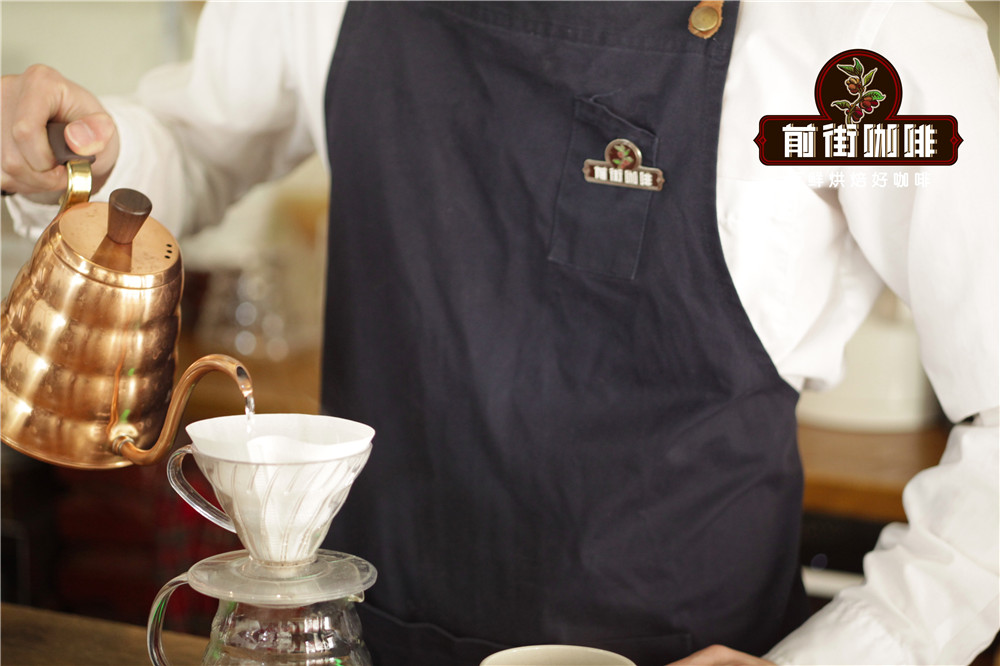
How does FrontStreet Coffee brew with a 1:15 coffee-to-water ratio?
FrontStreet Coffee typically usesthree-stage extraction. First, it extracts the flavor compounds of the coffee more fully during extraction, thereby enhancing the coffee's layering; second, it has strong compatibility, and can well express the coffee's flavor for most coffees from different origins and different roast levels.
How to usethree-stage brewingfor a cup of coffee?
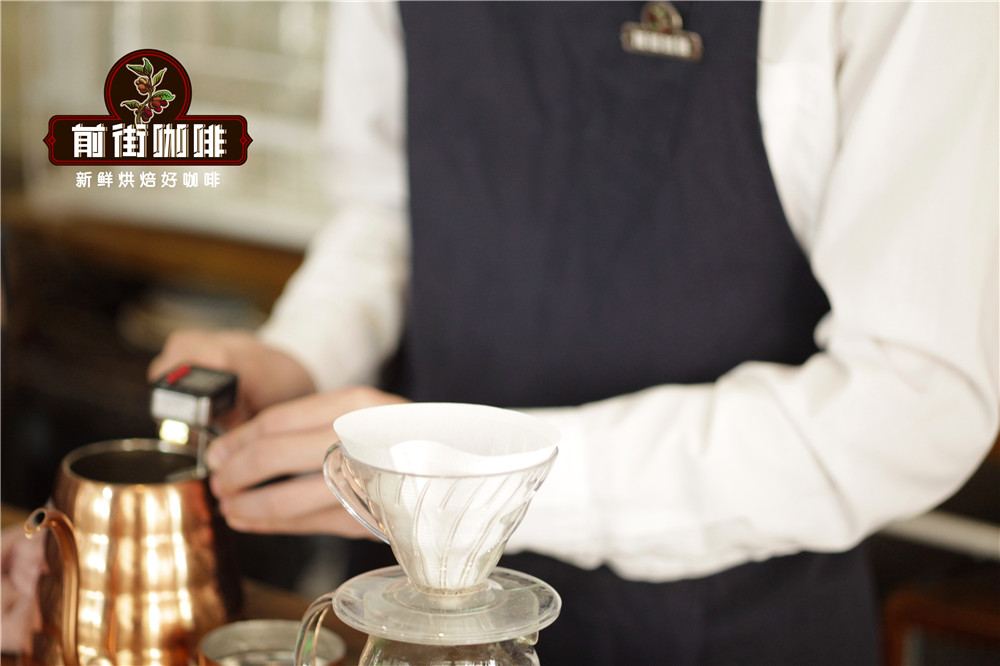
First, do the preparation work (warm the filter cup and server, grind the coffee, prepare water at the appropriate temperature), then pour in the coffee grounds.
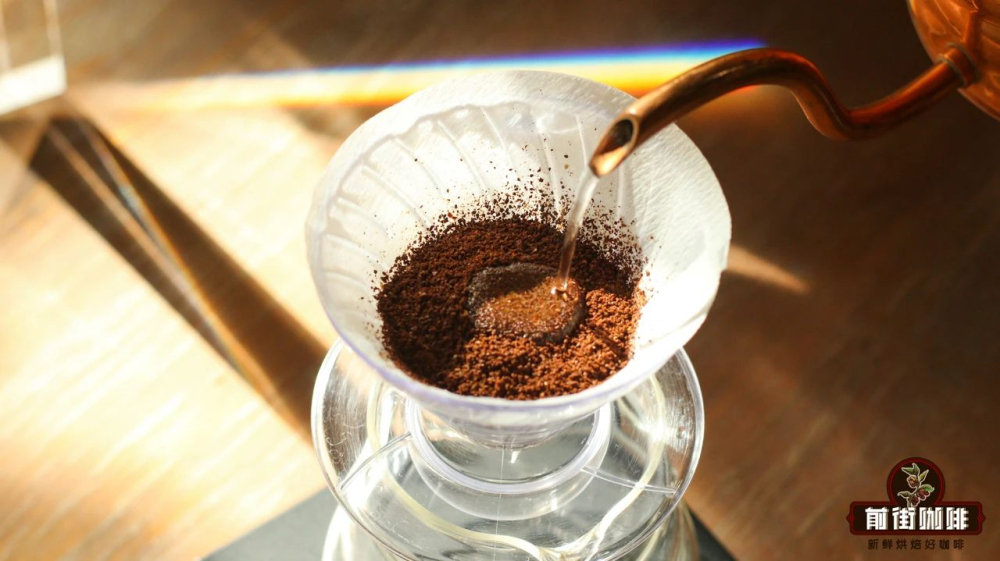
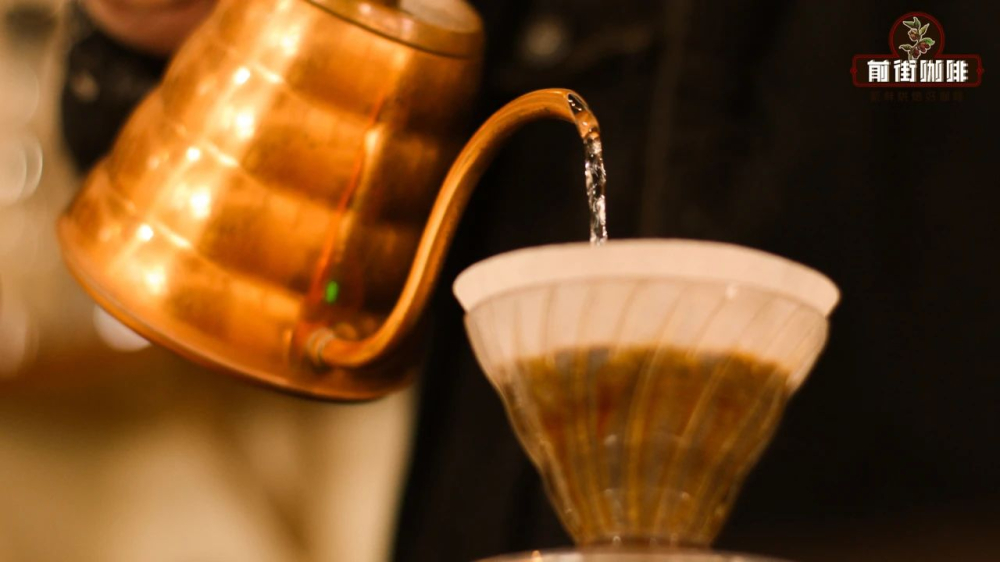
Begin the first pour while starting the timer. Pour 30g of hot water in the first stage, circling from the center outward. The coffee grounds absorb water and slowly expand, forming a puffy "coffee burger." Wait 30 seconds for the blooming time. At the 31st second shown on the scale, begin the second pour, circling from the center outward, keeping the water flow steady and vertical. Foam will appear when the water column hits the coffee bed. This stage of brewing lets the coffee foam release, overflowing across the entire surface of the coffee bed, with the liquid level rising to the base of the short ribs. The amount of water poured in this stage is 100g.
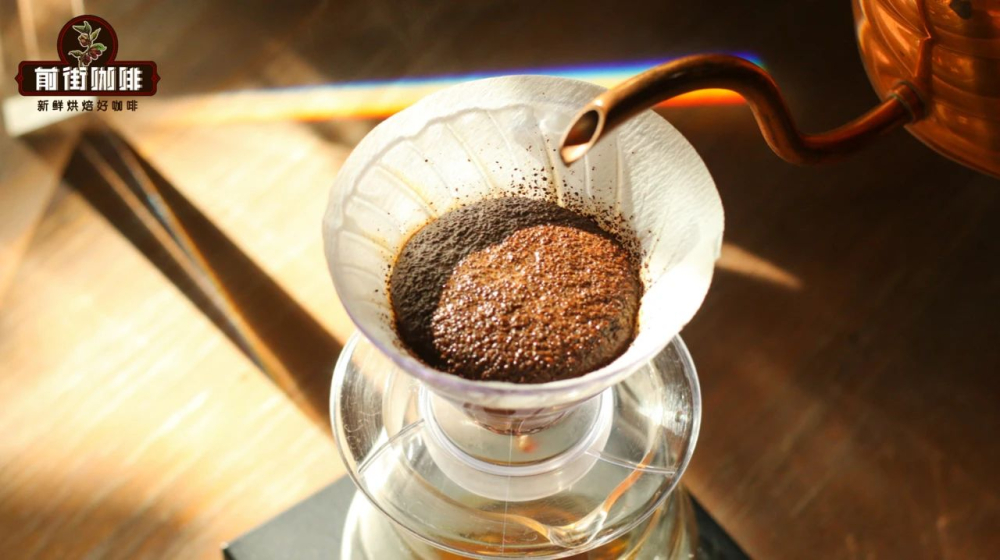
When the liquid level drops to the halfway point, begin the final pour. This stage also pours 95g in a "smelling" circular motion from the center outward. The originally dark brown foam turns into pale yellow coffee foam, and the liquid level also returns to the height of the second pour. After all the coffee liquid has flowed into the server, remove the filter cup and end the extraction.
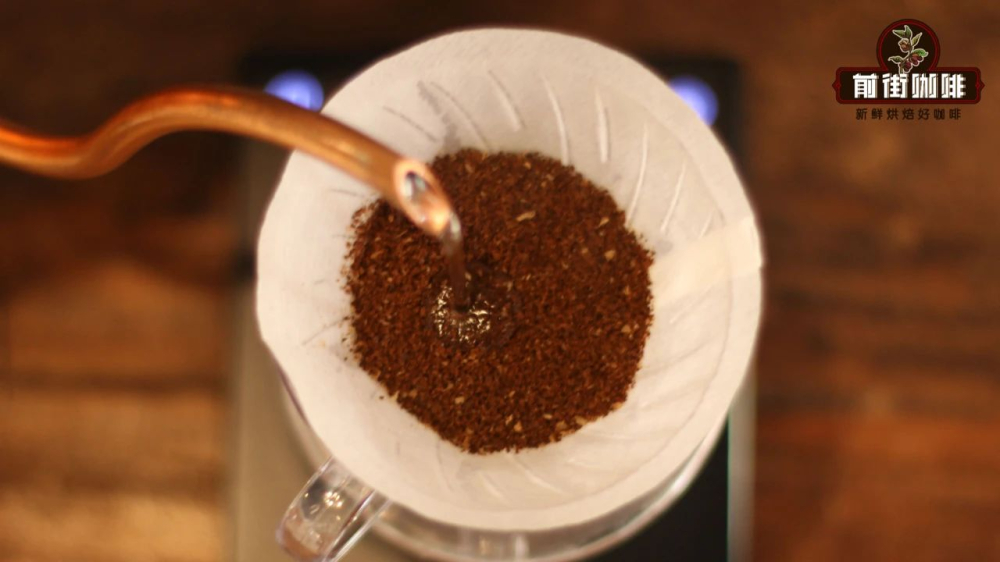
Finally! Pay attention!
The first stage of three-stage extraction awakens flavor molecules, the second stage extracts sweet and sour flavor molecules, and the third stage extracts full-bodied flavor molecules. After extraction is complete, the coffee liquid in the server will also form layers due to the different densities of each stage's coffee liquid. So after extraction, remember to swirl the server clockwise to fully blend all the flavors of the coffee liquid before tasting~
The above content is compiled by CoffeeHunters, a coffee news website.


