







Why is the piccolo coffee ratio so much tighter than a latte?
A piccolo latte is built on a single ristretto shot of about 15 ml topped with roughly 75 ml of steamed milk in a 90 ml cup, a ratio near 1:5. It is far smaller than a flat white, which is served at 150–200 ml on a double shot, so the piccolo concentrates the coffee flavor into a few sips.
Fewer domestic cafes list it because the small volume tests the barista: quality espresso, dense microfoam and even blending all have to be right, since there is little milk to hide flaws. The drink originated as a way to taste beans with milk without wasting a full latte.
A milk coffee drink rarely appears on the menus of domestic cafes, but in Australia it is as popular as the Flat White—that is the Piccolo, known as the "small latte."
The difference between Piccolo and Flat White
The Piccolo originates from Australia. The "piccolo" in "piccolo latte" refers in English to the piccolo instrument, while in Italian it means "small." Along with the Flat White, it is often called a "small latte."

The Piccolo came about because when coffee roasters and baristas were dialing in, they would taste the coffee both as straight espresso and with milk added to judge whether it was up to standard. Because a regular latte comes in a large cup, it would basically be poured out after two sips. Baristas didn't want to waste it, so they reduced the proportion of milk. Later it gradually evolved into a mini version of a latte—a good choice for people who don't want to take in too much caffeine or feel overly full.
Although both the Piccolo and the Flat White are smaller than a latte, the Piccolo is clearly much more mini in terms of cup volume. Australian baristas use a 90ml (about 3oz) cup, with a single Ristretto (about 15ml) as the base, topped with 75ml of steamed warm milk with thin microfoam. A Flat White, on the other hand, is served at about 150–200ml; for example, Front Street uses a double shot as the base and adds 150ml of hot milk with dense, thin foam. So a Piccolo can usually be finished in a few sips, whereas a Flat White is more "long-lasting."

Piccolo making techniques
In the past, baristas made Piccolos to avoid waste, but today the Piccolo in coffee shops is more about highlighting the flavor characteristics of the coffee beans used. It is precisely because the Piccolo's cup is small that you can taste the silky mouthfeel of the coffee liquid blending with the milk, while also better appreciating the coffee's aroma. Yet with such a small cup, adding latte art on top is not so simple. To make an authentic and delicious Piccolo, the barista needs to ensure high-quality espresso, milk quality, dense microfoam, and even blending—this also greatly tests the barista's skill.
To make a Piccolo, Front Street uses a small cup of about 90–100ml, with a coffee-to-milk ratio of 1:5, preheating it in advance as much as possible to ensure the coffee's drinking experience. The coffee's flavor comes from the beans used. The espresso drinks served at Front Street stores are all extracted from Front Street's own roasted "Sunflower Warm Sun Blend Coffee Beans," a combination of 70% Honduras Sherry coffee and 30% Yirgacheffe sun-dried Red Cherry coffee. The Sherry's whiskey, vanilla, and cream flavors paired with Red Cherry's tropical fruit and fermented notes give the cup a rich yet soft taste.
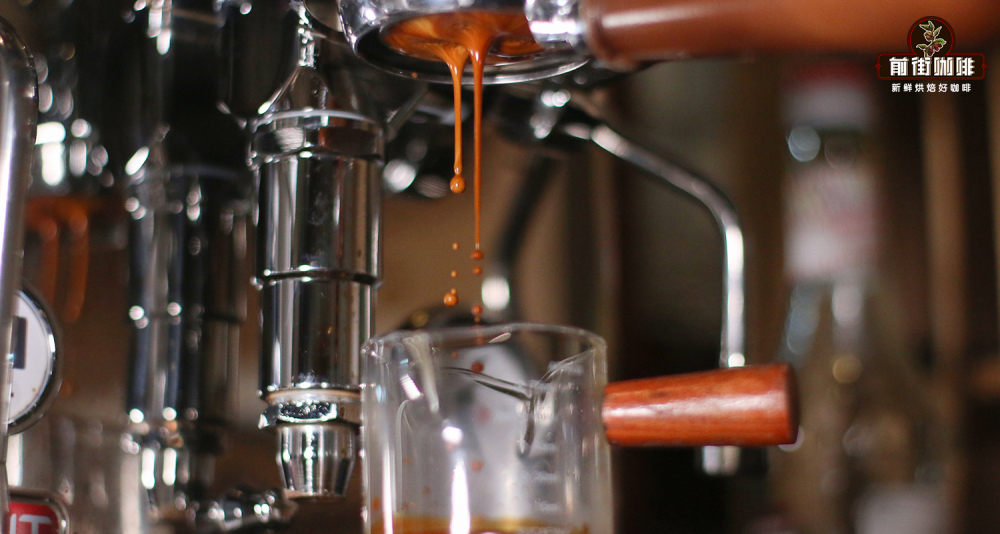
Here the Piccolo uses a single Ristretto as the base. Ristretto means "restricted" in Italian, also called extra-concentrated espresso, and usually only the front and middle portions of the Espresso are extracted, so it tastes stronger and the flavor is more concentrated. Front Street uses 20g of coffee grounds, extracting 28g of coffee liquid in 20–25 seconds; a single Ristretto is 14g, poured into the cup first.

The milk steaming part is rather particular—you should know that the less milk there is, the harder it is to steam. Front Street chooses a 350ml milk pitcher and pours in 100ml of milk. A Piccolo latte has thinner microfoam than a Flat White, so less air is incorporated and for a shorter time, with a thickness of about 0.3cm. The milk steaming temperature is controlled between 55°C and 60°C to ensure it won't burn your mouth when you drink it. Blend it as evenly as possible with the Ristretto, start pouring latte art at seven-tenths full, and a freshly made Piccolo tastes best when drunk right away.
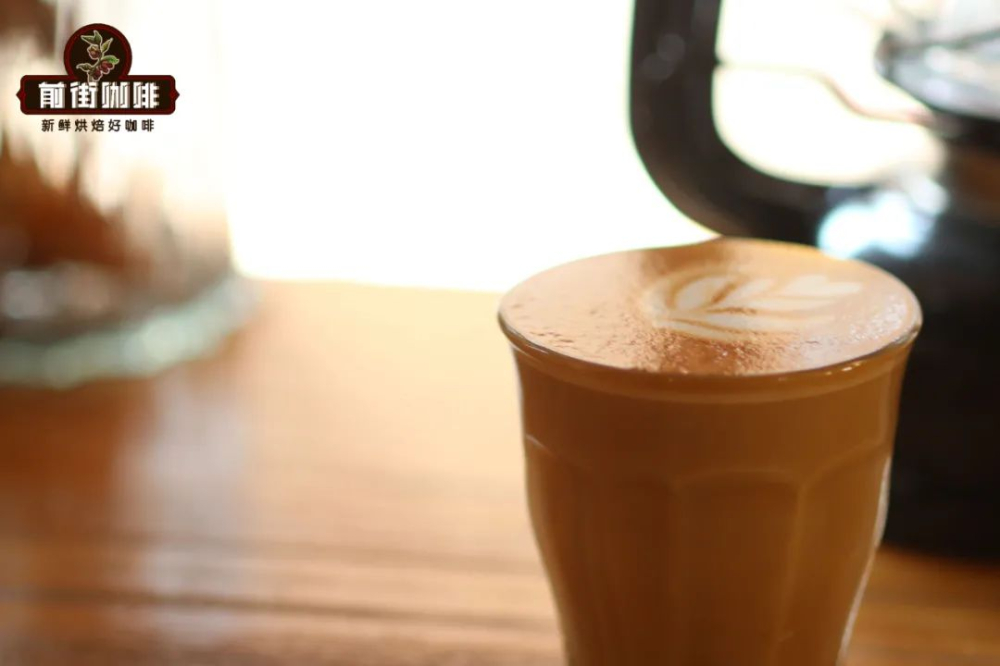
The Piccolo made by Front Street presents aromas of vanilla, cream, chocolate milk, and whiskey-filled chocolate, along with the sweet-and-sour notes of berries. The coffee flavor is full, the milk is creamy and fragrant, and the aftertaste is very long-lasting.
Why is the Piccolo so niche in China?
Although it is likewise a popular drink in Australia, the Piccolo has not had the same opportunity as the Flat White to be known by the public through the "big brand" Starbucks, and many people's impression of this milk coffee still stops at "niche coffee." In addition, in regions with a strong coffee culture such as Europe and Australia, most people go for the coffee drink itself—they order a Piccolo in the store, drink it, and leave. Domestic cafes, by contrast, are more about leisure—chatting and sipping slowly—so the Piccolo doesn't quite suit them.

With the specialty coffee industry developing more and more vigorously, many domestic coffee shops now place greater emphasis on the regional flavor of single-origin coffee beans, and therefore offer the mini milk coffee Piccolo to highlight the coffee's aroma. But after all, the cup is small, and at the same price as a latte, as a consumer, of course you'd choose the coffee that gives you more to drink~
Professional coffee knowledge exchange. For more coffee bean information, please follow Coffee Workshop (WeChat public account: cafe_style)
For more specialty coffee beans, please add the private WeChat Front Street Coffee, WeChat ID: qjcoffeex
The above content is compiled by CoffeeHunters, a coffee news website.


