









Flat White is directly translated as "flat white coffee", and there are alsoAussie White, Australian White, Fu Rui White and other different names. It has been one of the very popular drinks in coffee shops in recent years. In this article, Front Street Coffee will talk about this trendy drink, Flat White.
Flat WhiteHow did it evolve?
As for the origin of the Aussie White, both Australians and New Zealanders insist that it originated in their respective countries. Although we cannot determine exactly where Flat White was born, one thing we can confirm is thatFlat Whiteits birth came from consumers' pursuit of higher coffee quality.
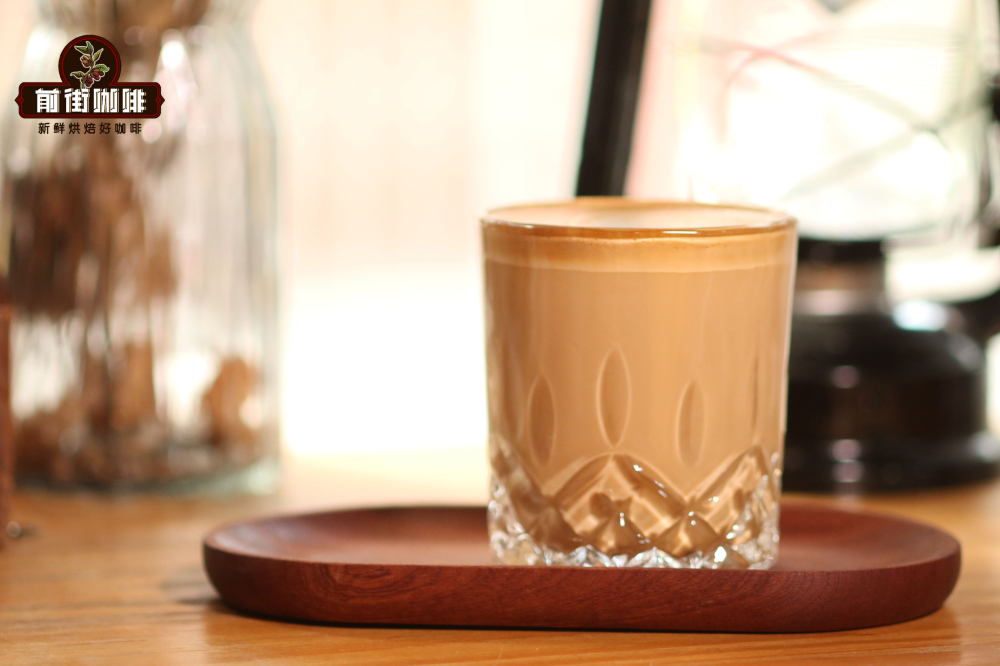
From the instant coffee era to the espresso era, consumers were looking for coffee drinks different from cappuccino. At that time, cappuccino had at least three centimeters of "hamburger-style" milk foam piled on top, so people hoped to make the milk foam flatter, which gave rise to the more balanced-tasting latte. When the milk foam on milk coffee became flatter and flatter, until it became a very thin layer completely level with the rim of the cup, today's Flat White came into being.
From initially receiving no attention, to Australians putting Flat White on cafe permanent menus in the 1980s, it soon became a standard drink in cafes in the United States and elsewhere. Flat White was able to become a popular trend product in China because Starbucks introduced it in 2015 and named it "Fu Rui White" as one of its signature drinks, which also meant that this milk coffee had already become mainstream.
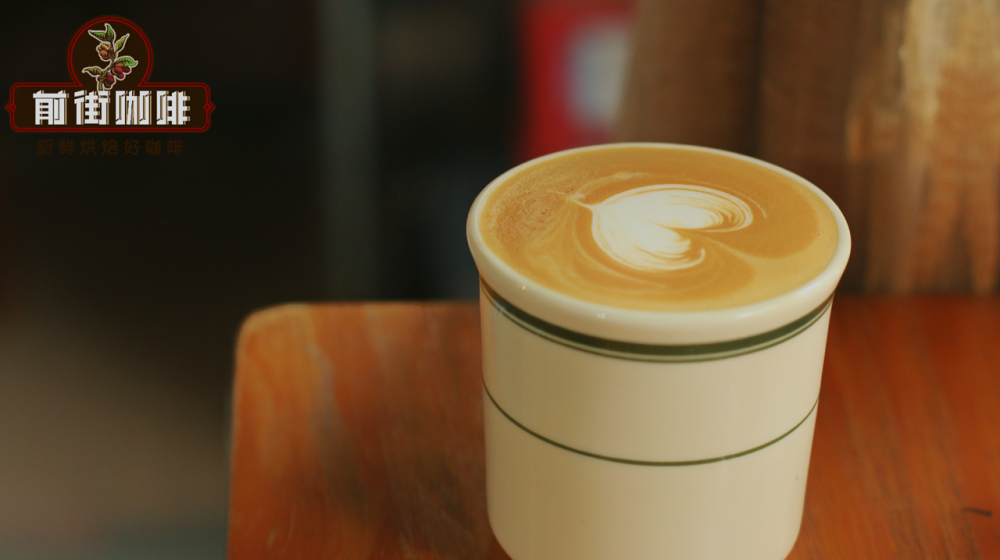
Presented in different waysFlat White
The Aussie White coffee presented by each coffee shop is different because different countries (different baristas) have different understandings of Aussie White. Let us first return to the original intention of its creation: baristas hoped that when drinking Aussie White, every sip would allow one to taste the perfect combination of milk foam and the milk coffee beneath it. Only when the milk foam is very fine and dense, relatively thin, and at a temperature suitable for drinking can one simultaneously taste both the milk foam and the rich coffee liquid in every sip, and finish it quickly before the milk foam separates. This also leads to the basic characteristics of Aussie White: fine, dense, thin milk foam; moderate temperature; coffee flavor that cannot be masked; and a mouthfeel that always remains consistent.
When New Zealand baristas make Aussie White, they serve it in a coffee cup smaller than that used for a latte (about 150 ml), and uniformly use a double shot of espresso as the base. In this way, as the amount of milk decreases, the proportion of coffee increases, so the coffee flavor is naturally richer.

With baristas' continuously improving extraction techniques, in order to more perfectly express the aroma of the coffee beans in Aussie White, Melbourne coffee shops also replace the base with a double Ristretto, adding milk foam of a thickness comparable to that of a latte into a 150 ml cup. Ristretto refers to espresso extracted with the same dose of coffee grounds but a smaller beverage yield. It can be said to be a reduced version of espresso, more concentrated in the front and middle stages of extraction, with a richer mouthfeel, and therefore places higher demands on the quality of the coffee beans used.
However, in Australia, baristas believe that it is enough to maintain thinner milk foam than a latte. When they make Aussie White, they use a cup size with the same capacity as a latte, placing more emphasis on the difference in milk foam thickness.
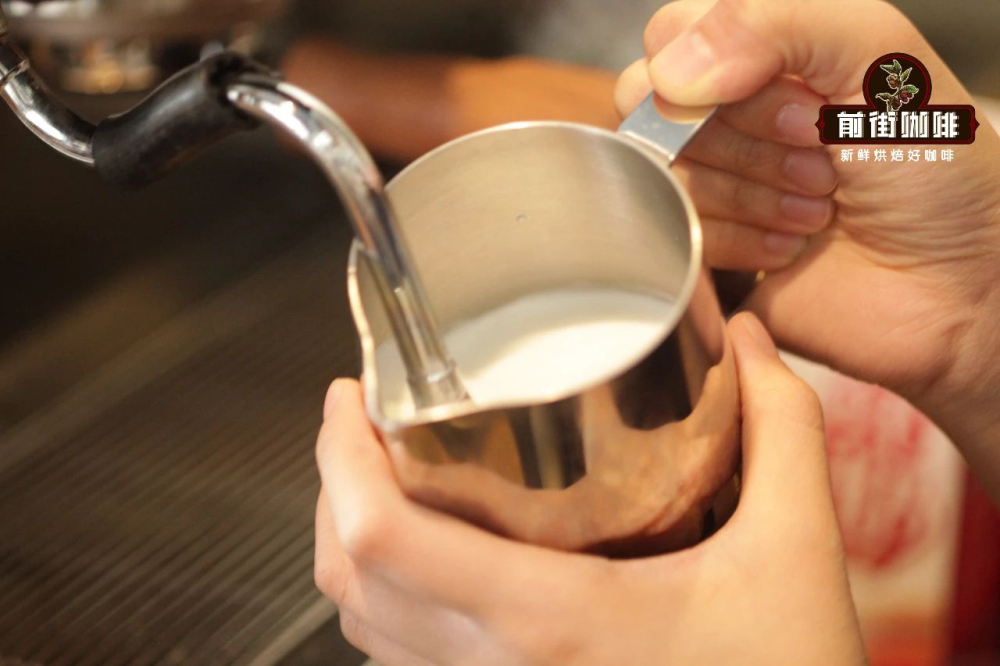
As for the thickness of the milk foam, it is one of the main reference factors for distinguishing Aussie White from other milk coffees. Thin milk foam is meant to allow the coffee liquid to be tasted better, emphasizing a smooth and silky "velvet"-like texture. Some baristas hope that the Aussie White they serve will not be affected by the taste of the crema, and even filter off the milk foam layer, retaining only the coffee liquid. Therefore, exactly how thin the milk foam layer should be whipped had no fixed numerical standard in the early days.
As this drink became more and more popular, in order to distinguish it from regular hot lattes and cappuccinos, people defined the thin milk foam thickness of Aussie White as about 0.3 cm to 0.5 cm. The thinner the milk foam, the easier it is for the milk liquid to sink to the bottom during integration. Without enough milk foam to support the surface, the white milk foam "runs around", making latte art patterns harder to create. This is also why some baristas choose not to make latte art. But for highly skilled baristas, it is a different story. As long as they can control it, even with thinner milk foam, they can still present exquisite patterns.

Therefore, each coffee shop, according to its own preferences and skills, combined with the characteristics of the coffee beans it uses and its understanding of Aussie White, presents a unique Aussie White style. The Warm Sun blend espresso beans used by Front Street Coffee have a relatively mild mouthfeel. In order to present the rich aroma of the coffee, a double Ristretto is used as the base and it is served in a 200 ml cup.
Recommended coffee beans for making Flat White at Front Street Coffee
Front Street Coffee has noticed that many friends who like milk coffee want to recreate delicious Flat White coffee at home. How Flat White tastes mainly depends on the espresso beans we use. Therefore, if you want to make a delicious Flat White, you cannot do without an aromatic Espresso.

Front Street Coffee recommends its classic espresso blend coffee. This is a recipe composed of beans from three origins: Brazil, Indonesia, and Vietnam. It uses a deep roast, which can highlight the mellow aroma of the coffee to the greatest extent and also allows everyone to easily extract rich and fine coffee crema. It is very suitable whether for making an Americano diluted with water or a latte paired with milk. It can be purchased and ordered at the Front Street Taobao store or the Front Street Tmall flagship store.
In addition to the strongly styled classic espresso blend, Front Street Coffee's espresso bean list also includes three highly cost-effective blended coffee beans. Their mellow mouthfeel and rich aroma are likewise suitable for making Aussie White coffee. These are blended products that Front Street Coffee has compared and tested many times, covering the high-quality flavors of different coffee-producing regions, and they are also conducive to extraction stability.

1. Classic mellow type - Front Street Commercial Blend Coffee Beans
Washed Robusta coffee beans + washed Colombian coffee beans + Brazilian semi-sun-dried coffee
The espresso has a rich golden crema and a nutty aroma. After being combined with milk, the Flat White has a roasted coffee bitterness when tasted, but it is accompanied more by a creamy, full-bodied mouthfeel. After swallowing, the bitterness also dissipates, leaving a lingering fragrance on the lips and teeth.

2. Slightly acidic and mellow type - Front Street Dark Cocoa Blend Coffee Beans
Washed Yunnan small-bean coffee + Brazilian semi-sun-dried coffee beans
Yunnan small-bean coffee brings a mild acidity, paired with the mellow aroma of Brazilian Cerrado coffee. The espresso has notes of caramel, nuts, and a mild plum-like acidity.

3. Balanced and aromatic type - Front Street Specialty Blend Coffee Beans
Washed Colombian coffee beans + Brazilian semi-sun-dried coffee beans
Colombian coffee is added to the nutty tone of classic Brazilian coffee. The espresso presents a dark chocolate flavor, caramel sweetness, and a full roasted aroma.
For professional coffee knowledge exchange and more coffee bean information, please follow Coffee Workshop (WeChat public account: cafe_style)
For more specialty coffee beans, please add the private WeChat of Front Street Coffee (FrontStreet Coffee), WeChat ID: qjcoffeex
The above content is compiled by CoffeeHunters, a coffee news website.


