








For more coffee origin news and coffee knowledge, please followCoffeeHuntersToutiao account
When it comes to brewing coffee, many people like to ask how many grams of coffee grounds to use and what the coffee-to-water ratio should be. Ultimately, what people care about is the coffee extraction rate. It should be noted that 70% of the substances in coffee beans are insoluble in water, and only a small amount of the remaining 30% consists of the ideal flavor compounds.
Compared with pour-over coffee, espresso has a more concentrated flavor, which means the defective flavors of the coffee beans are also maximized, and this is also a characteristic of espresso. Therefore, if you want to drink a cup of latte or cappuccino with an excellent flavor, in addition to using the right milk, a nearly perfectly extracted espresso as the base is also indispensable.
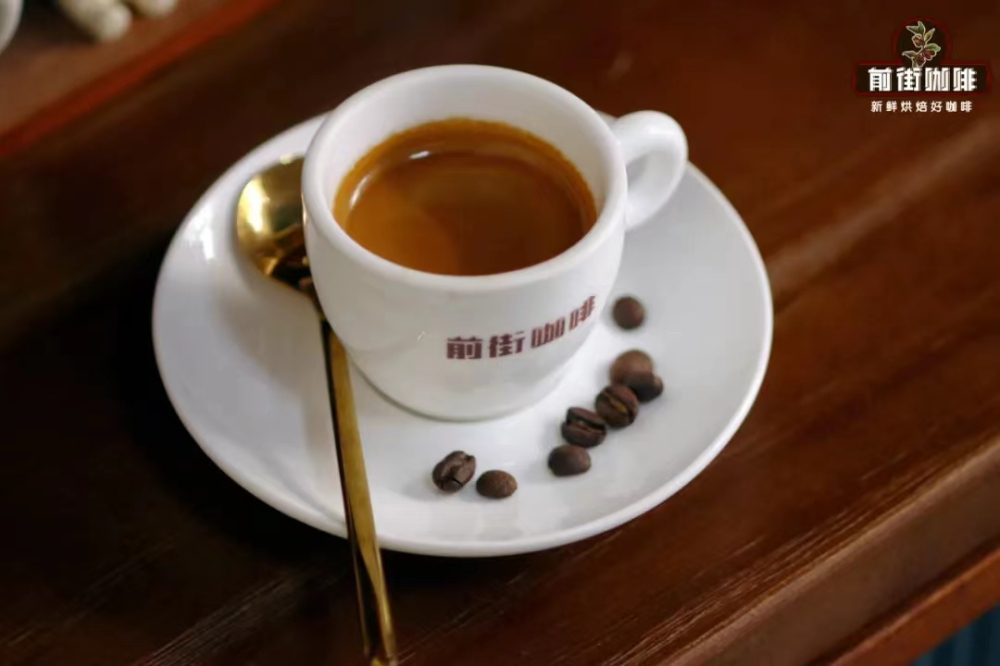
The Specialty Coffee Association of America (SCAA) once explained espresso this way: extract 45 ml of single espresso at 9-10 atmospheres of pressure, with 7-9 g of coffee grounds, at a water temperature of 88-92 °C, in 22-28 seconds. However, if you go to a specialty coffee shop and ask a barista about espresso extraction parameters, you will find that the amount of coffee grounds used and the extraction yield are not exactly the same, and there is a huge divergence from the above standard explanation.
In Front Street Coffee's espresso preparation method, an amount nearly matching the capacity of the filter basket is used, and the coffee-to-water ratio is closer to 1:2. However, such data is only for reference.
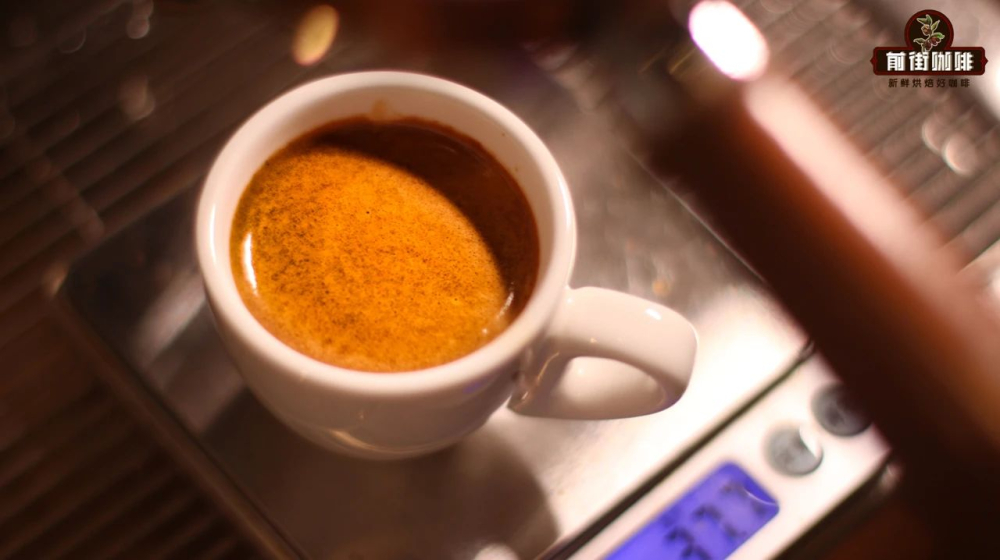
The roasting degree of coffee beans in the past and consumers' understanding of coffee flavor are now very different from today. People in the past preferred dark-roasted espresso beans and espresso with nutty and cocoa flavors, and even applauded burnt bitter flavors.
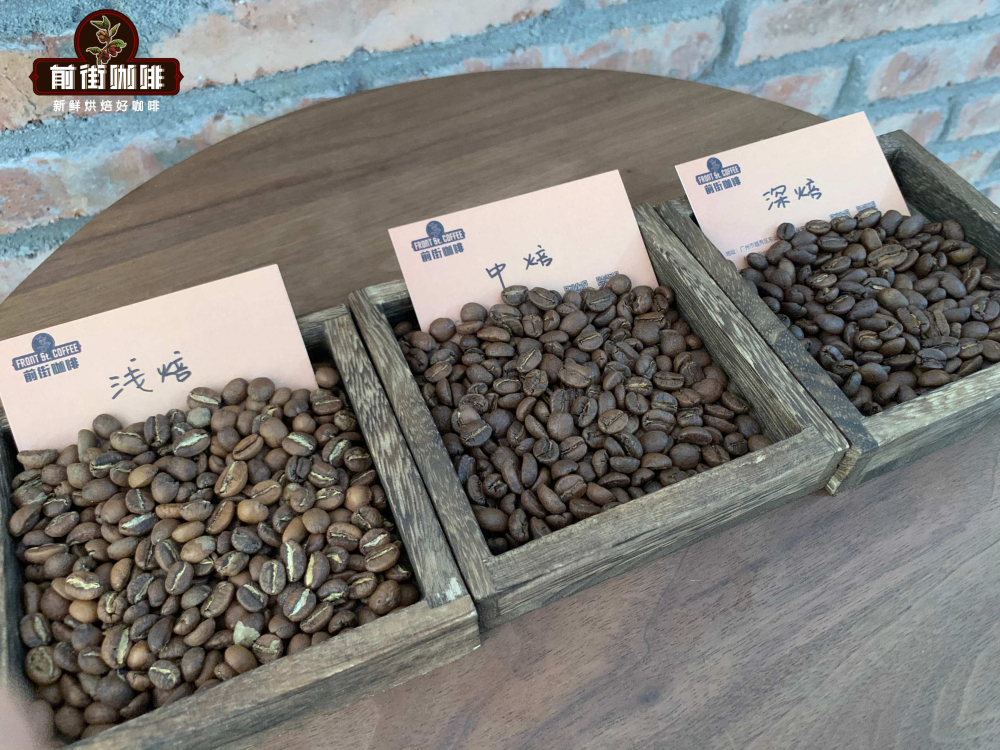
Nowadays, with the rise of the third wave of specialty coffee, people hope even more to taste floral and fruity aromas in coffee. The roasting degree used for coffee beans is lighter, and with the same water temperature, the taste will differ. Espresso extraction parameters are now closer to: 18 g coffee grounds, extracting about 30 g of liquid weight, water temperature 92-94 °C, and extraction time falling within 25-27 seconds. It can be noted that the judgment has shifted from the volume of the coffee liquid to the more precise actual weight of the coffee liquid. The reason is that factors such as brewing pressure, roast level, and freshness affect the amount of crema, so judging by volume is very unreliable.
In recent years, coffee machine manufacturing technology has advanced by leaps and bounds. Coffee machines with variable pressure and emphasis on pressure profiling have been invented one after another, and brewing pressure is no longer fixed at 9 atmospheres. Whether it is the introduction of pre-infusion pressure or a gentle ramp out of pressure in the middle and later stages, various pressure profiles that go beyond the old rules have been continuously experimented with and tested. Even for the same coffee bean, the flavor profile expressed under different pressure profiles is different.
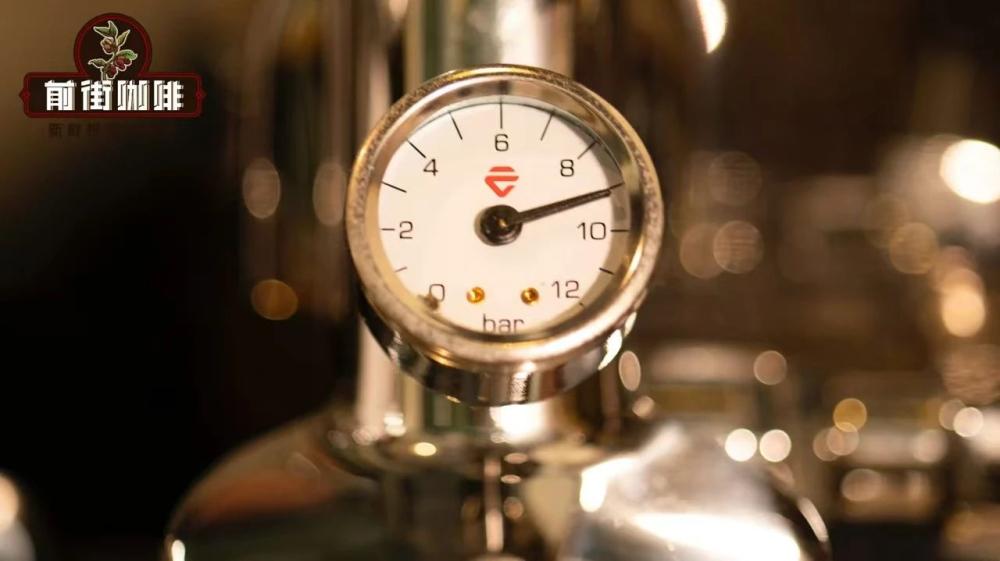
When making espresso, Front Street Coffee needs to consider factors such as grind size, extraction pressure, water temperature, dose, time, and extraction yield.
[Dose] Generally, the amount of coffee grounds used is determined by the capacity of the filter basket. For example, the filter basket used by Front Street Coffee has a capacity of 20 g, and Front Street Coffee will make slight adjustments under that amount, but not exceed the capacity. If there is too little coffee powder, it is easy to underextract; if there is too much coffee powder, the portafilter cannot be locked onto the group head.
[Water temperature] The higher the water temperature, the more substances in the coffee are released and the faster they are released; the opposite is also true. The extraction water temperature for espresso is generally hot water that is about to boil.
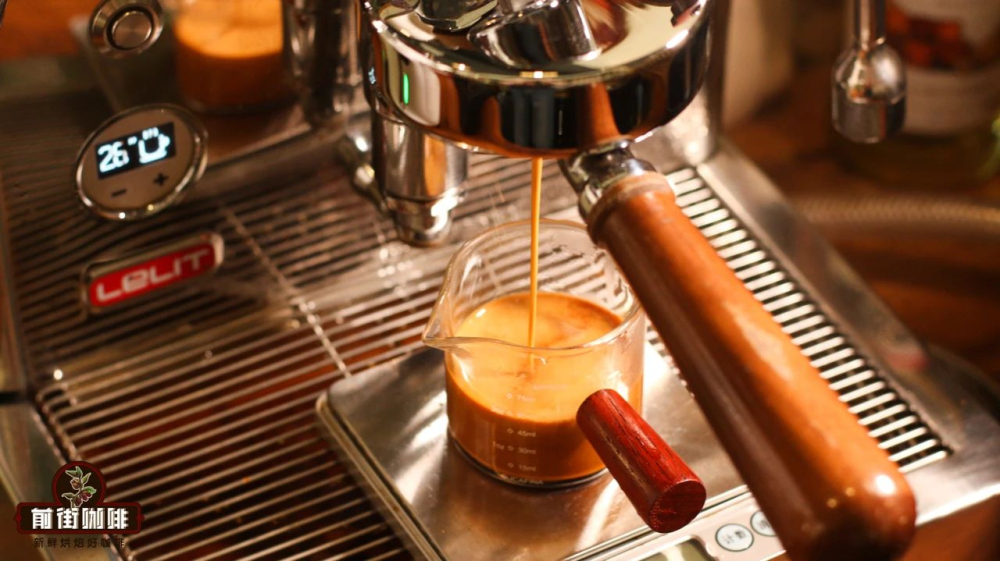
[Time] The sour substances and bitter substances in coffee are the most obvious, and the sour substances are extracted faster than the bitter substances.
[Extraction pressure] In the early days of espresso preparation, the extraction pressure was extremely close to atmospheric pressure, and the espresso extracted had a thin mouthfeel and no crema at all. With improvements in espresso machine manufacturing technology, since the appearance of the Faema E61, there began to be 9 bar of pressure and rich crema.
[Grind size] Grind size is the pain of every barista. As time changes, air humidity also changes accordingly. If the coffee powder particles are too fine, the contact area between hot water and coffee particles increases, and more substances are extracted, which easily causes over-extraction.

When producing espresso, Front Street Coffee adjusts the extraction parameters according to the day's temperature, humidity, and the roast date of the espresso beans, so as to extract nearly perfect espresso. The extraction parameters are as follows:
Front Street Coffee espresso extraction parameters:
Grinder: Galileo Q18
Grind setting: 2.1
Coffee machine: Faema E98
Pressure: 9 bar±2
Temperature: 90.5~96°C
Time: 20~30 sec
Dose: 19.7g (double espresso)
Extraction yield: 35ml
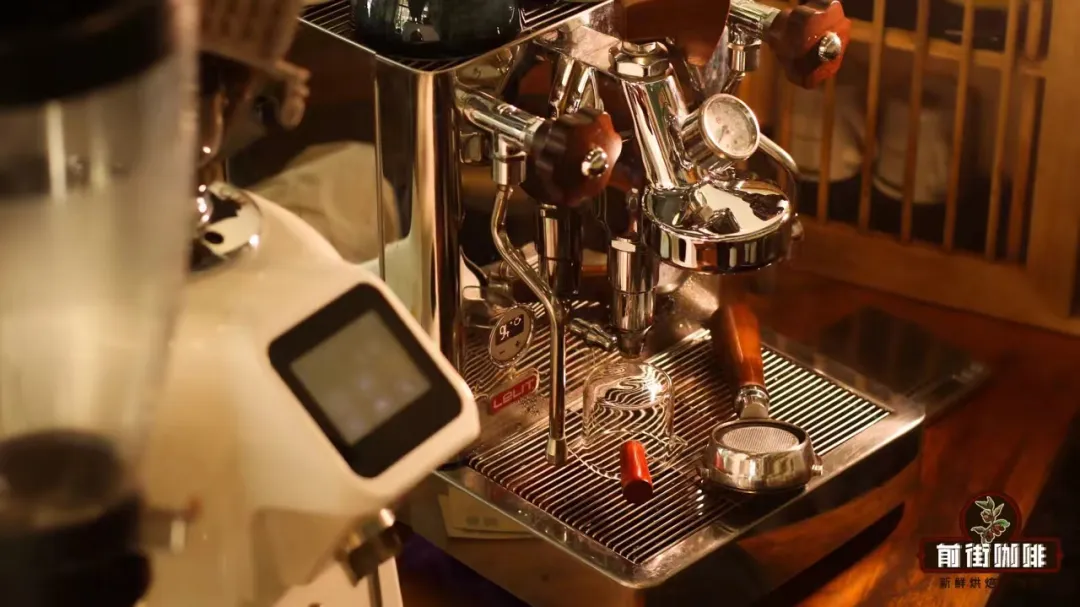
After parameter adjustment, the espresso extracted by Front Street Coffee (FrontStreet Coffee) shows a rich whisky aroma, with rich flavors like vanilla and cream, berry acidity on the palate, a long dark chocolate finish, and a viscous and smooth mouthfeel.
The reason it can have such a rich whisky aroma is that the espresso beans used by Front Street Coffee (FrontStreet Coffee) stores are the carefully blended Sunflower Warm Sun Blend. This blended coffee bean is made from 70% Honduras Sherry and 30% Ethiopian natural Red Cherry.

Front Street Coffee Sunflower Warm Sun Blend coffee beans
Region: Honduras & Ethiopia
Variety: Caturra, Catuai, Pacas, local heirloom varieties
Processing method: washed & natural
The 70% Honduras Sherry has undergone refined washing and then been placed into sherry whisky barrels for low-temperature fermentation for dozens of days, allowing the whisky aroma substances in the barrels to penetrate into the green coffee beans. The 30% Ethiopian natural Red Cherry brings the berry acidity unique to Ethiopia to this blend. The overall flavor of this blend is very appealing.
Some friends who have tasted Front Street Coffee (FrontStreet Coffee)'s latte discover that Front Street Coffee's espresso has a rich whisky aroma, and cannot resist wanting to drink the espresso straight to investigate. When Front Street Coffee serves espresso, it provides a small spoon and also serves a glass of ice water. When friends see this, they may want to ask, why serve ice water, and how should espresso be drunk correctly?

Front Street Coffee will explain the correct way to drink espresso. The purpose of the ice water is to let friends clean their palate before tasting the espresso, so as to better experience the flavor and mouthfeel. Before the coffee liquid enters the mouth, you can use a small spoon to check the crema or stir the entire cup of espresso so that the upper and lower layers of the coffee liquid are fully integrated, making the mouthfeel more balanced.
The above content is compiled by CoffeeHunters, a coffee news website.


