








The French press, with its full-immersion extraction and metal filter structure, can produce coffee with richer oils and a fuller body. But to brew a good pot of French press coffee, variables such as coffee bean selection and grind, water temperature, coffee-to-water ratio, and steeping time are all crucial. This article will start with the types of coffee beans suitable for the French press, using medium-dark roasted Mandheling as an example, and break down grind size, coffee-to-water ratio, water temperature control, steeping duration, and the complete brewing process one by one, helping coffee enthusiasts find a stable and satisfying French press brewing method.
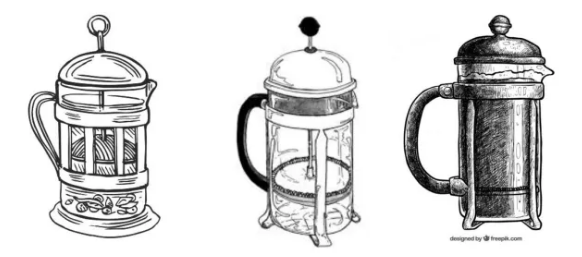
The French press is a full-immersion brewing device with a built-in metal filter. This structure allows coffee grounds to come into direct, prolonged contact with hot water, making the resulting cup more oily and giving it a heavy, full-bodied mouthfeel. However, if you are sensitive to the texture brought by coffee grounds or fines, the French press may not be an ideal choice.
When using a French press, there are quite a few variables you can adjust, such as water temperature, grind size, and steeping time. You can fine-tune them gradually according to your personal taste. The key is that as long as your brewing technique is correct, you can fully appreciate the aroma and flavor of each coffee bean itself.
What is the specific method for brewing coffee with a French press?
Before getting started, there are several important variables to think through, and you also need to choose the right coffee beans.
Since the French press relies on immersion extraction, the contact time between coffee grounds and hot water is relatively long. If you choose light-roasted beans, it is easy to extract higher acidity, which instead overwhelms the original floral and fruity notes and delicate layers. Therefore, compared to light roasts, the French press is better suited to medium-dark roasted single-origin coffees, so that sweetness and caramel-like flavors can be better expressed.
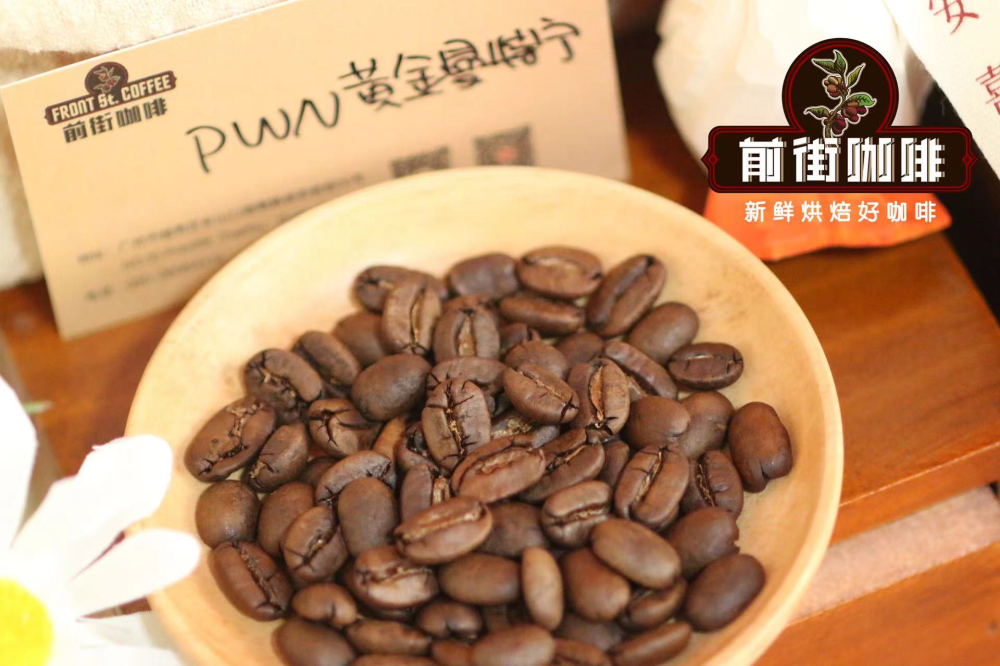
Beginners just getting into the French press can start with PWN Golden Mandheling. As one of the most well-known specialty coffees in Asia, Front Street Coffee Golden Mandheling SOE undergoes three rounds of hand sorting plus one round of machine sorting during the green bean processing stage, resulting in uniform, translucent beans. After medium-dark roasting, Front Street Coffee Golden Mandheling beans are plump and large, giving off rich aromas of spices, caramel, cedar, and dark chocolate. Extracted with a French press, the body is mellow and the oils perform quite well, making it very suitable for those who do not like acidic coffee.
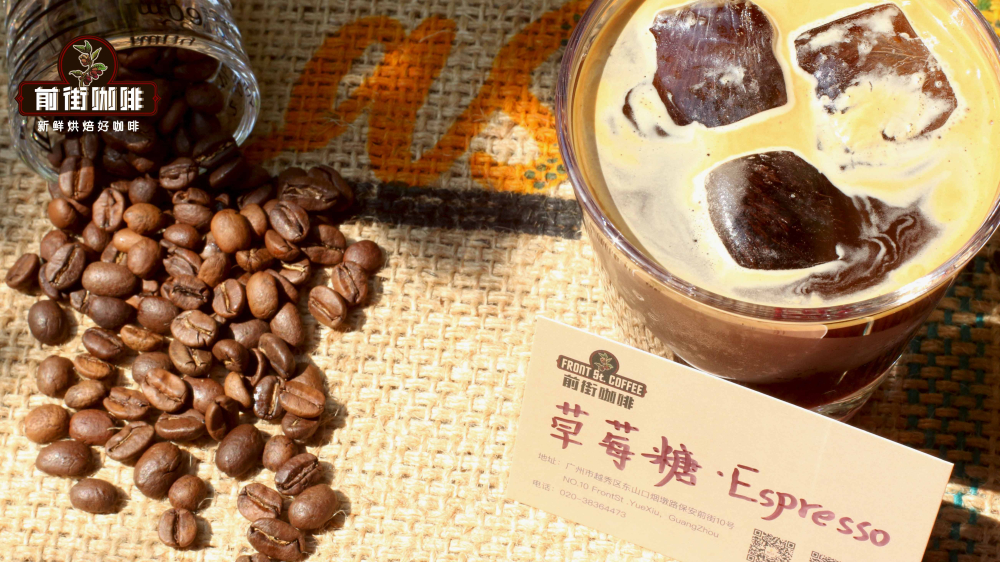
If you prefer a fresh, aromatic profile, you can try Front Street Coffee Strawberry Candy. This is a Geisha blend specially launched for lovers of floral and fruity notes, composed of Costa Rican honey-processed coffee and Panamanian washed Geisha, with aromas of roses, citrus, raisins, and dried blueberries. After adding milk, it also presents a strawberry gummy-like sweet aroma.
1. Grind size
No matter which grind size you choose, you should use a high-quality flat burr or conical burr grinder. Blade grinders are not recommended, and the French press brewing method itself very easily causes over-extraction. So, just how coarse is appropriate?
Here it is recommended to use a coarser grind setting, with a particle texture closer to small gravel rather than fine sand. If ground too fine, water will pass through the coffee grounds too quickly. For other immersion devices this may not be a big problem, but if a French press is ground too fine, fines may pass through the filter, resulting in a large amount of sediment in the final cup.
Looking at most French press tutorials, coarse grind is usually recommended. Front Street's suggestion is to reach a 70% passing rate on the Chinese No. 20 standard sieve, which is about the size of coarse granulated sugar. A coarse grind not only improves extraction tolerance but also reduces the extremely fine particles produced by grinding. The pores of a French press metal filter are generally between 80 and 300 microns, visible to the naked eye, and fines can easily pass through and mix into the coffee liquid, making it cloudy. Of course, if you are after richer layers, you can also try a finer grind, but remember to shorten the steeping time accordingly to avoid over-extraction.
2. Coffee dose and coffee-to-water ratio
The coffee-to-water ratio is a simple formula, that is, how much water to pair with how much coffee. A commonly used ratio is 1:15 (for example, 15 grams of coffee with 225 grams of water). You can start from this ratio, and in the next brew increase or decrease the coffee dose or water amount according to your preference, until you find the most satisfying ratio. Extracted at this ratio, the coffee concentration falls roughly between 1.1% and 1.2%. If you, like Front Street, prefer a rich style, you might try the 1:15 coffee-to-water ratio, which yields a thicker and fuller-bodied coffee.
3. Water temperature
Water temperature is another variable you can experiment with to change the taste of the coffee. If you do not have a thermometer on hand, you can boil hot water and let it sit for 45 seconds (adjust according to air temperature), then brew at around 90 degrees. If you want precise flavor control, it is recommended to buy a temperature-controlled pour-over kettle, or use it together with a thermometer.
The French press is filled with water all at once, and during the steeping period there is no stirring action to improve extraction yield, so sometimes the water temperature needs to be slightly raised to compensate for extraction yield, about 1 to 2°C higher than常规 pour-over temperature. For medium-light roasted coffee beans, a water temperature of 92 to 94°C is recommended; for medium-dark roasted coffee beans, a water temperature of 89 to 90°C is recommended.
4. Brewing time
Since there is no manual stirring, to extract coffee substances you have to improve the extraction yield through other steps, and steeping time is another factor that needs to be lengthened. Brewing time usually falls between 3 and 5 minutes. For darker roasted coffee, 5 minutes may be too long and easily produce bitterness and astringency; for light roasted coffee, 3 minutes may be too short and the flavors are hard to release. So Front Street recommends starting with a 4-minute steeping time on your first attempt.
5. Brewing process
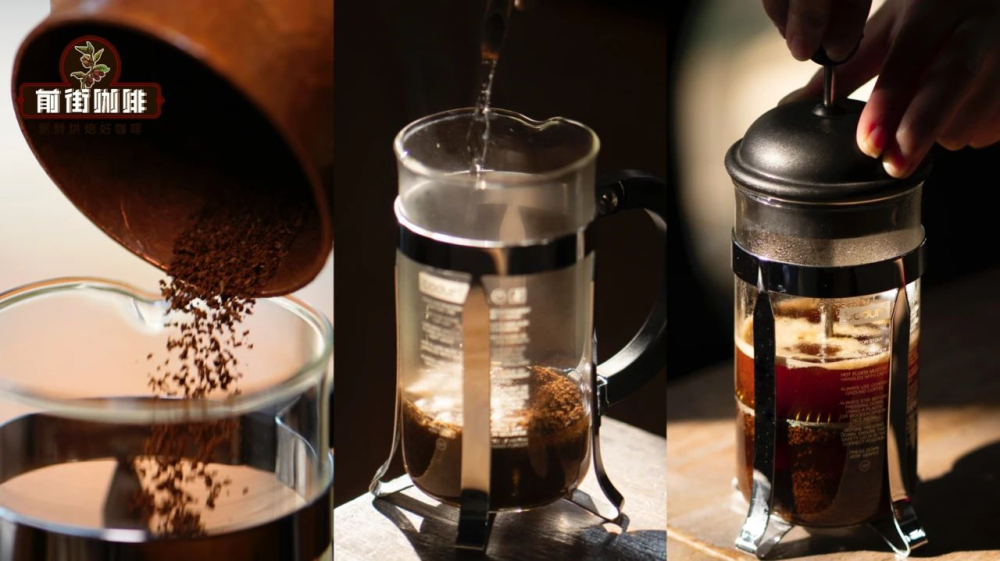
Pour the ground coffee into a preheated French press, then slowly pour in hot water, making sure all the coffee grounds are saturated. At the beginning, use about twice the coffee dose of water for pre-infusion and blooming (for example, 15 grams of coffee with 30 grams of water for blooming).
At 30 seconds, stir gently a few times, then pour in the remaining hot water, place the plunger on top, but do not press down yet. Wait until the coffee grounds have steeped for a full 4 minutes, then slowly press the plunger all the way to the bottom, and afterward carefully pour out the coffee liquid, avoiding disturbing the coffee grounds at the bottom of the pot.
If you feel strong resistance when pressing the plunger down, it means the coffee is ground too fine; if the coffee grounds sink and there is very little resistance when pressing down, it means the coffee is ground too coarse.
The above content is compiled by CoffeeHunters, a coffee news website.


