








What makes australian white coffee different from a latte?
Australian white coffee, better known as flat white, is an espresso milk drink built on a thin layer of fine micro-foam rather than the tall foam of a cappuccino or the larger, airier milk volume of a latte. It usually arrives in a smaller cup, so the espresso stays forward and the milk texture reads dense and velvety.
The drink took shape in the 1980s after Italian immigrants spread espresso culture to Australia and New Zealand, and both countries still claim its origin. It is typically served hot rather than iced, since icing changes the foam texture. Starbucks' version, sold in some markets as ristretto bianco, uses a ristretto shot and is not identical to a standard flat white.
Flat White, commonly known as Australian white coffee, is one of the most representative espresso milk coffees in Australia and New Zealand, and in recent years it has become almost ubiquitous on café menus in China. However, its place of origin is still debated between Australia and New Zealand; and the relationship between Starbucks' "馥芮白", the colloquial "澳瑞白", and flat white often confuses coffee enthusiasts. This article will walk you through the origins of flat white, its differences from latte and cappuccino in terms of milk foam and cup size, why Australian white coffee is usually not served iced, and share espresso extraction ideas and Front Street Coffee's espresso blend bean selections for recreating Australian white coffee at home, helping you gain a more complete understanding of this classic milk coffee with its rich flavor and dense, velvety milk foam.

For more specialty coffee knowledge, follow our WeChat official account: Front Street Coffee
Flat White, also called Australian white coffee or 馥芮白 coffee, is one of the most favored espresso milk coffees in Australia. In recent years, it has also become a popular item in domestic cafés, and regardless of the size of the shop, it can almost always be found on the menu.
Chinese coffee fans are accustomed to calling this coffee 澳白, but when it comes to tracing where it was actually born, New Zealand and Australia each hold their own claims to this day. The reason behind this is that after Italian immigrants brought coffee culture to Australia and New Zealand, coffee quickly took root and flourished in this new land.
The 1980s can be seen as the gestation period of Flat White. As Italian coffee culture gained a firm foothold locally, latte and cappuccino were naturally just as common, but increasingly discerning coffee lovers in New Zealand and Australia began to hope that the milk foam would neither pile up into a tall "peak" like cappuccino nor contain too much foam like latte.
Thus, in New Zealand and Australia where dairy sources were abundant, combined with baristas' superb milk steaming skills, Flat White developed a finer micro-foam than latte and cappuccino, allowing the fine, hot steamed milk to cover the coffee surface evenly—this was the starting point of Flat White. As for whether it originated in Australia or New Zealand, both sides have their own supporters; since we cannot return to that past, we may as well follow general perception and classify it as belonging to the New Zealand-Australia region.
Therefore, the "澳" in Australian white coffee actually refers to the New Zealand-Australia region. Regardless of which region it came from, one thing is certain: Australian white coffee has a stronger coffee flavor than cappuccino and latte, and its fine milk foam also gives it a velvety smooth mouthfeel.
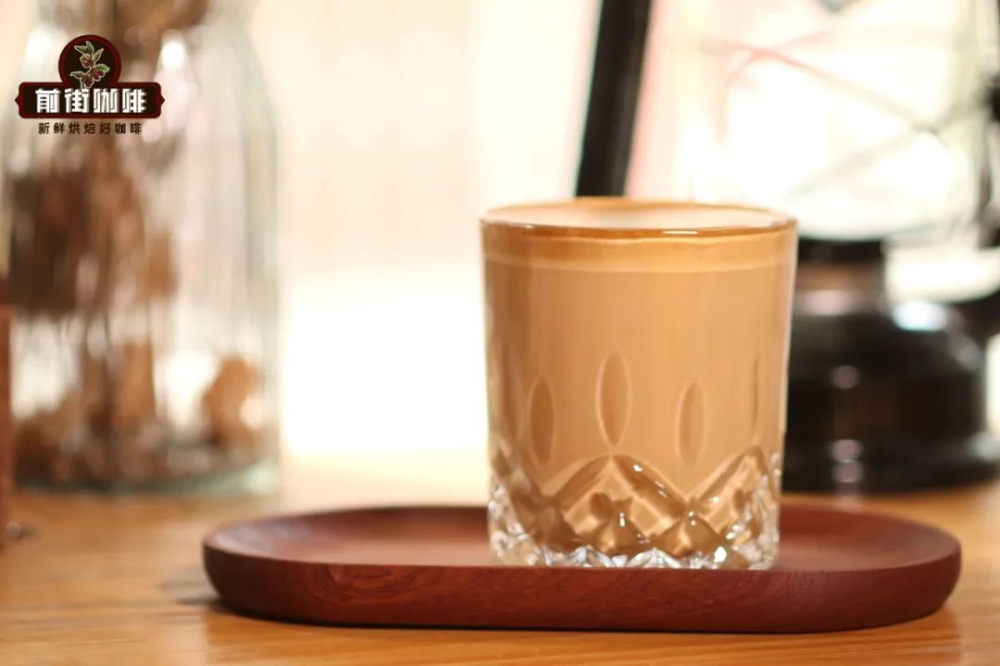
Front Street Coffee's daily Australian white coffee is made using a 200ml cup, adding two shots of espresso (40g), then heating the milk and creating a 0.5cm thick layer of milk foam, then pouring from the center, preserving the crema layer of the espresso so that the richness of the coffee is more prominent on the first sip.
Latte, on the other hand, is made using a 300ml cup, adding two shots of espresso (40g), heating the milk and creating a 1cm thick layer of milk foam, then fully integrating it with the coffee, thereby creating various latte art patterns.
To make espresso, coffee shops generally use a dedicated espresso machine, using 9-10 bar of pressure to push hot water at around 94 degrees Celsius through extremely finely ground coffee powder, extracting espresso at a coffee-to-liquid ratio of 1:2.
If you want to make Australian white coffee at home, you can use a home espresso machine or a portable hand-press espresso maker. However, compared to commercial coffee machines, its espresso concentration will be lower, and the stability of coffee quality will be relatively poorer.

When using a portable hand-press coffee maker to make espresso (here Front Street Coffee uses the Star Grain coffee maker as a demonstration), Front Street Coffee suggests taking 18g of extremely finely ground coffee powder, pouring in 120ml of 95 degrees Celsius water, and pressing directly until 40ml of coffee liquid is extracted, then stopping.
Next, heat the milk to 55-65 degrees Celsius, pour it into a milk pitcher, use a handheld milk frother to whip up the milk foam, then use a spoon to skim off the coarse bubbles on the surface, reducing the foam thickness to 0.5cm, then shake the milk pitcher to integrate the foam with the milk, and finally pour the milk from the center of the espresso; the finished product is about 200ml.
Why is Australian white coffee not served iced?
When drinking latte normally, we can choose to have it iced or hot, but Australian white coffee is only served hot. This is because baristas want every sip of Australian white coffee to deliver a perfect combination of milk foam and the milk coffee beneath; only when the milk foam is sufficiently dense, relatively thin, and at a temperature suitable for drinking can you taste both the milk foam and the rich coffee liquid in every sip, and finish it quickly before the foam separates. After adding ice cubes, the cooled milk coffee will be diluted to a certain extent, and it will no longer achieve the above effect.
If you prefer a rich milk coffee with an icy feel, Front Street suggests you try the "Dirty", which has also been very popular in the past two years. Drip the extracted espresso onto the top layer of chilled fresh milk, presenting a "dirty" visual effect, and the alternating hot-and-cold mouthfeel is quite unique.
Espresso coffee bean recommendations for making Australian white coffee
Some friends want to recreate a delicious cup of Australian white coffee at home. Front Street believes the first step is to choose the right coffee beans and extract a high-quality espresso as the base. Since most home espresso machines are not as stable in performance as commercial machines and produce fewer cups, this places even more demands on our grasp of the parameters. Therefore, Front Street suggests choosing espresso blend coffee beans with higher stability; espresso blends combine coffee flavors from different regions and use medium or darker roasting, making extraction more forgiving.
Front Street's bean list has previously offered nearly ten espresso blends for everyone to choose from, and ensures that only coffee roasted within 5 days is shipped, so that when you receive it, it is still at its best tasting stage. In addition to the mild-style Warm Sun blend mentioned above by Front Street, Front Street's espresso bean list also includes three nutty-toned blend coffee beans with relatively high cost performance; their mellow mouthfeel and rich aroma are also suitable for making Australian white coffee.
Balanced and rich—Front Street Specialty Blend Coffee Beans
Colombian washed coffee beans (30%) + Brazilian semi-washed coffee beans (70%)
Adding Colombian coffee to the nutty tone of classic Brazilian coffee, the espresso presents dark chocolate flavor, caramel sweetness, and a full roasting aroma. Blended with steamed hot milk, it presents a chocolate, cocoa, and cream mouthfeel, like drinking a cup of unsweetened Ovaltine hot drink.
Classic mellow type—Front Street Commercial Blend Coffee Beans
Robusta washed coffee beans (10%) + Colombian washed coffee beans (30%) + Brazilian semi-washed coffee (60%)
The espresso has a rich golden crema and nutty aroma. Made into Australian white coffee after blending with milk, when tasting it there will be a roasted coffee bitterness, but accompanied more by a creamy, full-bodied mouthfeel, and after swallowing, the bitterness also dissipates, leaving a lingering fragrance on the lips and teeth.
Slightly acidic and mellow—an espresso coffee bean recommended by many baristas—Front Street Black Cocoa Blend Coffee Beans
Yunnan washed small-bean coffee (30%) + Brazilian semi-washed coffee beans (70%)
Yunnan small-bean coffee brings a mild acidity paired with the mellow aroma of Brazilian Cerrado coffee; the espresso has flavors of caramel, nuts, and mild plum acidity, and when paired with milk it presents a relatively balanced and smooth mouthfeel.
The above content is compiled by CoffeeHunters, a coffee news website.


