







As the public's demand for coffee grows, more and more coffee enthusiasts are purchasing related coffee equipment. In the third wave of specialty coffee, online sales of pour-over coffee equipment continue to rise, and it is also becoming increasingly common for coffee lovers to keep an espresso machine at home. However, Front Street Coffee has also noticed that although many people have bought espresso machines, many friends have only a vague understanding of how to use an espresso machine to extract coffee, how many grams of coffee grounds to use during extraction, or how long the extraction should take. In this article, Front Street Coffee will talk with everyone about the relevant knowledge of using an espresso machine to extract espresso.

What kind of coffee beans should be chosen for espresso?
Espresso extracted from an Italian coffee machine usually has a layer of crema on the surface, and crema is also a very important factor in making a cup of espresso. Carbon dioxide is the main source of crema in espresso (another smaller source is the emulsified oils in coffee). Front Street Coffee recommends using coffee beans roasted within a few days or weeks, and not beans that have been sitting for several months!!
Because the longer coffee beans are stored, the more they gradually lose the carbon dioxide produced during roasting; when you grind the beans, the cell walls that store carbon dioxide and other volatile compounds are broken and release them. Therefore, in order to obtain the best results, it is best to grind and tamp fresh, because both carbon dioxide and the aroma of coffee will be lost as time drags on, and oxidation will also begin very quickly! Only fresh coffee that is ground and tamped immediately can achieve the best flavor and crema.
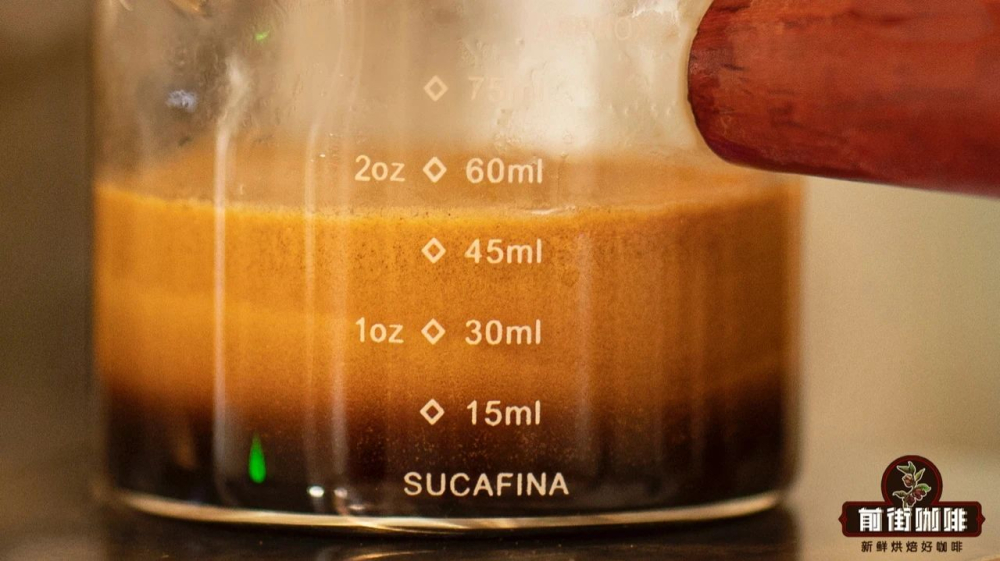
Generally, the beans used for espresso are espresso blends. Every blend has its own advantages and disadvantages. If one bean does not produce enough crema when extracted through an espresso machine, then coffee beans rich in crema can be added to complement it: if the espresso extracted from one bean is too sour, too bitter, or too sweet, then you can look for the complementary bean to blend with it and achieve the desired coffee flavor. Wouldn't that be perfect?
At present, the blend used by Front Street Coffee (FrontStreet Coffee) is coffee beans roasted in-house. ThisFront Street Coffee espresso blend coffee beanhas an aroma as comforting as warm sunshine, and its taste and flavor are eye-catching. With the richly fermented and wine-like Front Street Honduras Sherry coffee bean as the main component, paired with the Front Street Yirgacheffe Red Cherry coffee bean known for its acidity, it can create a fragrant and rich blended coffee. Therefore, Front Street Coffee named this espresso coffee bean Front Street Sunflower Warm Sun Espresso Blend.

What kind ofcoffeegrindershould be chosen for espresso?
To make standard espresso, Front Street Coffee recommends using a burr grinder; burr grinders produce more uniform particles than blade grinders, and they also allow you to control the particle size yourself through settings, so whether you use a hand grinder or an electric grinder, please be sure to choose a burr grinder! Burr grinders also have different burr designs, such as conical burrs, flat burrs, or ghost teeth burrs, and within each major category, each manufacturer's detailed burr design is different!
Not all burr grinders are suitable for grinding espresso powder. For example, many grinders using conical or flat burrs may be designed for other coffee types that use coarser coffee grounds, such as pour-over, siphon, French press, or moka pot, while grinders with ghost teeth burrs are mainly designed for pour-over and siphon. The powder used for espresso is finer, because the increase in the surface area of the coffee grounds gives espresso a higher extraction yield (that is, the percentage of all soluble solids by weight in the coffee grounds that ultimately dissolve into the coffee liquid). However, these grinders may not be able to grind coffee fine enough for standard espresso!! Therefore, when choosing a conical burr or flat burr grinder, you must confirm that it is suitable for espresso use (also called an "espresso grinder")!!
ExtractionespressoHow should the coarseness of the coffee grounds be adjusted?
If you do not know how to determine the coarseness of the coffee beans, you can refer to the standard of Front Street Coffee (FrontStreet Coffee). Front Street Coffee (FrontStreet Coffee) grind size standard sieve pass rate:
Cold brew > pour-over siphon 80% > moka American drip 75-80% > cup tasting 70-75% > French press 65-70%.

Standard espresso production requires pressure during brewing. If using a semi-automatic or fully automatic machine, the machine itself will control the pressure. For a general semi-automatic machine, the grind size needs to be dialed in to about 16-18 grams of coffee producing about 32-36 grams of espresso in about 20-30 seconds; while when using a lever machine where you control the pressure yourself, the coffee grounds should be adjusted fine enough to produce 6-9 BAR of resistance during brewing and complete brewing within 20-30 seconds; when you change coffee beans, you may also need to readjust the grind size to achieve the ideal pressure and time.
How to distribute and tamp the coffee grounds?

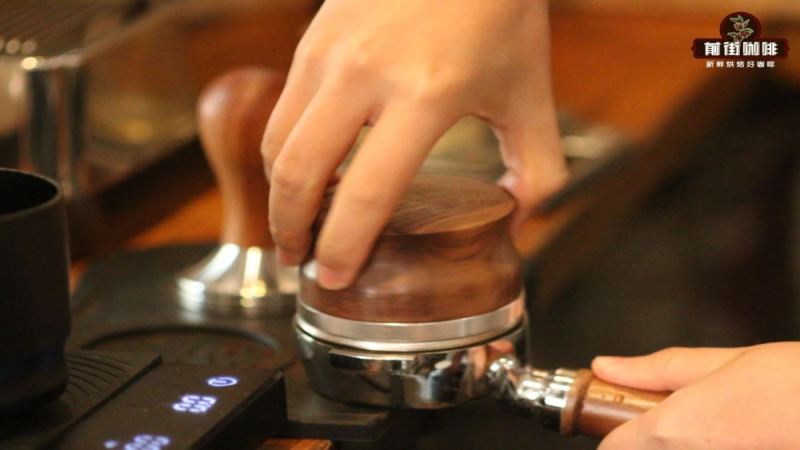
When putting coffee grounds into the portafilter basket, a good distribution method should be used to eliminate clumps and air pockets in the basket and avoid channeling during brewing, such as using the WDT (Weiss Distribution Technique) distribution method, or lightly tapping the portafilter on a soft mat; before tamping, the coffee grounds should also first be leveled in the basket, and then the tamping action should be performed. This can avoid uneven extraction of the entire puck in the basket, because if the coffee grounds are not level, after tamping the density of the coffee grounds on both sides will differ, causing uneven extraction of the entire puck! Also, tamping does not necessarily require great force. The purpose of tamping is to make the coffee bed level and, through that pressure, remove additional air pockets that have not yet been removed.
Espresso coffee-to-water ratio
The coffee-to-water ratio of espresso, that is, the ratio of the amount of coffee grounds to the amount of coffee produced. Front Street Coffee most often uses 20 grams of coffee grounds to brew 40 grams of espresso, giving a coffee-to-water ratio of about 1:2. Front Street Coffee sometimes adjusts it according to the situation; the coffee-to-water ratio of espresso can vary greatly depending on personal preference and regional characteristics, such as from 1:1 to 1:4. Italians also give these espressos of different concentrations different names, such as Ristretto espresso, Normale espresso, Lungo espresso, etc.

Of course, when extracting espresso, the higher the coffee-to-water ratio, the greater the amount of coffee in the cup. Although the extraction yield increases, the coffee becomes weaker; the most common espresso coffee-to-water ratio is about 1:2 to 1:3. Espressos of different concentrations also develop different variations and flavors after adding water or milk, milk foam, or cocoa, etc. At present, the latte coffee recipe used by Front Street Coffee is 1:6.5, that is, 40g espresso mixed with 260g steamed milk.
Front Street Coffee believes that to make a standard cup of espresso, in addition to the factors discussed above such as the coffee grounds themselves, grind size control, distribution and tamping techniques, and coffee-to-water ratio, it is also necessary to pay attention to factors such as pressure, temperature, and time control during brewing; making espresso generally uses 6-9 BAR of pressure. Of course, pressure is not the only factor affecting extraction yield, and higher pressure does not necessarily make espresso taste better!!

Espresso extraction temperature control
To make espresso, water temperature, pressure, and time are relied upon to dissolve the soluble solids in the coffee grounds. However, if the water temperature is too high or the time is too long, it will cause over-extraction and make the coffee bitter! If the water temperature is too low or the time is too short, it may cause under-extraction, making the coffee weak and sour! Generally speaking, we use a water temperature of about 91-96 degrees Celsius to extract espresso, but the darker the roast level of the coffee beans, the lower the temperature should be used, because dark-roasted coffee beans are naturally more bitter. Lightly roasted coffee beans should use a higher temperature, because lightly roasted coffee beans are naturally more acidic.

In addition, all espresso coffee machines, whether fully automatic, semi-automatic, or manual, need to be preheated to reach operating temperature; water temperature has a great influence on espresso taste. Front Street Coffee recommends that when making espresso, you experiment with and adjust your brewing water temperature and preheating time/method to achieve your ideal taste.
Once everyone understands the above extraction parameters for espresso, you can start doing it yourself! If after brewing you find that the coffee puck is relatively wet or muddy, please do not worry. As long as the extraction is even, this condition will not affect your espresso quality. Next, Front Street Coffee will share with everyone the method and related parameters for Front Street Coffee'slatte coffee.

Front Street Coffee'slatte coffee ratioand method
The espresso extraction plan used by Front Street Coffee is 20g of coffee grounds extracted in 27 seconds to produce 40g of espresso liquid, as the base for latte coffee.

Front Street Coffee uses the Flying Horse E98 espresso machine, and the extraction parameters are as follows:
Pressure: 9 bar
Temperature: 90.5~96 degrees Celsius
Time: 20~30 seconds
Coffee-to-water ratio: 1:1.7~1:2
Dose: 12g (single espresso) 20g (double espresso)
Extracted espresso amount: 20ml (single) 40ml (double)
After extracting the espresso, the next step issteaming milkthe related steps! Front Street Coffee will introduce to everyone asimple milk steaming method, which is to pour half a pitcher of milk, position the steam wand perpendicular to the center of the milk or at the edge of the pitcher, then let the steam tip just touch the surface of the milk, then open the steam to the halfway point, do not move the pitcher, slowly close it when the milk reaches 50 degrees, and close it exactly at 60 degrees. The final temperature will reach 66 degrees, and in this way you can steam a pitcher of good milk foam.

Then everyone can proceed to combine the espresso and milk foam. If you know how to do latte art, you can pour your favorite pattern; if not, it does not matter. Whether or not there is latte art will not affect the taste of a latte.
For more specialty coffee beans, please add the private WeChat of Front Street Coffee (FrontStreet Coffee), WeChat ID: kaixinguoguo0925
The above content is compiled by CoffeeHunters, a coffee news website.


